Any attempt to define SEO for hotels should start with the question a guest is actually typing, not the broad term a marketer assumes they’re typing.
“Hotel in Sydney” is searched millions of times. OTAs own it.
The searches your guests type when they’re close to booking look more like “airport hotel late check-in no credit card hold” or “family room with breakfast near convention centre.” Those searches are specific, lower in competition, and loaded with intent.
A hotel digital marketing strategy built around the second kind of search wins direct bookings. One built around the first mostly sends guests to Booking.com.
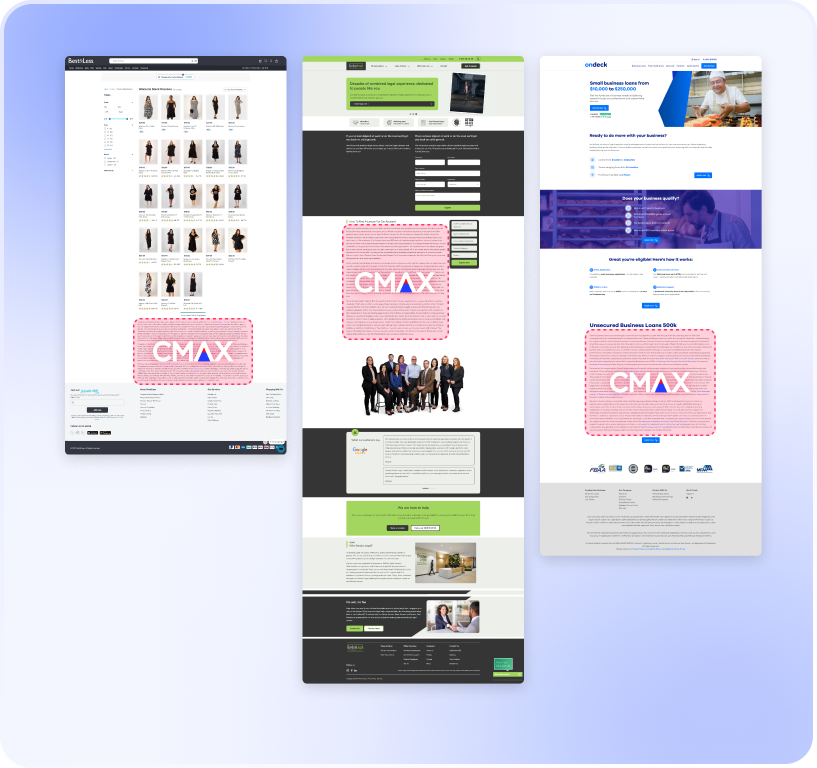
CMAX works on exactly this kind of long-tail coverage, helping hotel sites build and maintain pages that match how guests actually search.
Hotel SEO Captures More Direct Bookings by Covering the Searches Guests Actually Make
Long-Tail Guest Searches Matter Most
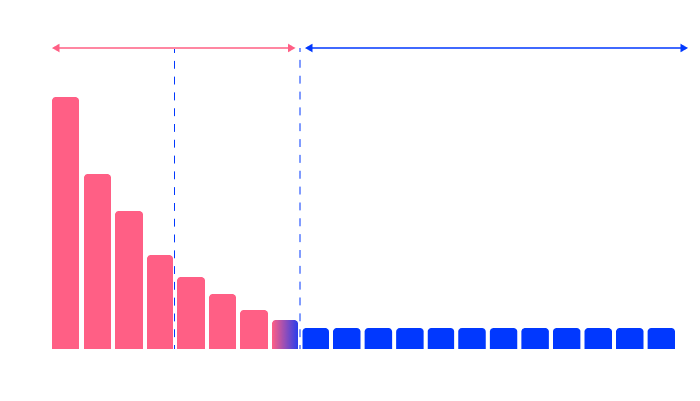
Over 90% of search demand sits in the long tail: the specific, detailed queries guests type when they’re close to booking. SEO for hotels grows when pages answer questions about parking costs, breakfast inclusion, cancellation terms and late check-in, not when a site chases “hotel in London.”
Most guests don’t arrive at a decision through the front door. They come in through a side gate, already knowing what they want: pet policy, early check-in, parking included, cot available.
In SEO, those side gates are the specific questions guests type before they commit. Local SEO for hotels means owning those entry points with pages that answer each question before the guest has to look elsewhere.
If those answers don’t live on pages Google can index, Google has nothing to match against those detailed searches, and the guest finds the information somewhere else. Usually on an OTA.
Indexable pages that state exact details, by property, by stay type, are how a hotel competes earlier in the decision.
Better Coverage Can Reduce OTA Dependence
Guests compare amenities, policies and booking conditions before they commit. Hotels that publish those answers on their own site compete in that process.
Hotels that don’t send that demand straight to OTA listing pages.
At sufficient scale, automated SEO can build and maintain direct-booking pages targeting lower-funnel searches like “hotel with free parking near stadium” or “airport hotel late check-in,” where the guest already knows what they want and is choosing where to book.
The Strongest Hotel Pages Match Specific Stay Needs and Local Intent
Build Pages Around Local Intent
Google surfaces hotel results by relevance across dozens of factors, including search terms, location, price, and user ratings and reviews. A page targeting “hotel near convention centre” needs to state the actual distance, transport options, parking terms and late check-in availability.
Those are the details a guest ready to book is looking for.
The same principle applies to SEO for restaurants: neighbourhood, parking and distance from nearby venues shape local relevance just as they do for hotels. Proximity and specificity are the variables Google is weighting.
Match Pages to Stay Type
Generic room copy does not perform well for specific stay-type searches. SEO for hotels means replacing that copy with breakfast hours, desk space and cancellation cut-offs, separated by room type.
Practical hotel website optimisation gives family suites, business stays and event nights separate pages with separate answers covering beds, desks, breakfast and parking.
Once these pages attract demand, automated SEO reports can show which specific stay needs are bringing clicks before guests reach the booking form.
CMAX Helps Hotels Turn Long-Tail Demand Into Ongoing Search Growth
CMAX Is Built for Long-Tail Growth
CMAX is the Agentic SEO Platform. Our platform targets the vast majority of search demand that sits in the long tail.
For hotel brands, that means pages covering room needs, local intent and booking questions, kept current as search behaviour shifts.
Most SEO programmes run by conventional agencies, using outdated methods, tell clients to expect results in six months. CMAX’s methods allow clients to start seeing clicks in 6 to 8 weeks.
The goal is wider content surface area across search and AI discovery. Content surface area is simply how many of the ways a guest might search you have a useful page for.
A handful of trophy positions on a results page is not a direct-booking strategy.
For hotel teams focused on long-tail growth, automated SEO reporting can show whether broader content coverage contributes to direct bookings rather than judging performance by position alone. A hotel digital marketing company may report positions.
Freshness and Linking Compound Performance
Unlike OTA advertising, this approach builds direct-booking coverage around accurate amenities, policies and locations. Dynamic Internal Linking and Full Body SEO strengthen the context around each page, and Google’s own guidance confirms internal links help both visitors and Google discover pages on a site.
Think of internal links as the corridor signs in a large building: they tell every visitor, and Google, exactly where to find what they came for.
Frequently Asked Questions
Why does my hotel rank but not get direct bookings?
Appearing for a broad term gets you the click. The booking depends on what happens next.
If the landing page skips parking cost, breakfast inclusion, cancellation rules or late arrival, the guest keeps comparing, and comparison usually ends on an OTA.
Clicks also drop when a page sends visitors to a generic homepage with no rate visibility and no page matched to the stay type they searched for.
As discovery expands beyond conventional results, Perplexity SEO raises the same practical requirement: booking details must be clear, specific and accessible on the hotel’s own pages. AI engines retrieve answers from Google’s index, so pages that lack specific detail are invisible to AI-sourced recommendations as well.
How does Google determine hotel search results?
Google sorts hotel results by relevance, weighing dozens of factors including search terms, location, price, and user ratings and reviews. Hotels do not pay to appear in hotel search results and cannot pay to influence their position.
Personalisation can also shape what an individual user sees, based on browsing activity and recent searches. Technical SEO for hotels makes sure Google can crawl, understand and index the pages containing accurate rates, amenities and location details.
Crawling means Google’s software has visited and read the page. If Google can’t read it, the page doesn’t exist for search purposes.
Hotel website optimisation in this context means giving family suites, business stays and event nights separate pages with specific answers, not a single generic rooms page.
Do Google reviews help hotels appear higher in local search results?
Yes. Google bases local results on relevance, distance and prominence, and prominence includes review volume and sentiment.
Stronger ratings can lift local visibility when other signals are close.
An accurate Google Business Profile for hotels supports relevance by displaying property location, reviews and current information used in local results. Google recommends responding to reviews, as helpful replies can make a property stand out to potential guests.
Accurate profiles, helpful review responses and detailed property pages make digital marketing in tourism and hospitality stronger across all three signals.
SEO for Hotels, More Direct Bookings From Specific Searches
SEO for hotels works when a site answers the specific questions that sit between interest and booking. That gap is where hotel sales and marketing either wins or loses to an OTA.
It’s what a hospitality marketing agency should be filling, and it’s what CMAX focuses on: not a few broad terms, but the many detailed searches around stay type, location, amenities and booking conditions that shape direct demand.
Hospitality marketing Australia works best when the content matches Australian guests searching in Australian contexts, with AUD pricing and the specifics of local properties. CMAX delivers this across hotel digital marketing strategy, SEO for hospitality and SEO for small business Australia, with content your team has approved.
For hotels seeking more direct bookings from specific searches, get SEO services from an outcome-driven agency that optimises your pages with dynamic content that matches what your customers are truly looking for.
If you’re curious as to how you’re performing on AI, book in a Missing Customer Map review with our Growth Team.
Author
Jeremy Tang
Founder and CEO of CMAX
Jeremy Tang is the Founder and CEO of CMAX. With over 2 decades of experience in business consulting and digital marketing, he has successfully driven seven startup businesses, six of which achieved $1 million in revenue from zero in less than 16 months, 5 of which grew to multi-million dollar a year ventures without any external funding. Jeremy's expertise lies in streamlining business processes through technology and leveraging digital (in particular SEO) for business growth. He resides in Australia, travels extensively, and draws inspiration from his global experiences.