Healthcare SEO is different from most sectors because the content carries a higher standard of proof. Every treatment page, condition page, and clinician profile sits in what Google classifies as a trust-sensitive health category, which means accuracy and authorship matter as much as visibility.
Search engine optimisation for healthcare has to align what gets published with what the practice can actually stand behind. Visibility and clinical accuracy work together or neither one holds up.
A clinic can appear prominently in search and still lose patients if the content overstates outcomes or hasn’t been through clinical review. The stronger approach maps content to how patients actually search: specific combinations of condition, suburb, and urgency, while keeping every claim supportable.
We work with healthcare providers on exactly this kind of coverage, applying the same content discipline we bring to shopify SEO services to content that must scale without drifting off-brand or off-brief.
SEO for healthcare works when it balances visibility, trust, and compliance-sensitive content
Patient search visibility
Healthcare providers, clinics, hospitals, and health brands need to appear for the service, symptom, treatment, and location searches patients already use. Those include high-intent queries like “urgent care near me,” “knee replacement recovery time,” or “bulk billing dermatologist Sydney.”
Clear authorship and current clinical information make medical clinic SEO more dependable in Google’s health category.
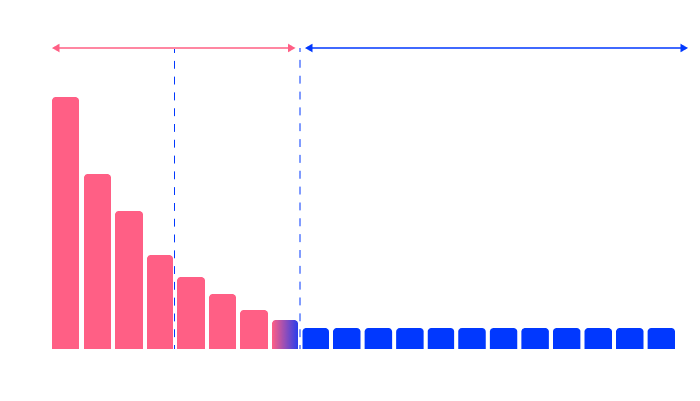
The opportunity extends well beyond the obvious broad terms. Google reports that 15% of its daily queries are brand new, so medical SEO marketing has to address detailed service, condition, clinician, and location searches, not just the handful of terms everyone already targets.
A healthcare site needs enough pages, covering enough combinations, to match the way patients actually search.
YMYL content expectations
Healthcare pages sit in a category where the standard is higher than keyword matching. Think of it like a pharmacist’s label: the information has to be specific, current, and signed off before it goes out.
Every page needs current medical information, clear authorship or clinical review, and language the practice can genuinely support.
The safest structure keeps treatment descriptions specific, explains who the service is for, shows what happens next, and avoids broad claims not backed by a clinician, an approved source, or an internal review workflow.
As healthcare discovery changes, interest in a gemini SEO service has grown alongside the need for content structures that preserve accuracy in sensitive categories. Medical SEO depends on accurate, current information rather than search position alone.
The strongest healthcare SEO programmes win more than broad visibility because they capture long-tail demand
Long-tail patient demand
The long tail refers to the specific, detailed searches people type rather than short general terms. Patients search in combinations: symptom plus suburb, treatment plus insurance type, provider plus urgency.
Local SEO for healthcare captures that high-intent behaviour by matching content to the combinations patients use when they are ready to book, call, or compare providers.
Those same structural signals also shape gemini SEO, where entity clarity and well-connected pages matter more than isolated keyword targeting. Connected clinician, condition, and treatment pages are easier for search engines to interpret than a collection of pages that don’t reference each other.
Freshness and internal linking
Service hours, clinician availability, referral rules, and payment details change often. Healthcare website SEO depends on regular updates so core service information stays aligned with what patients and referrers actually find.
Content that was accurate six months ago can already be working against you.
Linking a condition page to its related treatment page, a clinician profile, and a local location page helps search engines read the site as a connected whole. That makes it easier to crawl, easier to trust, and easier for patients to follow.
Google’s index, which is the library of pages it knows about, rewards sites that give it clear signals about how pages relate to each other.
The Agentic SEO Platform built to scale healthcare visibility without sacrificing brand control
Brand-trained content generation
Healthcare content requires approved terminology and clinical review steps across every service page, condition page, and location page. That consistency has to hold even when different teams are publishing or updating content at speed.
Our platform generates content trained on your approved brand assets, preventing hallucinations and off-brand output, which is the thing most programmatic tools cannot do at the point where healthcare content governance matters most.
Approved terminology and escalation boundaries give medical website SEO stronger safeguards when multiple teams publish or update clinical content.
Long-tail coverage at scale
Over 90% of search and AI demand is in the long tail. Our platform uses Dynamic Internal Linking and Smart Optimisation to expand coverage and keep pages connected as search behaviour shifts.
Dynamic Internal Linking supports SEO services for healthcare by connecting detailed condition, treatment, clinician, and location pages as patient search language evolves.
The same long-tail logic appears in shopify SEO, though the page relationships there revolve around collections, products, and commercial intent rather than clinician, condition, and treatment pathways.
Clients see first clicks in 6-8 weeks, with programmes maturing around month six, giving healthcare teams a way to build sustained coverage rather than relying on one-off page launches that go stale.
Frequently Asked Questions (FAQ)
Can healthcare providers respond to online reviews without violating HIPAA?
Providers can respond, but the reply cannot disclose protected health information or confirm that the reviewer is a patient, even if the patient revealed details first. A framework balancing search visibility with HIPAA-conscious publishing defines SEO for healthcare industry practice in regulated clinical settings.
HHS OCR settled one case where a provider did exactly that, resulting in a $30,000 payment plus a corrective action plan. The safer approach is a short, neutral reply that thanks the reviewer and moves anything specific offline.
Do tracking pixels on healthcare websites create HIPAA risks?
They can, particularly on authenticated pages, appointment flows, portal logins, and symptom checkers where collected data ties to an individual’s health activity. Any healthcare SEO company assessing tracking pixels should review those pages individually.
HHS states that certain unauthenticated pages may also involve protected health information depending on what is collected. Every tag, pixel, and vendor script warrants a page-by-page review, with close attention to form fields, login states, and third-party data sharing.
Similar governance issues also affect SEO for banks, where strict rules around trust, disclosures, and data handling shape what can be published and tracked.
How can healthcare providers measure SEO while protecting patient privacy?
Focus on aggregated, non-patient KPIs: impressions, clicks, page-level visit volumes, and lead volumes from privacy-reviewed forms or call workflows. Privacy-conscious digital marketing for healthcare professionals measures those metrics without exposing patient-identifiable data.
HHS confirms HIPAA rules apply when tracking technologies collect or disclose protected health information. Limit trackers on sensitive pages, vet each vendor before implementation, and keep search reporting separate from patient-identifiable data.
The same caution applies in SEO for financial services, where performance reporting has to stay useful without crossing into sensitive or regulated data exposure. Separating Search Console, which is Google’s free tool showing which searches your site appears for, from patient-identifiable data keeps healthcare SEO measurement useful without weakening privacy controls.
Coverage beats compliance guesswork
Most healthcare sites cover a fraction of the searches patients actually use. The gap between “services” and “bulk billing physiotherapist Parramatta after 6pm” is where patient decisions actually get made.
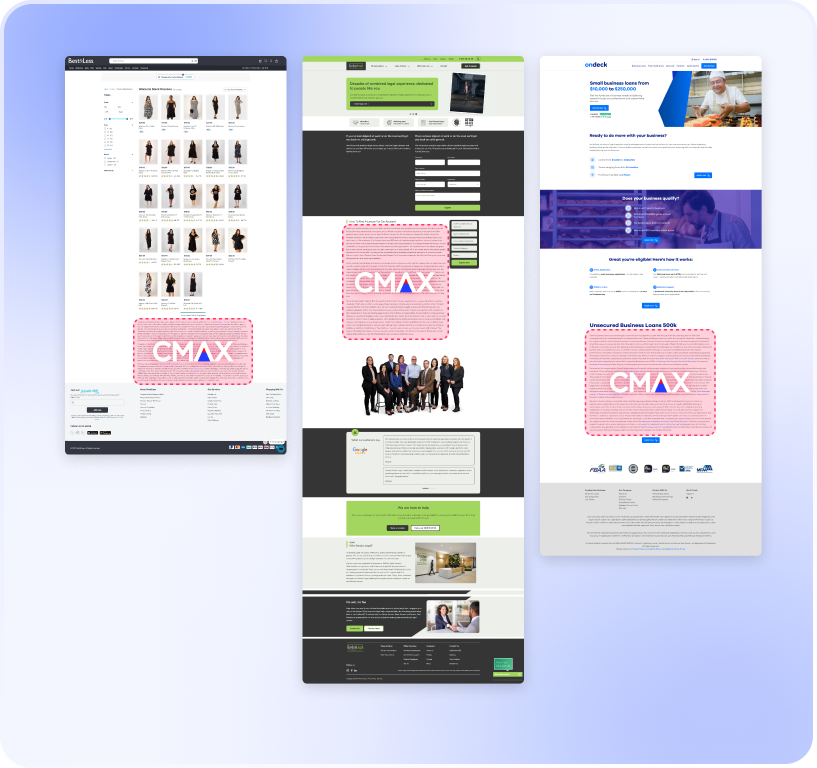
CMAX targets the 90% of search demand in the long tail, deploying and updating content across the thousands of specific ways patients search, from symptom and suburb combinations to provider and treatment queries. Content is trained on your approved brand assets, so terminology, escalation boundaries, and review steps stay consistent across service pages, condition content, and clinician profiles.
Healthcare content governance highlights a different set of priorities beside SEO for retailers, where speed and seasonal turnover often matter more than the review controls healthcare content requires.
A healthcare digital marketing consultant should monitor content freshness as Google and AI engines, which retrieve from Google’s index to build their answers, respond to changing search behaviour. Our platform keeps checking performance and updating content as that behaviour shifts, because freshness carries growing weight with both.
Full Body SEO gives healthcare teams the coverage, connection, and currency that no manual team can sustain at scale. Medical SEO marketing done at this level is a programme, not a project.
Run a Free SEO Fast Track to see where your long-tail gap is, or ask us to Show me my long-tail gap across your condition, treatment, and location pages.
Author
Jeremy Tang
Founder and CEO of CMAX
Jeremy Tang is the Founder and CEO of CMAX. With over 2 decades of experience in business consulting and digital marketing, he has successfully driven seven startup businesses, six of which achieved $1 million in revenue from zero in less than 16 months, 5 of which grew to multi-million dollar a year ventures without any external funding. Jeremy's expertise lies in streamlining business processes through technology and leveraging digital (in particular SEO) for business growth. He resides in Australia, travels extensively, and draws inspiration from his global experiences.