One blog post ranking, or failing, tells you almost nothing. Buyers don’t type a single search and buy.
They type a dozen variations: product comparisons, “best for” questions, problem-led queries. One article covers one of those.
The others go unanswered, and your competitors pick them up.
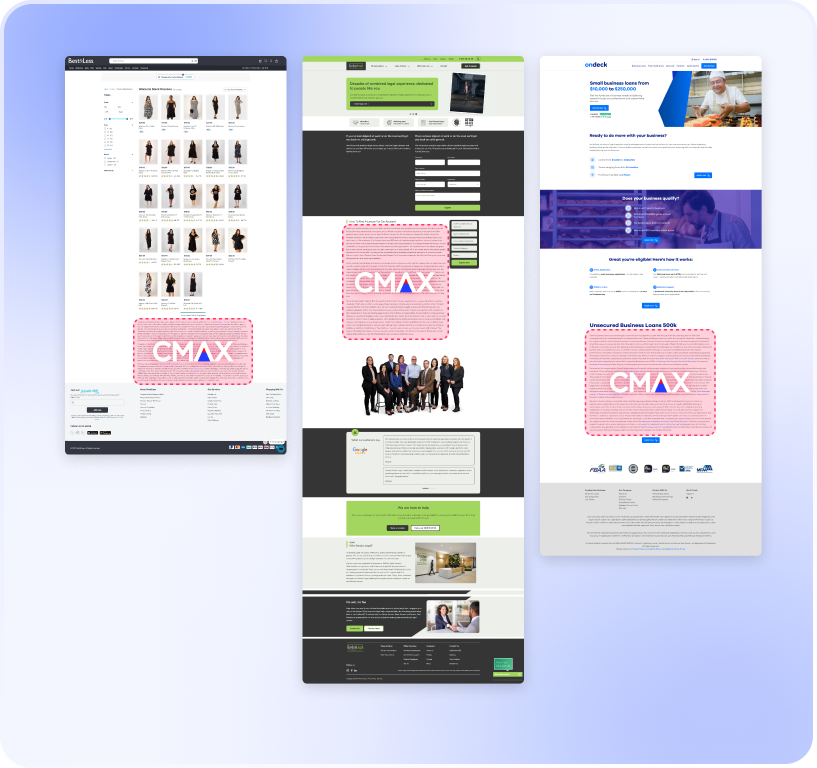
That’s why coverage across a connected cluster of topics matters more than any single post performing well. It’s also why keyword cannibalization SEO deserves attention early: when several of your pages chase the same intent, they compete against each other instead of covering different ground.
And it affects whether AI tools surface your brand, because those tools retrieve answers from what Google can already find on your site.
CMAX approaches SEO blog writing services with connected coverage in mind. Each blog content strategy builds long-tail content that links together, rather than treating each post as a standalone page.
SEO Blog Writing Should Cover the Long Tail, Not Just Publish Single Posts
Long-Tail Searches Drive Demand
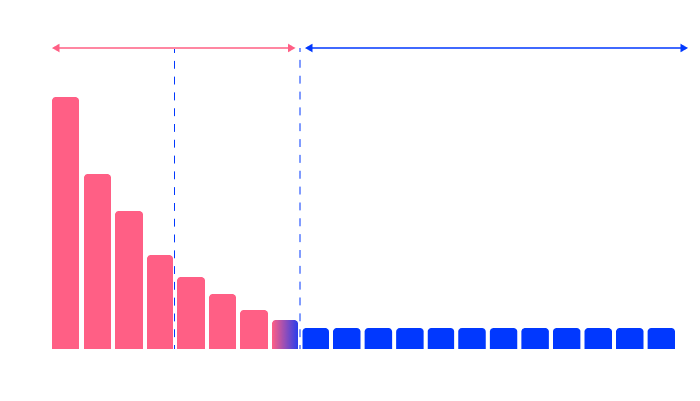
The long tail means the specific, detailed searches people actually type. “Best linen quilt cover for a hot sleeper” is long tail.
“Quilt cover” is not. Over 90% of search and AI demand is in the long tail, and most of it goes unanswered by brands that publish only a handful of broad posts.
Effective SEO blog writing services map product comparisons, problem-led searches, and industry use cases into connected clusters. A single post can’t cover the range of questions a buyer works through before they enquire, compare, or buy.
This is the same principle behind content marketing services that treat a topic as a territory to cover, not a box to tick.
Think of a large hardware store with a well-organised stock room. Every shelf holds a different product category, every bin answers a specific job the customer needs done, and the aisle signs connect them so the right item surfaces immediately.
A store with one aisle and a lot of empty shelving looks manageable until someone needs something specific. SEO blog writing works the same way: the depth of the catalogueue determines whether a reader finds what they came for or walks out.
Coverage Supports Search and AI Visibility
Search and AI visibility improve when your site holds useful pages across many connected queries. AI engines retrieve answers from Google, so they depend on what Google can find, crawl, and index.
Connected SEO content writing gives Google clear paths between detailed articles and the core category or service pages they support. Google is explicit about this: it primarily discovers new pages through links, and links help both users and search engines understand how pages relate to each other.
Posts that sit alone don’t get that benefit. Good SEO friendly copywriting accounts for those connections from the start, not as an afterthought.
Machine learning SEO can identify patterns across larger sets of pages, which is why building out the cluster matters as much as getting any one post right.
Strong SEO Blog Writing Stays Fresh, Connected, and Shaped by Performance Data
Freshness Changes With Search Behaviour
Content goes stale. Product ranges shift, competitors change their language, and the specific phrasing buyers use in search drifts over time.
A page that answered the right question six months ago can sit invisible today. Teams should revisit pages when search demand changes, not only when a site redesign forces the issue.
Search Console, Google’s free tool showing which searches your site appears for, gives CMAX the signal to refresh SEO blog writing services as those shifts happen.
Connected Pages Expand Content Surface Area
Content surface area means how many of the ways your customers search you actually have a useful answer on your site. Effective website copywriting services expand that surface by linking broad topics with the specific questions customers ask next.
SEO copywriting examples from well-run programmes consistently show the same pattern: broad category page at the top, detailed long-tail articles below, internal links connecting them.
CMAX integrates keyword research services with Search Console data so content updates follow observed behaviour, not assumptions. Dynamic Internal Linking moves readers from a broad topic into the next question they’re likely to ask.
Product pages SEO supports that structure by showing which queries are already earning impressions, so updates follow real demand.
CMAX Turns SEO Blog Writing Into Scalable Coverage With Approved Brand Assets and Human Review
Brand-Safe Scale With Human Review
CMAX is the Agentic SEO Platform, built for brands that need scalable long-tail coverage across content types: articles, category content, and SEO location pages. CMAX is trained on human-reviewed, client-approved content, so the language, claims, terminology, and tone stay locked to what’s already been signed off, rather than drifting into generic copy.
Approved assets establish the controls that website copywriting services and website content writing services need across every page type in your CMS.
Built for Complex, Regulated Industries
One-off copywriting doesn’t scale into a content programme. SEO blog writing services for regulated industries require approved terminology, accuracy controls, and review gates before publication.
CMAX combines Full Body SEO, ongoing crawl frequency management, and performance-led updates so content stays relevant as searches shift and AI visibility changes. Nothing publishes without human review.
Businesses searching for an SEO copywriter Australia should expect this level of control as a baseline, not a premium add-on. The same applies to content writing Melbourne teams who manage multiple stakeholder sign-offs before anything goes live.
Frequently Asked Questions
How long does it take for SEO blog posts to show results?
Timelines depend on the site, its competition, and how the work is implemented. There’s no fixed industry-wide answer.
Most SEO programmes run by conventional agencies, using outdated methods, tell clients to expect results in six months. CMAX’s methods allow clients to start seeing clicks in 6 to 8 weeks.
The difference is connected long-tail coverage built from approved content, Full Body SEO, and updates tied to real performance data rather than a quarterly content calendar.
Why do my blog posts get impressions but no clicks?
Search Console counts an impression when someone sees your link on Google, and a click when they follow it. A gap between the two usually means one of three things: the title tag is too generic, the page promise doesn’t match what the searcher typed, or the content takes too long to answer the question.
Fixing that gap is part of SEO copywriting best practices. Clear title tags and a direct answer up front close most of it.
How can SEO blog posts generate leads, not just readers?
Blog content generates better leads when it addresses decision-stage questions, not just awareness ones. A SEO website copywriter connects decision-stage comparisons with the right service or category page.
SEO copywriting services that focus only on word counts miss this entirely. Multi location SEO can extend that relevance to the distinct needs of customers in each market.
Location pages SEO applies the same principle to geography-specific demand. Commercial value comes from posts that link naturally to where a buyer goes next.
SEO Blog Writing Services Start With Long-Tail Coverage
SEO blog writing services matter more when they expand the number of real searches your site can answer. CMAX targets the vast majority of search demand sitting in the long tail: the specific questions, comparisons, and use cases that drive buying decisions, and that most brands haven’t covered yet.
CMAX is the Agentic SEO Platform. We help brands grow content surface area with connected, search-led content that keeps updating as demand shifts.
Combined with product led SEO, that means visibility built on breadth, freshness, and useful coverage across the queries that matter, not one-by-one publishing.
The simplest way to see where your gaps are is to look at what your site is missing right now. If you’re curious as to how you’re performing on AI, book in a Missing Customer Map review with our Growth Team.
Author
Jeremy Tang
Founder and CEO of CMAX
Jeremy Tang is the Founder and CEO of CMAX. With over 2 decades of experience in business consulting and digital marketing, he has successfully driven seven startup businesses, six of which achieved $1 million in revenue from zero in less than 16 months, 5 of which grew to multi-million dollar a year ventures without any external funding. Jeremy's expertise lies in streamlining business processes through technology and leveraging digital (in particular SEO) for business growth. He resides in Australia, travels extensively, and draws inspiration from his global experiences.