Topical authority SEO is built on how thoroughly your site covers a subject, not how many backlinks point to a single page. If your rankings have plateaued despite steady link acquisition, the gap is often structural: thin coverage, overlapping pages, or missing intent layers that leave parts of the topic unanswered. Relevance compounds when pillar pages, supporting content, and internal links work together so search engines can map your expertise across a full query set. CMAX helps enterprise teams scale that kind of structured, intent-separated coverage without sacrificing editorial control.
Topical Authority in SEO Is Relevance Proven Across a Subject
Coverage Breadth and Depth
Topical authority SEO is built on how thoroughly a site covers a subject, the main topic, the follow-up questions users ask next, and the adjacent intents they often search after the first click.
A cluster built this way answers the query path, not just one keyword. A user searching “topical authority SEO” may follow up with questions about how to structure a topic cluster, whether internal links matter, or how to measure coverage. A site that addresses each of those intents with a distinct, well-structured page signals to search engines that it covers the subject in full, not just at the surface.
That breadth, combined with genuine depth on each page, is what separates a topic cluster from a collection of loosely related articles.
Topical vs Link Authority
What is topical authority? It is the degree to which a site demonstrates comprehensive, structured coverage of a subject so that search engines treat it as a reliable source across related queries. Backlinks signal that other sites cite or trust a page. That signal is real and still carries weight. What backlinks do not show is whether a site covers a subject with enough breadth or depth to be the most useful result across a range of related queries.
Topic coverage, page relationships, and internal links do that work. They help search engines recognise which subject a site covers in depth and where each page fits within that subject. A page with strong link metrics but thin surrounding coverage can rank for one query and miss the rest of the topic entirely. Topical authority in SEO addresses the gap that link acquisition alone leaves open.
Topical Coverage Strengthens Rankings Through Connected Relevance Signals
Pillars, Support Pages, Internal Links
A strong topical authority SEO structure assigns each layer of search intent to the right page type. Pillar pages handle broad queries where a user wants an overview. Supporting pages take narrower queries, the ones that follow once a user knows enough to ask something specific. Internal links then map the relationships between them, connecting definitions to use cases, use cases to comparisons, and comparisons to pre-purchase questions.
That architecture gives each page a clear, singular job. When pages have distinct roles, they stop competing with each other for the same query. Search engines can read the structure and recognise which page belongs to which intent, rather than trying to choose between several pages that all partially answer the same thing.
Before-and-After Cluster Example
A single broad service page is a common starting point, and a common ceiling. When comparison queries, use-case scenarios, and FAQ-style questions are all crammed into one URL, none of them get answered with enough depth to rank well for their specific intent.
Splitting that content into dedicated pages changes the dynamic. A comparison page can address evaluative intent directly. A use-case page can go deep on a specific scenario. An FAQ page can target the pre-purchase questions that decision-stage searchers actually type. Each page now answers one search need cleanly, rather than burying it three scrolls into a general overview. The site’s coverage of the topic becomes legible, both to users and to search engines reading the cluster as a whole.
Evidence for Building Topical Authority Beyond Link Acquisition
Related Content Can Lift Visibility
A site with tighter topical coverage can outrank a competitor with stronger link metrics when it covers the query family around a subject with distinct, non-overlapping pages. Search performance across a topic is shaped by whether the cluster answers the range of searches users make, not by the authority of any single URL. One well-linked page rarely carries the whole topic; the surrounding pages do the distributional work.
Helpful Coverage and Architecture Matter
Coverage and architecture patterns observed across sites suggest the same pattern. Asking why is SEO so important leads directly to how coverage and architecture shape rankings. Pages perform better when they are comprehensive for their specific intent, clearly separated from pages targeting adjacent intents, and connected through a logical internal-link structure that lets both users and crawlers move from broad to specific without dead ends. Architecture is a primary concern, and it is what makes coverage legible to search engines.
Backlinks Still Need Content Support
Backlinks remain a meaningful signal, but they rarely compensate for thin coverage, overlapping pages, or weak internal linking when the goal is to rank across a subject area. Unlike link-first strategies, topical authority SEO depends on the cluster of pages that answers the full query path. The two signals work together; one does not replace the other.
Topical authority SEO strategies that rely on covering a wide query family at scale often raise questions about SEO dynamic content, particularly whether dynamically rendered pages are crawled, indexed, and recognised as distinct, helpful resources by search engines.
Topic Share Is the Stronger Signal
Topic share offers a more precise measure of authority than link counts alone. It describes how much of the relevant query set a site covers with non-duplicative pages across core subtopics, comparisons, use cases, and recurring questions. A site that covers 80% of the query family with distinct, well-linked pages holds a structurally stronger position than one with high domain-level link authority but patchy, overlapping content.[1]
A practical topical authority framework makes scaling more defensible.
Coverage sufficiency checklist
A practical topical authority SEO framework starts with breadth: every major intent in the cluster needs its own page. That means comparison queries live separately from service pages, use-case pages address specific scenarios or audiences with detail the pillar cannot carry, and recurring pre-purchase questions get standalone answers capable of ranking independently and pulling in decision-stage traffic.
The logic is structural. When multiple jobs share one URL, the page either ranks weakly across all of them or strongly for none. Separating evaluative intent from commercial intent removes that competition. A visitor comparing options and a visitor ready to buy need different pages, and search engines reward the separation.
Topical authority SEO frameworks that scale across large catalogues often need to account for faceted navigation SEO, since duplicate or crawl-inefficient facet URLs can undermine the clean intent separation that a well-structured cluster depends on.[2]
Use the following as a working checklist before publishing into a topic cluster:
- Each major search intent has a distinct page.
- Comparison queries are separated from service pages so evaluative intent does not compete with commercial intent.
- Use-case pages target specific scenarios or audiences with details the main page does not cover.
- Recurring pre-purchase questions have standalone answers that can rank on their own and support decision-stage traffic.
- Internal links connect parent and child topics logically, so users and crawlers can move from broad pages to specific pages without dead ends.
Internal linking is the connective tissue. Without it, pages sit in isolation and crawlers cannot map the relationships that signal subject-matter depth. A logical parent-to-child link structure lets both users and search engines move through the cluster without hitting gaps.
Topical authority SEO at enterprise scale frequently involves programmatic content as a mechanism for producing the volume of non-duplicative, intent-specific pages needed to cover a broad topic cluster without relying solely on manual editorial output.
No two pages target the same primary intent, which reduces cannibalisation and makes page roles easier to recognise.
Depth without duplication
When every page in a cluster has a distinct job, depth becomes a structural advantage rather than a content problem. Supporting pages earn their place by adding what the pillar page cannot cleanly hold: new evidence, worked examples, decision criteria for a specific buyer stage, or edge-case detail that would bloat a broader page. Repeating the same explanation under slightly different headings does not create depth. It creates competing pages that split signals and leave search engines with no clear signal about which URL to surface for a given query.
The practical test is straightforward: if a supporting page removed its unique content and merged into the pillar, would the pillar become harder to read or less useful for a specific intent? If yes, the supporting page is doing real work. If no, it is a duplication risk.
Enterprise scale proof point
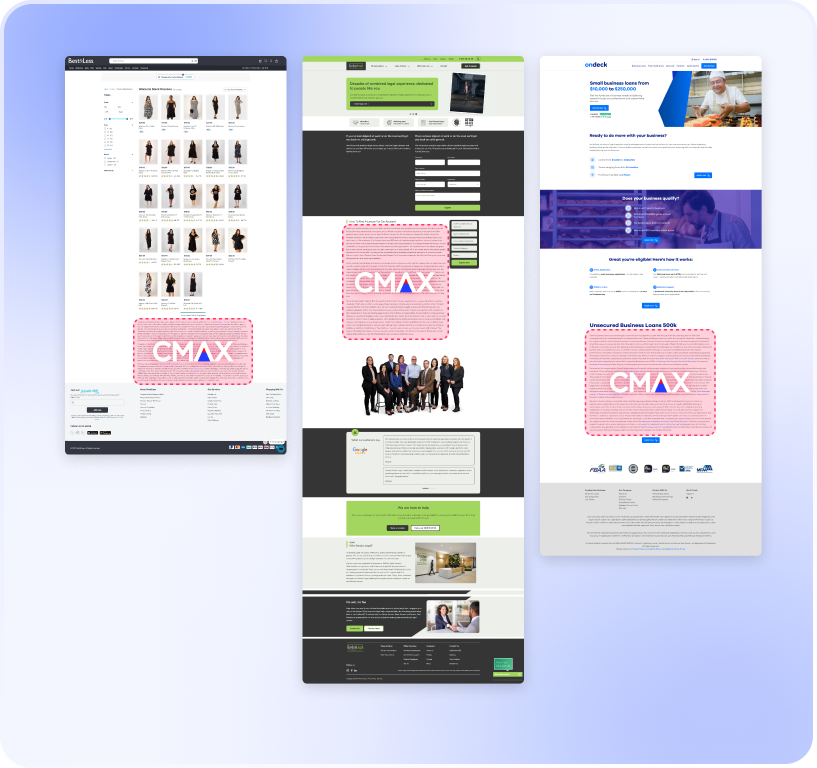
For SEO for B2B companies, long-tail coverage drives compounding returns, and one CMAX engagement illustrates the effect at scale. A B2B omnichannel hospitality retailer added 5,000 long-tail product pages and generated over $1M per month in incremental SEO revenue within 8 months, while lifting organic traffic 255% in 12 months. That result reflects a core principle of topical authority SEO: a small set of head-term pages cannot address the fragmented long-tail demand that makes up a substantial share of a topic’s query volume. An enterprise SEO programme covering that demand with distinct, non-duplicative pages is what converts structural coverage into measurable traffic and revenue.
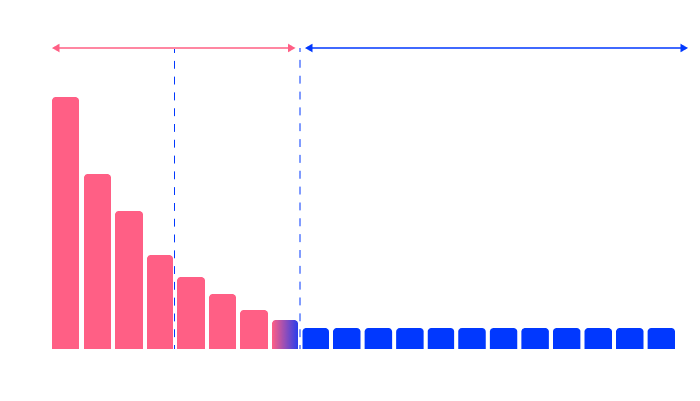
Topical authority SEO is built in large part by addressing fragmented demand, which is why longtail SEO plays a central role in assigning distinct pages to the narrower queries that a small set of head-term pages cannot fully answer.
The honest takeaway is that relevance compounds with structure.
Topical authority SEO does not resolve into a single lever. The sites that hold rankings across a subject area are not winning on backlinks alone, or content volume alone, or internal linking alone. They are winning because those signals reinforce each other.
Evaluate signals together
Treat topical authority as a combined signal. Backlinks carry more weight when the pages they point to sit inside a well-structured cluster with clear intent separation. Content depth lands harder when internal links connect it to related pages so crawlers can map the relationships. Intent coverage pays off when the architecture makes each page’s role unambiguous. Pull any one of those elements out and the others weaken. The compounding effect is what makes topical authority SEO more than a single ranking factor. The practical implication: audit them together, not in isolation.
Maintain the cluster over time
A cluster built once and left alone degrades. Search behaviour shifts, new questions emerge, and pages that once held distinct roles start to overlap as the site grows. The strongest long-term approach runs in three directions: expand clusters when new subtopics or intents gain search volume, refresh pages that have grown thin or outdated against current results, and consolidate overlapping URLs before adding more content into the same topic area. Publishing into a fragmented cluster compounds the problem rather than fixing it. Structural maintenance is what keeps compounding relevance working in the right direction.
Topical authority SEO requires ongoing cluster maintenance and expansion, which is where automated SEO processes can support the work of refreshing weak pages, closing coverage gaps, and keeping internal-link structures aligned as search behaviour shifts.
How to measure topical authority?
Start by auditing whether the site covers the core subtopics and intents within the topic using distinct, non-overlapping pages. Then cross-reference that coverage map against impressions, rankings, and internal-link support across the cluster. Gaps in coverage usually show up as low impressions on queries the site should own, or as pages competing for the same intent without a clear winner.
Topical authority vs domain authority
Topical authority describes relevance within a specific subject area. Domain authority is a third-party proxy metric for link strength. It does not show whether a site covers a topic with enough breadth or depth to rank across the full query set.
Can AI content build topical authority?
AI content can support topical authority when it produces accurate, non-duplicative pages with clear intent separation and human-reviewed subject detail.[3] Publishing at scale without editorial control does not create relevance. Volume without quality and structure adds noise to the cluster, not signal.
Topical authority SEO increasingly intersects with AI and SEO as practitioners consider how machine-generated content and AI-driven ranking signals affect which sites are recognised as authoritative across a subject.
How long to build topical authority?
There is no fixed timeline. Search engines need to crawl the cluster, recognise the relationships between pages, and compare the site’s coverage against existing results before visibility shifts become measurable. The variables are crawl frequency, cluster size, and how competitive the topic already is.
Does topical authority affect AI search rankings?
Yes. AI-driven answer systems still rely on relevance, coverage, consistency, and clear page relationships when deciding which sources to surface. A well-structured cluster with distinct, accurate pages tends to be favoured over a site with strong links but fragmented or thin coverage. Any AI SEO strategy benefits from this kind of structured depth.
Topical authority SEO remains relevant in the era of AI search engines because answer systems still evaluate coverage breadth, page relationships, and intent separation when deciding which sources to surface.
Topical Coverage at Scale Is an Execution Problem, Not a Strategy Problem
Most teams already know they need breadth and depth across their topic clusters.
CMAX is an agentic SEO platform that deploys and continuously updates content for the thousands of long-tail queries your audience actually types. Instead of manually planning pillars and supporting pages, you add two lines of code and let AI agents build interconnected coverage that strengthens your site’s topical footprint. Each new page reinforces the others, creating the kind of tightly related content structure that signals genuine authority to search engines.
If your strategy is sound but your output can’t keep pace, that’s the gap we close.
References [1] – https://ahrefs.com/blog/long-tail-keywords/ [2] – https://developers.google.com/search/docs/crawling-indexing/consolidate-duplicate-urls [3] – https://developers.google.com/search/docs/fundamentals/creating-helpful-content
Author
Jeremy Tang
Founder and CEO of CMAX
Jeremy Tang is the Founder and CEO of CMAX. With over 2 decades of experience in business consulting and digital marketing, he has successfully driven seven startup businesses, six of which achieved $1 million in revenue from zero in less than 16 months, 5 of which grew to multi-million dollar a year ventures without any external funding. Jeremy's expertise lies in streamlining business processes through technology and leveraging digital (in particular SEO) for business growth. He resides in Australia, travels extensively, and draws inspiration from his global experiences.