Across marketing SEO services, software and AI now handle repeatable search work such as content production, internal linking and page refreshes.
If you sell thousands of products, categories and comparisons, that looks like the obvious fix for a stretched team and flat results.
The catch is that automation can publish pages faster than anyone can check them. Without source checks and human approval, AI tools for SEO can multiply thin or inaccurate pages faster than a manual workflow ever could.
Picture a car. It gets you to the destination faster, or it ends up in a ditch, and the driver decides which.
The car is your AI and automation software, the driver is the person or agency running it, the destination is sales from search, and the ditch is thin pages, wrong claims and lost customer trust. Cars also come with faults, so a good driver checks the brakes before leaving.
In this context, automated SEO means a vetted car with a careful driver, where someone checks the sources and approves each page before it goes live, which is how thousands of pages stay useful instead of generic.
The real question is how to automate without losing control of quality and accuracy.
We built CMAX around that question. Any SEO automation platform should widen your content coverage while approval controls protect accuracy, brand language and page purpose.
Automated SEO scales search coverage while people keep control
What automated SEO covers
Automated SEO is software and AI doing the repeatable parts of search work. It drafts link suggestions, updates pages and monitors performance.
People stay responsible for claims, compliance and approval.
The split is simple for a brand fielding thousands of product, service, location, comparison and problem-led searches. Automate the research, link suggestions, page updates and monitoring.
Keep people responsible for commercial accuracy, claims, compliance wording and final approval.
Why long-tail coverage matters
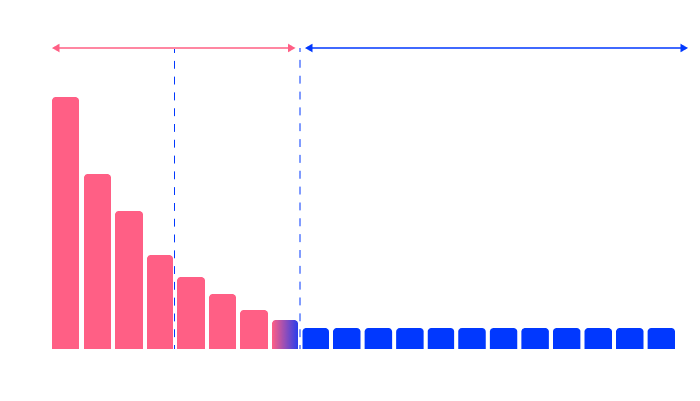
Over 90% of search and AI demand is in the long tail. That means the specific searches people actually type, like “best modular sofa for small apartment” rather than “sofa”.
Many SEO ranking tools track a short list of head terms and miss most of that demand.
Visibility depends on content surface area: how many of those searches you have a useful answer for. AI search widens the gap.
AI engines retrieve from Google by running several smaller searches, then build an answer from what they find. Good SEO automation AI has to account for this query fan-out, where one AI question can trigger eight to twelve smaller Google searches.
Brands that optimise only a handful of category terms leave thousands of buying questions unanswered in both search and AI.
Long-tail demand also varies by place, so a team weighing enterprise SEO services Adelaide should measure Adelaide demand separately from Perth rather than folding both into one national head term. Automated SEO can keep the two apart for you.
The safest automation supports quality, freshness and governance
Oversight prevents template spam
Automated SEO turns risky when it produces thin pages mainly to manipulate search results. Google defines that as scaled content abuse.
Thousands of identical pages is a filing error with a domain name.
A safer workflow needs source material, a defined purpose for each page, duplicate checks, factual review and human approval before anything publishes. That is how automation covers thousands of pages and still gives each one a reason to exist.
Rule-heavy sectors need approved wording locked in. SEO for recruitment agencies is a good example, because job ads carry rules on pay and eligibility.
Your SEO reporting software for clients should preserve approved wording for claims, disclaimers, eligibility rules and any financial or medical language that carries legal risk.
Freshness and linking need automation
Stock changes, pricing shifts, competitor pages and new customer phrases push content out of date. Good content freshness SEO starts with finding the stale pages.
Automated SEO reporting can use Search Console impressions and weak clicks to flag pages that need evidence-based refreshes.
Manual links tend to leave pages isolated. Automated SEO keeps category, product, guide, comparison and FAQ pages connected as coverage grows.
Dynamic Internal Linking gives Google clearer context across a topic and stops important pages becoming isolated as the site grows.
CMAX pairs long-tail scale with brand-safe oversight
Built for scale and control
CMAX is the Agentic SEO Platform, built for brands that want broader coverage without handing publishing to unchecked programmatic SEO. When you assess the best SEO automation tools, look at source controls, approval workflows, refresh logic and CMS compatibility.
Whether you shortlist a programmatic SEO agency or one of the AI automation companies, ask who approves each page.
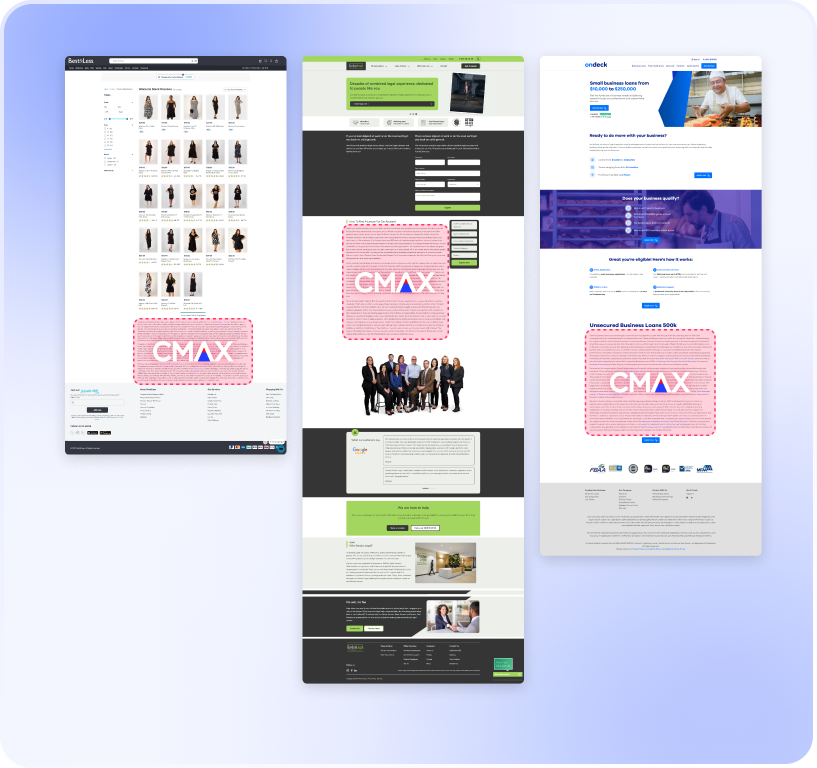
CMAX is trained on human-reviewed, client-approved content. Through Full Body SEO, CMAX targets that same long tail, creating and updating useful content for the thousands of specific ways customers search.
Approval workflows and human review stay in place where accuracy matters.
Why CMAX works differently
Most SEO programmes run by conventional agencies, using outdated methods, tell clients to expect results in six months. CMAX’s methods allow clients to start seeing clicks in 6 to 8 weeks.
Content injection, performance-led refreshes and Dynamic Internal Linking define how we run automated SEO. Broader long-tail coverage makes the earlier clicks possible, and we keep checking performance and updating content over time.
Frequently Asked Questions (FAQ)
Do I need WordPress for automated SEO?
No. Automated SEO works on any CMS, including Shopify, Magento, Webflow, headless or a custom platform, provided the platform can safely update page content and your team approves changes before they go live. CMAX works on any CMS and scopes the opportunity from a three-day review of Google Analytics and Search Console data.
Ask whether your site setup supports publishing rules, rollback, measurement and compliance review. The best SEO reporting tools, including SEO reporting tools for agencies, connect non-brand clicks, landing-page conversions, revenue and production costs instead of showing positions with no commercial context.
CMS compatibility is separate from where the provider sits, whether your shortlist includes an SEO agency Gold Coast, a Brisbane consultancy or a remote platform. A comparison of the best AI tools for SEO in 2026 should test Shopify, Magento, Webflow and custom-platform compatibility alongside publishing controls and rollback options.
How do I calculate the ROI of automated SEO?
Start with a baseline from Search Console and analytics: non-brand clicks, impressions, ranking positions, landing-page conversions, revenue or leads from search, and the manual cost of producing or refreshing pages. ROI improves when automated SEO cuts manual production time, expands coverage for searches your customers already make, and refreshes pages that get impressions but weak clicks or conversions.
How secure is my website data with an SEO platform?
Security depends on what the platform can access, what it stores, who approves changes and how quickly access can be revoked. Before you connect any platform, ask for the access model, retention rules, user permissions, audit trail and approval workflow.
Ask whether sensitive content changes can be reviewed before publishing.
Any AI integration used for gemini SEO needs clear permissions, limited data access, retention rules and a documented revocation process. Those same controls keep automated SEO accountable before sensitive changes reach a live website.
Automated SEO Scales Coverage Without Losing Control
Automated SEO works when it widens coverage for the many specific ways people search and keeps publishing out of the hands of unchecked templates. That is the gap CMAX focuses on: more useful content across search and AI visibility, with controls around approved language, page purpose, updates and performance.
Automated SEO also has to respect geographic intent, so demand for SEO agency Wollongong should be measured separately from Newcastle rather than folded into national totals. For local teams comparing SEO software in Australia, accurate local demand, permissions and measurement matter more than provider labels.
CMAX is the Agentic SEO Platform, built on an old SEO idea that still holds in AI results: you can’t rank for topics you don’t cover. As new searches appear and pages age, CMAX helps brands grow content surface area, keep pages fresh and keep related pages connected, so visibility grows on a broader base than a few obvious terms.
You can’t fix a gap you haven’t seen. A short diagnostic shows which customer searches your brand doesn’t yet answer.
If you’re curious as to how you’re performing on AI, book in a Missing Customer Map review with our Growth Team.
Author
Jeremy Tang
Founder and CEO of CMAX
Jeremy Tang is the Founder and CEO of CMAX. With over 2 decades of experience in business consulting and digital marketing, he has successfully driven seven startup businesses, six of which achieved $1 million in revenue from zero in less than 16 months, 5 of which grew to multi-million dollar a year ventures without any external funding. Jeremy's expertise lies in streamlining business processes through technology and leveraging digital (in particular SEO) for business growth. He resides in Australia, travels extensively, and draws inspiration from his global experiences.