Most businesses hiring an AI SEO consultant are really trying to answer one question: is this person using AI to do better SEO work, or just to produce more of it? The difference matters because volume without strategy, technical foundations or quality control tends to create pages that search engines struggle to retrieve and AI systems never cite. What you need to evaluate is method, not output speed. CMAX works with enterprise teams where that distinction shapes how programmes are scoped, measured and held accountable.
An AI SEO consultant adds strategy beyond automation.
Broader SEO and AI visibility scope
An AI SEO consultant connects technical SEO, content planning and AI-search visibility into a single operating programme. The goal is that search engines and answer systems can retrieve, interpret and cite the right pages for the right queries. That’s a different brief from using AI to accelerate drafting. A consultant who treats AI as a content shortcut typically skips the retrieval and indexing logic that determines whether a page ever surfaces in organic results or gets cited in an AI-generated answer. Scope, sequencing and site architecture have to come first.
An AI SEO consultant brings structured strategy to the intersection of AI and SEO, so that human oversight, technical foundations and content planning work together rather than leaving AI to operate without editorial control.
Human oversight stays essential
Human review is the publishability checkpoint, and it can’t be automated away. Someone has to verify that sources are credible, that brand and legal standards are met, that the page genuinely answers the query a real user typed, and that unsupported or high-risk claims are removed before anything goes live. AI can accelerate research and drafting. It doesn’t carry accountability for what gets published. Any AI SEO workflow still depends on that editorial layer: the decisions about what goes live, what gets revised and what gets pulled before it creates a compliance or quality problem.
The right scope covers search systems end to end.
Technical foundations affect retrieval
Technical SEO, entity signals and internal linking are not decorative. They determine whether search systems can read what a page covers, connect it to related pages on the same site, and assign the right URL to a specific query. Without that foundation, relevance fragments across competing pages and no single URL builds enough authority to rank or be cited consistently. An AI SEO consultant who skips this layer is optimising content that search systems may never retrieve correctly. An AI SEO consultant who understands how AI search engines retrieve and cite content can align technical SEO, entity signals and page structure to improve visibility across both traditional and AI-driven results.[1]
Long-tail coverage expands qualified reach
Head terms capture broad intent. Qualified demand sits further down the query chain, in specific product attributes, use cases, locations, industries and comparison modifiers that a homepage or category page cannot address. Long-tail targeting becomes commercially significant when a business carries large inventories, complex service lines or high query variation, because that is where buyers with specific intent search. For teams exploring AI SEO services Sydney, long-tail coverage and technical foundations determine whether scaled publishing creates qualified reach. Broad terms alone leave that demand uncovered.
Google guidance sets the baseline
Google’s helpful content and spam guidance define the floor for any scaled publishing programme.[2] Publishing at volume without originality, clear user purpose or quality control produces thin page sets, index bloat and degraded query matching. An effective AI SEO consultant treats these guidelines as operating constraints from the start, not as a compliance check applied after pages are already live. Scale built on that foundation holds; scale built around it tends to erode.
Honest Evaluation Depends on Proof and Measurement
Edited Workflows Usually Perform Better
Speed of production is not a performance signal. Edited, intent-led workflows consistently outperform unedited AI publishing because what determines whether a page works is whether it matches the query, covers the actual decision point, survives factual review and earns consistent indexing. A draft that clears those four gates in two days outperforms one that skips them in two hours.
Visibility Needs Multi-Metric Measurement
Rankings alone are an incomplete read. Useful measurement combines rankings, qualified organic traffic, indexed coverage, citation presence and downstream business outcomes. A page that ranks but is not indexed consistently, is not cited by answer systems, or fails to attract relevant visits is not generating meaningful search visibility. Each metric answers a different question; collapsing them into a single number obscures where the programme is actually working.
Evaluate an AI SEO Consultant
A credible way to evaluate an AI SEO consultant is to check how demand is identified, how page builds are sequenced and how quality is controlled before anything is published.
Ask for a documented workflow that connects keyword research, page briefs, drafting, human QA and performance reporting, and shows where decisions are made to revise, delay or stop publication. Buyers comparing SEO consulting Sydney providers should request documented workflows that show how research, QA and reporting connect.
An AI SEO consultant should be able to demonstrate how their approach differs from off-the-shelf AI SEO services, particularly in how quality control, intent matching and performance reporting are handled across a live programme.
Request page examples across different intents: product, service, comparison and location queries. If the structure, evidence and call flow do not change with the query, the consultant is applying a single template regardless of what the searcher actually needs.
Check how facts are validated, how brand rules are enforced and who approves source material and signs off final copy for regulated or high-risk claims.
Review which metrics are reported and how each is defined. Rankings, qualified traffic, citation presence and business outcomes should be reported separately so progress is not overstated.
Ask how technical SEO, internal linking and indexation are managed. Publishing more pages without crawl control, canonical logic and site structure can create page overlap and waste crawl budget.
Verify whether the consultant recommends pruning, consolidation or no-publish decisions. A provider optimising for site efficiency and coverage quality will make those calls; one optimising for output volume will not.
Provider choice becomes clearer with specific checks.
Method and references reveal capability
Choosing an AI SEO consultant becomes clearer when you apply specific checks to method and references. Ask a prospective provider to walk through how research, prioritisation, page creation, QA and reporting connect to a commercial outcome. A credible provider can do this without vague references to “our process” or a slide deck that stops at content production. The explanation should show where decisions are made, who makes them and how performance data feeds back into what gets built next.
When evaluating an AI SEO consultant, buyers sometimes compare individual consultants with a broader AI SEO agency to understand whether a team-based model offers more governance, specialist depth or scalable delivery for their programme.
References carry equal weight. A pilot or a short content sprint tells you little about whether the workflow holds under real operating conditions, with real approval chains, real brand standards and real traffic targets. For a business evaluating an SEO consultant Australia, method and references matter more than proximity. Whether the provider is based in a capital city or regional centre, the same criteria apply. Demand from buyers searching for an SEO consultant Sydney or SEO consultant Melbourne provider follows the same pattern: metro-market volume is high, but evaluation rigour should not change based on location. Ask for references from engagements that ran long enough to produce indexed coverage, measurable traffic shifts and a reporting cycle the client actually used.
Enterprise teams need governance fit
For enterprise buyers, methodology is only part of the evaluation. Approval workflows, brand controls and regulated review steps need to fit how your organisation actually releases content, not how the consultant prefers to work.
Many SEO programmes stall because governance, ownership and release processes were treated as implementation details rather than design requirements. Before signing, verify how the consultant collaborates with internal SEO, content and engineering teams, who holds sign-off authority at each stage, and how brand or compliance requirements are enforced before a page goes live. Whether evaluating an AI SEO company Melbourne teams have shortlisted or a national provider, the same governance and methodology checks apply. A provider that has worked inside enterprise release cycles will have clear answers. One that hasn’t will hedge.
An AI SEO consultant serving large organisations should be evaluated against the same governance, workflow and measurement standards applied when assessing an enterprise SEO consultant, including approval processes, brand controls and cross-team collaboration.
One enterprise proof point shows what scaled execution can look like.
Enterprise long-tail proof point
In one CMAX engagement, a B2B omnichannel hospitality retailer added 5,000 long-tail product pages and generated $1M+ per month in incremental SEO revenue within 8 months.
The mechanics behind that result are worth noting. Head-term rankings had plateaued, a common ceiling for enterprise sites that have already captured the obvious queries. Growth came from covering catalogue-scale long-tail demand: specific product attributes, use cases and purchase-intent modifiers that broad terms never reach. At 5,000 pages, that coverage compounds. Each page targets a distinct query cluster, and collectively they capture qualified demand that a smaller, manually produced content programme would take years to address.
An AI SEO consultant working with complex organisations may draw on frameworks developed within a B2B SEO agency context, where long-tail catalogue coverage, qualified demand and measurable revenue outcomes are central to the engagement model.
For an AI consultant Sydney enterprise teams can reference, proof points like the CMAX engagement show what scaled execution delivers. When head-term growth stalls, the remaining opportunity sits in the specificity of what you sell, the variations, configurations, comparisons and applications that high-intent buyers actually search for. Covering that demand at scale, with quality controls and indexation logic in place, is where an AI-enabled programme earns its commercial case.
An AI SEO consultant focused on scaled long-tail execution may offer a more tailored engagement model than an enterprise SEO company, making it worth clarifying how delivery, ownership and reporting responsibilities are structured before committing to either approach.
The 8-month timeline is also relevant for anyone building a board-level business case. Results at that scale are not instantaneous, but they are measurable, attributable and tied to revenue rather than ranking movement alone.
How to maintain E-E-A-T with AI-generated content?
E-E-A-T holds when AI handles research and drafting support, and accountable humans retain control of source selection, subject-matter review, authorship decisions and final editing. The risk to E-E-A-T comes from removing that human layer, not from using AI in the workflow. Someone with domain authority still needs to verify claims, apply brand and legal standards, and sign off before publication.
How to measure ROI for AI SEO programs?
Ranking gains are an input, not an outcome. ROI becomes credible when the programme ties specific page cohorts to tracked results: qualified sessions, assisted conversions, leads, revenue or reduced paid-search spend. Measuring at the cohort level lets you isolate which page types and query categories are driving commercial value.
Is AI SEO safe for regulated industries?
AI SEO can work in regulated industries when the workflow is built around approved source material, legal or compliance review, restricted claim handling and version control before any page goes live. The workflow design carries the risk, not the use of AI itself.
How to integrate AI SEO into an existing content strategy?
An AI SEO consultant typically starts integration by mapping current content gaps, then deciding which page types are suitable for AI-assisted production. Editorial standards, internal linking rules and measurement frameworks should stay consistent across existing and newly published pages so the programme extends your strategy rather than running parallel to it.
How does agentic SEO differ from programmatic SEO?
Programmatic SEO focuses on templated page creation at scale. Agentic SEO goes further: these systems can analyse inputs, decide actions, update content and manage parts of the workflow with less manual intervention between cycles.
What does SEO cover in an AI-augmented workflow?
Readers still asking what is SEO services will find that the core definition, improving how search systems retrieve and rank pages, underpins every AI-augmented workflow discussed above. The same principles of crawlability, relevance and authority apply whether content is produced manually or with AI assistance.
Strategy First, Then Scale It
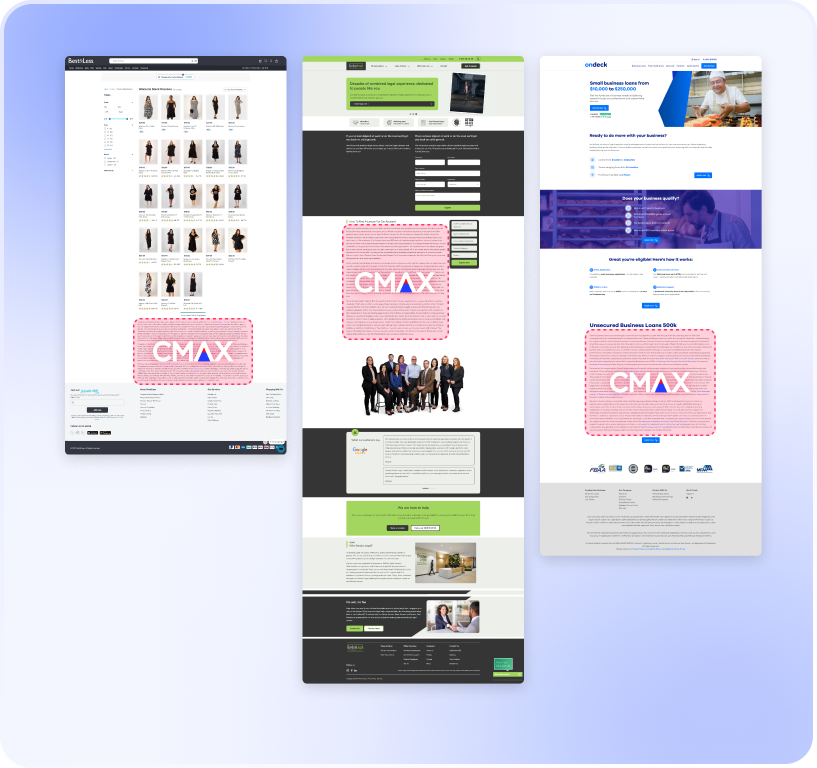
CMAX is a programmatic SEO platform built for one job: capturing the long-tail demand most businesses leave on the table.
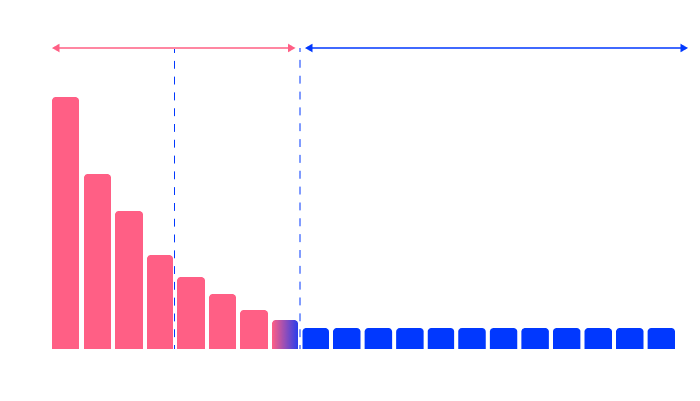
Over 90% of search and AI-driven queries sit in the long tail, thousands of specific, high-intent phrases your buyers actually type. CMAX deploys agentic AI to create, publish, and continuously update content across those queries with just two lines of code. Results typically begin surfacing within six weeks of deployment.
Where a traditional AI SEO consultant stops at recommendations, CMAX pairs strategic methodology with automated execution that can support scalable coverage when validated by your team.
References [1] – https://developers.google.com/search/docs/appearance/ranking-systems-guide [2] – https://developers.google.com/search/docs/fundamentals/creating-helpful-content
Author
Jeremy Tang
Founder and CEO of CMAX
Jeremy Tang is the Founder and CEO of CMAX. With over 2 decades of experience in business consulting and digital marketing, he has successfully driven seven startup businesses, six of which achieved $1 million in revenue from zero in less than 16 months, 5 of which grew to multi-million dollar a year ventures without any external funding. Jeremy's expertise lies in streamlining business processes through technology and leveraging digital (in particular SEO) for business growth. He resides in Australia, travels extensively, and draws inspiration from his global experiences.