Most of the debate around AI SEO optimisation treats it as an all-or-nothing decision, but the practical question is narrower: which tasks actually get better with AI, and which ones just get faster? The difference matters because speed without quality control creates problems at scale. The tasks where AI consistently pulls its weight tend to be repetitive, pattern-based, and checkable against structured data. Strategy, prioritisation, and editorial judgment still sit with your team. CMAX works within that split, applying AI to the repeatable workflows where it delivers measurable efficiency gains.
AI SEO Helps Most Where Pattern Recognition Outweighs Original Judgment
Keyword Clustering and Brief Creation
The way AI SEO optimisation delivers the most value is where pattern recognition outweighs original judgment. As a discipline, AI SEO saves the most time on tasks that are fundamentally about sorting: taking a large, messy keyword export and turning it into structured groups a team can act on. Keyword clustering, intent grouping, and first-pass content briefs all fit that profile.
Grasping how AI SEO optimisation works starts with recognising how AI and SEO operate together at the task level, particularly where pattern recognition across large keyword sets replaces manual sorting.
The mechanics are straightforward. A keyword set of 10,000 queries might contain hundreds of near-duplicate variants, mixed informational and commercial intent, and overlapping subtopics that would take a strategist days to untangle manually. AI can group those queries by pattern, separate “how to” intent from “best X for Y” intent, and produce a working brief outline that maps the subtopics a page needs to cover. The SEO optimisation output is not final, but it is a structured starting point rather than a blank page.
Strategy Still Needs Human Judgment
Pattern recognition has a ceiling. When several keyword groups look similar in volume but differ in conversion value, compliance sensitivity, or fit with the existing site architecture, no model can weigh those trade-offs without context a human holds.
Final prioritisation, claim approval, and decisions about which clusters to build first all require someone who knows the commercial goals, the legal constraints, and the technical debt on the site. A cluster targeting a high-volume query might carry regulatory risk in a regulated category, or it might compete with a page the team is already planning to rebuild. AI surfaces the options; the strategist makes the call.
The Strongest AI SEO Gains Come From Research, Audits, and Monitoring
Technical Triage With Crawl Validation
AI accelerates technical issue triage by grouping recurring problems across a site at a scale that manual review can’t match. Teams using AI SEO optimisation tools for this work can surface missing metadata, duplicate templates, orphaned sections, and thin indexable pages, categorising these patterns across thousands of URLs in the time it would take a team to work through a fraction of the crawl manually.
The output only becomes actionable when a team validates it against crawl data, indexation signals, and the actual site architecture. AI groups the symptoms; the SEO team diagnoses the cause and decides what to fix first. Practitioners applying AI SEO optimisation to technical triage and content gap analysis are finding that AI for SEO delivers the clearest efficiency gains when inputs are structured and outputs are validated against crawl data.
Content Gaps and Internal Linking
Content gap analysis and internal linking are strong AI use cases because both tasks follow clear, repeatable logic: compare a large page set against known entities, topic relationships, and query variants, then flag what’s missing or disconnected.
In practice, AI SEO optimisation means identifying query variants the site doesn’t cover, subtopics that should exist but don’t, and pages that should link to one another but currently sit in isolation. The rules are consistent enough for SEO AI tools to apply at scale; the editorial call on what to build or link first stays with the team.
SERP Monitoring and Refresh Prompts
AI can flag ranking movement, snippet changes, competitor page shifts, and pages that may need a refresh faster than any manual reporting cycle. On large sites, significant changes routinely fall through the gaps between reviews. AI monitoring closes that window, surfacing the signals a team needs to act on before a drop compounds.
Results Are Usually Clearer in Workflow Speed Than Rankings Alone
Workflow Speed Before and After
The clearest gain often shows up in SEO optimisation cost per deliverable rather than in rankings alone. A practical before-and-after comparison typically reveals the most measurable difference in three areas: keyword clustering, content briefing, and QA cycles. Tasks that once took a team of two several days can move to hours when the inputs are structured and the output criteria are defined.
For an SEO optimisation Australia team measuring before-and-after workflow speed, the most consistent gains appear in reduced time for clustering, briefing, and QA rather than in immediate ranking lifts when they apply AI SEO optimisation across their broader SEO marketing programmes.
What stays with humans is equally important to note. Editorial review, factual sign-off, and publication decisions remain human responsibilities. The real efficiency gain is the removal of manual repetition from the workflow, freeing senior team members to focus on the judgment calls that actually require their expertise. Any SEO optimisation Australia programme will see the same pattern: automation handles the repetitive assembly, while people retain the editorial authority.
Catalogue-Scale Long-Tail Proof Point
Scale is where the workflow speed advantage compounds into revenue impact. In one CMAX engagement, a B2B omnichannel hospitality retailer added 5,000 long-tail product pages and reached $1M+ per month in incremental SEO revenue within 8 months. A small manual SEO programme cannot build or maintain that kind of coverage efficiently, regardless of team quality.
The same dynamic applies to any enterprise site with a large catalogue or service inventory. Many query-specific entry points exist across those catalogues, but they go uncovered because the volume of pages required exceeds what a manual programme can produce and maintain. At catalogue scale, targeting the long-tail queries that represent a large share of search demand but rarely appear in a conventional keyword shortlist is precisely where AI SEO optimisation delivers its most measurable results.
Quality control determines whether AI SEO output stays useful.
Checks Needed Before Publishing
The failure mode in scaled AI content production is rarely a single bad page. It’s the same flaw replicated across hundreds of them. A factual error baked into a template, a duplicate structure that triggers thin-content signals, or a source that hasn’t been validated, these problems compound at scale in ways that a one-off editorial review won’t catch.
Maintaining the quality of AI SEO optimisation output requires the same editorial discipline regardless of which SEO AI tooling a team uses, because the primary failure mode is a single weakness replicated across hundreds of pages. Where SEO and AI intersect at this scale, structured QA is the only reliable safeguard.
Before any AI-generated page goes live, the QA process needs to cover five areas: fact checks against primary sources, source validation to confirm claims are attributable, template variation to prevent near-identical pages from cannibalising each other, duplicate-risk review across the existing index, and page-level QA to confirm each URL meets the brief. The order matters. Catching a structural issue at the template stage costs far less than fixing it across 500 published URLs.
Helpful, Original, People-First Content
Google’s guidance is direct: focus on helpful, reliable, people-first content.[1] AI involvement in production is not treated as a disqualifying factor when the resulting page is genuinely useful, original, and written for people rather than search engines.[2] Quality control is what keeps AI SEO optimisation aligned with Google’s guidance.
The practical implication is that the standard for AI-assisted pages is the same as for any other page. Does it answer a real query with specific, accurate information? Does it offer something a user couldn’t get from a generic summary? If the answer to either question is no, the page isn’t ready, regardless of how efficiently it was produced. Teams investing in SEO for AI should apply these same editorial standards to content designed to perform in AI-driven search contexts.
A task-readiness checklist makes AI SEO decisions more realistic.
AI SEO Task-Readiness Self-Assessment
Before committing to AI SEO optimisation across a workflow, a realistic self-assessment helps teams determine whether automation will actually improve results. Run each candidate task through three questions: Is the task repetitive? Are the inputs structured enough to process consistently? Can the output be checked against a measurable baseline?
If all three answers are yes, the task is a strong candidate for AI assistance. If any answer is no, manual handling is likely faster and safer.
This self-assessment helps teams determine whether the conditions that make AI SEO reliable, structured inputs, reviewable outputs, and a measurable baseline, are actually in place.
The task consumes meaningful team time without requiring original expert judgment. Clustering, tagging, templated brief creation, and first-pass issue grouping all qualify. Strategic prioritisation, brand-sensitive decisions, and compliance-adjacent calls do not.
The inputs follow a recognisable structure. Keyword exports, crawl files, page templates, feed data, and content inventories work well because they can be compared consistently across runs. Unstructured inputs produce inconsistent outputs.
The output can be reviewed against clear pass-fail criteria. Correct intent grouping, accurate page mapping, valid internal link targets, and issue categories that match crawl evidence are all checkable. If there is no clear pass-fail standard, QA becomes guesswork.
Errors can be caught before publication. QA, sampling, source checks, and editorial review should sit between AI output and the live site. Catching problems after indexation is significantly more costly than catching them in review.
Success can be measured. Set a baseline before automation starts, then track speed, coverage, error rate, and organic performance over time. Without a pre-automation benchmark, there is no way to know whether the workflow is improving or drifting.
The Workflow Has Enough Repetition and Scale to Justify Setup, Review, and Ongoing Refinement, Rather Than Being a One-Off Task That Is Faster to Handle Manually
Pilot One Repeatable Workflow
Before scaling AI across your SEO programme, pick one workflow that already runs on a cycle: keyword clustering, technical issue grouping, or first-pass brief creation. Automate that single workflow, record a clear baseline covering time spent, output volume, and error rate, then run it for a defined period before drawing conclusions.
The comparison worth making is quality and organic performance over time, not output volume alone. More automated output does not improve rankings by itself. What moves rankings is whether the output is accurate, well-structured, and genuinely useful to the people searching for it.
A one-off task rarely justifies the setup cost. The return on AI tooling comes from repetition: the same workflow running across hundreds of pages, keyword sets, or audit cycles, with each iteration producing reviewable, comparable output. If a task runs once a quarter and takes two hours manually, automation adds overhead without a meaningful return. If it runs weekly across thousands of inputs, the calculation shifts.
When AI SEO optimisation is applied to catalogue-scale projects, SEO content writing becomes one of the highest-volume repeatable workflows worth piloting first, provided editorial review and factual sign-off remain with human contributors.
Set your baseline before you start. Measure speed, coverage, and error rate at the outset so you have something concrete to compare against at the 30, 60, and 90-day marks. Whether you are an AI SEO Melbourne team or operating nationally, piloting one repeatable workflow first is the most reliable starting point. Organic performance takes longer to reflect workflow changes, but efficiency gains are visible almost immediately and give you an early signal on whether the setup is working.
How do you optimise for AI overviews?
Optimising for AI search overviews starts with the same fundamentals that drive conventional search performance: crawlable pages, direct answers, strong information gain, and content that demonstrates firsthand usefulness rather than generic summary copy.
AI overviews pull from pages that answer a query clearly and completely within the page itself. That means leading with the direct answer, structuring supporting detail so it can be parsed without ambiguity, and giving the content a reason to exist beyond restating what every other page already says. Thin rewrites and templated summaries are the first content types to be passed over.
Information gain is the practical test. A page earns inclusion when it adds something specific: a mechanism, a measured outcome, a qualified condition, or a perspective grounded in direct experience. Pages that aggregate publicly available points without adding context rarely surface in AI-generated responses.
Crawlability remains a prerequisite. If a page can’t be reliably accessed and indexed, it won’t be considered regardless of content quality. Clean URL structures, fast load times, and properly resolved internal links are baseline requirements, not differentiators.
The underlying principle is consistent with broader AI search optimisation practice: AI systems, whether generating overviews or ranking pages, favour content built for people who need a real answer, structured so the answer is easy to extract. As AI SEO optimisation practices evolve, teams are increasingly asking how to structure content so it surfaces effectively across AI search engines that synthesise answers rather than simply ranking blue links.
Two Lines of Code, Thousands of Long-Tail Keywords
Most SEO teams hit a ceiling: limited staff, manual workflows, and a backlog of content that never gets published.
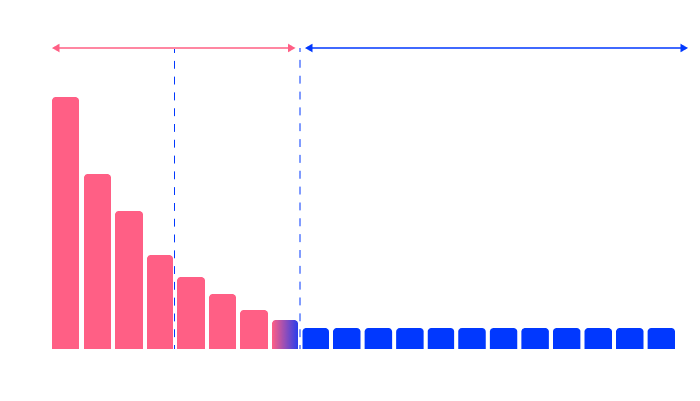
CMAX is an agentic SEO platform built to target the long tail at scale, the 90%+ of search and AI demand that conventional approaches leave on the table. Our AI agents deploy and continuously update content across the thousands of ways your customers actually search for what you sell. The platform integrates with two lines of code, so implementation doesn’t stall in a dev queue.
Results typically start showing within six weeks, not six months.
References [1] – https://developers.google.com/search/docs/fundamentals/creating-helpful-content [2] – https://developers.google.com/search/docs/essentials/spam-policies
Author
Jeremy Tang
Founder and CEO of CMAX
Jeremy Tang is the Founder and CEO of CMAX. With over 2 decades of experience in business consulting and digital marketing, he has successfully driven seven startup businesses, six of which achieved $1 million in revenue from zero in less than 16 months, 5 of which grew to multi-million dollar a year ventures without any external funding. Jeremy's expertise lies in streamlining business processes through technology and leveraging digital (in particular SEO) for business growth. He resides in Australia, travels extensively, and draws inspiration from his global experiences.