Searches for SEO agency Perth can look like demand for an AI SEO content generator, software that writes pages faster. That is only part of it. The bigger question is whether your site shows up for the specific searches customers make when they compare providers, prices, suburbs and proof.
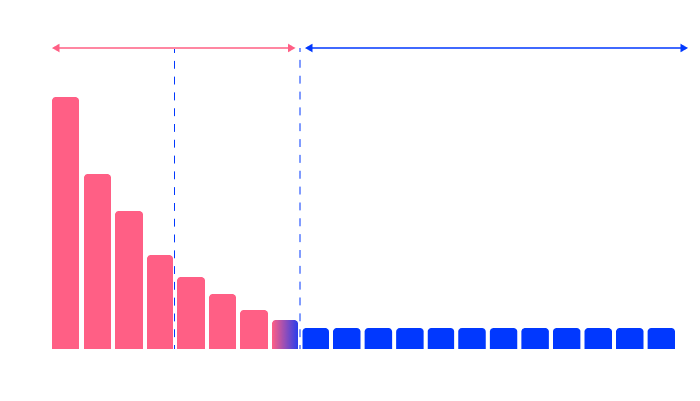
Most businesses chase broad terms and miss the long tail. Over 90% of search and AI demand is in the long tail. Let’s say you ring two plumbers about a leaking tap. One ute carries only the common parts. The other also carries the odd fittings, like the old mixer in a Cottesloe unit, and that is the plumber who fixes your tap today. In this context, long-tail coverage means stocking the ute for the odd jobs, the specific searches people actually make, so the customer who rings about their tap finds a part that fits.
Local results make digital marketing Perth look different from Sydney, even though both markets depend on Google indexing useful pages. Google has said the foundational SEO practices for standard search also apply to its AI features. A page still has to be indexed and genuinely useful to appear in AI Overviews or AI Mode.
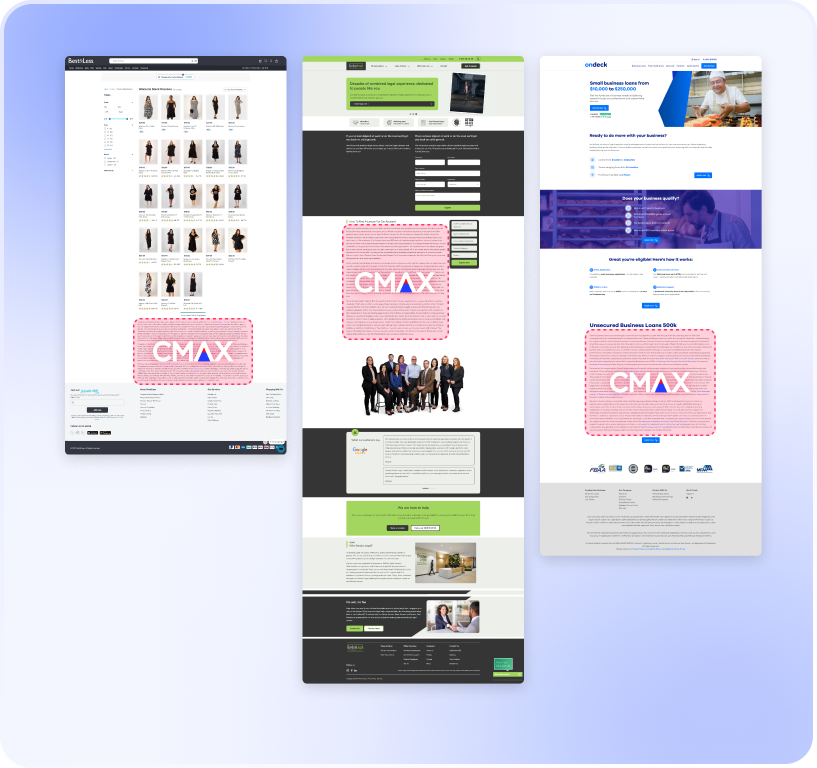
AI visibility is the same work as SEO, measured more widely. CMAX brings AI and SEO into one operating model built around approved claims, long-tail coverage and pages that Google can retrieve. CMAX is the platform behind a growing number of Perth business pages, and it targets the long tail at scale while keeping content tied to approved brand claims.
AI SEO in Perth starts with the searches people actually make.
Long-tail searches matter most.
AI SEO Perth means making your site useful and retrievable for the specific searches people type when they compare providers, prices, locations, risks and proof. Pages that explain SEO Perth prices sit well beside them when buyers want commercial detail. Build pages around service variations, suburb and WA location modifiers, buyer questions, industry language and comparisons. You can’t rank for something you don’t talk about.
Visibility now spans search and AI.
Google confirms that the same foundational SEO best practices apply to AI features. Pages must be in Google’s index and eligible for Google Search to appear as supporting links in AI Overviews or AI Mode. Reporting from SEO consultants Perth should connect indexed WA pages to enquiries, and Brisbane campaigns need their own Queensland location signals. In this broader context, SEO services Perth should be measured by whether the right pages get found, clicked and tied to enquiries across search and AI.
CMAX builds breadth, freshness, and internal links that AI can use.
Coverage comes from the long tail.
The long tail is where CMAX expands coverage for AI SEO Perth, using suburb-level language that differs from what comparable pages in Sydney need. Google’s AI features can use query fan-out: they run several smaller searches to build a single answer. CMAX supports local SEO Perth with WA suburb language, while Adelaide coverage needs South Australian locations inside Google’s retrieval paths.
Control matters in regulated industries.
If you’re assessing an enterprise SEO company Perth, start with this: CMAX is the Agentic SEO Platform, built for organisations that need scale without handing quality control to a generic template system. CMAX is trained on human-reviewed, client-approved content, and that is how we apply AI SEO optimisation. Ask any provider one question. Can they scale pages to the standard your legal and marketing teams accept on a core landing page?
Internal links and freshness shape context.
Dynamic Internal Linking and Full Body SEO connect service, suburb, product and industry pages, so Google reads the whole site as one structure. For AI SEO Perth, CMAX links service and suburb pages without reusing the Melbourne location references that businesses across Victoria need. Search Console tracks impressions, clicks, position and how often Google visits a page. That shows which Perth pages need updating before they go stale.
CMAX Replaces Template-First SEO with Continuous Coverage
Speed Depends on the Operating Model
A GEO agency Perth should set timelines from the site, the competition and the operating model. It should not default to a fixed six-month expectation. A review of any SEO company Perth should weigh WA competition, because Sydney providers face a different local market and timelines depend on the site. Template-first programmes publish a small batch, report on fixed keywords, then wait. The waiting is the only part that scales. CMAX keeps expanding and updating coverage as new searches appear. Creating pages is easy. Putting useful, approved, connected content on them at scale is the hard part.
Reporting Should Tie to Business Value
Prompt tracking tools ask ChatGPT the same questions repeatedly and record whether your brand appears. That does not prove a page was crawled, indexed, clicked or tied to enquiries. For AI SEO Perth, CMAX defines performance through indexed pages, impressions, clicks, query breadth, form fills, calls, assisted revenue and qualified leads. Adelaide campaigns need their own location signals for relevant local results.
Broader Visibility Still Needs Control
When you assess an aeo agency Perth for broader visibility, ask about long-tail content coverage, freshness and the connections that help Google understand the whole site. Google confirms that no special schema or optimisation requirements exist for AI Overviews or AI Mode beyond sound SEO fundamentals. CMAX grounds SEO marketing Perth in WA service and suburb signals, and Brisbane pages need Queensland details on top of the same fundamentals. Schema is the hidden labels in a page’s code that tell Google what things are. It won’t make thin or disconnected content useful.
Does Google Business Profile affect AI search results?
It can, particularly for local intent. A digital agency Perth may prioritise WA Business Profile service areas, while a Melbourne business must provide accurate Victorian locations and operating details. Google advises keeping your Business Profile current when preparing for AI features in Search. Check address, service areas, categories, hours, phone number, website link, services, photos and reviews. Inconsistent details make it harder for Google to confirm where you operate.
Can AI SEO guarantee a place in ChatGPT answers?
No provider can guarantee inclusion in ChatGPT, Gemini, Google AI Overviews or any AI response. The best SEO Perth providers will tell you that up front. Credible SEO agency pricing reflects page coverage, internal linking and reporting to enquiries. A credible standard is whether your pages are indexable, written for buyer questions, internally connected, fresh and visible across likely retrieval searches. Ask any provider how their prompt reporting connects to clicks, enquiries and revenue.
Does AI SEO need to be tailored to each location?
Usually, yes. At a local level, AI search optimisation Perth needs WA-specific terms, suburb language, local competitor context and accurate availability or appointment details. AI SEO Perth grounds the page in WA terms and accurate service areas, which differ from the Tasmanian state names needed around Hobart. A national page with the city name swapped rarely works.
AI SEO Perth Across Search and AI
AI SEO Perth works best as broader search visibility across Google and AI tools. If your site doesn’t cover the specific ways people search, Google and AI tools have less to retrieve.
CMAX focuses on content surface area, freshness and internal links, because visibility usually comes from the long tail rather than a small set of obvious terms. CMAX gives SEO consultants Perth WA scalable long-tail coverage, while Brisbane work needs Queensland state names and distinct local service details. That matches how search now works across Google and AI interfaces: detailed questions create detailed retrieval paths.
If you’re comparing providers of generative search optimisation Perth, ask whether coverage can keep expanding as new searches appear while staying aligned with approved claims and brand language. That is the operating model behind CMAX.
The quickest way to find the searches your site has no page for is to have someone map them. A review shows you those gaps before you spend anything on fixing them.
If you’re curious as to how you’re performing on AI, book in a Missing Customer Map review with our Growth Team.
Author
Jeremy Tang
Founder and CEO of CMAX
Jeremy Tang is the Founder and CEO of CMAX. With over 2 decades of experience in business consulting and digital marketing, he has successfully driven seven startup businesses, six of which achieved $1 million in revenue from zero in less than 16 months, 5 of which grew to multi-million dollar a year ventures without any external funding. Jeremy's expertise lies in streamlining business processes through technology and leveraging digital (in particular SEO) for business growth. He resides in Australia, travels extensively, and draws inspiration from his global experiences.