Most teams evaluating an AI SEO digital marketing agency run into the same problem: every provider talks about automation, but few explain what humans still control, how output quality is maintained, or which metrics actually connect to revenue. The difference between a useful agency and a risky one usually comes down to process, not technology. CMAX works within this space, combining AI-powered programmatic SEO with documented human oversight and outcome-tied reporting.
The right AI SEO agency proves useful outcomes, not just automation.
Human Review Over Speed
Speed of production is the wrong metric. A SEO digital marketing agency can generate hundreds of pages in a week and still deliver nothing that ranks, converts, or holds up to editorial scrutiny.
What separates a credible AI SEO digital marketing agency from a content mill is the review layer sitting between draft and publish. Each page should be mapped to a specific query and a defined buyer stage before it goes live. Source facts need to be checked. Unsupported claims need to be removed. Editorial standards need to be applied consistently, not selectively.
An AI SEO digital marketing agency that prioritises measurable outcomes will typically ground its work in a clear grasp of how AI and SEO interact to improve content relevance, crawlability, and long-tail visibility.
That process takes deliberate effort. Agencies that lead with output volume as a selling point are telling you something about where their priorities sit.
Measurement That Ties to Outcomes
Ranking snapshots are not a business result. A page can hold a top-five position and contribute nothing to revenue if it attracts the wrong audience or fails to move visitors toward a decision.
Credible agencies measure content work against organic traffic, conversions, revenue contribution, and visibility trends over time. Any outcome-focused SEO marketing digital provider ties reporting back to these indicators. Reporting should explain what changed, why it changed, and whether the trajectory is improving business outcomes. If a report cannot answer those three questions, it is tracking activity, not performance.
Ask any agency you are evaluating to show you a sample report. If it leads with keyword positions and stops there, that is the answer you need.
A reliable agency process combines automation with controlled human oversight.
What AI Handles, What Humans Approve
An AI SEO digital marketing agency that follows a reliable process combines automation with controlled human oversight. The division of labour matters more than the presence of AI. Strong agencies use AI digital marketing to accelerate research, keyword clustering, and briefing, the repetitive, high-volume tasks where speed creates real leverage. The decisions that carry risk stay with people: search strategy, factual accuracy, internal linking logic, and any claim that could affect brand trust or compliance. That boundary is what separates a controlled process from one that publishes at speed and fixes problems later. An AI SEO digital marketing agency should be able to articulate exactly how its workflow differs from a generalist AI SEO agency, particularly around human approval steps, intent mapping, and editorial governance before any page is published.
Helpful Content Still Wins
AI SEO accelerates research and briefing, but Google’s own guidance rewards pages that are genuinely helpful, accurate, and aligned to user needs.[1] The origin of the first draft, human or model, is secondary. What counts is whether the published page answers the query, supports the claim with accurate information, and serves the reader’s actual goal. A safe agency process treats AI as a drafting aid and editorial review as non-negotiable before anything goes live. The relationship between SEO and AI continues to mature, and an AI SEO digital marketing agency typically handles a wider range of content operations than a traditional enterprise SEO company, but the same standards for human review, factual accuracy, and brand governance should apply regardless of which model you choose.
Thin Pages vs Intent Pages
A thin page targets a broad topic. An intent-led page is built around the specific search, location, and buyer stage. The difference is visible in the result: a thin page leaves the reader searching again; an intent-led page gives them the exact answer, next step, or product path they came for. Agencies that build at scale without mapping each page to a real query produce volume without coverage, and traffic that doesn’t convert.
The safest agency relationships make scope, controls, and timelines explicit.
Evaluating an AI SEO digital marketing agency starts with comparing process quality and safeguards. If you are wondering are digital marketing agencies worth it, the answer depends on whether scope, controls, and timelines are made explicit before work begins.
Document Controls Before Publishing
Before any page goes live, both sides need a written record of who holds analytics access, who can publish to the CMS, which brand assets are approved for use, which competitors are off-limits for direct comparison, and what the rollback procedure looks like if a page needs to come down fast. An approval flow should name the specific sign-off required for factual claims, regulated language, and brand-sensitive copy. A change log ties every publish decision to a date, a reason, and a responsible party. Without these controls in place, a single misconfigured access permission or an unreviewed factual claim can create compliance exposure that takes far longer to fix than it took to cause.
Before signing a contract, confirm that the AI SEO digital marketing agency’s scope of AI SEO services is documented in writing, covering which tasks are automated, which require human sign-off, and how deliverables are updated after launch.
Expected Timing by Signal Type
Early signals can begin within 6 weeks. Meaningful movement in rankings, traffic, and conversions typically takes longer, because crawling, indexing, internal linking effects, and authority shifts operate on different timescales. An agency that quotes a single timeline for all outcomes is collapsing distinct signals into one number. Expect early data on crawl coverage and impressions first, then click-through trends, then conversion attribution as volume builds.
AI SEO Agency Selection Self-Assessment
Use this checklist to compare agencies on process quality, safeguards, reporting depth, and day-to-day operational fit before you shortlist them.
- The agency documents who can access analytics, the CMS, and approved brand assets.
- The agency defines which tasks AI handles and which decisions require human review.
- The agency explains how pages are mapped to search intent, buyer stage, and site structure.
- The agency states what is included, what is excluded, and what gets updated after launch.
- The agency provides an approval workflow for factual claims, regulated wording, and brand-sensitive language.
- The agency keeps change logs for content edits, publishing actions, and rollbacks.
- The agency reports on traffic, conversions, and business outcomes, not rankings alone.
- The agency gives realistic timelines for early signals and longer-term gains.
The strongest shortlist comes from campaign-level proof and honest fit criteria.
Campaign-level proof is what separates a credible AI SEO digital marketing agency from one that leads with promises.
What a Reporting Sample Should Show
Ask any agency you’re seriously considering for an anonymised reporting sample before you shortlist them. That sample should tell you which pages or page groups are included in the report, which metrics are deliberately excluded and why, how frequently the data refreshes, and what annotations explain major traffic shifts or ranking changes. Critically, it should show how performance is judged over time, not at a single snapshot. A report that only surfaces ranking positions without connecting them to traffic, conversions, or revenue tells you very little about whether the work is moving the business. As an AI agency Sydney businesses can evaluate firsthand, the reporting sample is often the clearest indicator of operational maturity.
Catalogue-Scale Proof Point
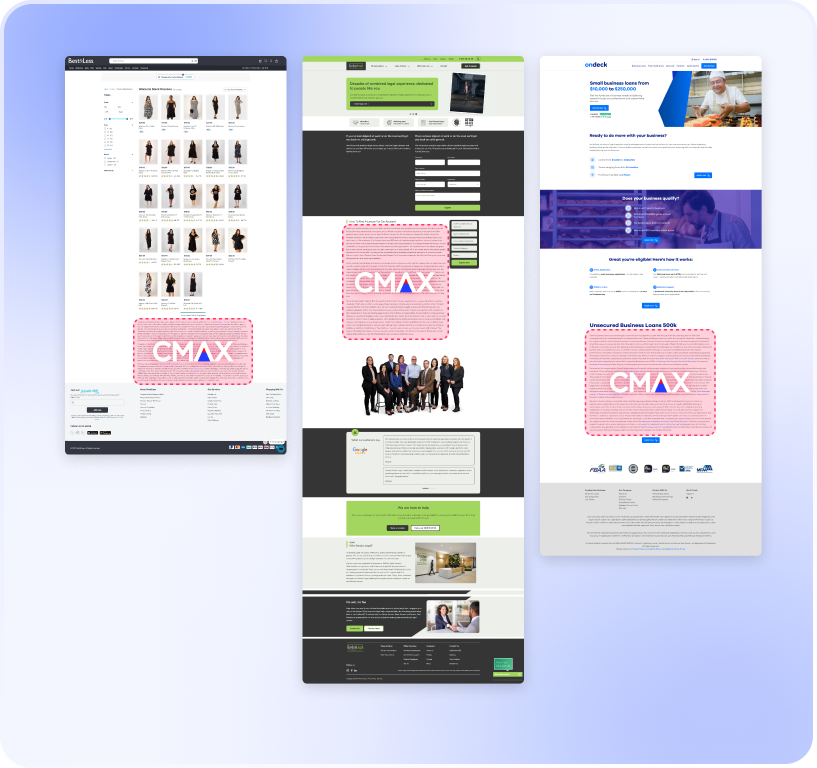
Scale claims need campaign-level evidence behind them. In one CMAX engagement, a B2B omnichannel hospitality retailer added 5,000 long-tail product pages and reached $1M+ per month in incremental SEO revenue within 8 months, with a 255% organic traffic increase over 12 months. For any AI marketing agency Sydney buyers are comparing, this kind of catalogue-scale result is the benchmark worth requesting. Enterprise sites with large catalogues face the same structural problem: keyword mining, page creation, and reporting have to operate together at scale or coverage gaps persist and revenue stays on the table.
An AI SEO digital marketing agency serving business clients should be able to share campaign-level evidence comparable to what a specialist B2B SEO agency would provide, including pipeline-linked metrics and account-level reporting rather than isolated ranking snapshots. Buyers exploring AI marketing Australia providers should apply the same evidence standard to local and international agencies alike.
Honest Fit Beats Big Promises
The agency most likely to deliver is the one that can clearly explain trade-offs, limits, ownership, update responsibilities, and dependencies before the contract is signed. Ranking guarantees and automation-as-strategy pitches are signals to walk away. For those evaluating a SEO marketing agency Sydney firms recommend, fit comes down to whether the agency can articulate what they will do, what they won’t do, and who owns what when search conditions change.
An AI SEO digital marketing agency working at scale may offer broader automation capabilities than a single enterprise SEO consultant, but the consultant model can provide deeper strategic ownership and clearer accountability for each decision made during a campaign. Any credible Australia SEO agency should be willing to outline these boundaries before a contract is signed.
Is AI SEO safe for regulated industries?
AI SEO can be used in regulated sectors. The safety depends entirely on the controls around it: approved source material, human review at the claim level, and compliance sign-off before any page goes live. When those controls are in place, the agency publishes only what has been verified and cleared.
How does AI SEO differ from SGE optimisation?
AI SEO improves content operations, long-tail coverage, and search visibility across a large volume of queries. SGE optimisation is narrower: it focuses specifically on how pages may be cited, summarised, or surfaced inside AI-generated search experiences. The two are related but address different parts of the search landscape.
When evaluating an AI SEO digital marketing agency, it is worth asking how the agency’s process accounts for visibility inside AI search engines, since AI-generated results surfaces are increasingly shaping how buyers discover and shortlist providers.
Can AI SEO maintain a consistent brand voice?
It can, when the agency trains drafts on approved brand assets and requires human editors to check tone, terminology, and claim wording before publication. Without that editorial layer, voice drift is a real production risk at scale.
What are the risks of AI hallucinations in SEO?
Hallucinations can introduce invented facts, unsupported comparisons, wrong pricing or feature details, or misrepresented product information. Source checking and approval controls before pages go live are the practical defence against this.
Do AI SEO agencies replace human strategists?
An AI SEO digital marketing agency does not replace human strategists; it augments their capacity. AI accelerates repetitive research and production tasks. Strategists make the decisions that shape outcomes: intent mapping, prioritisation, quality standards, governance, and measurement. Those calls require judgement that automation does not provide.
Most AI SEO Agencies Promise Scale, CMAX Proves It
CMAX is the agentic SEO platform built for teams that need measurable organic growth, not another vendor pitch.
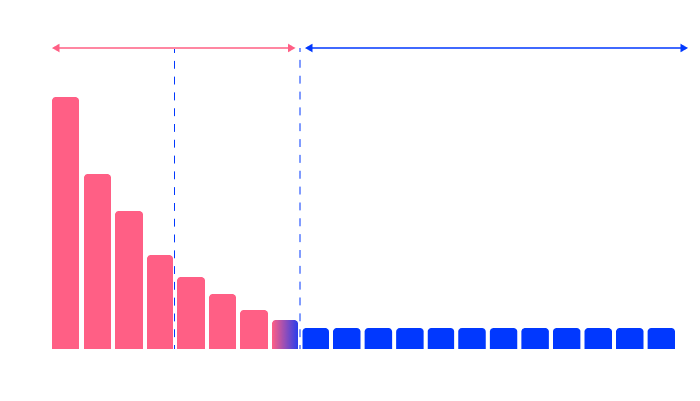
Our AI agents deploy and continuously update content targeting thousands of long-tail keywords, the 90%+ of search and AI demand most businesses never reach. Two lines of code connect CMAX to your site. From there, every page is tuned to match how your customers actually search for what you sell, across both traditional search and AI surfaces. Teams typically see initial results within six weeks, not quarters.
When you’re evaluating an AI SEO digital marketing agency, ask for the mechanism, the timeline, and the proof. We’re built to answer all three.
References [1] – https://developers.google.com/search/docs/fundamentals/creating-helpful-content
Author
Jeremy Tang
Founder and CEO of CMAX
Jeremy Tang is the Founder and CEO of CMAX. With over 2 decades of experience in business consulting and digital marketing, he has successfully driven seven startup businesses, six of which achieved $1 million in revenue from zero in less than 16 months, 5 of which grew to multi-million dollar a year ventures without any external funding. Jeremy's expertise lies in streamlining business processes through technology and leveraging digital (in particular SEO) for business growth. He resides in Australia, travels extensively, and draws inspiration from his global experiences.