Most Australian businesses using AI internally haven’t asked the harder question: is their public content actually being retrieved and cited by answer engines? AEO Australia is still emerging, and the gap between general AI adoption and measurable answer-engine visibility is wider than most teams realise. Before investing in optimisation, you need a way to tell real evidence from vendor assertions and general hype from query-level proof. CMAX works with enterprise teams building the content depth and measurement foundations that answer-led discovery requires.
AEO in Australia Is Emerging, Not Yet Mature
AI Use Versus AEO Visibility
The conversation around aeo Australia is growing, but adoption and visibility are separate questions. Australian businesses are adopting AI across marketing, customer service, and operations at a meaningful pace. That adoption, however, does not translate automatically into answer-engine visibility. To be clear, aeo Australia refers to answer engine optimisation, not the american eagle Australia retail brand. Whether a business uses AI internally is a separate question from whether its public content is being retrieved, summarised, or cited when a customer asks an answer engine a direct question.
The two behaviours measure different things. Internal AI use reflects how a team works. Answer-engine citation reflects whether an external platform selects your content as a credible source for a specific query. Conflating the two leads to overconfident readiness assessments and underinvested content foundations.
Australian businesses already investing in SEO services Melbourne have a practical head start on aeo Australia readiness, since the crawlability, authority, and structured content that underpin strong SEO are the same foundations answer engines draw on when selecting sources to cite.
What Signals Local AEO Expertise
A provider’s Australian postcode is not a reliable proxy for Australian AEO capability. The signals that carry more weight are prompt design quality, citation tracking methodology, familiarity with how Australian audiences phrase high-intent queries, and awareness of local compliance constraints that affect what claims can appear in a standalone cited sentence.
An Australian financial services business, for example, faces different content governance requirements than a US counterpart. A provider who can’t account for those constraints in their content and measurement approach is operating with an incomplete picture of the market, regardless of where their office is located. Assess expertise through evidence of method, not geography.
For Queensland-based organisations exploring aeo Australia, resources covering answer engine optimisation Brisbane can offer locally grounded context on how Australian search phrasing and compliance considerations shape query design.
AEO Extends SEO Into Answer-Led Journeys
How AEO Builds on SEO
AEO works on top of SEO. SEO handles the foundational work: getting pages crawled, indexed, and recognised as credible sources by search engines. AEO, which aeo stands for answer engine optimisation, addresses a separate, narrower question, whether those same pages can be pulled into a conversational answer when someone asks a specific question in an AI-powered engine. A clear grasp of aeo Australia begins with grasping aeo meaning, specifically how it differs from, and builds upon, the SEO foundations that help pages get crawled, indexed, and recognised as credible sources.
A page that ranks well for a category term may still be passed over by an answer engine if it doesn’t contain a direct, self-contained response to the follow-up question a buyer actually types. The two disciplines share the same technical and authority foundations, but aeo Australia adds a layer of question-specific content precision on top. The full aeo meaning covers this shift: structuring content so that AI-led engines can extract and cite it as a standalone answer.
From Head Terms to Questions
A broad term like “business insurance” is a starting point, not an answer. An answer engine responding to a buyer’s actual query needs content that addresses what cover applies to their situation, which exclusions are relevant, how claims are handled, and whether their industry requires different wording or limits.
Each of those follow-up questions represents a distinct retrievable entry point. A page built around the head term alone may not satisfy any of them directly. Reshaping that content into specific, answerable units, where each claim can stand alone and still be accurate, is what makes a page more retrievable across AI-led discovery. That shift in content structure is where aeo extends what SEO already does.
Australian Evidence Needs a Stricter Measurement Standard
Assumptions Versus Evidence
Australian businesses are right to pay attention to AI momentum, but momentum is not the same as measurable AEO performance. What aeo Australia actually requires is documented, attributable answer-engine visibility, not just general AI momentum. The stricter test is straightforward: can a defined page be surfaced through repeatable prompts, with a visible citation or clear source attribution? If the answer is unclear, the evidence base is not there yet.
Several assumptions circulate in this space, and each one deserves a direct correction. Many organisations already invest in SEO Australia as a foundation for organic visibility, but traditional search rankings and answer-engine citations are measured differently and should be evaluated on separate terms.
When Australian businesses evaluate aeo Australia readiness, it helps to understand how a generative engine selects, retrieves, and attributes source content, because that process is what determines whether a page is cited or ignored.
Assumption: AEO adoption is already widespread in Australia. Interest in AI is rising, but documented, attributable answer-engine visibility is still an emerging practice. The maturity of SEO in Australia is well established by comparison, yet answer-engine optimisation remains a far earlier-stage discipline. A mature, standardised channel it is not.
Assumption: AI usage data proves answer-engine visibility. Internal use of AI assistants and external citation by answer engines measure different behaviours. A team running ChatGPT for drafting copy is not the same signal as an answer engine retrieving and citing that team’s public content for a customer query. Treating them as equivalent overstates actual AEO progress.
Assumption: A local office proves local expertise. Australian market understanding shows up in query design, compliance handling, and evidence standards, not in a provider’s postcode. An offshore team that tests Australian search phrasing and applies local regulatory awareness can outperform a local one that does neither.
Assumption: Ranking for a head term means answer engines will cite the page. Answer engines often select pages that answer narrower follow-up questions directly, particularly when the wording holds up outside the original page context. A page that ranks for a broad category term may still be passed over if it does not address the specific question being asked. Established SEO services Australia providers already build content around specific long-tail queries, and that same discipline applies when optimising for answer-engine citation.
Assumption: Provider Screenshots Are Enough to Prove Results. Evidence: Fixed Prompt Sets, Dated Logs, Cited URLs, and Before-and-After Records Are More Credible Because Another Team Can Check Them.
How to Verify AEO Visibility
Screenshots of an AI answer are a starting point, not a standard. A single captured result tells you what one person saw at one moment, on one device, with one phrasing. It cannot be reproduced, audited, or tied to a specific content change.
A workable aeo optimisation method runs like this: maintain a fixed prompt set that mirrors the questions your target audience actually asks. Each time you run those prompts, record the full answer returned, note whether your brand name or URL appears as a cited source, and confirm the source page is crawlable and indexable. When you edit content, log the change and re-run the same prompts. Visibility shifts can then be tied to a known action rather than attributed to chance.
That log becomes the evidence. Another team member, a client, or a CFO can open it and follow the chain from prompt to answer to page to change.
Proof Point on Discoverability Scale
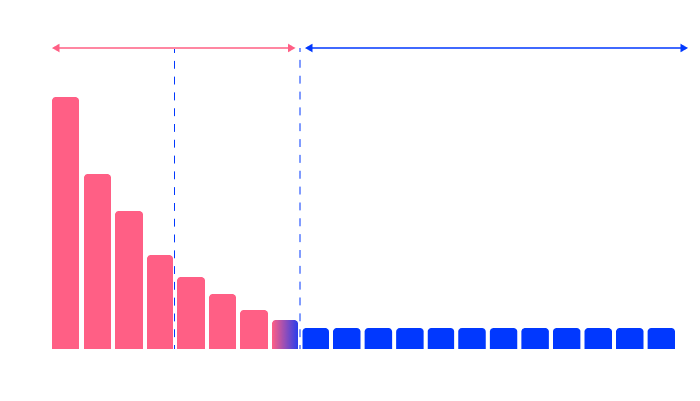
The discoverability logic behind AEO is the same logic that drives long-tail SEO at scale. In one CMAX engagement, a B2B omnichannel hospitality retailer added 5,000 long-tail product pages and reached $1M+ per month in incremental SEO revenue within 8 months.
Enterprise AEO works the same way: a site that covers specific product queries, use-case variations, and narrow follow-up questions creates more retrievable entry points across both search and AI answer engines. Breadth of specific coverage, not a single optimised page, is what increases the probability of citation.
Readiness Depends on Content, Data, and Governance
Content and Entity Consistency
Answer engines pull from what they can find and verify across multiple touchpoints. When a product name appears one way on a landing page, a different way in schema, and a third way in a feed or help article, the engine has no reliable version to cite. AEO readiness improves when product names, service definitions, entity details, policy wording, and supporting facts are consistent across landing pages, schema, feeds, help content, and profile data. Consistency removes ambiguity before it becomes a retrieval problem.
Governance for Regulated Sectors
Australian businesses in regulated sectors face a specific risk: answer engines can surface a single sentence or definition without the surrounding qualifiers that give it legal or compliance context. Before scaling content, teams should review approval workflows, evidence thresholds, and how standalone claim wording reads when lifted from the page. A sentence that is accurate in context can be misleading in isolation.
Five-Step AEO Readiness Checklist
For aeo Australia readiness, these five checks give teams a vendor-neutral starting point to assess whether their content, measurement, and governance foundations are ready for answer-led discovery.
- Entity naming is consistent across service pages, product pages, schema, feeds, and profile data, so answer engines do not encounter conflicting versions of the same entity.
- High-intent topics have dedicated pages that answer specific follow-up questions, including inclusions, exclusions, definitions, use cases, and location or industry variations.
- Key claims are written in citation-safe language, so a quoted sentence stays accurate and meaningful when separated from the rest of the page.
- A fixed prompt set and log are in place, recording prompts, returned answers, cited URLs, and content changes over time.
- Legal, compliance, and brand approvals are documented before large-scale page expansion begins, particularly where regulated claims or sensitive product wording are involved.
The Practical Takeaway Is to Test Claims Carefully
When AEO Is More Likely to Help
AEO can help when a site already has enough topical depth to answer narrow, high-intent follow-up questions across products, services, industries, or locations. A site that relies on a small number of broad category pages gives answer engines little to retrieve for the specific queries buyers actually ask.
The practical implication: before investing in AEO activity, audit whether your existing content covers the follow-up questions that sit beneath your main category terms. If those pages exist, are crawlable, and are written in citation-safe language, the site is in a stronger position to be retrieved and attributed. If they don’t exist, content coverage is the prior problem to solve.
Questions to Ask Providers
Weak AEO claims are easier to spot than they might appear. Ask any provider for the exact prompts used to demonstrate visibility, the baseline query set those prompts were drawn from, how attribution was judged (cited URL, brand mention, or inferred), which specific URLs appeared in the returned answers, and dated before-and-after records that connect a content change to a measurable visibility shift. A credible aeo Australia agency will be able to supply each of these without hesitation.
Businesses researching aeo Australia should apply the same evidence standards to any provider offering aeo services Australia, asking for fixed prompt sets, dated logs, and cited URLs rather than accepting screenshots alone.
If a provider can’t supply dated logs, cited URLs, and a repeatable prompt set, the claim can’t be independently checked. Screenshots without source attribution and prompt context don’t meet that bar. Providers who can answer these questions specifically are worth a closer conversation; those who can’t have told you something useful. When vetting any aeo agency Australia, prioritise firms that share their full methodology over those that lead with credentials alone.
When assessing aeo Australia options, evaluating an aeo agency on the strength of its methodology, prompt design, citation tracking, and documented before-and-after records, is a more reliable signal than office location or general AI credentials. Before committing budget, test any aeo Australia claim against dated, prompt-level evidence.
How do you measure AEO success?
Measure AEO success at the query level. Build a defined prompt set that reflects the specific questions your target audience asks, run those prompts consistently, and record whether your content appears as a cited or clearly attributable source. Comparing results against the same baseline prompts over time gives you a repeatable signal rather than a one-off screenshot.
How to track AI search citations?
Save the exact prompts used, capture the full answer returned, record whether your brand or page was cited, and log the surfaced source URL each time. That log lets you check whether a content change produced a visibility change, and it gives another team member something concrete to verify.
Does traditional SEO still matter with AEO?
Yes. Answer engines rely on crawlable, well-structured, authoritative pages when deciding which sources to retrieve, summarise, or cite. Strong technical SEO and credible on-page signals remain the foundation that AEO builds on.
How long does it take to see AEO results?
Timing depends on how often the source content is crawled, how much question-specific coverage already exists on the site, and whether indexable pages are already in place for the topics being tested. Citation changes can appear before broader traffic shifts do, which is why query-level logging matters from the start.
How does AEO impact organic traffic?
AEO can shift organic traffic in two directions. Where your content is selected as a source, long-tail informational visibility may strengthen. On queries that an answer engine resolves without sending the user to the site, click-through can fall. Tracking both patterns separately gives a clearer picture of net impact.
Long Tail at Scale, Built for Answer-Led Search
Most SEO platforms target the same high-volume keywords everyone else is chasing.
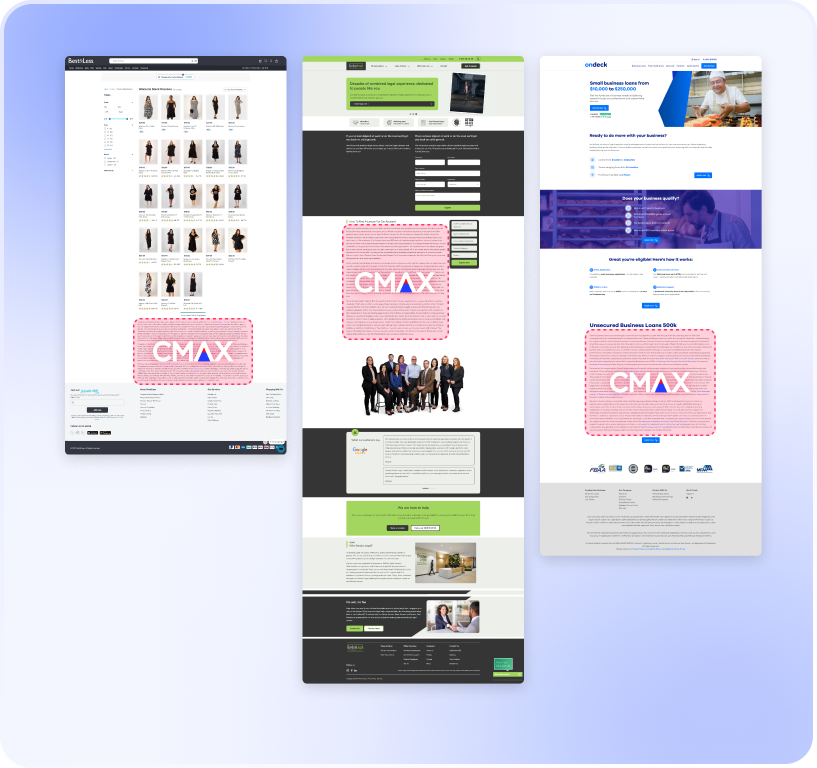
CMAX is an agentic SEO platform that deploys and continuously updates content across the thousands of specific, conversational queries your customers actually use. With two lines of code, our AI-powered agents can help capture long-tail demand that traditional approaches leave on the table. As answer engines reshape how Australian businesses get found, that breadth of coverage matters more than ever.
We built CMAX for teams that need measurable organic growth without scaling headcount to match.
Author
Jeremy Tang
Founder and CEO of CMAX
Jeremy Tang is the Founder and CEO of CMAX. With over 2 decades of experience in business consulting and digital marketing, he has successfully driven seven startup businesses, six of which achieved $1 million in revenue from zero in less than 16 months, 5 of which grew to multi-million dollar a year ventures without any external funding. Jeremy's expertise lies in streamlining business processes through technology and leveraging digital (in particular SEO) for business growth. He resides in Australia, travels extensively, and draws inspiration from his global experiences.