SEO search engine optimisation breaks into stages, and most diagnostic problems come from treating those stages as one. A page that isn’t ranking might not be indexed. A page that isn’t indexed might not be crawlable. Each stage has its own evidence and its own fix, so collapsing them into a single “SEO issue” makes the real constraint harder to find. When you can check crawl access, index status, impressions and clicks separately, the next priority becomes obvious. CMAX applies this stage-by-stage logic at scale, pairing programmatic page creation with the technical proof that each URL earns its place in the index.
SEO is a measurable loop.
Visibility needs four stages
Why is SEO so important? Because search visibility depends on four sequential stages: discovery, interpretation, indexation, and selection for relevant queries. A page that fails at any one of them will not rank, and a ranking report alone cannot tell you where the breakdown occurred. If traffic drops, the cause could sit in discovery (the page is not being found), exclusion (the page is being crawled but not stored), a weak intent match (the page is indexed but not surfacing for the right queries), or poor click performance (the page appears in results but does not get chosen). Each failure mode has a different fix, so treating them as a single “SEO problem” wastes diagnostic time.
Grasping SEO search engine optimisation meaning starts with separating each stage and diagnosing it on its own terms. Exploring search engine optimisation as the end-to-end discipline connecting discovery, indexation, ranking and measurement makes this measurable loop clearer.
Check crawl, index and rank separately
Crawling, indexing and ranking are distinct stages with distinct failure points. Crawling confirms a search engine can access the URL. Indexation confirms the page has been stored and is eligible to appear in results. Ranking confirms the page is being selected for relevant queries. Diagnosis becomes more reliable when each stage is checked against its own evidence: crawl access logs or URL Inspection for discovery, index status for storage, query impressions and average position in Search Console for visibility, and click-through rate for selection. Collapsing all three into one investigation makes it harder to isolate the constraint and act on it with precision.
Technical and content signals determine indexability.
Why crawled pages stay excluded
Crawling and indexing are separate decisions. A search engine can fetch a URL and still choose not to store it, and that gap is where many sites quietly lose ground. A common SEO search engine optimisation failure point is the set of technical conditions that trigger exclusion before content quality even enters the equation.
Several technical conditions trigger exclusion. Duplicate versions of the same page, whether caused by URL parameters, trailing slashes or protocol variants, give search engines competing copies with no clear winner. Canonical conflicts compound this: search engine optimisation Google documentation confirms that conflicting directives make indexation harder to predict, as a page that signals one canonical in the HTML but a different one in the sitemap sends contradictory instructions.[1] Rendering problems, where JavaScript-dependent content never fully loads during processing, mean the page a search engine sees may be largely empty. Soft 404 patterns, pages that return a 200 status code but display thin or error-like content, flag the URL as unreliable. Any of these conditions can push a crawled page out of the index or prevent it from entering in the first place.
Original utility supports indexation
Technical accessibility is a prerequisite, but it does not guarantee indexation on its own. Search engines weigh whether each URL offers a distinct reason to exist in the index. The technical and content decisions at the heart of SEO search engine optimisation are the same foundations that underpin web search optimisation, since both depend on pages being crawlable, indexable and clearly differentiated before ranking can follow.
Templates that generate large runs of near-identical pages rarely clear that bar. If two pages differ only in a product name or a swapped phrase, there is no clear reason to serve both. Pages are more likely to be indexed when the template structure is clean and accessible, and the content on each URL covers a query intent that no other page on the site already addresses. Distinct intent coverage, at the individual URL level, is what gives search engines a clear reason to keep and serve each page separately.
Ranking Reflects Relevance, Authority and Page Usefulness
What Ranking Systems Weigh
Ranking systems evaluate four things simultaneously: how closely a page matches the query, how specifically it answers the intent behind that query, how strongly it is supported by internal links and external references, and whether the page stays usable once a searcher lands on it. For any search engine optimisation Australia market participant, ranking systems typically weigh relevance, authority and page usefulness as core factors, though their relative weight can vary by region and context.
Each factor is independent. A page can match a query at the keyword level but fail on intent specificity, answering a broad category question when the searcher wanted a precise product comparison. A page can answer the intent well but carry almost no internal linking, leaving ranking systems with little signal about where it sits in the site’s authority structure. Usability matters too: slow load times, intrusive interstitials or broken layouts can suppress a page that would otherwise rank.
As SEO search engine optimisation evolves, practitioners are increasingly watching how AI search surfaces results differently from traditional ranked lists, which adds a new dimension to how relevance and authority signals are interpreted.
Relevance, authority and usability are not sequential. Ranking systems weigh them together, which means a weakness in any one dimension can hold back a page that performs well in the others.
When SEO search engine optimisation strategies are built around ranking systems, AI ranking helps clarify how machine-learning signals may weight query match, authority and page usefulness alongside conventional factors.
Catalogue-Scale Long-Tail Proof Point
In one CMAX engagement, a B2B omnichannel hospitality retailer added 5,000 long-tail product pages and reached $1M+/month in incremental SEO revenue within 8 months.
The mechanism is straightforward. Broad category pages compete for high-volume queries where ranking is slow and contested. Distinct, intent-specific pages match the specific demand patterns that category pages miss entirely, a searcher looking for a particular product configuration, use case or specification. At catalogue scale, those individual matches accumulate into material revenue. Each page earns its place by covering a query pattern no other page on the site already owns.
Stage-by-stage evidence changes the next priority.
End-to-end SEO proof checklist
Before adding more pages, an end-to-end SEO search engine optimisation system should prove that important URLs can be found, processed, indexed, shown for the right queries and turned into clicks. Any credible search engine optimisation service must confirm each of these stages in sequence. Each missing proof point shifts what needs fixing first.
Work through the chain in order.
Discovery. Important URLs should be reachable through internal links or submitted via a maintained XML sitemap. Pages that sit outside both are effectively invisible to crawlers regardless of their quality.
Crawl signals. Crawled URLs should return the intended status code and send consistent directives. Conflicting canonical tags, noindex flags or duplicate signals on the same URL make indexation decisions unpredictable, and the problem rarely surfaces in a ranking report.
Index purpose. Each indexed page should cover a distinct query intent. A page that repeats another URL with minor wording changes gives search engines no clear reason to keep both. Well-scoped SEO search engine optimisation services deliver distinct purpose at the URL level, which is what gives site architecture its SEO value.
Visibility before traffic. Search Console impressions and average position show whether a page is entering relevant result sets. That data should be checked before traffic is expected, because low impressions and low clicks point to different problems than high impressions and low clicks.
Running this checklist in sequence means the next action is always grounded in evidence rather than assumption. Fix the earliest broken stage first; the downstream metrics will follow.
Titles, Snippets and On-Page Relevance Are Reviewed When Impressions Appear but Clicks Remain Weak, Because That Pattern Usually Means the Page Is Being Seen but Not Chosen
Evidence That Isolates Bottlenecks
Impressions without clicks point to a specific failure: the page is entering result sets but losing the selection decision. That narrows the diagnosis considerably. The title tag and meta description are what a searcher actually evaluates before clicking, so when impression volume is healthy and click-through is low, those elements are the first place to look. Weak click-through on a page that ranks is a direct search engine optimisation cost, because every ignored impression represents budget spent on content that fails to convert visibility into visits. Does the title reflect the specific query intent, or does it describe the page in general terms? Does the snippet give the searcher a reason to choose this result over the ones above and below it?
URL Inspection, index status reports and before-and-after Search Console comparisons each answer a different question. URL Inspection confirms whether a page is indexed and how Googlebot last rendered it. Index status shows whether a URL is present in the index at all. Search Console impression and position data, tracked across a defined period, shows whether a page is gaining or losing ground in relevant result sets before any traffic expectation is reasonable.
Read together, those three data sources can place the constraint at discovery, indexation, visibility or click-through. That placement changes the next action. A page with no impressions needs a crawl or indexation fix. A page with strong impressions and low clicks needs title, snippet or on-page relevance work. Any search engine optimisation business with commercial priorities tied to organic traffic should treat this diagnostic step as non-negotiable. Defaulting to more content or another round of technical changes without checking that evidence first adds cost without a clear target.
Scaled SEO Works When Page Purpose Stays Distinct
Automation Needs Real Page Differences
Templates scale production. They do not, on their own, scale relevance. Scaled SEO search engine optimisation works when page purpose stays distinct, because automation earns its place only when each template encodes a genuinely distinct entity, location, or product, and search demand operates at that level of specificity. A page targeting “commercial espresso machines for hotel breakfast service” and a page targeting “commercial espresso machines for office kitchens” serve different queries, different buyers, and different intent patterns. A template that swaps one noun for another without changing the substance of the page gives search engines no clear reason to index and rank each URL separately. Repeated thin copy across hundreds of URLs tends to produce a catalogue that looks large but performs narrowly.
Practitioners scaling effective search engine optimisation strategies are increasingly examining artificial intelligence SEO to see how automation can encode meaningful page differences rather than multiply thin, near-duplicate content.
Volume Should Follow Real Constraints
Daily page counts are an output metric, not a quality signal. Publishing pace should be set by three real constraints: crawl capacity, quality control throughput, and mapped search demand. If a site’s crawl budget cannot absorb a surge of new URLs, those pages may sit undiscovered for weeks. If quality control cannot verify that each page covers a distinct intent, duplication accumulates faster than it can be corrected. If new URLs are not tied to actual query patterns with measurable demand, the pages may be indexable but earn no impressions. Volume that outruns these constraints does not compound; it creates maintenance debt. The most reliable search engine optimisation techniques tie publishing pace to what the pipeline can verify, not to what the template engine can generate.
Frequently Asked Questions (FAQ)
Why isn’t my site indexed?
Pages stay out of the index for three main reasons: search engines can’t find them through internal links or a maintained sitemap, the URLs send conflicting signals such as a canonical pointing elsewhere or a noindex tag, or the pages don’t offer enough distinct utility to justify a separate entry in the index. Duplicate content, soft 404 patterns and rendering failures all contribute to the same outcome. Fix discovery and technical signals first, then assess whether each page has a clear, standalone purpose.
A common starting point for anyone new to SEO search engine optimisation is to look up the SEO definition so that the relationship between crawling, indexing and ranking is clear before diving into diagnosis or strategy.
If SEO is done correctly, how long does it take to rank?
Even when SEO search engine optimisation is done well, ranking still takes time because pages must be discovered, crawled, indexed and then measured against competing results before any ranking movement shows. In practice, crawl and impression data in Search Console appear before traffic does, so those signals are the earliest reliable indicators that the process is working. Timelines vary by site authority, crawl frequency and competition, but watching for impressions and average position shifts is the right way to track progress before expecting clicks.
How to rank for long-tail keywords?
Each page needs a clearly defined query pattern, content that answers the specific intent behind that pattern, and internal links that signal where the page fits in the site architecture. Broad category pages rarely capture specific demand; distinct pages built around individual query patterns do.
Does programmatic SEO still work?
Programmatic SEO works when automation produces genuinely distinct pages at scale. It underperforms when the main output is near-duplicate URLs with minimal added usefulness, because search engines have little reason to index or rank pages that don’t differentiate themselves.
Readers who arrive at SEO search engine optimisation content after searching to define search engine optimisation are using the American spelling variant, but the underlying concept, earning visibility through discoverable, indexable and relevant pages, is identical regardless of spelling.
How many pages should I create programmatically per day?
There’s no universal daily quota. Publishing pace should be set by crawl capacity, quality control throughput and mapped search demand. New URLs that can’t be crawled, quality-checked or tied to real query patterns create duplication and maintenance problems that compound over time.
SEO Has Stages, CMAX Covers Thousands of Them at Once
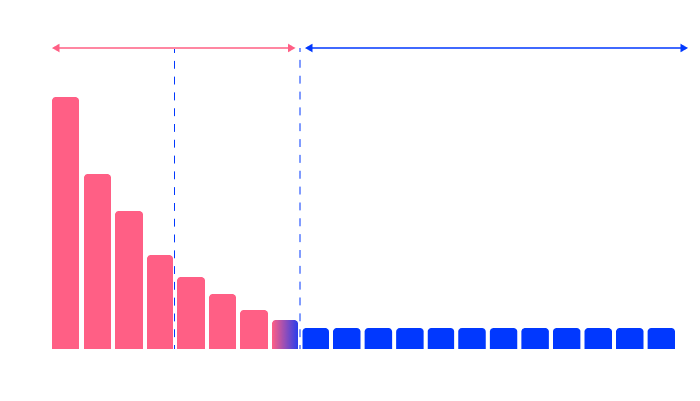
Most SEO effort concentrates on a handful of high-volume keywords while long-tail demand goes unaddressed.
CMAX is an agentic SEO platform built to target the long-tail searches where the majority of commercial intent actually lives. It deploys with two lines of code, generates pages programmatically across thousands of keyword variations, and continuously updates that content as search behaviour shifts. Results have been observed within six weeks of deployment.
If your SEO strategy stalls at the head-term stage, CMAX picks up where conventional approaches stop.
References [1] – https://developers.google.com/search/docs/fundamentals/seo-starter-guide
Author
Jeremy Tang
Founder and CEO of CMAX
Jeremy Tang is the Founder and CEO of CMAX. With over 2 decades of experience in business consulting and digital marketing, he has successfully driven seven startup businesses, six of which achieved $1 million in revenue from zero in less than 16 months, 5 of which grew to multi-million dollar a year ventures without any external funding. Jeremy's expertise lies in streamlining business processes through technology and leveraging digital (in particular SEO) for business growth. He resides in Australia, travels extensively, and draws inspiration from his global experiences.