If you’re asking what is SEO optimisation for a single page, the answer is short: SEO page optimisation improves an existing page so it earns the positions it should already be winning. The SEO optimisation definition covers the wider idea.
Most marketers think a stronger page means a longer page. It rarely does. Good content optimisation makes a page more relevant and its next step clearer. Nobody has ever bought a sofa because the page was long.
The real question is what the buyer needs next: price, proof or a clear next step. A good website optimisation service answers those questions on the page.
Get that right and the page does two jobs. It ranks better, and it turns visits into enquiries worth having.
We work on exactly this layer of a site. Our agents use approved brand content and performance data to keep pages matched to what people search for.
SEO Page Optimisation Improves Pages You Already Have
Better Relevance and Structure
SEO page optimisation works on a URL you already have, so it performs better for the searches it should already win. Start with what people and Google read first: the title tag, meta description, H1, headings, intro, body copy, FAQs, internal links and calls to action. Google advises content that is easy to read, well organised and broken into sections with helpful headings.
Check whether the page answers the buyer’s next question: price, availability, eligibility, comparison, proof or next step. A useful on page SEO analysis tests whether the copy answers those questions. An on page SEO score checker can flag missing titles and thin headings, though a person still has to judge whether the page is useful. A stronger page is a more useful page.
More Visibility, Better Next Steps
A page that matches a query clearly improves the quality of the visit and the enquiry. The SEO search engine optimisation definition is wordy, but it still describes two jobs: helping search engines read your content, and helping users decide whether to click through. For ecommerce categories, meta tags SEO should reflect buying criteria and delivery information, and repeat the page heading less. The goal is useful visibility from people closer to buying. SEO off page optimisation, such as links from other sites, is separate work. SEO page optimisation covers what you control on the page.
The Strongest Gains Come From Coverage, Freshness, and Connection
Coverage Wins in the Long Tail
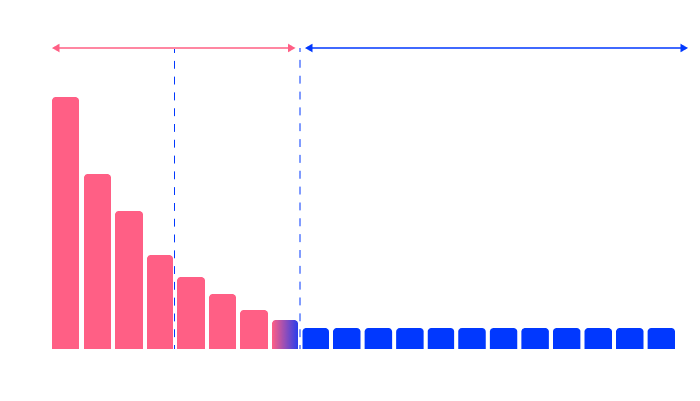
Over 90% of search and AI demand is in the long tail. An on page SEO process has to cover the specific, detailed queries people type, and keyword research tools help you find them.
Picture a tailor who stocks one suit size, medium. Tall customers and short customers walk in, try the jacket and leave. Your “modular sofas” page is that single size, and searches about pet-friendly fabric or narrow stairwell delivery are the customers it doesn’t fit. In this context, SEO page optimisation means adding a fitted size for each specific search, so every customer who walks in finds a page that suits them.
AI engines retrieve from Google, running smaller searches behind each answer. Effective SEO search engine optimisation gives them relevant pages to retrieve. Gaps in your content give Google and AI less to work with. Visibility comes down to content surface area: how many of the ways customers search you have a useful answer for.
Freshness and Internal Links Matter
Content is perishable. Alongside technical SEO, refreshing pricing language and product details keeps a page accurate after its publication date.
Search Console shows pages with impressions but few clicks. That is a reliable signal that the copy doesn’t match what the query expects. For SEO page optimisation, Dynamic Internal Linking connects priority URLs with relevant supporting pages, which navigation menus alone don’t do.
CMAX Keeps Page Optimisation Moving After the First Update
Human-Reviewed, Site-Connected Optimisation
CMAX is trained on human-reviewed, client-approved content. That gives SEO content optimisation a controlled base for widening coverage without hurting brand accuracy. We use that approved material for SEO optimisation australia work and to optimise content for AI search, and we keep the expanded coverage tightly controlled.
Continuous Refreshes and Testing
Most SEO programmes run by conventional agencies, using outdated methods, tell clients to expect results in six months. CMAX’s methods allow clients to start seeing clicks in 6 to 8 weeks. Timing depends on the site, the competition and the work done.
Our agents apply AI website optimisation through ongoing content refreshes, page testing and long-tail coverage based on real performance data.
How long do on-page SEO changes take to show results?
Timelines depend on the site, its competition and how the work is done. Google says some improvements take effect in days and others take several months. In AI SEO optimisation work, clearer headings, updated copy, stronger internal links and better-matched metadata are among the changes that can take effect fastest.
Those on page SEO steps are the quickest to ship. Consolidations and URL moves take longer. Track impressions, clicks, query-group positions and qualified next steps instead of one headline keyword.
Can changing a page URL hurt its search position?
URL changes can cause temporary volatility while Google recrawls and processes redirects. Improving headings, metadata and internal links without changing the URL is a practical form of SEO page optimisation. Google confirms 301 and other permanent redirects don’t cause a loss in PageRank. Change a URL only for a clear reason, such as merging duplicate pages. Redirect cleanly, update internal links, check canonical tags and keep the redirect in place.
Does duplicate content affect my whole site or just those pages?
Duplicate content typically affects only the URLs involved. Google doesn’t penalise duplication unless it is deceptive, and it groups duplicates to consolidate signals to one URL. The real risk is Google surfacing the wrong version, splitting signals or wasting crawl attention. This is common with filters, location pages and manufacturer descriptions.
In technical SEO work, SEO engine optimisation is a muddled label, but the fix still matters: choose a main version, make it genuinely useful, and apply redirects or canonicalisation where appropriate. Reliable SEO website optimisation services consolidate duplicate URLs through canonicalisation or redirects first. After that, SEO page optimisation makes the chosen version more useful and relevant.
SEO Page Optimisation Needs Fresh Content More Than Rewrites
SEO page optimisation works best as part of wider coverage, and a one-off rewrite doesn’t give you that. A stronger page lifts relevance and next-step clarity, but one page ranks only for the questions it answers.
That is where we come in. CMAX is the Agentic SEO Platform built around content surface area, ongoing refreshes and connected internal links, so important pages stay aligned with the searches around them. We support SEO optimisation australia with Australian spelling, and we adapt US content to American spelling across connected pages.
The practical goal of SEO search optimisation is simple: search performance comes from keeping useful content broad, current and connected. Adding more pages alone doesn’t do that.
A review shows which searches your existing pages already answer and which ones they miss. It is the quickest way to see where your gaps are before you decide anything.
If you’re curious as to how you’re performing on AI, book in a Missing Customer Map review with our Growth Team.
Author
Jeremy Tang
Founder and CEO of CMAX
Jeremy Tang is the Founder and CEO of CMAX. With over 2 decades of experience in business consulting and digital marketing, he has successfully driven seven startup businesses, six of which achieved $1 million in revenue from zero in less than 16 months, 5 of which grew to multi-million dollar a year ventures without any external funding. Jeremy's expertise lies in streamlining business processes through technology and leveraging digital (in particular SEO) for business growth. He resides in Australia, travels extensively, and draws inspiration from his global experiences.