Most proposals for SEO agency link building lead with volume promises and domain scores, but say very little about how placements are actually sourced, approved or reported. That gap makes it harder to compare services on the things that matter: relevance, editorial context, disclosure practices and commercial proof. The evaluation framework below is built around those criteria, so you can hold any agency to the same standard before signing. For teams already running enterprise SEO through platforms like CMAX, the same transparency principles apply when vetting link building partners.
A credible SEO agency link building service shows clear methods before launch.
Goals, targets and timelines
Any SEO link building agency worth considering will name the exact pages it plans to support and explain why those pages matter commercially. That means specifying whether a page drives lead capture, category visibility or product discovery, not just listing URLs. It also means setting honest expectations across every stage: outreach, editorial review, publication, crawling and indexation each take time, and a proposal that implies immediate ranking impact after a link goes live is skipping over the mechanics that actually govern when and whether a signal registers.
If an agency can’t tell you which pages it’s targeting or why those pages carry commercial weight, that gap will show up later in reporting.
Sourcing and reporting rules
Before any work begins, the agency should be able to answer four questions plainly: Where do prospect sites come from? How does the agency screen for topical fit and editorial standards? When are paid placements used, and how are those links disclosed and qualified? What placement-level data will the client receive once links go live?
Sourcing transparency is where most proposals fall short. An agency that can describe its prospecting criteria, editorial review process and paid-link handling in specific terms before launch is demonstrating the same rigour it will apply to your campaign. Vague answers at the proposal stage rarely sharpen once the engagement starts. Ask for a sample report that shows URLs, anchor text, target pages and placement dates, and judge the methodology by what’s actually in it. Reliable link building SEO services deliver this level of detail as standard.
Before signing any contract, buyers comparing SEO agency link building options should ask each provider to walk through exactly how their link building SEO service defines sourcing criteria, editorial standards and paid-placement disclosure.
Relevance and editorial context matter more than headline domain metrics.
Relevance over raw metrics
A high domain authority score tells you one thing: that a site has accumulated links over time. It tells you nothing about whether that site’s readers are likely to care about your product, click through to your page, or convert.
A contextual mention on a site covering the same subject, audience or buying problem carries a clearer signal of referral value. If the article addresses the same commercial question your target page answers, the surrounding content reinforces the link’s relevance to both readers and search engines. What separates strong SEO agency link building from generic placements is this kind of topical alignment. A generic placement on a higher-metric domain, where the article topic, readership and surrounding content have no connection to your category, delivers neither.
When evaluating placements, ask whether the site’s editorial focus and audience overlap with the page being supported. An SEO agency in Sydney or SEO agency Melbourne that prioritises topical fit will outperform one chasing raw domain scores. If the answer is no, the domain score is a distraction. When evaluating SEO agency link building proposals, it helps to see how each placement fits within the broader practice of search engine optimisation rather than treating domain metrics as a standalone quality signal.
Google policy as safety test
Industry best practice and published search policy standards give buyers a practical, vendor-neutral screen. Tactics that rely on undisclosed sponsorships, manipulative anchor text, scaled placement schemes or links inserted primarily to influence rankings rather than inform readers fall outside established standards.
Before committing to an agency, run their described tactics against that guidance. If an agency can’t explain how its placements would hold up under that screen, that gap in their answer is the answer. For any SEO agency in Melbourne, the ability to articulate exactly where its process sits relative to published criteria is a baseline expectation. A strong SEO agency link building strategy depends heavily on the quality of the surrounding editorial environment, which is why the standard of SEO website content writing on a prospective host site is often a more reliable quality signal than its domain authority score alone.
Unsafe link building patterns are easiest to spot in how placements are sourced.
Traces of unsafe sourcing
Paid, automated, exchanged and forum-based links tend to leave fingerprints. Repeated anchor text patterns across unrelated domains signal scaled placement schemes rather than genuine editorial interest. Thin articles with no clear author attribution, inconsistent or absent sponsorship disclosure, and identical placement formats appearing across sites with no topical connection are all signs that sourcing criteria were loose or absent entirely.
None of these patterns are hidden. A buyer who reviews five to ten sample placements from a proposal can usually spot them: the articles are short, the bylines are generic, the surrounding content has no clear audience, and the anchor text matches a little too precisely across too many domains. That pattern reflects volume-first sourcing, not editorial judgment.
When auditing SEO agency link building proposals for thin or poorly attributed content, some buyers also evaluate a SEO copywriting agency to ensure that the articles hosting their placements meet genuine editorial standards rather than existing solely to carry a link.
Link-building evaluation checklist
Before committing to any SEO agency link building proposal, run through these checks. A structured checklist makes agency proposals directly comparable. It forces each agency to show its method rather than its monthly link count. Whether you are vetting a link building agency Sydney teams recommend or a local provider, the same sourcing standards apply.
- The agency names the specific pages it wants to support and explains why those pages matter commercially.
- The proposal describes how target sites are found, screened and approved.
- The agency distinguishes earned editorial placements from paid ones.
- Any paid placement process includes disclosure and link qualification rules.
- Sample placements show content context, not just domain metrics.
- Reporting covers URLs, anchor text, target pages and placement dates.
- Success measures include referral quality, leads or assisted conversions alongside link volume.
- The agency can name tactics it avoids, such as large-scale link exchanges or automated forum drops.
An agency that can answer every item on this list without hesitation is operating transparently. For a link building Melbourne provider or any other city-specific service, the same principle holds: one that deflects, generalises or treats link volume as the primary proof of value is telling you something important about how it works.
Measurable results depend on transparent reporting, not ranking promises.
Reports tied to outcomes
A backlink count tells you how many links exist. It tells you nothing about whether those links are doing commercial work.
Useful reporting connects each live placement to metrics that reflect actual business activity: referral sessions, engagement quality, assisted conversions, lead creation, or page-level trend movement. When a report shows a specific URL, the target page it supports, the anchor used, the publication date, and the referral behaviour that followed, a buyer can trace whether that placement contributed to a commercial outcome. Without that chain, the report is an activity log, not a performance record.
Transparent reporting is what makes SEO agency link building accountable. Agencies that default to total link volume as the headline metric are measuring what’s easy to count, not what the client hired them to produce.
As SEO agency link building reporting evolves, buyers are increasingly asking how editorial placements perform not only in traditional results but also in AI search environments where content context and authority signals are interpreted differently.
Client proof by measurement
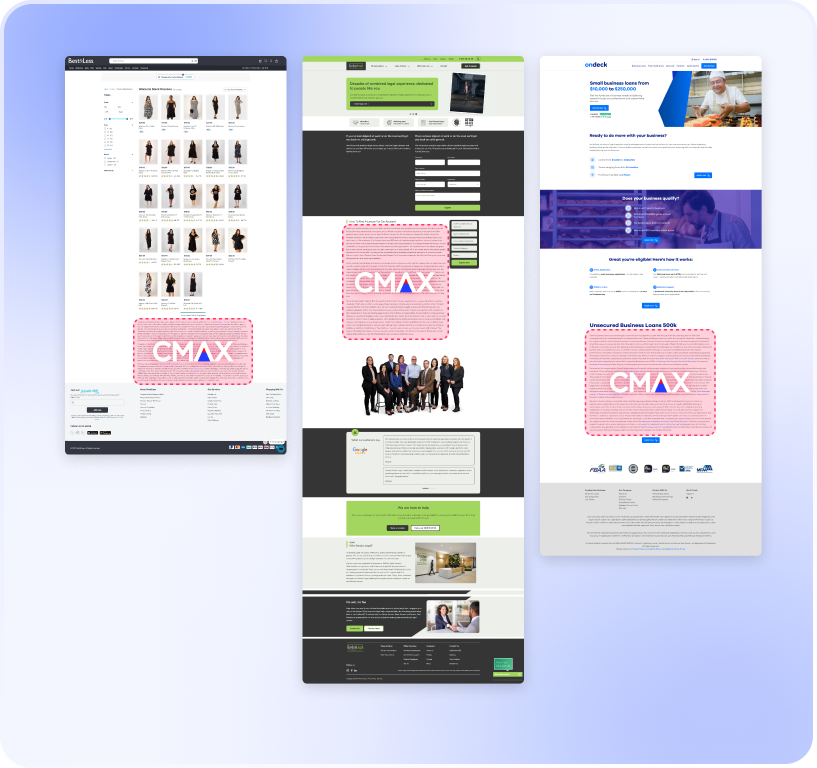
The measurement principle holds at scale. In one CMAX engagement, a B2B omnichannel hospitality retailer generated over $1M per month in incremental SEO revenue within 8 months, achieved by scaling 5,000 long-tail product pages alongside traditional SEO activity. The result was documented against commercial outcomes, not reported as a content volume milestone.
That same standard applies to link building. A placement that drives qualified referral traffic to a lead-capture page has a traceable commercial value. A placement that adds a number to a backlink dashboard does not. Enterprise SEO investment, whether in content, links, or both, needs to be tied back to documented outcomes before it can be defended to a CFO or a board.
The right agency choice becomes clearer when trade-offs are stated plainly.
Transparency over volume promises
A large monthly link promise tells you very little if the agency can’t explain where those placements come from, how sites are screened, or what happens when a placement falls below standard. For buyers comparing a link building agency in Australia, the clearest signal is whether the provider offers shorter initial commitments, sample reports from live campaigns and placement-level disclosure, all of which give you far more signal about how the agency actually operates day to day.
When an agency shares a sample report, check whether it shows individual URLs, anchor text, target pages and placement dates, or whether it collapses everything into a single link count. The latter is a sourcing and quality question left unanswered. An agency confident in its process will show the detail without being asked.
Clear scope and evidence
The agency that defines its method, exclusions and proof standards before a contract is signed makes every downstream decision easier. When quality questions arise, you have a documented baseline to reference. When a placement looks off, you have stated approval criteria to test it against. When the board asks whether the programme is working, you have agreed success measures rather than a debate about what was promised.
Buyers assessing SEO agency link building as part of a wider engagement should confirm how link acquisition integrates with the broader website SEO service scope, since placement strategy and on-site optimisation decisions often affect each other’s outcomes. As a reputable link building services in Australia provider, an agency should be able to map how each placement supports the overall site strategy.
Scope clarity also reduces internal risk. An agency that names the tactics it avoids, states how paid placements are handled and commits to outcome-linked reporting gives you something concrete to present to a CFO or legal team. Vague scope creates vague accountability.
Frequently Asked Questions (FAQ)
Which link building services should you be using?
The safest services are built around relevant editorial placements, clear outreach criteria and disclosed paid-placement rules where applicable. Each link should come with a documented reason: which page it supports and why that page matters commercially. If an agency can’t explain that before launch, the service isn’t ready to evaluate.
Are there specific contract minimums?
Contract minimums vary by agency. A reporting sample, a clear approval process, sourcing transparency and exit terms will tell you more about how an agency actually operates than the contract length on its own.
How long does link building take to see results?
Effects appear gradually. Prospecting, outreach, content review, publication, crawling and indexation all happen before any page-level movement, referral traffic pattern or assisted-conversion signal becomes visible. Agencies that imply faster timelines are skipping steps, not accelerating them.
How are link building services done safely?
Safer SEO agency link building relies on relevant sites, strong editorial context, transparent sourcing and sensible anchor choices. Any compensated placements need proper handling and disclosure. Shortcuts designed mainly to influence rankings rather than inform readers carry policy risk that compounds over time.
While SEO agency link building requirements are broadly consistent across markets, buyers operating across multiple regions may find that international SEO agencies apply different editorial standards, disclosure norms and outreach approaches depending on the target country.
How do you measure the success of your link building?
The most useful measurement combines placement data with referral quality, assisted conversions, lead impact and page-level performance trends. Link totals alone don’t tell you whether a placement contributed to a commercial outcome. Agencies that report only volume are measuring activity, not results.
What is link building in SEO and why does it matter for buyers?
Knowing what is link building in SEO helps buyers set realistic expectations about timelines, placement quality and commercial impact. At its core, it is the practice of earning or securing hyperlinks from external websites back to your own, with the goal of improving search visibility and driving qualified referral traffic.
Most Link Building Fails at Scale, CMAX Fixes the Other 90%
Link building matters, but it only works when there’s content worth linking to.
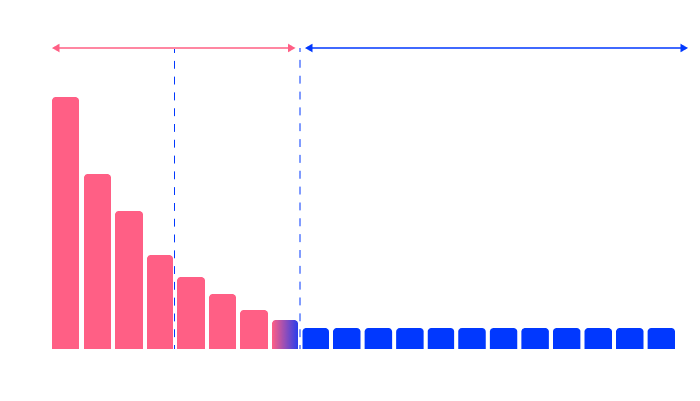
CMAX is an agentic SEO platform that programmatically deploys and updates content targeting thousands of long-tail keywords, the 90% of search demand most businesses never reach. Our AI-powered agents create and refine pages at a speed and scale manual teams can’t match, with results visible in as few as six weeks. When your site covers the full breadth of how customers actually search, earned links land on pages that convert rather than collect dust.
Two lines of code to deploy. Thousands of high-intent pages to grow into. That’s how SEO agency link building efforts finally get content that pulls its weight.
Author
Jeremy Tang
Founder and CEO of CMAX
Jeremy Tang is the Founder and CEO of CMAX. With over 2 decades of experience in business consulting and digital marketing, he has successfully driven seven startup businesses, six of which achieved $1 million in revenue from zero in less than 16 months, 5 of which grew to multi-million dollar a year ventures without any external funding. Jeremy's expertise lies in streamlining business processes through technology and leveraging digital (in particular SEO) for business growth. He resides in Australia, travels extensively, and draws inspiration from his global experiences.