Search engine optimisation covers more ground than most definitions suggest. It starts with whether search engines can find and process your pages at all, then extends into how relevance is judged, how content earns visibility and how you measure whether any of it is working commercially. Each layer depends on the one before it, which is why fixing a technical blocker can shift results faster than publishing new content, and why content published without a clear intent target often sits unindexed. CMAX works across these layers at catalogue scale, particularly for enterprise sites with large product or service sets.
Search engine optimisation is a visibility system.
Search visibility mechanics
Search engine optimisation makes the right pages discoverable, crawlable, indexable, understandable and useful to the person behind a query. Visibility depends on two things working together: search engines must be able to access the page, and they must recognise that it answers a specific need. A page that loads but fails either condition won’t appear where it should. That’s the core mechanic, access plus relevance, not one or the other.
Search engine optimisation is a broad discipline, and for those starting out, a clear SEO definition helps establish what the practice actually covers before diving into its components.
Core SEO components
In practice, search engine optimisation spans the full lifecycle of how a page gets found and judged. Discovery and crawling determine whether search engines reach the URL at all. Indexing determines whether that URL enters the pool of results eligible to rank. Relevance judgement determines where it sits within that pool. Each stage depends on the one before it.
Whether you encounter it as the British or American spelling, search engine optimisation and SEO search engine optimisation refer to the same discipline of making pages discoverable, crawlable and relevant to searchers.
Strengthening that lifecycle means working across technical setup, content quality, internal linking, external credibility signals and measurement. Measurement is the component most often treated as an afterthought, yet it is what shows which changes moved the needle and which didn’t, so the next priority is based on evidence rather than assumption. Without it, SEO work accumulates without direction.
Search engines process pages in four stages.
Discovery and crawling
Grasping how search engine optimisation works starts with how bots discover and fetch pages. Before a page can rank, a search engine must find it and fetch its content. That process relies on four things working together: internal links that point bots toward important URLs, XML sitemaps that list those URLs explicitly, server responses that return the page without errors or timeouts, and robots directives that do not accidentally block the pages you want indexed. Any one of these failing quietly can keep a page out of search entirely, with no obvious error to flag it.
Indexing failure points
A page missing from search results usually has a traceable cause. The practical first checks are a noindex directive left in place after a staging migration, duplicate versions of the same page competing for the same query intent, canonical tags pointing to the wrong URL, and internal link paths so thin that crawlers rarely revisit the page. Each of these is fixable, but they need to be checked before publishing more content on top of them.
How relevance is judged
Once a page is indexed, relevance is assessed across several dimensions: how well the page matches the intent behind a query, what the page itself communicates, the context provided by surrounding pages on the same site, and external credibility signals. Repeating a keyword without answering the query rarely moves a page into competitive positions because search engines are matching intent, not counting terms. Search engine optimisation covers a wide range of technical and content considerations, and a search engine optimisation blog can be a useful ongoing resource for staying current with how crawling, indexing and relevance signals evolve.
SEO work spans content, authority and measurement
Technical quality signals
Technical SEO creates the conditions for visibility.[1] Important pages need to load reliably, render correctly on mobile devices, return the right status codes and consolidate authority under a single canonical URL. When authority splits across duplicate paths or inconsistent URL versions, search engines receive conflicting signals and neither version ranks as well as a clean, consolidated page would.[2]
Content and search intent
Each page earns visibility by serving one distinct query type. Matching pages to intent begins with search engine optimisation keyword research that maps queries to distinct page purposes. A page built for informational intent, one for comparison and one for transactional intent will each perform better than a single page stretched across all three. Forcing one URL to satisfy every stage of research dilutes relevance signals and makes it harder for search engines to match the page to a specific query. Intent matching is what makes search engine optimisation effective.
Search engine optimisation principles apply across many contexts, and ecommerce SEO marketing extends those same content, authority and measurement disciplines to product catalogues and transactional queries.
Links, mentions and site structure
Links and unlinked brand mentions strengthen credibility signals, but their value depends on what they point to. Clear information architecture, internal links directed at priority pages and content that genuinely matches search demand give those external signals something solid to reinforce.
Search engine optimisation relies on credibility signals from external sources, which is why many organisations complement their on-site work with a link building SEO service to strengthen authority for priority pages.
SEO engagement checklist
A sound search engine optimisation strategy moves from diagnosis to implementation to validation, with each stage generating evidence that informs the next decision.
- Set baseline tracking for indexed pages, impressions, clicks, conversions and revenue contribution before any changes go live.
- Audit technical blockers, including noindex tags, crawl barriers, duplicate URLs and canonical conflicts, before scaling content. More pages do not help if existing URLs cannot be indexed correctly.
- Map priority pages to distinct search intents to target genuine gaps and give each page a clear, non-overlapping role.
- Review internal linking and page templates so important URLs are discoverable, contextually supported and consistent across similar page types.
- Report on coverage and indexing changes first. Search engines must process pages before demand converts to clicks.
- Pace content expansion against implementation capacity to avoid duplication, template drift or an unmaintained backlog.
- Measure indexed coverage, query breadth, click-through rate and business outcomes on an ongoing basis so the team can tell whether visibility is growing in commercially useful areas.
SEO results follow implementation and feedback loops.
Typical reporting sequence
Search engine optimisation progress usually appears in sequence: coverage and indexing changes register first, often within weeks of a technical fix or a new page set being submitted. Impressions follow as search engines begin surfacing those pages for relevant queries. Clicks and conversions come last, once the page set matches enough demand and earns consistent placement for queries with real commercial intent. Expecting revenue movement before indexing has stabilised is the most common reason SEO timelines feel broken.
Search engine optimisation delivers the most consistent results when implementation is guided by a documented SEO strategy that sequences technical fixes, content development and measurement in a logical order.
Catalogue-scale proof point
In one CMAX engagement, a B2B omnichannel hospitality retailer added 5,000 long-tail product pages and reached $1M+/month in incremental SEO revenue within 8 months, alongside a 255% organic traffic increase over 12 months. A small set of head-term pages could not have covered the breadth of product, configuration and use-case queries that drove that result. The same dynamic applies to any enterprise site where product, service or solution combinations outpace what a handful of category pages can answer.
Metrics that matter
Track whether more relevant pages are indexed, whether query coverage expands, whether click-through rate improves and whether organic traffic contributes to conversions and revenue. Those four measures show whether visibility is becoming commercially useful. Rankings alone do not. Teams evaluating search engine optimisation services should use these indicators to judge whether their investment is producing measurable commercial lift.
A search engine optimisation specialist interprets these signals in context, separating seasonal shifts and algorithm updates from genuine performance trends.
Why timelines vary
When stakeholders ask how much does search engine optimisation cost, the answer depends on starting site health, competitive intensity, content depth and implementation speed. A blocked-page fix can register in Search Console within weeks. Broader traffic growth takes longer because search engines need to reprocess updated pages, test relevance against competing results and accumulate performance signals before rankings stabilise.
Frequently Asked Questions (FAQ)
How do you measure SEO success beyond just rankings?
Rankings show position, not value. More useful measures are indexed page coverage, non-brand impressions, click-through rate, qualified conversions and revenue contribution. A page ranking third for a query no buyer uses produces nothing. Tracking whether visibility is expanding into commercially relevant queries, and whether those queries convert, gives a clearer picture of whether SEO is working for the business. Businesses that need search engine optimisation Melbourne expertise they can rely on should start by evaluating these metrics before comparing providers.
How soon will I see results from SEO?
Some technical fixes, such as removing an erroneous noindex tag or resolving a crawl block, can affect indexing within weeks. Because search engine optimisation depends on processing, reprocessing and competition, meaningful traffic and conversion gains take longer. Search engines need to reprocess updated pages, test their relevance against competing results and build confidence in the changes before rewarding them with consistent visibility.
How often should you refresh website content for SEO?
Refresh content when search intent shifts, facts become outdated, competitors cover the topic more completely, or performance data shows a page losing visibility for queries it previously ranked for. A fixed publishing schedule is less reliable than monitoring which pages are declining and acting on that signal directly. For teams that need search engine optimisation Sydney support they can trust, the same principle applies: refresh decisions should follow performance signals, not arbitrary calendars.
Is programmatic SEO dead?
Programmatic SEO underperforms when pages duplicate each other or add little unique value. Pages created at scale can work when each one targets a distinct query and provides information that justifies indexing it separately. Scale without differentiation is the problem, not scale itself.
What are long-tail keywords, and how do they differ from short-tail keywords?
Long-tail keywords are specific searches that reveal clearer intent than broad short-tail terms.[3] A category page can rank for a head term; it rarely answers a niche product query, a specific location search or a precise use-case question well enough to compete. Dedicated pages mapped to those specific queries close the gap a single broad page cannot. Businesses pursuing search engine optimisation Australia campaigns benefit most when long-tail targeting is paired with locally relevant content.
Search engine optimisation needs vary by market and scale, and businesses in regional markets can explore how a SEO agency geelong applies the same crawling, indexing and content principles to local search visibility.
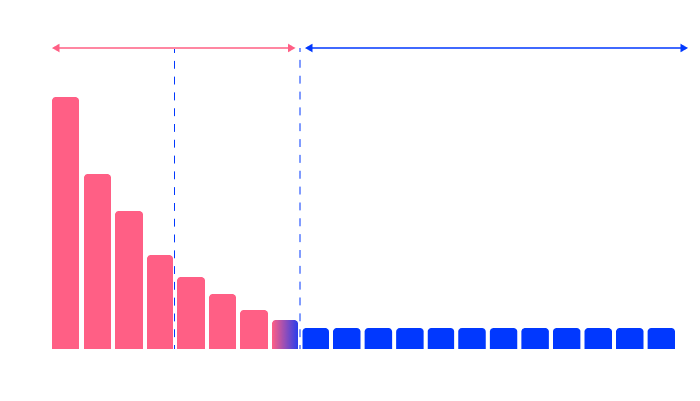
Most SEO Stops at 10% of Demand, CMAX Targets the Rest
Search engine optimisation works best when it covers the full spectrum of how people actually search.
CMAX is an agentic SEO platform built to capture long-tail keywords at a scale and speed manual teams can’t match. Our AI agents deploy and continuously update content for the thousands of specific queries your customers already use, across both search and AI surfaces. Two lines of code connect CMAX to your site, and results typically start showing within six weeks.
Over 90% of search demand sits in the long tail, where intent is highest and competition is lowest. CMAX was built for exactly that ground.
References [1] – https://developers.google.com/search/docs/fundamentals/seo-starter-guide [2] – https://developers.google.com/search/docs/essentials/spam-policies [3] – https://searchengineland.com/guide/long-tail-keywords-seo
Author
Jeremy Tang
Founder and CEO of CMAX
Jeremy Tang is the Founder and CEO of CMAX. With over 2 decades of experience in business consulting and digital marketing, he has successfully driven seven startup businesses, six of which achieved $1 million in revenue from zero in less than 16 months, 5 of which grew to multi-million dollar a year ventures without any external funding. Jeremy's expertise lies in streamlining business processes through technology and leveraging digital (in particular SEO) for business growth. He resides in Australia, travels extensively, and draws inspiration from his global experiences.