Most people who search engine optimisation define are really asking whether the definition they already know still holds. It does. SEO still means improving how your content gets found through organic search. What has changed is where that visibility shows up: traditional listings, AI-generated summaries, and long-tail query paths that older reporting missed entirely. The core mechanics of crawlability, indexing, and content quality haven’t been replaced. They’ve just started feeding more surfaces. CMAX works within that broader definition, helping enterprise teams scale discoverability across both classic and AI-assisted search.
Search engine optimisation still means improving discoverability.
SEO Still Targets Organic Visibility
To search engine optimisation define it in its simplest terms is to describe the practice of earning visibility through unpaid search listings and grounded AI answers that pull from web content users can verify. That objective hasn’t shifted. What has changed is where visibility can appear: a ranked blue link, a featured snippet, or an AI-generated summary that cites a source page. In each case, the underlying goal is the same, get the right content in front of the right query without paying for placement.
Whether written as search engine optimisation or search engine optimisation, the search engine optimisation definition remains the same: earning organic visibility through content that search systems can crawl, index, and trust.
Why The Core Definition Holds
The traditional definition holds because search systems, including AI-assisted ones, still need content they can crawl, index, interpret, and judge as relevant and trustworthy enough to surface. A system that synthesises answers still draws from web pages. It still evaluates whether those pages are accessible, coherent, and credible. The mechanics that determine whether a page qualifies for visibility haven’t been replaced; they’ve been extended to cover a wider set of surfaces. The definition of search engine optimisation centres on producing content that search systems can find, read, and trust, and that remains the entry point for any form of organic discoverability, AI-driven or otherwise.
Queries that define search engine optimisation have grown more complex as AI-assisted answers enter the picture, yet the underlying goal of improving organic discoverability remains unchanged.
AI search changes where visibility appears, not why SEO exists.
AI Answers Still Need Web Pages
AI answer features shift where users first encounter information, but the source material behind those responses is still the open web. AI systems pull from crawlable, indexable pages to generate their summaries. A page that search engines cannot access cannot be cited, regardless of how well the content is written. The surface changes; the dependency on accessible web content does not. Queries increasingly surface in contexts shaped by AI search, where synthesised answers draw from the same crawlable, indexed pages that traditional results rely on.
Foundational SEO Still Applies
Site access, content clarity, and source trust remain the core levers because the same underlying signals that support classic search results also support AI-assisted responses. Google’s own guidance on AI search features confirms this: foundational search engine optimisation techniques feed both traditional and AI-driven discovery.[1] A page that loads reliably, communicates its topic clearly, and earns trust through verifiable sources is better positioned across both traditional listings and AI-generated answers.
Two Meanings Of AI SEO
“AI SEO” covers two distinct activities, and conflating them creates real strategic confusion. The first is using AI to accelerate SEO work: research, content production, internal linking analysis, and performance monitoring. When practitioners search engine optimisation define this first meaning, they are describing efficiency gains applied to existing workflows. The second is structuring content so AI search systems can more easily surface, summarise, and cite it. Search engine optimisation AI represents this second category, where the focus shifts from speeding up tasks to shaping how content appears inside synthesised answers. Both are legitimate. They require different decisions, different quality controls, and different success metrics. Knowing which one you’re doing at any given moment keeps execution focused and output measurable.
The mechanics still begin with crawlability, indexing, and evidence.
From Crawl To AI Citation
Technical access is still the first gate. A page must be crawlable before it can be indexed, and indexed before any search system, traditional or AI-assisted, can surface or cite it. AI-generated answers do not pull from pages that are blocked, inaccessible, or excluded from the index. The sequence has not changed: crawl, index, surface. Skipping steps one or two means step three does not happen.
Structure Beats Special AI Markup
There is no proprietary AI markup required for basic eligibility. What does help is the same structural discipline that has always supported good indexing: clear headings, descriptive page architecture, and claims tied to identifiable sources. According to search engine optimisation Google documentation, foundational access still underpins AI visibility, and these elements make it easier for systems to parse a page accurately and reuse its content in a summarised response.[2] A well-structured page with verifiable claims is more likely to be cited than a dense, unattributed one.
SEO Meaning Corrections
Before listing what gets misunderstood, it helps to search engine optimisation define accurately first. Several assumptions about SEO produce the wrong priorities in an AI search environment. A working definition needs to account for how discoverability actually operates now.
SEO covers more than blue-link rankings. AI-generated answers that draw on web sources are a visibility surface, and earning a place in those answers is part of the same discipline.
AI visibility does not sidestep crawlability and indexing. Systems cannot reliably surface pages they cannot access or process.
Search engine optimisation mechanics are often misunderstood, and resources that address SEO what is SEO can help ground practitioners in the crawlability and indexing fundamentals that AI visibility still depends on.
Using AI tools to produce SEO work is a production decision. Structuring content so AI search systems can surface and cite it is an optimisation decision. The two are related but distinct.
Publishing additional pages only expands discoverability when each page targets a distinct query and makes claims users can verify. Repetitive content that lacks a clear query target adds volume without adding coverage.
Visibility measured only by rankings for a short list of head terms understates real discoverability. The more accurate measure is the breadth of relevant queries that bring a page into view.
Useful AI-assisted content depends on editorial controls, not automation alone.
Editorial Controls Prevent Commodity Content
AI-assisted production can support scale, but only when human review, first-party expertise, and citation discipline are applied at every stage. Without those controls, the output is repetitive pages, unsupported claims, and thin variations on the same topic, exactly the kind of content search systems are built to deprioritise. For any brand investing in search engine optimisation Australia businesses rely on, editorial controls determine whether scale produces value or noise. The mechanism that makes AI-assisted content useful is editorial rigour, not the AI tooling itself.
Measure Beyond Rankings Alone
Search Console data gives a more accurate picture of whether SEO is actually expanding discoverability. Tracking impressions, clicks, indexed pages, and the range of queries that bring the site into view shows whether coverage is growing. Rank checks for a short list of head terms can look stable while real discoverability stagnates, or can miss genuine gains happening across hundreds of long-tail queries.
Client Proof On Long-Tail Coverage
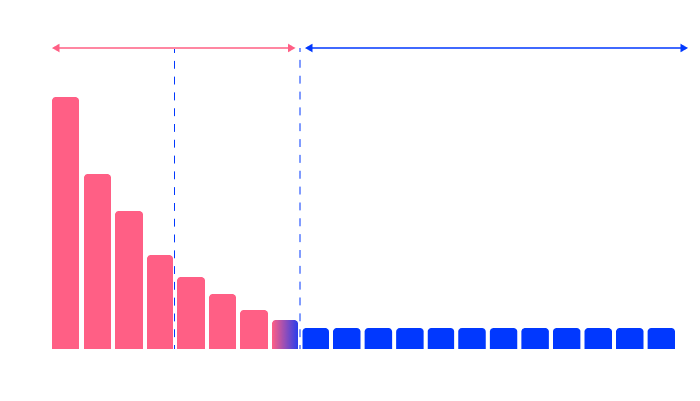
The numbers from one CMAX engagement make the case directly: a B2B omnichannel hospitality retailer added 5,000 long-tail product pages and generated over $1M per month in incremental SEO revenue within 8 months. The same dynamics apply to other large catalogues and enterprise sites. Specific query coverage, pages that each target a distinct, verifiable search intent, drives more discoverability than concentrating effort on a narrow set of broad terms. That’s where the measurable growth sits.
The practical definition of SEO is broader, but not replaced.
SEO Now Covers More Surfaces
The reporting lens has expanded. SEO now includes earning discoverability across traditional blue-link listings, AI-generated summaries, and the long-tail query paths that were easy to deprioritise when rank tracking for a handful of head terms was the primary measure of success.
That shift affects how teams set targets and allocate effort. A page that earns an impression in an AI-generated summary for a specific product query is delivering organic visibility, even if it never appears in a ranked list your current tools track. Measuring only traditional rankings leaves that coverage invisible. Even a reputable search engine optimisation course now needs to cover AI-assisted discovery surfaces, because practitioners who learned SEO as a blue-link discipline are working with an incomplete picture.
Search engine optimisation has expanded well beyond blue-link rankings, and revisiting the SEO definition helps clarify why foundational practices still apply across both classic and AI-assisted search surfaces.
A Better Modern Definition
One way to search engine optimisation define for today’s landscape is: improving how a brand’s information can be found, cited, and surfaced across different search experiences.
That definition holds whether the search experience returns a ranked list of links, a synthesised AI answer, or a mix of both. The objective, earning organic discoverability for relevant queries, stays constant. What changes is the range of surfaces where that discoverability can appear and the signals that support it.
Grasping what search engine optimisation means today requires acknowledging that discoverability now spans classic organic results and AI-cited answers, not a ranked list of blue links alone.
For teams reporting to a CFO or board, this framing is also more defensible. Growth in qualified impressions, indexed coverage, and query breadth across both traditional and AI-assisted surfaces is a more complete account of SEO performance than a rank report for ten keywords.
Frequently Asked Questions (FAQ)
How are you adapting to AI-driven search trends?
Foundational SEO stays in place. The practical adaptation is structuring content so it can be crawled, indexed, and cited across both traditional listings and AI-assisted search surfaces. That means clear page structure, verifiable claims, and source discipline, the same signals that support classic rankings also support AI-generated answers that pull from web content.
When teams ask search engine optimisation what is its modern scope, the honest answer is that it now covers traditional listings, AI-generated summaries, and the long-tail query paths that connect both.
Can SEO be automated?
Parts of it, yes. Research, internal linking, templated page production, and monitoring are all candidates for automation with search engine optimisation tools, but useful output still depends on editorial review, source control, and evidence standards. Automation handles scale; human oversight handles accuracy.
How can SEO content scale without losing quality?
Each page needs a distinct query target, approved source material, and an accuracy review before it goes live. Publishing thin template variations that repeat existing material doesn’t expand discoverability, it dilutes it. Quality at scale is a production discipline, not a volume target.
How do you define SEO success for our project?
When stakeholders search engine optimisation define by rankings alone, they miss the broader discoverability picture. Growth in qualified impressions, clicks, indexed coverage, and query breadth tells a fuller story. Rankings for a narrow list of high-volume keywords are a partial view. A site gaining visibility across thousands of specific queries is outperforming one that holds a handful of broad positions.
How long does SEO take to work?
Results appear gradually. Pages must be published, crawled, indexed, and tested against real queries before discoverability expands. At CMAX, clients typically start seeing results within six weeks of deployment.
The Definition Changed, CMAX Was Built for What Comes Next
SEO still means making your business discoverable, but where and how discovery happens has shifted.
Traditional optimisation focused on ten blue links. Today, search engines synthesise answers, pull from structured content, and reward pages that serve both crawlers and AI systems. CMAX is an agentic SEO platform that deploys and continuously updates content across thousands of long-tail keywords, the 90% of search demand most teams never reach, with just two lines of code.
Whether a query returns a ranked link or a grounded AI citation, the content has to exist, be crawlable, and be worth surfacing. That’s the work CMAX automates at a scale and speed manual teams can’t match, with results visible in as few as six weeks.
References [1] – https://developers.google.com/search/docs/fundamentals/ai-optimization-guide [2] – https://developers.google.com/search/docs/fundamentals/seo-starter-guide
Author
Jeremy Tang
Founder and CEO of CMAX
Jeremy Tang is the Founder and CEO of CMAX. With over 2 decades of experience in business consulting and digital marketing, he has successfully driven seven startup businesses, six of which achieved $1 million in revenue from zero in less than 16 months, 5 of which grew to multi-million dollar a year ventures without any external funding. Jeremy's expertise lies in streamlining business processes through technology and leveraging digital (in particular SEO) for business growth. He resides in Australia, travels extensively, and draws inspiration from his global experiences.