Most buyers comparing a link building SEO service start with price and volume, but the more useful comparison point is method. How a provider sources prospects, earns placements, and reports results tells you far more about risk and durability than a promised link count ever will. The gap between an editorially earned mention and a paid, PageRank-passing placement is also the gap between compliance and a spam-policy problem. CMAX works on the content and internal linking side of that equation, giving earned links stronger pages to point to.
A professional link building service should show its work.
Documented delivery steps
Among the many link building SEO services available, a credible link building SEO service can walk you through every stage of its process before you sign anything. That means explaining how it identifies prospects, how it filters those prospects for topical relevance, how outreach is conducted, what content support is included, how placements are reviewed before going live, and how it confirms links remain live and crawlable after publication. Buyers looking for the best SEO link building services should expect this level of transparency as a baseline, not a bonus.
A link building SEO service sits within the broader discipline of search engine optimisation, so providers should be able to explain how their external backlink work connects to a wider organic-growth strategy.
A link count tells you nothing about how those placements were won. Forty links from a provider with a documented, auditable process carry a different weight than forty links from one that hands over a spreadsheet and calls it a report. The process is the evidence.
Ask for the process in writing. When evaluating any SEO link building agency, if a provider hesitates or offers a vague summary, that hesitation is the answer.
Methods carry different risks
Editorial outreach, digital PR, guest contributions, and paid placements do not carry the same compliance or durability profile. Each method sits at a different point on the risk spectrum, and the gap between them is wide enough to affect whether placements hold long-term value or create policy exposure.
The first comparison point when evaluating any link building SEO service is the acquisition method, not the volume of links promised. A provider leading with numbers before explaining method is asking you to trust an outcome without showing you the mechanism that produces it.
Link quality depends on relevance, context, and crawlability.
What separates a strong link building SEO service from a weak one is how it handles relevance, context, and crawlability.
Relevance and indexability signals
A backlink carries more weight when the page hosting it is indexed, covers the same subject as the destination page, and includes copy that gives a reader a clear reason to follow the citation. Those three conditions work together. A link on an indexed page about commercial kitchen equipment pointing to a hospitality supplier makes editorial sense. The same link dropped into an unrelated lifestyle article on an unindexed page does not, regardless of the domain’s authority score.
Indexability is a prerequisite, not a bonus. If search engines can’t reach the linking page, the placement produces no signal. Topical alignment is what makes that signal relevant once the page is crawlable. Buyers evaluating a link building SEO service should also consider whether the target site has a solid website SEO service foundation, covering crawlability, indexability, and page structure, so that earned backlinks have strong destinations to support.
Page-level quality checks
Domain-level authority metrics give you a single aggregate number for an entire site. Page-level checks tell you whether the specific URL hosting your link is worth the placement.
Four signals carry the most diagnostic weight:
- Anchor text, does it reflect the destination page’s actual topic, or is it over-optimised for a target keyword?
- Topical fit, does the linking page’s content align with the destination page’s subject matter at the article level, not just the domain level?
- Follow status, does the link pass PageRank, or has it been nofollowed or tagged as sponsored?
- Crawlability and indexability, can search engines access and index the linking page?
A provider that reports only domain authority is skipping the checks that actually predict whether a placement will perform.
Google’s Spam Policy Sets the Practical Risk Boundary
Google Flags Manipulative Links
For anyone asking what is link building in SEO, Google’s spam policy provides the sharpest answer by defining what it is not. The policy names the tactics that create compliance exposure: bought links that pass PageRank, excessive link exchanges, and automated link creation all qualify as link spam under its published guidance.[1] These methods are designed to manipulate rankings rather than reflect genuine editorial endorsement.
This is why provider method disclosure carries more weight than volume claims. A provider promising 50 links a month tells you nothing about how those placements were won. A provider that can walk through its sourcing criteria, outreach process, and approval steps gives you something you can actually assess against Google’s stated boundaries.
Aggressive link counts are a sales metric. Acquisition method is a compliance question.
Grasping Google’s spam policy is easier when a link building SEO service works in tandem with a qualified SEO content writing agency that produces original, editorially credible material, reducing reliance on manipulative placement patterns that attract policy risk.
Editorial vs Paid Placement
The clearest test a buyer can apply: does this link exist because an editor chose to reference the page, or because a fee bought a PageRank-passing placement?
Google treats the second case as a spam-policy violation. The distinction between editorially earned and paid placements is central to responsible link building in SEO, and it isn’t always obvious from a placement report. That is why buyers need providers to separate editorially earned links from paid or sponsored placements rather than blending them into a single headline number.
A provider that can’t make that distinction clearly in its reporting either doesn’t track it or has a reason not to. Both are signals worth acting on before signing an agreement.
A provider safety audit makes comparison more reliable.
Provider safety audit checklist
Before committing to any link building SEO service, a structured safety audit gives buyers a practical comparison framework. Rather than weighing one agency’s pitch deck against another’s, you’re scoring each provider against the same criteria: sourcing, approvals, sample evidence, reporting detail, and post-publication checks.
Run through these five checkpoints with any provider you’re evaluating. Buyers evaluating a link building services Australia provider can use this checklist to hold local and offshore agencies to the same standard.
Sourcing and qualification. The provider can explain where prospects come from, how topical relevance is assessed, and what disqualifies a site before outreach starts. Vague answers here usually mean a recycled inventory.
Verifiable sample evidence. The provider can show real, live URLs and actual placement examples. Publication logos and cropped screenshots with no verifiable page are not evidence.
Documented approvals. The provider can name who approves target sites and placements, and describe what review steps happen before outreach goes live. A clear approval chain reduces the chance of placements you’d reject if you’d seen them first. For those sourcing link building services in Australia, this step is especially important given varying editorial standards across regional publishers.
Granular reporting. Delivery reports include live URLs, anchor text, destination pages, and placement dates, with enough context to review each link individually. A headline link count tells you nothing about how those placements were won.
Earned vs. paid disclosure. The provider separates editorially earned links from paid or sponsored placements in its reporting. Blending both into one number makes compliance assessment impossible and obscures the risk profile of what you’re actually buying.
When running a provider safety audit, buyers operating across multiple markets should ask whether the link building SEO service has experience working alongside international SEO agencies that understand regional relevance standards, indexing behaviour, and compliance norms.
The provider has a process for checking whether placements remain live, crawlable, and indexable after publication.
What placement examples should prove
A placement example is only useful if it answers four specific questions: Is the linking page topically relevant to the destination? Was the placement approved through a documented review step? Does the link resolve to a live destination URL right now? Does the reported format match what the provider delivers in its standard reporting?
If a provider’s sample portfolio is a list of publication logos, a folder of cropped screenshots, or a spreadsheet with no verifiable URLs, those gaps are informative. Opaque inventories frequently mask links that were placed on recycled sites, removed after a short window, or dropped into pages with no editorial connection to the destination.
Placement examples are stronger when the linked destination features well-crafted SEO website content writing, because editorially placed links are more likely to be approved and retained when the content they point to is genuinely useful and topically coherent. A credible link building Melbourne agency should be able to point to live placements where the surrounding copy gives a clear editorial reason for the citation.
Ask for a live URL, open it, and check three things: the page is indexed, the surrounding copy gives a clear reason for the citation, and the link points to the destination the provider claimed. Then cross-reference that URL against the provider’s reporting template. If the format doesn’t match, the reporting process either changed after the fact or the sample was curated separately from standard delivery. Any provider offering link building services Sydney should meet the same verification standard, with each placement traceable to a live, indexed page.
Post-publication monitoring is the final checkpoint. A provider with no process for confirming that links remain live and crawlable after placement has no way to distinguish a durable placement from one that disappeared within weeks. That gap shows up in results, not in a link count. These checks reveal whether a link building SEO service can back its claims with verifiable evidence.
Lasting SEO gains depend on more than external links.
Links need strong site architecture
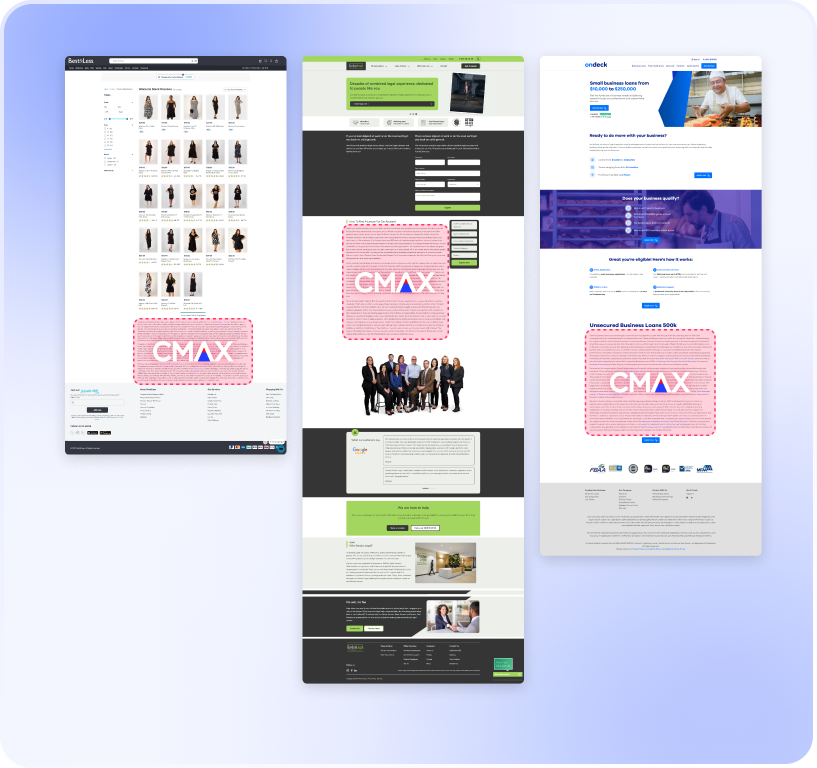
Link building can support discovery and authority, but earned placements only go so far when the destination site lacks the content depth to capitalise on them. Based on CMAX’s platform data, sustainable organic growth depends on whether the target site has enough useful content, internal links, and page coverage to capture long-tail searches once authority arrives. A strong backlink pointing to a thin site with three product pages and no supporting content has limited room to compound. The authority lands, but there are few relevant destinations for it to distribute across, and the long-tail demand that drives most search volume stays uncaptured. This is why link building works best as one component of broader SEO services that also address content depth, internal linking, and technical health.
A link building SEO service delivers more durable results when the destination site is supported by a capable SEO copywriting agency that produces content worth citing, well-structured and topically authoritative. For any SEO service in Australia provider, aligning site architecture with link acquisition is what turns individual placements into compounding organic gains.
Client proof on scalable page coverage
The gap between link acquisition and organic revenue is often a page coverage problem. In one CMAX engagement, a B2B omnichannel hospitality retailer added 5,000 long-tail product pages and recorded $1M+ per month in incremental SEO revenue within 8 months. The same dynamics apply to any link building programme: stronger page coverage gives earned links more relevant destinations to support. When authority has thousands of topically matched pages to flow through, each placement works harder. When it has a handful, the ceiling is structural, and no volume of backlinks moves it.
Frequently Asked Questions (FAQ)
How do you identify high-quality backlinks?
A link building SEO service worth considering will source backlinks from pages that are topically relevant to the destination page, indexed by search engines, and editorially placed within copy that gives a reader a clear reason to follow the link. The surrounding content matters: a link buried in an unrelated article or sitting on a page built primarily to sell outbound placements carries far less weight than one that fits naturally into a piece covering the same subject as the destination.
How do you check the quality of a website before building a link to it?
Check whether the site publishes real, topic-specific content rather than thin filler. Confirm that its important pages are indexed and readable. Look at how outbound links are distributed, selective linking across relevant topics signals editorial standards; links stacked across unrelated subjects signal a link-selling operation. A useful final test: would the placement still make editorial sense if SEO value were removed entirely?
What are the risks of poor-quality link building?
Budget can be wasted on three distinct failure modes: links that search engines ignore, links that disappear after publication, and placements that create spam-policy exposure through paid PageRank-passing arrangements or automated link creation. Each carries a different cost, but all three are avoidable with proper provider vetting.
Question 9: Is purchasing or trading links a viable strategy?
Buying links or arranging excessive link exchanges can generate placement volume, but Google treats links intended to manipulate rankings as link spam.[2] The trade-off is direct: more links on paper, with policy risk attached to each one.
What are the differences between white hat, black hat, and grey hat link building?
White hat link building produces editorially earned placements with a clear, reader-facing reason to exist. Black hat tactics rely on manipulative schemes that violate search guidance directly. Grey hat methods occupy the space between the two, less overtly deceptive, but still raising compliance, durability, or disclosure concerns that a serious buyer should weigh before committing budget.
As link building service providers adapt their methods, buyers are also beginning to ask how placements perform in AI search environments where citation and authority signals may be evaluated differently than in traditional web results.
CMAX Builds the Content That Earns the Links
Link building works best when there’s something worth linking to.
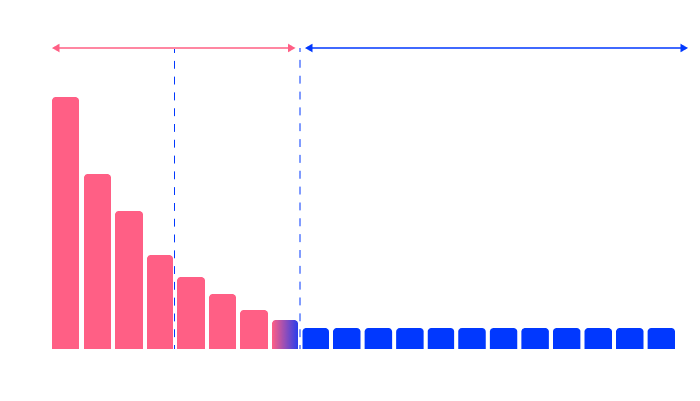
CMAX is an agentic SEO platform that deploys and continuously updates content targeting the long-tail keywords most businesses ignore, the 90% of search demand where high-intent buyers actually look. Two lines of code activate thousands of pages, each one optimised through programmatic internal cross-linking that strengthens your entire site’s authority. Results start showing in as little as six weeks.
If you’re evaluating a link building SEO service, the content foundation matters as much as the outreach.
References [1] – https://developers.google.com/search/docs/essentials/spam-policies [2] – https://developers.google.com/search/docs/essentials/spam-policies
Author
Jeremy Tang
Founder and CEO of CMAX
Jeremy Tang is the Founder and CEO of CMAX. With over 2 decades of experience in business consulting and digital marketing, he has successfully driven seven startup businesses, six of which achieved $1 million in revenue from zero in less than 16 months, 5 of which grew to multi-million dollar a year ventures without any external funding. Jeremy's expertise lies in streamlining business processes through technology and leveraging digital (in particular SEO) for business growth. He resides in Australia, travels extensively, and draws inspiration from his global experiences.