Choosing an LLM SEO agency often comes down to one question you can’t answer from a sales deck: does this provider coordinate audits, implementation, and reporting in a way you can actually verify, or are they repackaging traditional SEO under a new label? The same question applies if you’re weighing an agency against an independent consultant. What matters is delivery architecture, proof of outcomes, and honest limits on what anyone can promise about AI visibility. CMAX is one resource worth evaluating against those criteria, particularly for enterprise teams that need scale and accountability in the same engagement.
Capability matters more than the agency label.
The label “LLM SEO agency” tells you what a provider calls itself. It tells you almost nothing about what they can actually deliver. The more useful question is whether the provider’s structure matches the work you need done.
An LLM SEO agency earns its place on a shortlist through documented delivery architecture, and understanding what LLM SEO actually involves, technically and editorially, is the first step toward evaluating whether any provider can meet that standard.
When an agency makes sense
An LLM SEO agency is usually the better fit when the scope spans multiple moving parts at once: technical fixes, content production, citation or mention testing, and reporting across different stakeholders, markets, or site sections. At that scale, the core buying question shifts from “who has the best strategy?” to “who can coordinate specialist delivery without things falling through the gaps?” A single point of contact managing a multi-discipline brief rarely holds. Agencies with dedicated technical, content, and analytics functions can run those workstreams in parallel rather than sequentially, which matters when timelines are tight and board visibility is high.
For a buyer evaluating an SEO agency Melbourne teams have worked with, the same capability questions apply. The label on the door matters far less than whether the provider can document how each workstream connects to measurable outcomes.
When a consultant fits better
An independent consultant is usually the better fit when a senior decision-maker wants direct expert access, a tighter strategic brief, and a clear line between advice and execution. As a credible SEO agency in Melbourne, or any other market, a provider still needs to demonstrate that its structure matches the brief’s demands. That structure works well when in-house teams are capable of handling most implementation and what’s missing is a sharp external perspective to set direction, prioritise the roadmap, and pressure-test assumptions. The trade-off is capacity: a consultant’s bandwidth is finite, and if the scope expands into content production or multi-market rollout, the model can strain quickly. Whether you are shortlisting a SEO Melbourne agency or a national firm, knowing which constraint applies to your situation before you shortlist saves significant time.
Delivery models differ in ways buyers can verify.
How to verify agency accountability
A proposal that cannot name the audit outputs, implementation owners, reporting cadence, and AI-content review process before work begins is a proposal worth pushing back on. These details are not administrative formalities. They are the mechanism by which you can hold an agency to account once the engagement is live. An LLM SEO agency typically offers coordinated specialist teams across technical, content, and reporting functions, whereas an LLM SEO consultant tends to provide direct senior access and a tighter strategic scope, two genuinely different delivery models that buyers can verify before signing.
Ask directly: who runs the technical audit, who owns implementation sign-off, and who reviews AI-assisted content before it publishes? If the answer is “the team,” that is not an answer. Whether you are vetting an SEO agency in Sydney or interstate, the same transparency checks apply. A credible agency will name roles, attach deliverables to those roles, and describe how quality control works when content touches regulated or high-risk topics. Vague governance at the proposal stage tends to become vague delivery at the reporting stage.
How to verify consultant accountability
With a consultant, the accountability risk sits in a different place. Advisory retainers can absorb delays without surfacing them, particularly when the scope does not clearly separate strategy from production.
Before signing, the scope document should state who handles technical changes, who approves editorial decisions, and who manages escalations when something stalls. If your in-house team carries most of the implementation load, that division of responsibility needs to be explicit, not implied. A consultant who cannot draw a clean line between what they own and what they hand off creates ambiguity that compounds over time, especially when multiple internal stakeholders are involved in approvals.
Evidence should decide the shortlist.
Five checks before hiring
Broad claims about AI-search expertise are easy to make and hard to verify. Before any LLM SEO agency makes the shortlist, run five evidence checks that test documented delivery against measurable outcomes.
One: Ask for a worked example with a baseline. Request one anonymised case that shows the starting visibility state, the implementation window, what changed in citations or answer-surface presence, and a business outcome, pipeline, leads, or revenue. If the LLM SEO agency cannot produce that sequence, the engagement is theoretical. An SEO agency Gold Coast businesses shortlist should pass the same five checks before progressing to contract discussions.
Two: Confirm who does the work. Ask the provider to name who performs audits, who owns implementation, and how technical and content teams coordinate when a problem spans both. Vague answers here usually mean accountability gaps later.
Three: Review the reporting template before signing. A credible report separates crawlability, citations or mentions, answer-surface presence, and conversion impact. If everything folds into a single rankings or traffic number, the report cannot tell you whether AI-search activity is actually moving commercial outcomes. The same standard applies when vetting an SEO agency in Canberra or any other regional market.
Four: Ask how AI-assisted content is governed. Source controls, editorial review stages, and a clear process for regulated or high-risk topics are non-negotiable. Unsupported claims in governed industries create real approval risk, and a provider without a documented review process transfers that risk to you.
Five: Check whether the provider qualifies its limits. A provider who cannot explain what they cannot control, citations, inclusion in AI answers, specific ranking positions, is a provider who has not thought carefully about the work.
When shortlisting an LLM SEO agency, buyers researching LLM SEO Australia should apply the same five-point evidence checks, baseline, implementation window, visibility change, and a documented business outcome, regardless of where the provider is based.
Look for a clear explanation of what cannot be promised, especially rankings, citations, or inclusion in AI answers, because realistic limits are often a better trust signal than bold forecasts.
Any provider that guarantees AI citations or a specific ranking position is describing an outcome they cannot control. AI systems decide what to surface through their own retrieval and synthesis processes. A credible LLM SEO agency will tell you that directly, then explain what it can influence: crawlability, entity clarity, topical coverage, and the structural conditions that make a page easier to reuse in generated answers.
When a provider hedges on limits, that is a signal worth taking seriously before you sign anything.
Client proof by shared mechanism
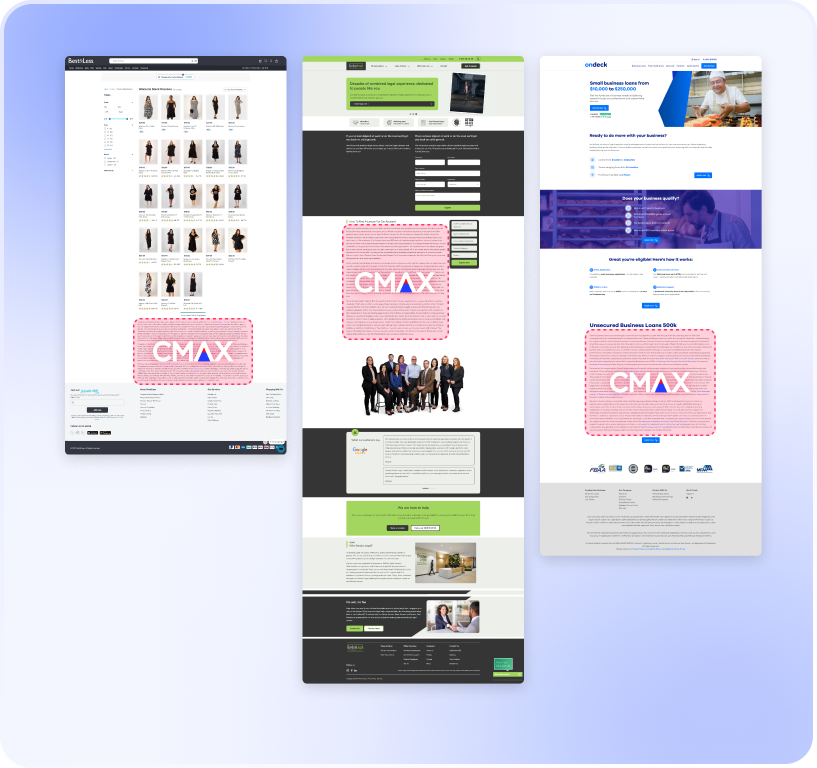
What separates a credible LLM SEO agency from a speculative one is documented outcomes. Realistic limits do not mean modest results. In one CMAX engagement, a B2B omnichannel hospitality retailer added 5,000 long-tail product pages and reached $1M+ per month in incremental SEO revenue within 8 months.
The mechanism behind that outcome is worth noting. Enterprise demand fragments across thousands of low-volume, high-intent searches. Manual content operations rarely cover that breadth at pace. When the catalogue scale matches the search surface, programmatic page deployment closes the gap that conventional production leaves open.
The same dynamic applies to AI-search visibility. A provider that can deploy and maintain content at that scale creates more conditions for retrieval than one working page by page. Disciplines such as SEO pr overlap when off-site references and editorial coverage feed the same citation signals. That is a structural advantage, and it is verifiable in the proposal before work begins.
Measurement should connect visibility to business outcomes.
Report the right visibility signals
Traditional rankings tell one part of the story. For LLM SEO, they tell almost none of it.
A LLM SEO agency should separate crawlability, citations, and assisted conversions in every report. Useful reporting breaks out four distinct signals: crawlability (can AI systems access and process the page?), citations or mentions (is the brand appearing in generated answers?), answer-surface presence (which prompts trigger a brand reference?), and assisted conversions (did that visibility contribute to a visit, lead, or sale?). Folding all of this into a single traffic or rankings chart obscures what is actually happening in AI-driven search and makes it harder to act on the data.
SEO providers Australia buyers compare should report assisted conversions, not just traffic. A credible LLM SEO agency will report on AI search visibility by tracking which prompts trigger brand mentions or cited URLs and then connecting those patterns to pipeline, leads, or revenue rather than stopping at citation counts alone.
A provider who cannot show these signals separately is either not tracking them or not willing to surface them. Either way, the buyer loses the ability to connect AI-search activity to commercial performance. Among SEO agencies Australia businesses evaluate, this level of signal separation is a reliable indicator of reporting maturity.
Show a full before-and-after example
A visibility metric without a before-and-after comparison is a number without meaning.
A credible worked example starts at baseline: which pages were indexed, which prompts triggered brand mentions, and what conversion activity existed at that point. It then maps the implementation window, showing what changed in crawl health, cited pages, or mention frequency. The final step connects those changes to pipeline, leads, or revenue, rather than stopping at visibility alone.
If a provider cannot produce this structure, even in anonymised form, the reporting likely does not track outcomes at the depth needed to justify the investment or present results to a CFO.
No agency can promise AI visibility.
Why guarantees are not credible
AI systems, whether ChatGPT, Gemini, or Perplexity, decide what to surface through their own retrieval and response processes. No agency sits inside that decision. A provider can improve the conditions for visibility: cleaner crawlability, stronger entity signals, better topical coverage, more consistent off-site references. What they cannot do is control whether an AI system retrieves a specific page, attributes a brand, or includes a citation in a generated answer.
An LLM SEO agency can improve the conditions that support AI visibility, but no provider can control whether an AI system ultimately surfaces a brand in its generated answers.
Any provider that guarantees citations or mentions is describing an outcome they do not own. Treat that as a red flag, not a differentiator. Realistic qualifications, “we can improve the signals that make citation more likely”, are a stronger trust signal than bold forecasts, because they reflect how the technology actually works.
The practical buying takeaway
Agencies suit buyers who need coordinated specialist delivery at scale: technical fixes, content production, citation testing, and reporting across multiple teams or markets running in parallel. A franchise SEO agency, for example, must coordinate location-level content across dozens of sites. Consultants suit buyers who want focused senior guidance and a narrower implementation burden, particularly where in-house teams carry most of the execution.
Both models are viable. Neither is automatically superior. The deciding criteria are transparent methods, clear ownership of deliverables, and reporting that connects visibility signals to pipeline, leads, or revenue. A provider who cannot show those three things before work begins, regardless of the label they use, carries more risk than the engagement is worth.
Frequently Asked Questions (FAQ)
How do AI LLMs actually cite or mention your brand?
AI systems can mention a brand when they retrieve and synthesise information from pages that are accessible, relevant to the prompt, and supported by clear entity signals. Those signals include consistent brand naming across pages, explicit product or service context, and corroborating third-party references that reinforce what your own pages claim. Accessibility and relevance are prerequisites; entity clarity is what tips a retrievable page toward an attributable one.
How does AI Visibility or SEO for LLMs Work?
AI visibility work focuses on making pages easier to crawl, easier to interpret, and easier to reuse inside generated answers. That means improving information architecture, entity clarity, topical coverage, and source consistency across both owned pages and referenced external sources. The goal is a page an AI system can parse, attribute, and draw from accurately.
An LLM SEO agency may also operate under overlapping labels, and llmo-short for large language model optimisation, describes the same category of work focused on making brand information retrievable and reusable inside AI-generated answers.
How to measure AI Search Visibility?
Track which prompts trigger brand mentions or cited URLs, then compare those patterns against crawl health, indexed assets, and assisted conversions over time. Visibility that does not connect to commercial outcomes is a signal, not a result.
Effective SEO / GEO strategies for LLM visibility?
Effective strategies combine technically accessible pages, query-matched content, strong internal linking, and consistent off-site references. Reporting should test whether mentions lead to visits, leads, or revenue, citations are an input, not the finish line.
How is LLM SEO different from traditional SEO?
Traditional SEO targets a ranked position in a results list. LLM SEO targets something harder to control: making page information understandable, attributable, and reusable inside a generated answer. The page still needs to rank and be crawlable, but the additional layer is whether an AI system can accurately synthesise and attribute what it finds there. This is why a LLM SEO agency focuses on making information attributable and reusable, not just rankable.
An LLM SEO agency builds on the foundations of search engine optimisation-crawlability, content relevance, and authority signals, while extending that work to address how AI systems retrieve and synthesise information rather than simply rank pages.
CMAX Targets the Traffic Most LLM SEO Agencies Talk About but Never Reach
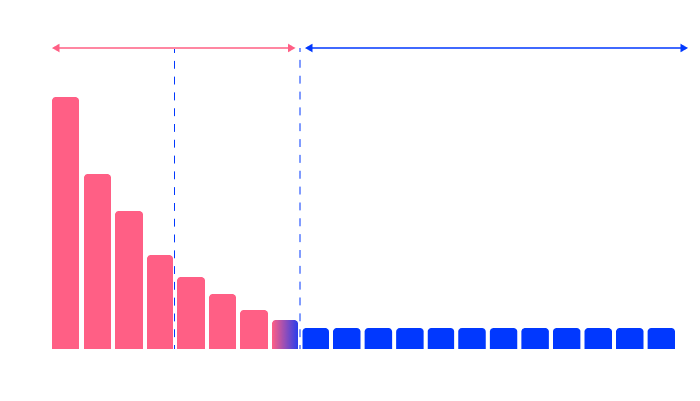
Most search demand sits in the long tail, thousands of specific, high-intent queries that traditional SEO programs rarely touch at scale.
CMAX is an agentic SEO platform that deploys and continuously updates content across those queries with two lines of code. Its AI-driven agents work programmatically, building pages that target the ways real buyers actually search, across both conventional search engines and AI-powered answer surfaces. Observed results across multiple campaigns show measurable traffic gains beginning within six weeks of deployment.
If you’re evaluating LLM SEO agency options, CMAX offers a different delivery model: automated scale and speed without the overhead of a large agency team or the bandwidth limits of a single consultant.
Author
Jeremy Tang
Founder and CEO of CMAX
Jeremy Tang is the Founder and CEO of CMAX. With over 2 decades of experience in business consulting and digital marketing, he has successfully driven seven startup businesses, six of which achieved $1 million in revenue from zero in less than 16 months, 5 of which grew to multi-million dollar a year ventures without any external funding. Jeremy's expertise lies in streamlining business processes through technology and leveraging digital (in particular SEO) for business growth. He resides in Australia, travels extensively, and draws inspiration from his global experiences.