Marketing what is SEO comes down to one thing: it’s the part of your marketing mix that captures demand already sitting in search engines, without paying per click. Most marketers know that much. The harder question is how SEO actually connects to the rest of your work, where progress shows up first, and what realistic timelines look like when your board wants results now. That’s the ground this piece covers, with practical checkpoints you can use to judge whether SEO effort is translating into business outcomes. CMAX works with enterprise teams solving exactly these problems at scale.
SEO is digital marketing’s organic search discipline.
Capturing existing search demand
When marketers ask marketing what is SEO, the short answer is that SEO earns visibility in unpaid search results. When someone types a query into Google, the pages that appear below the ads got there through relevance and trust signals, not a media budget. That distinction carries commercial weight: a well-optimised page can attract qualified visits repeatedly without a cost-per-click attached to each one.
Grasping the SEO marketing meaning starts here: search engine optimisation earns unpaid visibility by connecting a brand’s pages to the queries people are already typing into search.
The opportunity sits in matching pages to people who are already searching. They have a question, a problem, or a purchase in mind. SEO’s job is to make sure the right page appears when that intent surfaces, then gives the visitor a clear reason to stay. At its core, what is SEO in marketing is the practice of aligning page content with that existing demand.
SEO’s role in growth
SEO touches every stage of the buying cycle. A well-structured blog post builds awareness. A detailed service page supports consideration. A conversion-focused landing page closes the gap between interest and action. Improving discoverability across those stages is what makes SEO a growth input rather than a vanity metric. Framed another way, SEO meaning in marketing is the discipline’s ability to influence each of those stages through organic search.
Before mapping marketing what is SEO to a growth strategy, it helps to anchor the work in a clear SEO definition so every stakeholder shares the same baseline of what the discipline covers and what it does not.
It does not operate alone, though. Content production feeds it with material worth ranking. Analytics tells you which pages are pulling weight and which are leaking traffic. Conversion rate optimisation determines whether the visits SEO delivers actually turn into enquiries or revenue. Paid media insights often reveal which queries convert, shaping where organic effort goes next. Pull any one of those inputs and the whole system underperforms. SEO is the discipline that connects them around search demand, and that connective role is what is SEO marketing in practice.
SEO performance depends on four connected mechanisms.
Crawling and indexing access
Before a page can compete for any search query, a search engine must be able to find it, crawl it, and add it to the index. That sequence is a prerequisite, not a detail. Pages that are blocked by robots directives, buried too deep in site architecture, duplicated across multiple URLs, or excluded from the index through noindex tags simply will not appear in results, regardless of how well the copy is written or how strong the backlink profile is. Fixing crawl and indexation problems is often the fastest way to recover visibility that already exists on paper but is not reaching searchers. Anyone asking what is SEO digital marketing should start here, because none of the other mechanisms produce results if search engines cannot access the page in the first place.
Content, links, and experience
Once a page is accessible to search engines, three factors determine whether it earns qualified organic visits. Content signals relevance: a page that answers the query clearly and specifically gives search engines a reason to surface it for that search.[1] Links signal importance and context: when other pages link to a given URL, search engines use those signals to interpret how the page relates to a topic and how much weight to assign it.[2] Page experience determines what happens after the click. A page that loads slowly, presents information poorly, or leaves the visitor without a clear next step tends to produce a bounce rather than a conversion. All three factors work together. Strong content on a slow, poorly linked page will underperform. A fast, well-linked page with thin answers will too. The question of marketing what is SEO comes down to how well these three factors reinforce each other in service of a measurable business goal. Communicating these mechanics across teams becomes much simpler when you can confidently define search engine optimisation in terms of the four mechanisms, crawling, indexing, content relevance, and page experience, that actually drive organic visibility. Zooming out further, what is digital marketing if not the sum of channels like paid search, social, email, and SEO working toward the same revenue targets. SEO’s role within that mix is to capture demand that already exists in search behaviour and convert it through pages built around these four mechanisms.
SEO progress shows up in visibility, visits, and actions.
Search Console early signals
Search Console impressions and clicks are the most practical early indicators available to a marketing team. Impressions show whether pages are appearing for a broader set of queries; clicks show whether searchers are choosing them. Both signals move before enquiry or revenue data reaches a volume worth acting on, which makes them the right metrics to watch in the first weeks after a change goes live. If impressions are flat after a crawl or content fix, that tells you something specific: either the fix hasn’t been processed yet, or the underlying problem runs deeper.
Measuring a page refresh
A service-page refresh is best evaluated by comparing pre- and post-change impressions, clicks, and qualified enquiries side by side. At its core, what is SEO optimisation tests whether a revised page can earn more visibility and engagement from the same search landscape. That three-metric view answers three distinct questions: did the page become more discoverable, did searchers choose it more often, and did the added traffic produce business-relevant actions? Tracking all three prevents the common mistake of calling a refresh successful because clicks rose while enquiries stayed flat. The skill behind clearer on-page answers that lift click-through rates is what is SEO copywriting, and its impact shows up most clearly in the gap between impressions gained and clicks earned.
CMAX proof point
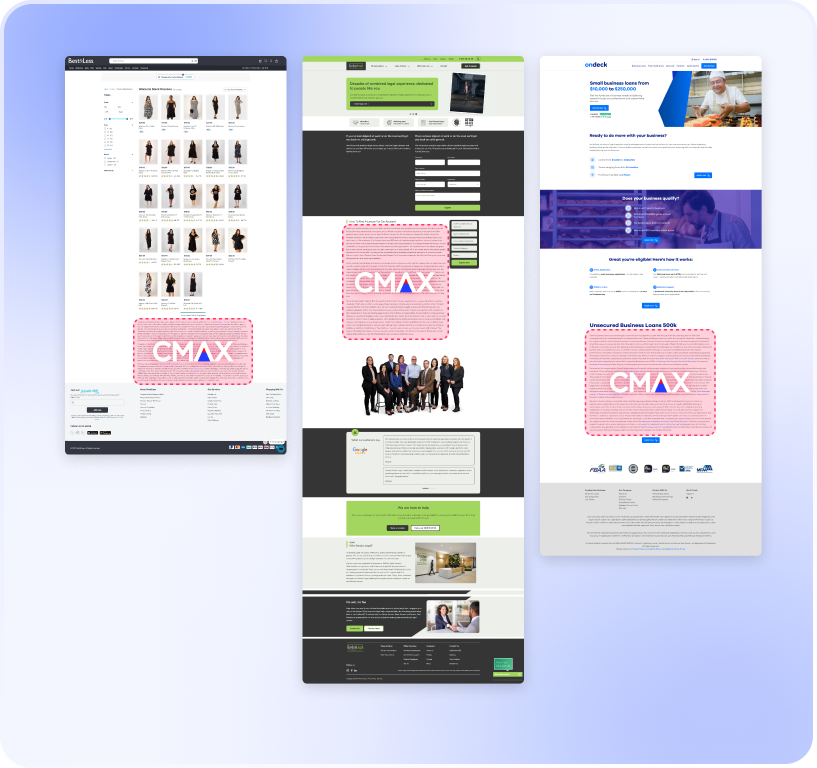
Based on CMAX’s client portfolio analysis, long-tail coverage gaps are a structural problem for enterprise teams with large catalogues. Teams asking what is ecommerce SEO face the same long-tail coverage problem: a small set of core pages rarely matches the full range of specific searches buyers use at different stages of a purchase decision. In one CMAX engagement, a B2B omnichannel hospitality retailer added 5,000 long-tail product pages and generated over $1M per month in incremental SEO revenue within 8 months. The mechanism was coverage at scale: more pages matching more specific queries, each one capturing demand that the existing catalogue was missing entirely.
SEO Timelines Vary by Site Conditions and Market Context
What Changes the Timeline
No two sites move at the same pace. Site health, crawl access, content gaps, competitor strength, and location-level demand all shape how quickly search engines can process changes and how much reachable opportunity exists once they do.
A site with crawl errors and thin coverage faces a longer runway than one with clean architecture and an established index footprint. A market with entrenched competitors requires more sustained effort than a niche with limited supply. Location-level demand adds another variable: a page targeting a regional query may move faster simply because fewer pages compete for it. Anyone asking what is local SEO marketing will recognise this dynamic, where geographic focus narrows the competitive set and can shorten the path to visibility.
These factors interact. Fixing crawl access on a site with strong content and few competitors can produce visible movement quickly. The same fix on a site with thin content in a saturated market will take longer to register. Multi-market campaigns add further complexity. Teams exploring what is international SEO quickly discover that each additional country or language multiplies the crawl, indexation, and content requirements, stretching timelines accordingly.
Marketers researching marketing what is SEO often land on the broader question of SEO what is SEO when they realise that the discipline’s scope is inseparable from setting realistic timeline expectations.
Why Results Are Not Instant
Search engines need time to recrawl updated pages, reassess their relevance, and compare them against every other page competing for the same queries. That process does not happen on a fixed schedule, and it does not produce uniform results across a site.
Visibility in Search Console, measured through impressions and clicks, typically moves before qualified enquiries or revenue do. A page can start appearing for more queries weeks before those appearances translate into business actions. That lag is normal, and it is why early-stage measurement focuses on discoverability signals rather than conversion data.
CMAX clients can start seeing results in six weeks, though the pace depends on the site conditions above.
An Expectations Checklist Keeps SEO Work Grounded
SEO Expectations Checklist
SEO rarely moves in a straight line, and rankings, traffic, and conversions do not shift in sync. A checklist built around marketing what is SEO keeps expectations grounded, giving marketers a stage-by-stage reference for judging whether an engagement is producing the right signals at the right time.
Teams working through this question for the first time often revisit the foundational question of search engine optimisation what is before building an expectations checklist that ties each stage of progress to a measurable signal.
Before major changes begin, baseline tracking should cover impressions, clicks, key landing pages, and qualified enquiries. Without that baseline, later gains are hard to attribute to specific pages or actions rather than broad site averages.
Early-stage progress shows up in crawlability, indexation, page coverage, and Search Console impressions. Revenue impact is not a fair measure at this point. Discoverability typically improves well before conversion data is large enough to draw conclusions from.
Mid-stage progress in what is SEO online marketing is visible in higher click volume, broader query coverage, and stronger landing-page engagement on refreshed or newly published pages. When those signals move together, it indicates pages are matching more searches and giving visitors a clearer next step.
Later-stage progress is measured through qualified enquiries, sales influence, or revenue contribution. Rankings alone are a weak finish line. A page ranking in position three for a low-intent query contributes less than a page ranking eighth for a query that consistently produces enquiries.
Each stage has its own evidence. Holding early work to a revenue standard, or treating mid-stage click growth as proof of commercial impact, produces the kind of misread that stalls investment decisions before the channel has had time to perform.
Channel Handoffs Are Clear So SEO Insights Inform Content Planning, Paid Search Targeting, Analytics Reporting, and Conversion Testing, Which Prevents Search Demand Insights From Getting Stuck Inside One Team
Cross-Team Coordination
SEO produces search traffic. What happens to that traffic depends entirely on what the rest of the team has built around it.
A landing page that ranks but fails to answer the visitor’s next question loses the visit. A conversion path that analytics hasn’t instrumented can’t be optimised. A paid search team that doesn’t know which organic queries are already converting will bid against its own wins. These are coordination failures, and they’re common.
Effective cross-team coordination starts with a shared definition of what search engine optimisation means in practice, so that when the question of SEO’s role surfaces as a strategic concern, every channel team, content, paid, analytics, and CRO, is working from the same baseline.
The fix is structured handoffs. When SEO and content teams share keyword and query data, content briefs reflect actual search demand rather than editorial instinct. When SEO and paid media teams align, high-intent queries can be covered organically while paid budget shifts to gaps or competitive terms. When SEO feeds into analytics reporting, the measurement framework captures organic visits, landing-page engagement, and qualified enquiries in one view rather than siloed channel dashboards. When CRO teams know which pages are receiving new organic traffic, they can prioritise tests where volume now justifies them.
A well-coordinated marketing SEO service depends on agreed handoff points: who shares what, when, and in which format. Search demand data has commercial value across the marketing function. Keeping it inside the SEO team limits what the whole programme can return.
Frequently Asked Questions (FAQ)
How do you measure SEO success beyond just rankings?
Rankings are one signal, but they don’t tell you whether SEO is producing business outcomes. A stronger measurement view combines impressions, clicks, landing-page visits, qualified enquiries, and downstream conversions. That mix shows whether organic search is driving actions that matter to the business, not just more visibility on a results page.
Is there a way to scale content creation with AI without sacrificing quality?
AI-assisted content scales more safely when teams work from approved source material, apply human review at each stage, and match output to page-specific search intent. That process reduces the risk of publishing pages that are generic, too similar to each other, or factually off. The guardrails matter as much as the speed.
How long does SEO take to work?
Some pages show early visibility movement within weeks, particularly when crawl or indexing issues are resolved first. Meaningful gains typically take longer because results depend on site health, competitor strength, content gaps, and how frequently search engines revisit the site. There is no single timeline that applies across all situations.
How do you optimise for AI?
Making pages easy for AI systems to parse, trust, and summarise is the practical goal.[3] That means clear structure, specific answers, consistent entity signals, and original information that a search engine or AI system can recognise as worth citing.
As marketing what is SEO evolves, practitioners are increasingly asking how traditional organic strategies hold up alongside AI search, where results are generated and summarised rather than simply listed.
Should I optimise my content for AI Overviews?
Optimising for AI Overviews is a reasonable part of broader organic search work, but the more durable priority is publishing genuinely helpful pages that answer specific queries clearly. Pages that answer marketing what is SEO clearly are the kind search engines and AI systems recognise as worth citing. Overview visibility can be useful, but it shifts too unpredictably to anchor a whole strategy around it.
SEO Is a Marketing Channel, CMAX Turns It Into a Growth Engine
Most teams treat SEO as a checklist. It’s not. It’s the organic-search discipline inside your marketing strategy, and it should drive measurable visits and qualified actions.
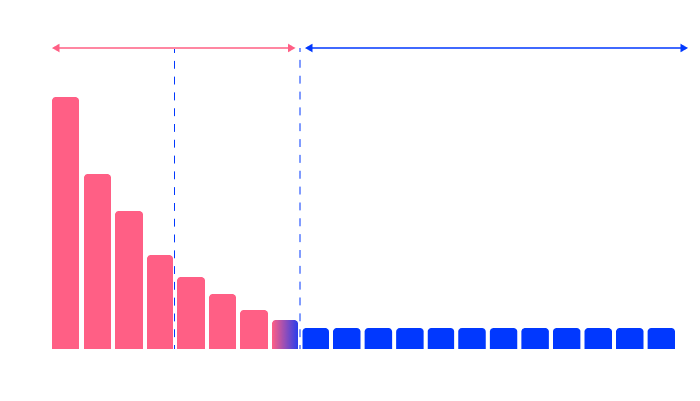
CMAX is an agentic SEO platform that deploys and continuously updates content across thousands of long-tail keywords, the 90% of search demand most strategies ignore. Two lines of code connect it to your site, and our AI agents handle page creation, optimisation, and iteration at a scale and speed manual teams can’t match. Teams typically see initial results within six weeks.
If SEO fits into your marketing mix, CMAX makes sure it actually performs there.
References [1] – https://developers.google.com/search/docs/fundamentals/creating-helpful-content [2] – https://developers.google.com/search/docs/fundamentals/seo-starter-guide [3] – https://developers.google.com/search/docs/fundamentals/ai-optimization-guide
Author
Jeremy Tang
Founder and CEO of CMAX
Jeremy Tang is the Founder and CEO of CMAX. With over 2 decades of experience in business consulting and digital marketing, he has successfully driven seven startup businesses, six of which achieved $1 million in revenue from zero in less than 16 months, 5 of which grew to multi-million dollar a year ventures without any external funding. Jeremy's expertise lies in streamlining business processes through technology and leveraging digital (in particular SEO) for business growth. He resides in Australia, travels extensively, and draws inspiration from his global experiences.