If you’re comparing a GEO agency Australia, start with what GEO means. It means showing up in AI answers.
That is the job SEO already does, extended to new places, and it shouldn’t create a second budget line. For a homewares brand, a GEO marketing agency should cover comparisons, use cases and questions about products for small spaces.
The real test is whether the agency builds coverage across detailed searches and keeps it current. A brief and a monthly report is a lot of paper for a flat line.
We work from that test. Our agents scope content and internal linking from your actual Search Console and analytics data, not guesswork.
That gives you a clear way to judge whether a GEO agency is doing the work or renaming what your SEO agency already does.
A GEO agency helps brands show up in AI answers and long-tail searches.
GEO, in plain English
GEO stands for generative engine optimisation. CMAX defines a GEO agency as a partner that expands long-tail coverage across Google and AI-generated answers.
If you’re asking what is generative engine optimisation, the short answer is SEO aimed at AI answers as well as search results. If you also need the baseline, what is search engine optimisation?
It is the work of making your pages easy to find and worth choosing when people search.
Google is direct on this: the best practices for SEO still apply in generative AI search, and optimising for it is still SEO. A credible GEO agency treats AI search optimisation as an extension of that work.
You will also see generative AI optimisation used as a label for the same job.
Why long-tail coverage matters
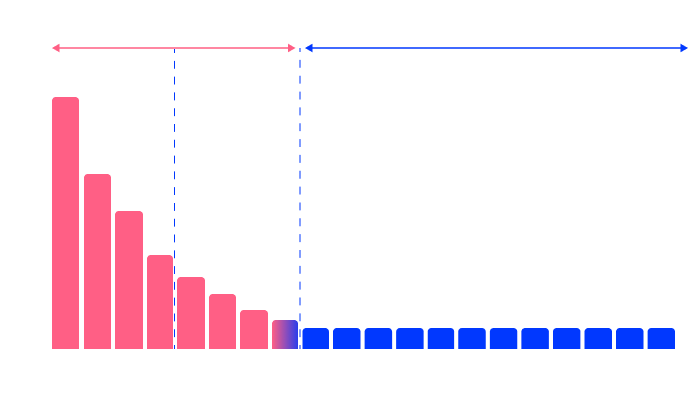
Most search and AI demand is in the long tail. Customers at a retailer, lender, healthcare provider, law firm, university or SaaS brand rarely search the obvious category term.
They search comparisons, price, availability, eligibility, risks and alternatives.
A GEO agency’s job is to increase content surface area. The GEO services you buy should answer more of those searches instead of betting the budget on a short list of head terms.
To optimise content for AI search, answer the detailed question a customer actually types.
The best GEO agencies build coverage, freshness and authority together.
Coverage plus freshness
A GEO agency maps the queries that matter, builds useful pages for them and keeps those pages current as demand shifts. AI answers and search results are typically built from pages that already explain a topic clearly.
Google’s software also revisits updated sites more often, so fresh pages are more likely to appear in its index. The generative engine optimisation GEO best practices come down to clear pages, wide coverage and regular updates.
Conventional vs agentic
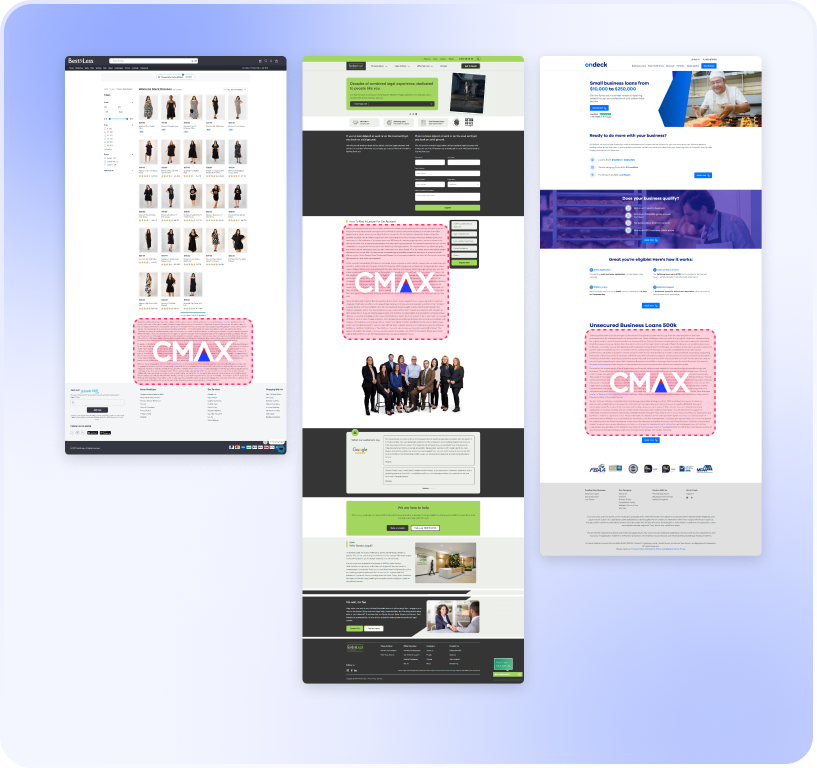
Conventional agencies often stop at briefs, blogs and monthly reporting. CMAX works as a GEO audit agency: we scope strategy and implementation from a three-day review of Google Analytics and Search Console.
CMAX is the Agentic SEO Platform. Its Dynamic Internal Linking and Full Body SEO connect related pages and refresh content from real search data.
Scale with brand control
At scale, GEO SEO only works if the content still sounds like the business and can pass legal or brand review. CMAX is trained on human-reviewed, client-approved content.
We use approved claims, tone, source material and traceable inputs before anything goes live, and we work without requiring a CMS migration. Ask any GEO digital marketing agency how it keeps tone and claims under control at that volume.
The right GEO agency should show its method, measurement and fit before you commit.
Measure more than publishing
A sound GEO vs SEO comparison shouldn’t turn on page count, because either label needs evidence beyond publishing volume. Any plan for AI search visibility optimisation should connect publishing with citations, search and AI visibility, qualified visits, direct visits and commercial outcomes like leads, bookings, purchases or assisted revenue.
Google Search Console now includes a Generative AI performance report showing impressions from AI Overviews and AI Mode. It gives your team one practical way to track part of that visibility.
Check technical and CMS fit
A generative engine optimisation agency should work across your CMS, analyse Search Console and analytics data, identify missing query coverage and make content accessible in text. Check that the generative engine optimisation services you’re quoted for cover that work.
Be wary of proposals built on shortcuts. Google states no special schema, AI text files or new machine-readable files are required for its AI features.
Ask about pace and proof
Google can show different local results interstate, so visibility depends partly on the searcher’s location. Most SEO programmes run by conventional agencies, using outdated methods, tell clients to expect results in six months.
CMAX’s methods allow clients to start seeing clicks well before that six-month mark. Timelines depend on the site, its competition and how the work is executed.
A serious GEO agency should explain what drives pace, what gets fixed first and which leading indicators it will report before broad ranking gains appear. That matters in any SEO vs GEO discussion.
Frequently Asked Questions (FAQ)
Can a GEO agency guarantee AI citations?
No credible GEO agency should. AI answers vary by query, model, location and the pages retrieved at that moment.
Google states its AI features may use different models and techniques, with responses and links that can vary. The practical goal is to improve eligibility, relevance and visibility.
Can a GEO agency correct inaccurate AI answers about my brand?
For inaccurate brand answers, the SEO vs AEO question matters less than fixing the source material AI systems rely on. Update key pages, align structured data with visible text, and make business details consistent across your website, Merchant Centre and Business Profile.
No agency can force a correction on a set date. Accurate source pages give AI systems better material to draw on.
Does my website need an LLMs.txt file for AI search?
No. Google states you don’t need to create new machine-readable files or AI text files like LLMs.txt. Creating them will neither help nor harm your visibility in Google Search, because Google Search ignores them.
Local results can differ between Melbourne and Sydney, and an LLMs.txt file doesn’t control that either. An effective GEO agency prioritises accessible pages, accurate information and established SEO practices.
GEO Agency Starts With Long Tail Coverage
A GEO agency is only as useful as the search coverage it creates. If your site doesn’t answer the specific ways people search, in Google or AI, you’re invisible for the demand you could have captured.
CMAX is the Agentic SEO Platform built around that reality. It helps brands expand content surface area across thousands of detailed searches, keep important pages fresh and connect related content so performance builds instead of stalling.
For law firms, that includes compliance-ready content through approved claims, connected content and updates based on real performance data.
The practical lesson in the AEO vs SEO debate is that AI didn’t replace SEO. It made breadth, freshness and connected content matter more, and that’s where we focus.
The quickest way to find out whether your site is missing demand is to look at the searches your customers make that it doesn’t answer yet. The review maps those gaps and gives you a baseline to judge any agency against.
If you’re curious as to how you’re performing on AI, book in a Missing Customer Map review with our Growth Team.
Author
Jeremy Tang
Founder and CEO of CMAX
Jeremy Tang is the Founder and CEO of CMAX. With over 2 decades of experience in business consulting and digital marketing, he has successfully driven seven startup businesses, six of which achieved $1 million in revenue from zero in less than 16 months, 5 of which grew to multi-million dollar a year ventures without any external funding. Jeremy's expertise lies in streamlining business processes through technology and leveraging digital (in particular SEO) for business growth. He resides in Australia, travels extensively, and draws inspiration from his global experiences.