Most teams try to find long tail keywords by pulling a list from a database, sorting by volume, and picking whatever looks easy to rank for. The problem is that approach skips the two checks that actually matter: whether Google treats the phrase as its own intent, and whether winning that visit would move the business forward. The methods here start with first-party Search Console data and live SERP signals, then layer in the sources tools tend to miss. CMAX applies this same signal-led approach when scaling long-tail content across large catalogues.
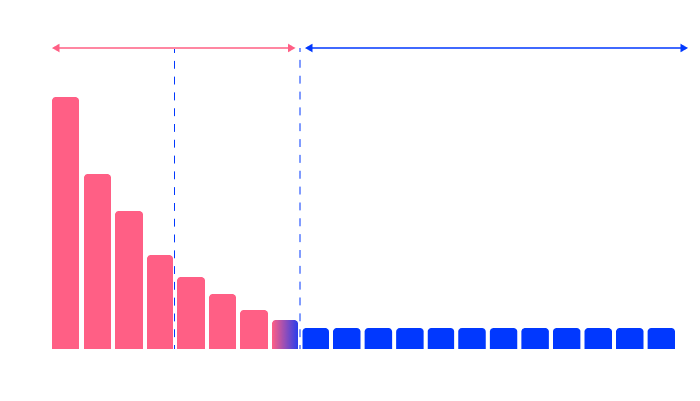
Long-tail keywords are found across multiple signal sources.
Long-tail discovery evidence rundown.
The most reliable way to find long tail keywords is to draw from multiple signal sources rather than a single database. Long tail keywords appear across several source types, and first-party query data, live SERP checks, and the language customers use in forums and reviews each reveal different things. A keyword database alone will not surface all of them. The goal is to separate terms that merely exist in a tool from terms that map to a real search task someone is actively performing.
Six sources do the heaviest lifting:
Search Console queries that already earn impressions or clicks are the clearest starting point, particularly terms where your site appears without a page built around that wording. That gap is a direct signal of unmet relevance.
Autocomplete suggestions show how searchers extend a broad topic into specific modifiers: use case, problem, comparison, location, compatibility, or audience. Each modifier can represent a distinct searcher need.
Related searches surface adjacent intents, follow-up questions, and qualifiers a head term does not cover on its own, which makes them useful for mapping the edges of a topic.
Forum threads and community sites capture the language people use when they describe a problem before they know the polished terminology. That wording often differs from what marketing copy uses, and it frequently converts well precisely because it mirrors how buyers think.
Keyword databases help expand coverage, identify recurring modifier patterns, and confirm whether a variant appears consistently across a topic set rather than in isolation.
Each source has a different blind spot. Combining them reduces the risk of building a keyword list that looks complete but misses the queries that actually drive decisions.
Finding long tail keywords is most effective when it sits within a broader search engine optimisation strategy that connects discovery, intent validation, and on-page execution.
Live SERPs That Show Whether Google Treats a Phrase as Its Own Intent, or Folds It into a Broader Synonym with Near-Identical Results
Search Console Finds Hidden Queries
Google Search Console surfaces something keyword databases rarely show: the exact queries your pages already appear for, including low-visibility terms that have accumulated impressions without a single heading, page title, or dedicated section built around them.
That gap is the signal. When a query earns impressions but your site has no page directly targeting that wording, Google has already matched your content to a real search task. The phrase exists in live demand, and you have a foothold you haven’t yet acted on. This is one of the fastest ways to find long tail keywords your pages already rank for but never targeted.
To find these, open the Performance report and filter for queries with impressions but low or zero clicks, or for terms sitting outside your strongest average positions. Those patterns point to existing relevance without dedicated coverage. A query appearing at position 18 with 400 impressions and no matching page title is a candidate worth examining, not discarding because the click count looks thin.
External tools have limitations in their coverage because they model search volume from panel data and aggregated signals. Search Console draws from your actual traffic, which means it catches phrasing that is specific to your audience, your product language, and the way real visitors describe what they need. That specificity is what makes it one of the clearest starting points when you want to find long tail keywords that are already within reach. When practitioners set out to find long tail keywords, they sometimes search for longtail keywords as a single word, though both spellings refer to the same concept of specific, lower-competition queries.
SERP analysis shows whether a query deserves its own page.
Intent clues reveal page worthiness.
The clearest signal that a query deserves its own page is a SERP that looks meaningfully different from its broader parent term. Pull up “fleet management software” and then “fleet management software for construction companies.” If the ranking pages change, the title language shifts toward industry-specific wording, or the page types move from broad overviews to vertical-specific solutions, Google is already treating those as separate jobs. That shift is the signal. A wording variation that returns near-identical results with the same ranking URLs does not warrant a separate page, it belongs on the page that already ranks. When two long tail keywords SEO candidates return overlapping URLs and identical result types, that SERP overlap confirms duplicate intent and a single page should cover both.
Check three things in the live SERP: which pages rank, what language appears in their titles and H1s, and whether the result types change (guides vs. product pages vs. comparison pages). Two out of three shifting is usually enough to confirm distinct intent. Before you build a page around a phrase, confirm the SERP treats it as its own intent, that is the step that turns the ability to find long tail keywords into actual page-level strategy.
Forums and SERP features surface demand.
Autocomplete, related searches, and People Also Ask results can surface problem-led phrasing before keyword databases catch up. A buyer researching a purchase rarely opens with a clean commercial query. They start with a problem description, a compatibility question, or an objection, and those phrasings show up in SERP features weeks or months before a tool assigns them reportable volume. Validating intent at this stage is what makes long tail keywords for SEO valuable rather than speculative.
As you find long tail keywords and analyse SERP results, it is worth noting how AI search features such as AI Overviews are reshaping which query types surface conversational or problem-led phrasing at the top of results.
Forums are particularly useful here. A thread where someone asks “does [product type] work with [specific integration]” is a keyword brief in plain language. It captures the exact modifier, the objection, and the audience segment in one place. Combine what you find in these sources with a live SERP check to confirm the phrasing pulls distinct results before committing to a page.
Profitability depends on business fit, not reported volume.
Score relevance, intent, and value.
Reported volume is a starting point, not a verdict. A query with 50 monthly searches that maps directly to a buying decision carries more commercial weight than a 5,000-search informational term that attracts researchers with no purchase intent.[1]
A practical prioritisation model runs each long-tail term through three checks. First, does the query match what the business actually offers? Second, does the wording suggest a buyer who is comparing options or moving toward a decision? Third, would ranking for that term produce a visit the business cares about? Terms that fail any one of these checks get deprioritised, regardless of volume. The practical keywords meaning shifts from search volume to conversion likelihood when you score relevance and intent. This keeps high-volume, low-fit informational queries from displacing the specific terms more likely to convert or support a sale.
The wording itself is often the clearest signal. Phrases that include a product type plus a qualifier such as pricing model, compatibility, or use case tend to indicate a buyer further along than someone searching a broad category term.
Every time you find long tail keywords and score them for business fit, evaluating each long tail keyword against intent signals and conversion relevance is what separates genuinely profitable targets from high-volume terms that rarely lead to action. Scoring relevance, intent, and business value is what separates a useful effort to find long tail keywords from a list that never converts.
CMAX proof point on scaled long tail.
The catalogue-scale version of this plays out clearly in one CMAX engagement: a B2B omnichannel hospitality retailer added 5,000 long-tail product pages and reached $1M+ per month in incremental SEO revenue within 8 months.
The mechanism is straightforward. When a large catalogue contains products that buyers search for using distinct, specific queries, a small set of broad pages will not cover that demand. Each distinct buyer intent needs a page built around it. Volume per query stays low; aggregate revenue does not.
Scaled coverage works when each page earns distinct intent.
Expand broad terms into qualifiers.
Expanding a broad term into qualified variants is the scaled version of the same process used to find long tail keywords one query at a time. A broad term like “fleet management software” can support multiple long-tail pages, but only when the qualifier genuinely changes what the searcher needs to evaluate. A logistics company comparing fleet software by integration compatibility has different objections, proof requirements, and decision criteria than a construction firm evaluating it by deployment model. Those differences warrant separate pages.
Modifiers that tend to shift the evaluation include industry, company size, integration, pricing model, deployment requirement, and use case. Each one can change the examples that resonate, the objections that need addressing, and the format that best answers the query. When the modifier changes none of those things, a separate page adds coverage without adding value.
Once you find long tail keywords and map them to distinct pages, SEO page optimisation ensures each URL has the right title, heading structure, and content depth to match the specific intent you identified.
Differentiate clusters and canonicals.
Topic clusters and clear canonicals keep scaled coverage from collapsing into repetition. When several phrases sit close together, the practical test is direct: if two keywords need the same page title, the same evidence, and the same answer, they belong on one page rather than two URLs.
Page-level differentiation comes from three variables: audience, modifier, and content angle. A page targeting “fleet management software for small fleets” and one targeting “fleet management software for enterprise logistics” can share a parent cluster while serving distinct readers with distinct proof. Without that separation in audience, modifier, or angle, scaled coverage risks thin pages that compete with each other rather than capturing additional intent.
Scaling the process to find long tail keywords across a large catalogue is ultimately one component of web search optimisation, which also covers technical structure, internal linking, and authority signals that help specific pages reach the right searchers.
Frequently Asked Questions (FAQ)
How can you find long tail keywords on other websites?
Review a competitor’s indexed pages and look for patterns in title tags, subfolder structures, FAQ headings, internal anchor text, and ranking snippets. Those elements reveal which modifiers, use cases, and audience segments the site treats as distinct enough to warrant their own pages, giving you a working map of gaps your own coverage may not yet address.
What’s the best way to find long-tail keywords?
Knowing what are long tail keywords helps frame why the best discovery method combines multiple sources. Combine Search Console, autocomplete, related searches, forum language, keyword databases, and live SERP checks. Then cut any term that doesn’t match your offer or fails to show meaningfully distinct intent from a phrase you already cover. No single source is sufficient on its own; the combination is what separates real opportunities from database noise.
How to find long-tail opportunities using Google Search Console?
Filter the Performance report for queries with impressions but low clicks, or for queries sitting at average positions outside your strongest rankings. Both patterns can indicate that Google already associates your site with a phrase, but no page directly targets it, a clear signal to act.
How to search long tail keywords for products?
Start with the product type, then layer in modifiers buyers actually use: size, material, compatibility, feature, problem solved, alternative, or application. Confirm in the live SERP that the modifier shifts the results enough to justify a dedicated page.
Any free long tail keyword tools?
Google Search Console, Google autocomplete, related searches, People Also Ask, and forum search can all function as a capable long tail keywords finder, surfacing ideas even when paid databases report little or no volume. No single long tail keyword finder will cover every angle, so use several for discovery first, then validate intent in the live SERP before committing to coverage.
If you want to go deeper after learning how to find long tail keywords, a well-maintained search engine optimisation blog can provide ongoing method updates, case studies, and tool comparisons to keep your research current.
Most Search Demand Is Specific, CMAX Was Built for That
Over 90% of search and AI demand sits in long tail queries. Most platforms weren’t designed to capture it.
CMAX is an agentic SEO platform that deploys and continuously updates content across the thousands of specific ways customers search for what you sell. Two lines of code connect it to your site, and AI-driven agents handle the creation, targeting, and refinement at a scale manual teams can’t match. Results typically begin within six weeks.
If you’re looking to find long tail keywords and actually convert that traffic, CMAX turns discovery into deployed, revenue-focused pages, without stretching your team thin.
References [1] – https://searchengineland.com/guide/long-tail-keywords-seo
Author
Jeremy Tang
Founder and CEO of CMAX
Jeremy Tang is the Founder and CEO of CMAX. With over 2 decades of experience in business consulting and digital marketing, he has successfully driven seven startup businesses, six of which achieved $1 million in revenue from zero in less than 16 months, 5 of which grew to multi-million dollar a year ventures without any external funding. Jeremy's expertise lies in streamlining business processes through technology and leveraging digital (in particular SEO) for business growth. He resides in Australia, travels extensively, and draws inspiration from his global experiences.