Most teams evaluating GEO services already run solid SEO programmes, so the real question is where generative engine optimisation starts and where existing work already covers the ground. The boundary matters because scoping GEO too broadly means paying twice for technical SEO you already have, while scoping it too narrowly misses the entity clarity, query coverage, and citation monitoring that actually affect AI-answer visibility. CMAX publishes its service scope and measurement methods so teams can compare what is included before committing budget.

GEO Services Have a Defined Scope

GEO Means Generative Engine Optimisation

When buyers evaluate GEO services, the first question is what the term actually covers. On this page, GEO refers to generative engine optimisation services for AI-answer visibility. It does not refer to geographic information systems, location-based mapping services, or spatial data platforms. The term pulls in results from both categories, and the service boundaries look nothing alike, so that distinction is critical for buyers comparing vendors. This page covers the AI-visibility definition only.

GEO Supports AI Visibility

GEO optimisation is the working term for how content is shaped so AI systems can interpret, retrieve, and cite it when generating answers. That scope sits on top of foundational SEO, which still handles crawlability, indexing, and conventional ranking signals. The two are not interchangeable, and GEO does not replace the basics.

Buyers comparing GEO services providers benefit from knowing that generative engine optimisation services typically span entity clarity, structured content, indexing readiness, and citation monitoring as distinct workstreams. For organisations evaluating GEO Australia providers, the starting point is what the service layer includes and how it differs from conventional SEO.

Evaluate GEO as an additional layer of work. A page that cannot be crawled or indexed cannot be retrieved by an AI system either, so the foundational layer remains a prerequisite. What GEO adds is the work that makes already-indexable content easier for AI systems to parse, attribute, and quote with confidence. That includes how entities are named, how answers are structured, and how evidence is placed relative to the claims it supports.

The service boundary is broader than keywords.

GEO Scope vs Traditional SEO

A practical GEO engagement draws a clear line between work that improves AI-answer retrieval and citation, and work that belongs to established SEO services disciplines like technical health, indexing, and rank tracking. Both matter. The distinction is which outcome each workstream is designed to move.

Entity definitions are written so AI systems can connect a page to the correct company, product, service, policy, or topic without inferring meaning from vague labels. A page that names its subject precisely gives retrieval systems less room to misattribute or skip it.

Adjacent query coverage extends the page beyond one exact phrasing to answer the broader user need. When closely related questions are addressed on the same page, near-identical queries are less likely to require separate pages, and the content becomes a more reliable retrieval surface across a wider range of prompts.

Citation-friendly structure places direct answers, supporting context, and attributable evidence next to the claims they support. Individual passages become easier for AI systems to quote or summarise accurately, which is a different structural goal from optimising for a featured snippet or a ranked position. GEO services address retrieval and citation across AI systems broadly, and teams researching that scope often encounter answer engine optimisation as a related discipline focused on how AI assistants surface direct responses. For organisations that already invest in online SEO services, GEO adds a distinct layer by targeting how AI models retrieve and cite content rather than how pages rank in traditional results.


Indexing readiness sits at the foundation. Crawlability, internal linking, canonicals, and related technical signals determine whether a page is discoverable before any retrieval or citation question becomes relevant. GEO work that skips this check is built on an untested assumption.

These workstreams define where GEO-specific scope begins and where conventional SEO disciplines remain the right tool.

Citation monitoring is separated from rankings and traffic so teams can see whether AI mentions are rising, flat, or absent, even when traditional SEO metrics move differently.

Core GEO Workstreams

GEO scope in practice covers five distinct workstreams, each addressing a different layer of AI-answer visibility.

Entity clarity defines who or what a page is about in terms AI systems can resolve without guessing. Vague labels get replaced with explicit names, categories, and relationships.

Broader query coverage extends a page beyond one exact phrasing to answer the range of closely related questions a user might ask, reducing retrieval gaps across near-identical intents.

Structured and sourceable content places direct answers, supporting context, and attributable evidence together so individual passages can be quoted or summarised with confidence.

Indexing readiness covers crawlability, internal linking, and canonicals. A page that AI systems cannot find cannot be cited, so this workstream overlaps with foundational SEO without replacing it.

Citation monitoring tracks whether pages appear in AI-generated answers as a separate signal from rankings, clicks, and traffic. Eligibility and answer-surface visibility are not the same metric, so teams that read one as a proxy for the other risk misreading the data. Teams already investing in SEO services Melbourne or SEO services Sydney often find that citation monitoring reveals a visibility layer their existing reporting misses.

That boundary is what separates GEO services from pure content production on one side and standard technical SEO on the other. As a provider of SEO services Brisbane organisations rely on, the same principle applies: if citation data is absent from reporting, a full layer of AI visibility goes unmeasured. Teams evaluating a provider can use these five workstreams as a scope checklist: if a proposed engagement does not address all five, the gap is worth naming before work begins.

AI Visibility Depends on Retrieval and Evidence

Clear Entities Improve Citation Chances

What makes GEO services effective is the retrieval mechanism underneath. AI systems retrieve and cite content by assessing how confidently they can interpret a page. When a page names entities unambiguously, such as the specific company, product, service, or policy being discussed, an AI system can connect that content to the right query without inferring meaning from vague labels. Add direct answers to closely related query variants, and the page covers more of the retrieval surface. Place attributable evidence next to the claim it supports, and individual passages become easier to quote or summarise accurately. Clearer pages are easier to retrieve, interpret, and cite with confidence.

Search Eligibility and Citation Metrics Differ

GEO services work on top of foundational SEO, not instead of it. Crawlability and indexing still determine whether a page can be found at all. Search-engine guidance is explicit on this point: eligibility to appear in search and visibility in AI-generated answers are distinct signals, and one does not stand in for the other.[1] A page that ranks well may still be absent from AI citations if its structure makes it hard to parse. A page optimised for citation may not move rankings. Citation visibility should be tracked separately from rankings, clicks, and traffic, because each metric reflects a different stage of how content reaches a reader.

Measurement needs its own scorecard.

Separate Visibility From Traffic Metrics

GEO reporting works harder when citations, rankings, clicks, referral traffic, and downstream conversions are tracked as distinct signals. Each reflects a different stage of visibility and commercial impact: a citation confirms retrieval, a click confirms interest, a conversion confirms value. Collapsing them into a single metric obscures where the gap actually sits. If citations are rising but traffic is flat, the issue is likely on-site performance or intent mismatch, not retrieval failure. If neither is moving, the problem is earlier in the chain. For providers offering SEO services Australia-wide, separating citation data from traffic metrics is the clearest way to show where AI visibility is moving independently of rankings. Search-engine guidance draws a clear line between search eligibility and answer-surface visibility, treating them as separate signals rather than proxies for each other. That separation belongs in your reporting framework too.

GEO services reporting becomes clearer when teams distinguish citation visibility from traffic metrics, a discipline that overlaps with answer engine optimisation in its focus on how AI systems select and surface specific content passages.

Better Structure Can Improve Eligibility

A service page becomes more usable for AI retrieval when vague copy is replaced with explicit definitions, broader topic coverage, and a structure that places individual claims where they can be quoted or summarised without extra interpretation. The practical test is straightforward: can a single paragraph answer a precise question clearly enough to stand on its own? If the answer requires reading three surrounding paragraphs for context, the structure is working against retrieval. Replacing hedged language with direct statements, naming entities precisely, and placing supporting evidence next to the claim it supports all reduce the interpretive load on AI systems, which makes the page a more reliable source to cite. That structural discipline is what separates competent GEO services from surface-level optimisation work.

Enterprise Evaluation Benefits From Documented Methods

Enterprise Proof by Mechanism

One CMAX engagement with a B2B omnichannel hospitality retailer illustrates the retrieval logic directly. Based on CMAX’s engagement data, the retailer added 5,000 long-tail product pages and recorded over $1M per month in incremental SEO revenue within 8 months. The mechanism was catalogue-scale query coverage: more pages built around specific queries created more precise entry points for search systems to find and retrieve. The same principle carries into GEO. When AI systems have more query-specific surfaces to evaluate, they have more opportunities to retrieve and cite content with confidence.

GEO services delivered at enterprise scale are typically scoped and executed by a GEO agency that can document methodology, entity work, query coverage, and citation monitoring across a full account.

Documented Methods Matter More Than Promises

When evaluating GEO providers, ask how they work, not what they promise. Credible providers of GEO services document scope, measurement methods, and observed patterns. They should be able to explain how they assess entity clarity, query coverage, indexing readiness, and citation tracking in concrete terms.

What to treat as a red flag: guaranteed citations, guaranteed rankings, guaranteed traffic outcomes, or fixed timelines to results. AI retrieval depends on how well content is structured and how clearly entities are defined. No provider controls the retrieval decisions of third-party AI systems, and any claim to the contrary should prompt harder questions before a contract is signed.

The practical test is whether a provider can show you their methodology on paper, not just describe it in a sales call.

GEO services engagements are easier to evaluate when a generative engine optimisation agency can present documented account patterns, observed citation outcomes, and a clearly defined scope rather than outcome guarantees.

Frequently Asked Questions (FAQ)

How can we tell if our content is being featured in AI tools?

Track citations and mentions as a separate data stream from organic rankings and analytics. Compare those citation observations against referral behaviour and conversion data over time. That separation is what reveals whether AI visibility is rising even when traffic stays flat.

How do AI engines choose which content to cite?

AI engines favour content that is easy to retrieve and summarise. In practice, that means pages with clear entity references, direct answers to specific questions, and supporting evidence placed close enough to the claim that it can be attributed with confidence.

How is GEO impacting my site’s analytics?

GEO affects analytics unevenly. An increase in AI citations does not reliably produce matching increases in organic rankings, clicks, or on-site traffic. Each signal reflects a different stage of visibility, so teams need to read them together rather than treat one as a proxy for the others.

How often should we update content for GEO?

Update when definitions become unclear, evidence goes stale, adjacent query coverage is thin, or changes in products, policies, or demand create retrieval gaps. A fixed publishing cadence is the wrong trigger. Content accuracy and coverage gaps are the right ones.

What kind of content works best for GEO?

Content that answers a narrow question directly, names the relevant entities precisely, and includes supporting facts in a format that search engines and AI systems can parse without extra interpretation. Pages built around one clear intent are typically more citable than pages that try to cover everything at once.

GEO services buyers who encounter the term generative search optimisation agency should verify whether the provider’s scope includes entity work, query coverage, and citation tracking, or whether it overlaps primarily with conventional SEO deliverables.

Two Lines of Code, Thousands of Long-Tail Keywords

CMAX is an agentic SEO platform built for programmatic scale.

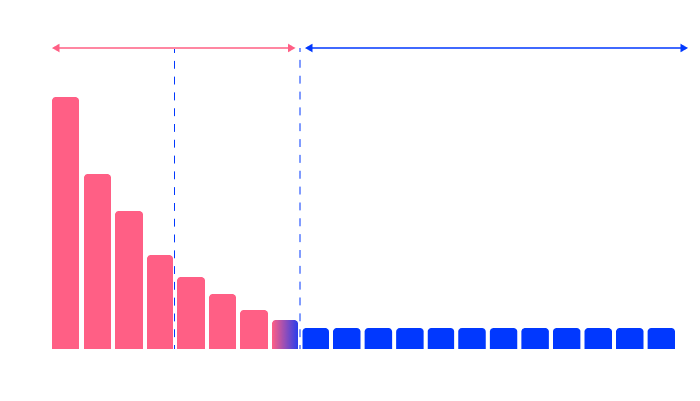
Our AI agents deploy and continuously update content targeting the long-tail queries that make up over 90% of search and AI demand, the high-intent phrases most businesses never reach. CMAX integrates with two lines of code, so teams stay lean while output grows. Results have been observed in as few as six weeks across documented accounts.

When the conversation shifts from traditional SEO to GEO services and AI-answer visibility, the same foundation applies: structured, entity-rich content deployed at speed and refined by agents that adapt as search behaviour changes.

References [1] – https://developers.google.com/search/docs/fundamentals/ai-optimization-guide