Most generative engine optimisation services packages look similar on paper: technical audits, content structuring, entity work, monitoring. The differences show up in what each deliverable actually maps to, what gets excluded, and how results are reported separately from standard SEO metrics. Without those distinctions, you end up comparing broad retainers where AI search work is buried and scope stays vague. The comparison framework below breaks each element into observable outputs and clear boundaries, with CMAX included where its first-party evidence is relevant to the evaluation.
Generative Engine Optimisation Packages Extend Beyond Standard SEO
Core GEO Package Elements
Generative engine optimisation is the working term for a discipline that sits alongside, but operates differently from, traditional SEO. A credible generative engine optimisation services package is built around four distinct workstreams, each with a specific job to do.
When evaluating generative engine optimisation services, it helps to know what is generative engine optimisation and what it actually covers across technical, content, entity, and monitoring workstreams before comparing packages.
Technical eligibility covers the crawlability and retrieval signals that determine whether a page can be accessed and parsed by AI systems in the first place. Without this foundation, content structuring work has nowhere to land.
Entity reinforcement connects the brand consistently to the right topics across the web, so models can recognise the source as relevant when assembling a generated answer.
Citation-ready content structuring shapes pages so that individual passages are easy to extract and attribute. This is different from writing for rankings; it means organising information at the passage level, not just the page level. This retrieval-focused work is sometimes referred to as generative search optimisation, reflecting the emphasis on how AI systems pull and cite source material.
Monitoring across AI search surfaces gives teams a documented view of where visibility appears and where it does not, across the platforms and prompt sets the provider actually tracks.
A package missing any of these workstreams is likely relabelled SEO with a generative engine optimisation GEO (GEO) label applied at the proposal stage.
A well-structured generative engine optimisation services package should define what GEO services include across technical eligibility, content structuring, entity reinforcement, and monitoring, as well as what they explicitly exclude.
Citation Goals Need Separate Reporting
Citation opportunity operates on a different axis from rankings, clicks, and conversions. Each answers a different question, and collapsing them into a single SEO summary obscures what is actually changing.
A credible package defines a separate baseline for prompt visibility and cited-answer presence from day one, then reports those figures alongside organic traffic and commercial outcomes. That separation is what lets a buyer tell whether AI search presence is improving independently of broader SEO movement, or whether the two are simply being conflated.
Package scope is clearest when each deliverable maps to an output.
Deliverables should map to outputs
Every technical fix and content structuring decision in a GEO package should connect to an observable output. Better crawl access, clearer passage retrieval, stronger source attribution, more consistent entity recognition, these are the mechanisms that can improve citation opportunity. They are also the only things a provider can actually move. No deliverable should be framed as a guarantee that any page will appear in a generated answer, because that selection happens at the model layer, outside the provider’s control.
If a deliverable cannot be tied to a specific, inspectable output, it does not belong in a credible scope.
GEO scope boundaries checklist
Buyers can compare generative engine optimisation services more reliably when a package names every included output and every explicit exclusion. Buyers comparing generative engine optimisation services should ask any generative engine optimisation agency to map each deliverable to a specific, observable output rather than bundling AI search work inside a broad SEO retainer. Standard search engine optimisation services focus on rankings and traffic; a GEO package adds citation tracking and entity-signal work. Hiding AI search work inside a broad SEO retainer leaves scope, ownership, and reporting open to interpretation.
Many buyers already hold SEO services contracts that cover technical health and content production. Layering a GEO scope on top, with its own deliverables and reporting lines, prevents the two workstreams from blurring together.
Included:
- Technical audits and implementation that improve indexability, structured content access, internal linking, and other retrieval-eligibility signals the provider can directly change
- Content planning and page structuring around defined entities, topics, and query variants, so AI systems can identify relevant passages and attribute them to the right source
- Entity-signal work: consistent naming, supporting references, and corroborating content that helps models connect the brand to the right topics
- Monitoring for citations, assisted visits, ranking movement, and conversions as separate tracked outputs, each with a documented method
Excluded:
- Guaranteed placement in ChatGPT or any other AI tool, retrieval layers, model choices, and answer generation sit outside agency control
- Claims of universal coverage across every model, browser, or answer surface unless the provider specifies exactly which environments are monitored and how often
- Untracked attribution claims that treat any lift in branded traffic or leads as proof of AI citation impact without a fixed prompt set and a consistent observation method
Evidence and Timelines Separate Credible Services from Relabelled SEO
No Credible Provider Guarantees Placement
Any provider that promises placement in ChatGPT is selling something they cannot deliver. Inclusion in a generated answer depends on whether the content is indexed, whether the relevant passage is retrievable at the moment a query fires, how current the information is, and how the model assembles its response.[1] None of those factors sit inside an agency’s control.
What separates credible generative engine optimisation services from relabelled SEO is the evidence behind each claim. A credible generative engine optimisation agency should be able to show an attributed before-and-after result. The distinction is precise: the provider can improve crawlability, passage structure, entity clarity, and corroborating signals. Whether a model selects that passage for a specific answer on a specific day is a retrieval decision made outside the provider’s remit. Packages that blur this line should be treated as a red flag during evaluation.
When assessing generative engine optimisation services for credibility, one useful step is reviewing how a GEO agency documents its evidence methodology, timeline expectations, and scope boundaries before any engagement begins.
Expect Weeks for Signals, Months for Patterns
Early indicators can surface within weeks. Indexing status, query spread, and assisted visits are observable relatively quickly once technical and content work is in place, and a team can inspect them directly without waiting for a full measurement cycle.
Reliable citation patterns take longer. Months of measurement against the same prompt set, the same baseline, and the same review method are needed before any observed pattern can be treated as real rather than anecdotal. A provider that reports citation impact after four weeks, without a fixed prompt set or documented observation method, is presenting noise as signal. Buyers should ask for the methodology before accepting the result.
Measurement frameworks make service comparisons more credible.
A measurement framework gives buyers a structured way to evaluate generative engine optimisation services against observable outcomes.
Report metrics by funnel stage
Bundling citation share, assisted visits, organic rankings, and conversions into a single SEO summary obscures what’s actually happening. Each metric answers a distinct question.
Citation share tells you whether the brand appears in generated answers. Assisted visits tell you whether that visibility is driving traffic. Organic rankings tell you whether broader search presence is improving. Conversions tell you whether any of it produces commercial value.
A package that reports all four separately gives you a clear line of sight from AI retrieval through to revenue. A package that folds them together makes it impossible to diagnose what’s working or defend the spend to a CFO.
Generative engine optimisation services become easier to evaluate when a generative search optimisation agency provides separate reporting for citation share, assisted visits, and organic rankings rather than folding all metrics into a single SEO summary.
When evaluating generative engine optimisation services, ask each provider to show you a sample report. Tracking AI engine optimisation outcomes means separating citation share from organic ranking movement. If citation presence and organic traffic share the same row, the measurement framework isn’t built for GEO.
CMAX proof point
The same coverage logic that drives SEO results applies directly to GEO. AI retrieval favours sources with specific, well-structured content across a wide range of query variants, not a handful of optimised head terms.[2]
In one CMAX engagement, a B2B omnichannel hospitality retailer added 5,000 long-tail product pages and generated over $1M per month in incremental SEO revenue within 8 months. Broad, structured coverage at scale is what creates the retrieval surface AI systems draw from. A narrow content footprint limits citation opportunity regardless of how well individual pages are optimised.
Frequently Asked Questions (FAQ)
How do AI engines choose which content to cite?
Generative engine optimisation services address visibility across AI answer surfaces, starting with the fundamentals models need to retrieve and cite a source. In practice, that means crawlable pages, clear topical focus, passage-level structure that makes extraction straightforward, and corroborating web signals that help the model identify the source as relevant and reliable.
How is GEO impacting my site’s analytics?
GEO rarely shows up as a clean traffic line. It surfaces indirectly through assisted visits, shifts in branded search behaviour, changes in landing-page entry patterns, and conversion paths that started somewhere else. Citation tracking needs its own reporting column alongside standard analytics rather than being inferred from traffic movement alone.
Generative engine optimisation services share significant overlap with answer engine optimisation in their focus on making content extractable, attributable, and citable within AI-generated responses.
How can we tell if our content is being featured in AI tools?
Track a fixed prompt set, record whether your brand or URLs appear in cited answers over time, and compare those observations against referral, ranking, and conversion data using the same review process each period. A business that already invests in search engine optimisation Perth can layer GEO monitoring onto that existing programme. Consistency in method is what separates a real pattern from a coincidence.
Do we need to optimise differently for each AI tool?
Start with shared fundamentals: crawlability, clear entity signals, and passage-level structure. Then adapt monitoring, prompt sets, and interpretation by platform, because tools differ in how they retrieve, present, and attribute sources.
Teams building a generative engine optimisation services strategy will find that the fundamentals of answer engine optimisation, crawlable pages, clear entity signals, and passage-level structure, form the same technical foundation regardless of which AI platform is being monitored. Teams running search engine optimisation Sydney campaigns should add citation tracking as a parallel reporting line.
How often should we update content for GEO?
Update when the underlying facts, offering details, entity context, or search language materially change. Freshness only improves citation opportunity when the revision adds accuracy, completeness, or retrieval relevance.
Most Search Demand Is Invisible to Your Current Strategy
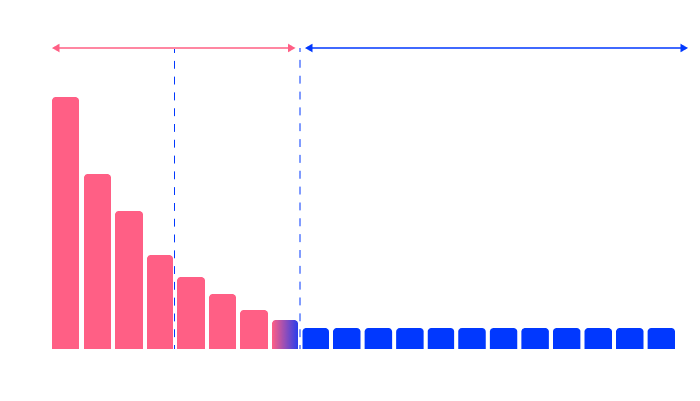
Over 90% of search and AI demand sits in the long tail, thousands of specific, high-intent queries your site probably doesn’t cover.
CMAX is an agentic SEO platform built to close that gap at scale. Two lines of code deploy AI-generated content across the long-tail keywords your buyers actually type, and autonomous agents continuously update that content as search behaviour and model outputs shift. Results have been observed within six weeks across defined client cohorts, with content acting as a compounding asset: more pages, more coverage, more captured demand.
If you’re evaluating generative engine optimisation services, the question isn’t whether AI-driven search matters, it’s whether your current setup can keep pace with it.
References [1] – https://developers.google.com/search/docs/fundamentals/ai-optimization-guide [2] – https://arxiv.org/abs/2311.09735
Author
Jeremy Tang
Founder and CEO of CMAX
Jeremy Tang is the Founder and CEO of CMAX. With over 2 decades of experience in business consulting and digital marketing, he has successfully driven seven startup businesses, six of which achieved $1 million in revenue from zero in less than 16 months, 5 of which grew to multi-million dollar a year ventures without any external funding. Jeremy's expertise lies in streamlining business processes through technology and leveraging digital (in particular SEO) for business growth. He resides in Australia, travels extensively, and draws inspiration from his global experiences.