A generative engine optimisation agency helps your brand show up when customers ask ChatGPT or Google’s AI tools for recommendations.
Good AI search optimisation gives those tools useful pages of yours to retrieve when they build a recommendation.
You’ve probably seen your brand missing from one of those answers and wondered what it costs you in sales. An AI answer that leaves you out is still an answer. It just isn’t yours.
The reason starts with the searches you don’t cover at all: the specific questions customers ask when they compare products or check whether something suits them.
Most sites answer only the easy questions. That leaves AI systems little else of yours to retrieve.
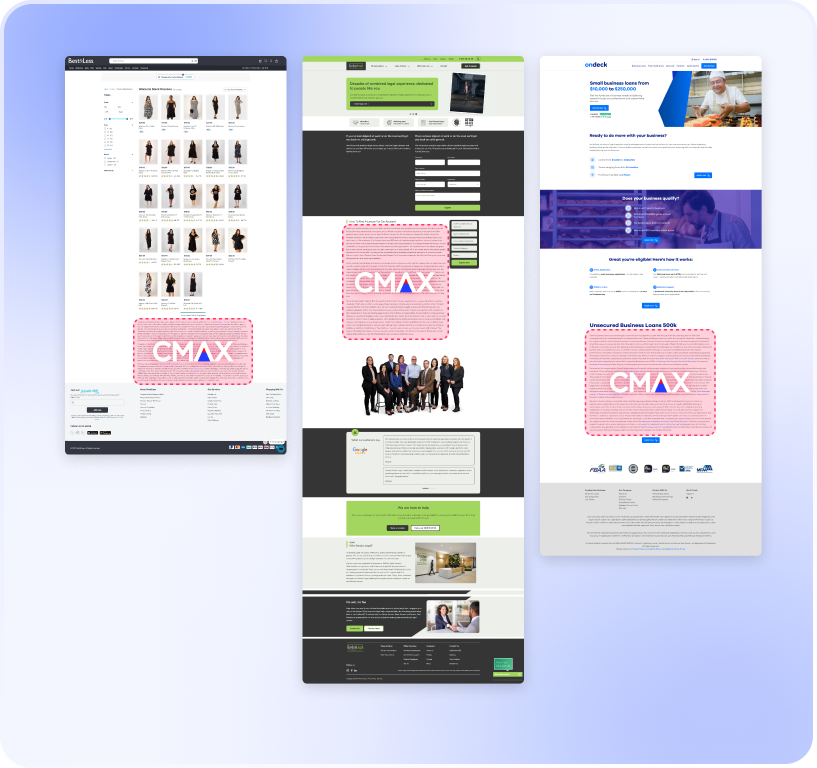
CMAX starts from the same place. We build long-tail content that gives AI and Google more of your pages to pull from. CMAX builds AI visibility by expanding that content and reporting the clicks, conversions and sales that follow.
This agency helps brands show up in AI-generated answers by covering the searches customers actually make.
Long-tail coverage matters most.
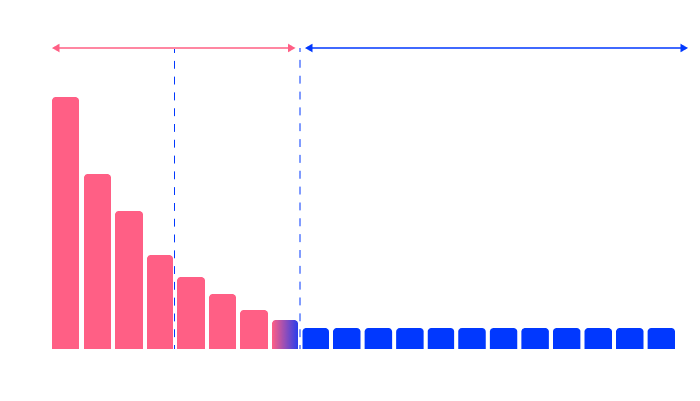
Effective generative engine optimisation services work when a brand has pages for the specific searches people run when they compare products, check suitability or solve a problem. A homewares retailer needs answers for “best sofa bed for small apartment” and “how firm should a sofa bed mattress be,” not just “sofa bed.” Ahrefs reports 94.74% of keywords get 10 monthly searches or fewer.
To optimise content for AI search, a generative engine optimisation agency maps those specific questions, such as sofa-bed firmness, then expands into the connected category content. Strong LLM SEO needs more than category terms, because AI systems can only retrieve pages they can find. Fewer relevant pages means fewer appearances in their answers.
GEO complements SEO.
GEO is SEO applied to the way people now discover brands through AI. Google’s generative AI features run on its core Search ranking systems, pulling relevant, up-to-date pages from Google’s index. When an AI tool fans out across several Google searches to build one answer, your coverage across those searches decides whether your brand appears.
Useful answer engine optimisation services complement SEO by covering the smaller Google searches an AI engine runs to build one response. An agency that sells GEO as a replacement for SEO is selling the wrong thing.
CMAX focuses on the content signals that help AI and search systems trust a brand more often.
Long-tail, freshness, and linking.
Over 90% of search and AI demand is in the long tail. CMAX uses GEO generative engine optimisation to target that demand with answer-first content, fresh updates and Dynamic Internal Linking. Within CMAX, generative engine optimisation GEO combines those parts across topic clusters. That is what AI search visibility optimisation looks like in practice: more connected pages that answer real questions.
Dynamic Internal Linking places each page inside a wider topic cluster. That gives search systems the surrounding context they need to retrieve the page with confidence.
Human-reviewed, connected coverage.
CMAX is trained on human-reviewed, client-approved content, and uses Full Body SEO to build depth, structure and connected coverage at scale. Controlled AI content optimisation starts from that approved material before we expand coverage. That is AI driven content optimisation with a person checking the source.
CMAX is the Agentic SEO Platform: it expands coverage, checks performance and updates content continuously. Template-based publishing produces pages and stops.
Measurement ties visibility work to search performance and business impact instead of vague AI claims.
Measure search visibility and business impact.
Start with Search Console. It gives a generative engine optimisation agency concrete evidence through clicks, impressions, CTR and average position, all for free. Add conversions and direct visits, and you get a picture that connects visibility to revenue.
Among generative engine optimisation tools, prompt tracking tools repeatedly ask ChatGPT questions and record whether your brand appears. They’re directional at best. An agency can tie its reporting to commercial outcomes, which a prompt-tracking provider can’t. Any generative engine optimisation services you buy should report in those terms.
Some campaigns need location-specific proof. Reporting can separate demand for generative engine optimisation Perth from demand for answer engine optimisation Brisbane, because geography changes the queries and the opportunities worth covering.
Faster feedback than conventional SEO.
For teams running answer engine optimisation australia, the usual timeline is slow. Most SEO programmes run by conventional agencies, using outdated methods, make clients to expect results in six months. CMAX’s methods allow clients to start seeing clicks in 6 to 8 weeks. Timing still depends on the site, its competition and how the work is done.
CMAX defines a generative engine optimisation agency as a provider that expands connected coverage and updates it using real performance data. Broader coverage, connected pages and fresh content create an earlier feedback loop: earlier evidence of what to expand, update or cut.
Does GEO work in regulated industries like healthcare and finance?
In regulated industries, search engine optimisation needs tighter review, stronger source discipline and clearer ownership of claims. For answer engine optimisation aeo, that means approved claims, current source material and named owners across healthcare and finance pages.
The aim is to make accurate, approved information easier to retrieve. If important answers are thin, outdated or buried in PDFs, AI may retrieve third-party material instead.
Can you correct inaccurate AI answers about your brand?
You usually can’t edit an AI answer, but you can improve the source material: clearer pages, updated claims, less ambiguity, stronger supporting clusters. Teams that optimise for ChatGPT do this work on the source pages, not on the generated answer. Google’s AI features retrieve pages from the Search index and generate responses with supporting links, so the fix starts with the pages Google can read.
Can a GEO provider guarantee a recommendation?
No provider can guarantee a recommendation. Answer engine optimisation outputs vary by query, context, location, timing and the pages retrieved. Commercial reporting, fresh pages and Search Console evidence separate a generative engine optimisation agency from providers who rely on isolated AI screenshots.
Generative Engine Optimisation Agency Starts With Search Coverage
A generative engine optimisation agency is only as useful as the search coverage it builds. AI engines retrieve from Google, so visibility still starts with useful pages for the many specific searches buyers make. An LLM SEO strategy works when those questions are answered clearly, connected across topics and refreshed with real performance data.
That’s the point behind CMAX: effective AI engine optimisation depends on expanding your content surface area across the long tail, instead of concentrating on a few obvious terms. Reporting then ties the broader visibility back to clicks, conversions and sales.
The review shows which customer questions have no page of yours behind them. It takes the guesswork out of where to start.
If you’re curious as to how you’re performing on AI, book in a Missing Customer Map review with our Growth Team.
Author
Jeremy Tang
Founder and CEO of CMAX
Jeremy Tang is the Founder and CEO of CMAX. With over 2 decades of experience in business consulting and digital marketing, he has successfully driven seven startup businesses, six of which achieved $1 million in revenue from zero in less than 16 months, 5 of which grew to multi-million dollar a year ventures without any external funding. Jeremy's expertise lies in streamlining business processes through technology and leveraging digital (in particular SEO) for business growth. He resides in Australia, travels extensively, and draws inspiration from his global experiences.