“ChatGPT SEO” gets used to describe two completely different things, and teams acting on the wrong definition waste their entire effort. One meaning is using ChatGPT as a writing tool inside an enterprise SEO services workflow, where it supports research and drafting.
That has nothing to do with whether your pages appear in AI-generated answers. The other meaning is showing up when ChatGPT searches the web and cites sources in its response.
That second meaning is what affects enterprise visibility and revenue, and it is what this page is about.
Effective SEO content writing gives AI engines clear source material to retrieve when they are building a cited answer. Whether those citations include your brand depends on whether your pages are easy to find, trust and recommend across the specific questions your buyers actually type.
What ChatGPT SEO Means for Enterprise Visibility
Two Meanings of ChatGPT SEO
Think of every search as a question posted to a library reference desk. The librarian (Google or an AI engine) scans all available material and hands back the most credible answer.
Your page is one of those sources. Your ad is another.
The librarian decides which one the reader receives, and the decision weighs trust, links and how easy your page is to access, not content alone. In this context, ChatGPT SEO means giving the librarian a clear, credible answer to the specific question your buyer is asking, across as many of those questions as possible.
“What is SEO in website,” at its most basic, is the work of making sure your pages show up when the right questions are asked. The confusion around “ChatGPT SEO” comes from the same term covering both the writing tool and the visibility outcome.
For enterprise teams, only the second meaning connects to revenue.
Long-Tail Coverage and Freshness Matter
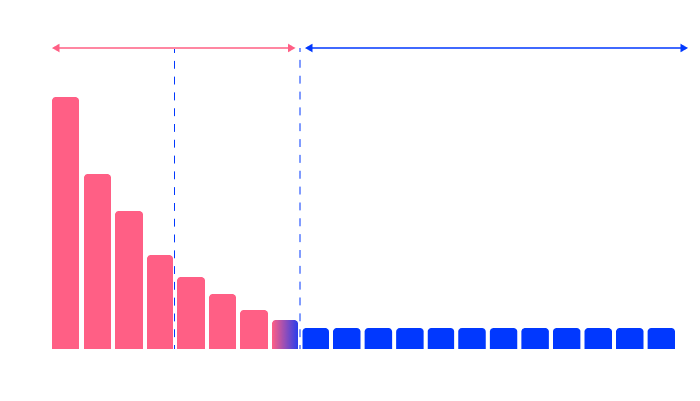
Over 90% of search and AI demand is in the long tail: the specific, detailed searches people type, like “white oak bedside table under $400 Sydney” rather than “furniture”. Think of your content as a market stall at a busy weekend fair.
A stall with one large sign draws whoever happens to walk past. A stall with clear labels on every individual item gets found by everyone who came looking for that exact thing.
Long-tail coverage is the labelling work.
For enterprise teams, that shifts the job from chasing a handful of head terms to covering the hundreds of product, problem and comparison searches buyers actually use, then keeping those pages current as questions change. Covering that breadth is what makes ChatGPT for SEO a revenue programme rather than a narrow head-term exercise.
An enterprise SEO firm built for this work plans content around the full range of questions buyers ask, not just the obvious ones. Good keywords research at enterprise scale maps those long-tail questions before a single page is written, so the content surface area that gets built actually reflects how buyers search.
Why AI Search Surfaces Some Pages and Not Others
AI Uses Query Fan-Out
When you ask ChatGPT a question, it does not answer from memory. The AI engine runs several smaller Google searches across related subtopics and builds a single response from what it finds across all of them.
That process is called query fan-out: one question fans out into many. Google confirms AI Overviews and AI Mode may work this way.
For a business planning SEO for my website, this means a page that answers one narrow sub-question well can appear inside a much broader AI response, because the engine needed that specific piece to complete its answer. Teams can use AI for keyword research to map the adjacent questions involved before creating individual answers.
That is also why the question “What is SEO content writing?” matters here: it is about having a useful, findable answer for each sub-question the engine goes looking for, not simply producing volume.
Indexing, Links and Freshness Shape Visibility
A page has to be in Google’s index before it can appear anywhere. Think of Google’s index as a post office sorting room: if your parcel never arrives at the room, it never gets delivered.
If your page is not in the index, no AI engine can retrieve it. Google uses internal links to discover pages and assess relevance, and on large sites it tracks how often pages are updated.
A stale page can fall behind a fresher competitor covering the same topic, which is why freshness is not cosmetic.
Unlike prompt tracking (tools that repeatedly ask ChatGPT questions and record whether your brand appears), AI and SEO visibility depends on indexed pages, relevant internal links and content kept current. Those are the conditions that determine whether your pages are candidates to be cited.
How CMAX Helps Teams Close the Gap
Brand-Safe Agentic Content Operations
CMAX is the Agentic SEO Platform, built for enterprise teams that need search and AI visibility without loosening approval controls. CMAX is trained on human-reviewed, client-approved content, so coverage scales across approved workflows while claims, tone and compliance checks stay aligned to internal standards.
This is what separates genuine AI SEO optimisation from generating copy and hoping for the best. Teams researching an AI SEO course or evaluating what is the best AI chatbot for content production will find the same gap: most tools hand you output and stop there.
Conventional SEO firms hand you a content brief and leave the approval process to you. CMAX builds the review into the production cycle.
Coverage Gaps Tied to Revenue
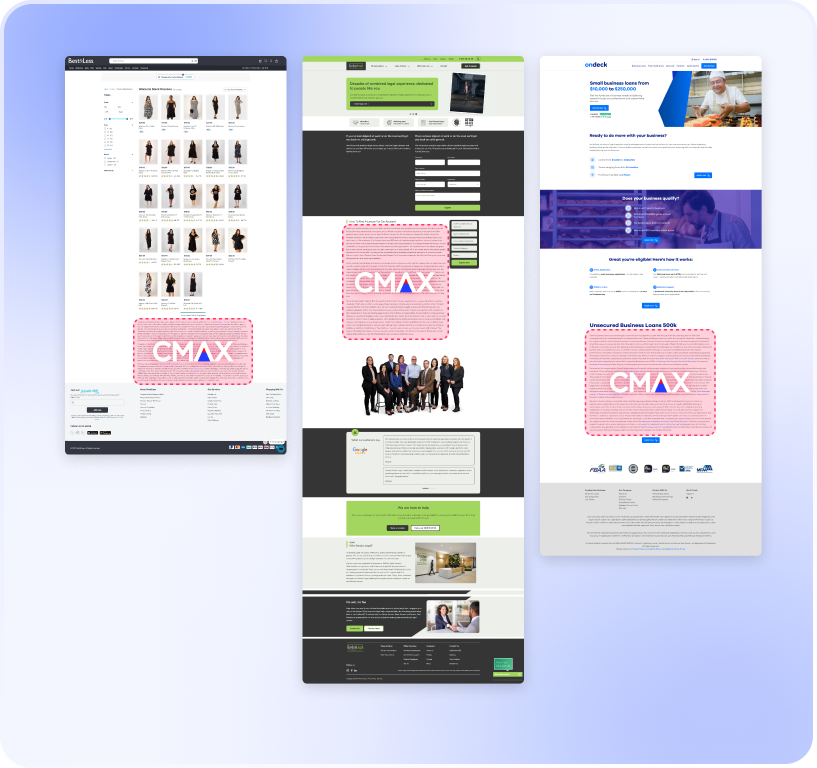
CMAX targets the vast majority of search demand sitting in the long tail by identifying where your content surface area is thin, then helping teams expand and refresh the pages that support revenue goals. Content surface area is how many of the ways your customers search you have a useful answer for.
CMAX also applies Dynamic Internal Linking so product, problem and comparison pages connect to one another, which helps Google discover them and helps AI engines retrieve them as part of a fan-out response.
An AI SEO content generator working inside an enterprise needs approved brand assets and compliance controls before its output can match the business’s claims and tone. That is the constraint CMAX is built to work within.
The platform’s approach to AI SEO optimisation ties every piece of content to a measurable gap in coverage rather than producing pages without a clear demand signal behind them.
Frequently Asked Questions
How Long Does It Take to See Results from SEO for ChatGPT?
Timelines depend on your site, its competition and how the work is done. AI visibility follows the same discovery, indexing, content quality and freshness constraints as search visibility.
For regulated industries, such as SEO for law firms, approval cycles add time. For AI SEO Brisbane clients, local competition affects the timeline.
Most SEO programmes run by conventional agencies, using outdated methods, tell clients to expect results in six months. CMAX’s methods allow clients to start seeing clicks in 6 to 8 weeks.
Can Smaller Brands Compete with Large Enterprises in ChatGPT Recommendations?
Yes. AI engines often need a source that explains one specific question better than a larger competitor does.
A smaller brand that publishes a clearer answer on a narrower topic can be cited ahead of a bigger brand with a broader but less precise page. Large sites still benefit from scale and crawl history, so smaller teams do better targeting high-intent long-tail topics they can answer plainly, keep updated and connect to stronger commercial pages.
Does Posting on Reddit Help with ChatGPT Visibility?
It can help if it generates useful public discussion that gets indexed on the open web. Strong source content on your own site comes first.
OpenAI notes that web-search responses may include citations, so demand for ChatGPT SEO Australia still depends on accessible source pages, whether the business is in Australia, the US or the UK. For AI SEO Melbourne teams, Australian spelling in published content also matters for local relevance signals.
ChatGPT SEO Starts With Long-Tail Coverage
ChatGPT SEO is often framed as a new channel. The job is the same at its core: show up for the specific questions buyers ask.
AI made the long tail bigger and harder to ignore, but effective SEO for ChatGPT still depends on publishing useful answers across the ways customers search, so search engines and AI engines have relevant material to retrieve, cite and recommend.
For enterprise teams asking how to do keyword research at this scale, CMAX’s Full Body SEO approach maps the full range of questions your buyers ask, then builds and connects the pages that answer them. That is how you build content surface area tied to revenue rather than a handful of obvious terms.
If you want to understand your current position before deciding anything, the practical starting point is to see where your gaps actually are.
If you’re curious as to how you’re performing on AI, book in a Missing Customer Map review with our Growth Team.
Author
Jeremy Tang
Founder and CEO of CMAX
Jeremy Tang is the Founder and CEO of CMAX. With over 2 decades of experience in business consulting and digital marketing, he has successfully driven seven startup businesses, six of which achieved $1 million in revenue from zero in less than 16 months, 5 of which grew to multi-million dollar a year ventures without any external funding. Jeremy's expertise lies in streamlining business processes through technology and leveraging digital (in particular SEO) for business growth. He resides in Australia, travels extensively, and draws inspiration from his global experiences.