Answer engine optimisation sounds like a new discipline, but most of what it involves is work your team has already started: clear answers, solid page structure, visible evidence. The difference is the goal. Instead of optimising purely for rankings, you’re making your content easier for AI systems to find, interpret and reuse when someone asks a specific question. That overlap with SEO is real, and so are the boundaries. CMAX works with enterprise teams applying these principles at scale across thousands of pages.
Answer engine optimisation makes trustworthy answers easier to reuse.
Eligibility, Not Inclusion
Answer engine optimisation (AEO) improves the chances that AI systems can find, interpret and reuse a page for a specific question. It does not guarantee that any model will cite that page, quote it, or include it in a generated answer. What is answer engine optimisation is the question behind every team trying to appear in AI-generated results, and the answer starts with eligibility rather than placement.
That distinction shapes every practical decision. Teams that treat AEO as a path to guaranteed placement will optimise for the wrong outcome. The actual goal is eligibility: making a page a stronger candidate for reuse when a relevant question is asked. Whether a given model selects that page depends on factors outside any publisher’s direct control, including model behaviour, competing sources and query phrasing at the moment of the request.
Eligibility is still worth pursuing. A page that is hard to parse, vague in its answer, or blocked from crawling has a lower chance of being reused than one that is clear, well-evidenced and technically accessible. AEO is the work of closing that gap.
Answer engine optimisation follows the same foundational principles whether teams use the Commonwealth spelling or the US-standard answer engine optimisation, since both refer to making content easier for AI systems to find, interpret and reuse.
Why AI Answer Visibility Matters
More users are asking research and comparison questions directly inside AI interfaces rather than clicking through to a results page. For early-stage queries, a generated answer can replace the visit entirely.
That shift means brands need visibility in generated responses alongside traditional search listings. A brand that ranks well organically but has no presence in AI-generated answers may be absent from the first touchpoint a potential buyer encounters. For high-value, early-stage queries where a buyer is still forming a view, that absence has commercial consequences.
The boundaries of AEO are narrower than many claims suggest.
AEO Scope and Boundaries
Answer engine optimisation is mainly about making source material easy to retrieve, parse and trust for question answering. It does not include guarantees of citation, control over model outputs, or shortcut tactics that claim automatic inclusion. Vendors who promise otherwise are selling something answer engine optimisation cannot deliver. For brands pursuing answer engine optimisation Australia is an increasingly relevant market because local teams are adopting these practices early, yet the same boundaries apply regardless of geography. Readers who want a concise primer on what is aeo will find that the core definition centres on making source material easy to retrieve, parse and trust for question answering.
What it does cover is a defined set of content and technical practices:
- Answer directly, near the top. Publish pages that address one clear question in plain language, with the answer positioned where a retrieval system can find it without parsing the entire page.
- Back claims with visible evidence. Support key points with worked examples, attributed data or first-party information. A page that forces an AI system to infer missing context is a weaker source candidate than one that supplies it.
- Make pages technically accessible. Crawlable, indexable and internally linked pages are discoverable by search engines and the downstream AI retrieval systems that depend on them.
- Use consistent terminology. Clear headings, concise summaries and stable wording for the same concept reduce ambiguity. Describing one idea three different ways across a page creates noise a retrieval system has to resolve.
- Signal freshness where it matters. Show when important pages were reviewed or updated, particularly for product details, pricing context, policies or fast-changing guidance where a stale answer carries real risk.
These are the levers teams can actually pull. Citation remains a model decision, not a content guarantee.
Track citations, mentions and qualified visits so teams can see whether content is being reused, not just whether it ranks.
AEO, SEO and GEO Differences
AEO, SEO and GEO overlap in practice, but each has a different centre of gravity.
SEO focuses on search discovery and indexing: getting pages crawled, ranked and clicked through traditional search listings. The goal is visibility in results pages, and success is measured through rankings, impressions and organic sessions.
AEO focuses on answer reuse for a specific query. A page succeeds in AEO terms when an AI system retrieves it, interprets it accurately and draws on it to construct a response. Ranking in a conventional results page is a related but separate outcome. A page can rank well and still be too ambiguous for an AI system to reuse confidently, and a page can be cited in a generated answer without sitting at position one. As a discipline, AI engine optimisation addresses these retrieval differences by structuring content so that AI systems can parse and reuse it with confidence.
GEO covers broader visibility across generative interfaces and response environments. Where AEO is query-specific, generative engine optimisation is concerned with how a brand appears across the wider landscape of AI-generated content, including summaries, recommendations and multi-source responses that may not map to a single defined question.
Answer engine optimisation becomes especially relevant as more research and comparison queries migrate into AI search interfaces, where a well-structured source page can surface directly inside a generated response rather than as a ranked link.
The practical implication for teams is that the measurement signals differ across all three. Rankings and click-through rates track SEO performance. Citations, brand mentions in AI responses and qualified visits from AI platforms are the signals that indicate whether AEO efforts are producing reuse, not just discoverability.
The strongest AEO signals are clarity, evidence and crawlability.
Clear Answers With Evidence
The strongest signals for answer engine optimisation are clarity, evidence and crawlability. A page earns answer eligibility when it removes the work an AI system would otherwise have to do. That means matching a specific question, placing the answer near the top, and supporting key claims with visible evidence rather than leaving the system to infer what the page actually means.
Vague copy creates ambiguity. Ambiguity forces interpretation. Interpretation introduces error. A page that states a direct answer, attributes its claims and notes when the content was last reviewed gives an AI retrieval system far less to resolve before it can reuse the source accurately. For content where freshness affects accuracy, such as pricing context, product details or fast-changing guidance, a visible review date is a concrete signal, not a cosmetic detail.
SEO Still Does the Heavy Lifting
Answer eligibility does not bypass the fundamentals. A page that cannot be crawled, indexed or internally linked is invisible to search engines and to the downstream AI retrieval systems that depend on them. Clear page structure and consistent terminology are core search engine optimisation techniques, because signals such as crawlability, internal linking and structured headings reduce the cost of interpretation for both traditional and AI-powered systems.
Answer engine optimisation builds on the same technical and content foundations as search engine optimisation, since crawlability, indexable content and clear page structure remain prerequisites for AI systems to discover and reuse a page.
Official guidance reinforces this.[1] Special AI markup is not required for a page to be reused in a generated answer. That means teams chasing obscure AI-specific hacks are solving the wrong problem. The pages most likely to be reused are the ones that are technically accessible, structurally clear and evidentially strong, which is the same standard solid search engine optimisation has always demanded.
AEO Measurement Depends on Citations, Mentions and Qualified Visits
Separate AI From Organic Patterns
Standard analytics won’t separate AI-sourced visits from conventional organic traffic on its own. Search Console and Bing AI performance views give teams a more granular starting point: compare query patterns, landing pages and visit quality across both channels, then assess whether the pages appearing in AI responses are the right ones and whether those visits are driving meaningful actions.
The signal to watch isn’t raw traffic volume. A page cited in an AI-generated answer may attract fewer visits than a top-ranked organic result, but those visits can carry higher intent. Tracking assisted conversions from AI-sourced sessions alongside citation frequency and brand mentions in generated responses gives a clearer picture of whether AEO efforts are producing commercially relevant reach.
Measuring answer engine optimisation means tracking citations, mentions and qualified visits. Answer engine optimisation measurement should account for appearances in features such as AI Overview, where Search Console query data and landing-page visit quality can help teams judge whether AI-sourced visibility is reaching the right pages and supporting meaningful actions.
Catalogue-Scale Coverage Example
Coverage gaps are one of the most common reasons AI systems skip a brand’s content. If no page directly answers the exact long-tail question a user asks, there’s no source to cite.
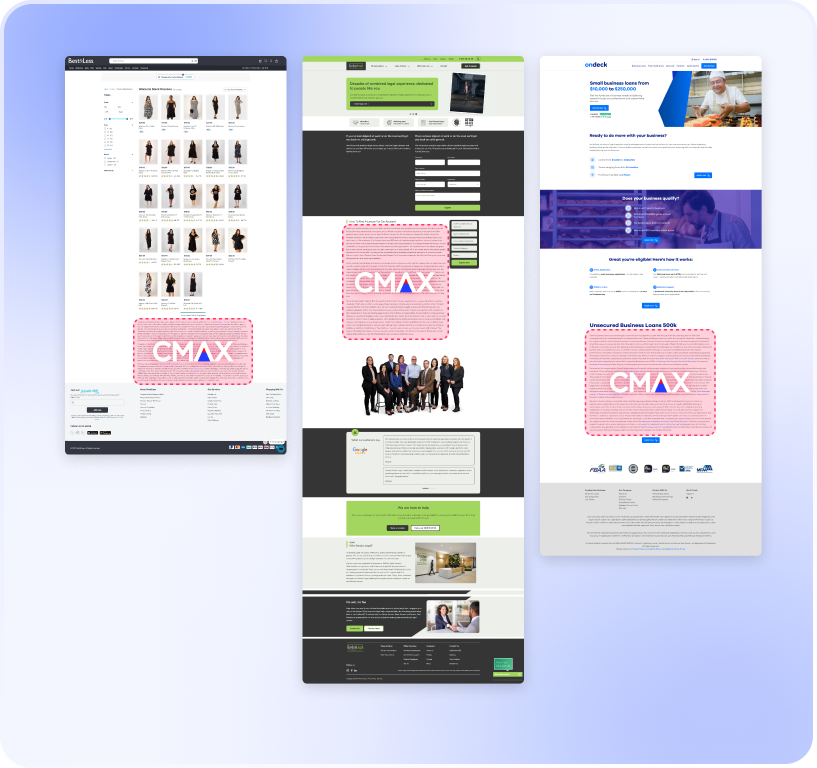
In one CMAX engagement, a B2B omnichannel hospitality retailer published 5,000 long-tail product pages and reached $1M+ per month in incremental SEO revenue within 8 months. The same logic applies to enterprise AEO: AI answers frequently depend on whether a brand has published a clear, specific source for the precise question being asked. Broad category pages rarely fill that gap. Targeted pages built around defined questions do.
The practical takeaway is that AEO complements SEO.
Build Better Sources, Not Hacks
Tactics like llms.txt files, mass page publishing without substantive content, or vendor promises of guaranteed AI inclusion share a common flaw: they skip the underlying problem. AI systems reuse sources that are clear, credible and easy to parse. A page that lacks a direct answer, thin evidence or inconsistent terminology will not become citation-worthy because a file was added to the root directory.
Source quality, page structure and evidence depth are where the work actually sits. Teams already investing in search engine optimisation services can extend that work by improving those same foundations for AI reuse. Skip those, and no technical shortcut closes the gap.
Answer engine optimisation improvements are most durable when grounded in source quality and page structure, which is why teams evaluating aeo services should look for offerings that prioritise evidence depth and crawlability over shortcut tactics.
Start With Questions and Weak Pages
A practical AEO plan has a clear starting point: identify the high-value questions your audience is asking, then find the pages on your site that answer them vaguely or incompletely. Those are the pages to improve first.
Prioritise pages where the answer is buried, the evidence is missing or the wording shifts across sections. Tighten the answer, move it near the top, attribute key claims and add a review date where freshness affects accuracy.
Answer engine optimisation strategy can be applied at any scale, and businesses in Western Australia looking for localised support may find it useful to explore what an aeo agency Perth can offer alongside broader SEO foundations.
Once those pages are live, watch citation patterns and qualified visits over time. Which sources are AI systems actually pulling from? Which pages attract visits that reach the right destination and assist a meaningful action? That signal, tracked consistently, tells you whether the content is being reused or just indexed. In practice, answer engine optimisation complements SEO rather than replacing it.
Frequently Asked Questions (FAQ)
How do you actually “do” Answer Engine Optimisation?
Start by identifying the specific questions your audience is asking, then publish pages that answer each one directly, with the answer near the top. Back key claims with evidence, worked examples, or attributed data. Make those pages crawlable, internally linked and kept current so AI retrieval systems can find and re-evaluate them over time.
How can I improve the citation for AI content?
Focus each page on one clear question and answer it in consistent language throughout. Attribute important claims rather than stating them without a source. Vague copy forces an AI system to infer what you mean, which reduces the likelihood it will reuse your page accurately.
How to get cited in AI answers?
There is no guaranteed path to citation. Pages that match the exact query, are technically accessible and explain the point more clearly than competing sources are more likely to be reused. Clarity and specificity are the practical levers.
How long does AEO take to work?
Timelines vary. Citation behaviour depends on crawl frequency, query demand, how competitive the source landscape is and how much a page needs to improve before it becomes a stronger answer candidate than what already exists.
How do you measure AEO performance?
Track observed citations, brand mentions in AI responses, landing pages drawing qualified visits from AI platforms and changes in assisted conversions from those visits. Search Console and Bing AI performance views can help separate AI-sourced traffic from conventional organic patterns.
Long Tail Coverage That Feeds AI Answers
Most SEO platforms target the same high-volume keywords everyone else is chasing.
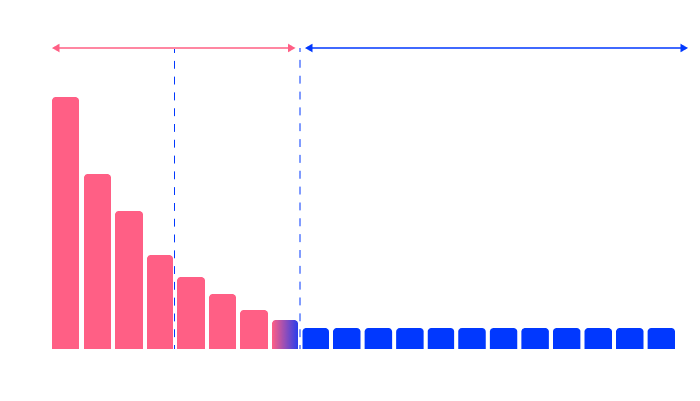
CMAX is an agentic SEO platform built to deploy and continuously update content across thousands of long tail variations, the specific phrases that make up the majority of search and AI demand. Two lines of code connect it to your site, and our agents handle page creation, optimisation, and ongoing refinement at a scale manual teams can’t match. That breadth of precise, well-structured content is exactly what answer engines look for when they pull citations into AI-generated responses.
If you’re evaluating how answer engine optimisation fits your organic strategy, CMAX gives you the content infrastructure to show up where it counts.
References [1] – https://developers.google.com/search/docs/fundamentals/ai-optimization-guide
Author
Jeremy Tang
Founder and CEO of CMAX
Jeremy Tang is the Founder and CEO of CMAX. With over 2 decades of experience in business consulting and digital marketing, he has successfully driven seven startup businesses, six of which achieved $1 million in revenue from zero in less than 16 months, 5 of which grew to multi-million dollar a year ventures without any external funding. Jeremy's expertise lies in streamlining business processes through technology and leveraging digital (in particular SEO) for business growth. He resides in Australia, travels extensively, and draws inspiration from his global experiences.