Most people define search engine optimisation as picking the right keywords or chasing higher rankings. In practice, it’s a coordination problem: getting pages crawled, making them relevant to what someone actually searched for, and giving that person a reason to stay. When any one of those layers breaks, visibility stalls, even if the content itself is strong. CMAX approaches SEO as that kind of coordinated system, connecting technical access, intent alignment, and measurable outcomes across large page sets.
Search engine optimisation is a coordinated visibility discipline.
What is search engine optimisation? It is the practice of improving the conditions that help search engines reach a page’s resources, interpret what the page is about, and index it against the wording and intent behind real searches. That definition of search engine optimisation covers three distinct jobs: access, interpretation, and eligibility. Each one can fail independently, which is why treating SEO as a single lever rarely moves the needle.
When you define search engine optimisation as a coordinated visibility discipline, you are describing the same practice covered under search engine optimisation, a system that makes pages technically accessible, topically relevant, and useful to real searchers. In short, what is search engine optimisation SEO if not the coordination of all three jobs into one repeatable system.
Crawl, understand, and index pages
Search engines send crawlers to follow links, retrieve page resources, and build a picture of what each page covers. When those resources are blocked, when internal links don’t surface important URLs, or when rendering depends on scripts a crawler can’t execute, the page may never reach the index at all. SEO improves those conditions so that the right pages are reachable, readable, and eligible to appear.
SEO goes beyond keywords and links
Keyword targeting, rankings, and backlinks each play a role, but none of them alone determines whether a page appears for a given search. Visibility depends on whether the page is technically accessible, whether its topic focus matches the query, and whether the content satisfies what the searcher actually came to do. A page can rank for a term and still fail to attract qualified visits if the intent behind the query points somewhere else. SEO addresses all three conditions together, which is what makes it a coordinated discipline rather than a checklist of isolated fixes.
Search Visibility Depends on Access, Relevance, and Evidence
Three Layers of Search Visibility
Search visibility rests on three conditions working in sequence: technical accessibility, topical relevance, and intent satisfaction. A page that fails any one of them can disappear from results regardless of how well it performs on the other two.
Technical accessibility determines whether search engines can reach the page and render its content. Topical relevance determines whether the page’s focus aligns with what the query is actually about. Intent satisfaction determines whether the page delivers what the searcher came to do, whether that’s learning something, comparing options, or evaluating a provider.
These layers are interdependent. A technically clean page with weak topical focus won’t rank for the queries that matter. A page with strong relevance signals but blocked resources may never get indexed in the first place. To fully define search engine optimisation across its technical and strategic dimensions, a precise SEO definition must account for how crawlability, intent match, and content usefulness work together to determine whether a page earns unpaid visibility.
Why Pages Fail to Appear
Most visibility failures trace back to one of three specific problems. First, key resources such as JavaScript files, CSS, or images are blocked in robots.txt, which prevents search engines from rendering the page correctly and interpreting its content. Second, internal links don’t surface important URLs, so pages sit in the crawl architecture without enough link equity to be discovered or prioritised. Third, duplicate content and conflicting canonical signals leave search engines uncertain about which version of a page to index, splitting authority or suppressing the preferred URL entirely.
Each failure has a different fix, and the work we define search engine optimisation around includes resolving these access gaps. Diagnosing visibility problems requires checking access, relevance, and indexation signals separately rather than treating SEO as a single lever.
A Payroll Software Example Shows How SEO Works
Payroll Software Page Example
A payroll software page is a useful test case because the queries around it are specific and commercially loaded. Someone searching “payroll software for mid-size manufacturers” or “payroll software vs. HRIS comparison” has a clear job to do: evaluate options and move toward a decision.
A page built around that intent does three things. It targets a defined query purpose, whether that’s vendor comparison or solution evaluation, rather than a broad category term. It answers the practical questions a buyer actually brings: fit for their team size, feature depth, implementation timeline. And it removes crawl issues that prevent search engines from reaching the content that carries those answers, whether that’s blocked JavaScript, thin internal linking, or a canonical signal pointing to the wrong URL version.
Strip any one of those three and the page loses ground. Strong content on a poorly crawled page stays invisible. A technically clean page that answers the wrong intent attracts the wrong audience.
Defining search engine optimisation through a real-world example like a payroll software page helps bridge the gap for those approaching the discipline from a broader perspective, which is precisely the angle that marketing what is SEO addresses when situating the practice within wider demand-generation and content strategy contexts.
Proof Point from Catalogue-Scale Expansion
The same pattern scales. In one CMAX engagement, a B2B omnichannel hospitality retailer added 5,000 long-tail product pages and recorded a 255% organic traffic increase over 12 months.
Software categories follow the same discovery logic. A business needing search engine optimisation Sydney can follow the same catalogue-scale approach to cover feature-specific queries, integration comparisons, use-case searches, and head-to-head evaluations, each representing a distinct search intent. When those queries have no matching page, the site simply does not appear. For any company pursuing search engine optimisation Australia, covering them systematically, with pages built for access, relevance, and usefulness, is how catalogue-scale visibility compounds.
A Numbered Evidence Rundown Makes SEO Easier to Diagnose
Five Parts SEO Actually Optimises
One practical way to define search engine optimisation is to split it into five diagnosable parts, each answering a distinct question about whether a page can be accessed, interpreted, chosen, and measured after it appears in search.
Working through a numbered evidence rundown is one of the clearest ways to see search engine optimisation in action, and search engine optimisation what is explores each diagnostic layer, from crawlability and indexability through to intent match and content usefulness. These search engine optimisation techniques each answer a different diagnostic question.
1. Crawlability. Can search engines reach the page, follow its navigation paths, and load the resources needed to render key content? Blocked scripts, gated navigation, or missing internal links can all prevent a page from being seen, regardless of how well it’s written.
2. Indexability. Is the preferred URL version eligible to appear in search? Conflicting canonical tags, duplicate versions of the same page, or a stray noindex directive can quietly remove a page from consideration before any ranking signal applies.
3. Intent match. Does the page serve the purpose behind the query? A page targeting a comparison query but structured as a product overview will lose to one that directly addresses fit, alternatives, and decision criteria.
4. Content usefulness. Does the page give a searcher the specific information they need to move forward? Broad category copy rarely satisfies a high-intent query. Pages that answer precise questions about features, implementation, or trade-offs hold attention and earn action.
5. Outcome measurement. Do relevant impressions, qualified organic visits, and conversion actions improve after changes are made? Measurement closes the loop and tells you which of the four preceding parts to address next.
Each part is a diagnostic lever. Weakness in any one of them can suppress a page that performs well across the others.
Outcome Measurement Checks Whether Relevant Impressions, Qualified Organic Visits, and Conversion Actions Improve After Changes Are Made
SEO Versus Paid and Content
A search engine optimisation specialist focuses on unpaid visibility rather than ad spend. Paid search stops the moment the budget does; organic visibility, once established, can keep delivering qualified traffic without that ongoing cost per visit.
The distinction from content marketing is less obvious but equally important. Content marketing produces the material. SEO determines whether that material can actually appear in search. A well-written page that search engines cannot access, that carries a conflicting canonical signal, or that sits disconnected from the rest of the site through weak internal linking may never surface for the queries it was written to answer. Technical access and page eligibility are prerequisites, not afterthoughts.
Outcome measurement is where these distinctions become concrete. Relevant impressions show whether the right queries are triggering the page. Qualified organic visits show whether the audience arriving matches the intended one. Conversion actions, whether a demo request, a form submission, or a content download, show whether that audience is moving forward. Tracking all three after a change is made gives a clearer picture than rankings alone, which can shift without producing any commercial result.
Defining search engine optimisation in practical terms means going beyond theory, and the resource SEO what is SEO addresses exactly how the discipline connects technical access, content relevance, and measurable outcomes in one coherent framework.
SEO, paid search, and content marketing can work in parallel, but they answer different questions. Paid search buys placement. Content marketing builds the asset. SEO creates the conditions that allow the asset to be found, by the right people, without paying for every visit.
Search Engine Optimisation Works Best as an Ongoing System
Why Good Content May Stall
A well-written page can sit invisible for months, and the cause is rarely the writing itself. Search engines may struggle to reach the page if crawl budget is spent on low-value URLs, if key resources are blocked in robots.txt, or if the page sits too far from the site’s main navigation to receive consistent internal link equity. Even a page that search engines can access may underperform if it answers a different intent from the query it targets, a page built around broad category copy will not satisfy a searcher who arrived looking for a specific comparison or implementation answer. Weak internal linking compounds both problems: a page that receives few or no internal links is effectively disconnected from the rest of the site’s authority structure, regardless of how thorough its content is.
Iteration Matters More Than One-Time Fixes
A single optimisation pass rarely holds. Search console data shows query shifts at the page level, terms that were driving impressions six months ago may have drifted, and new queries may be arriving that the page was never built to serve. Dedicated search engine optimisation tools surface the console patterns and page-level shifts that guide the next update. Reviewing qualified traffic trends and conversion evidence on a regular cadence reveals which pages are pulling the right audience and which are attracting volume without commercial outcome. That evidence drives the next decision: whether to adjust the page’s intent focus, strengthen internal links to it, or expand its coverage of related queries. SEO treated as a one-time project tends to plateau; treated as a review cycle, it compounds, which is why practitioners define search engine optimisation as a continuous cycle, not a one-time project.
Defining search engine optimisation as an ongoing system rather than a one-time fix is central to understanding what search engine optimisation means in practice, a continuous cycle of reviewing access signals, intent alignment, and conversion evidence to decide what to improve next.
Frequently Asked Questions (FAQ)
How do we measure SEO success beyond just rankings?
Rankings show position, not performance. Measure SEO success with a mix of impressions on relevant queries, qualified organic visits, conversion actions, and page-level engagement signals. A page ranking for the right query but attracting the wrong audience will show high impressions and low conversions, that gap is the signal. Tracking all four metrics together shows whether the right people arrived and took action.
Can anyone explain programmatic SEO?
Programmatic SEO is the structured creation of many search-targeted pages from reusable data, page logic, or templates. It covers repeated search patterns at scale, locations, product types, integrations, comparisons, where manually building individual pages would be impractical. The approach works because search demand across those patterns is real and consistent, and a single well-structured template can serve thousands of distinct queries.
Will AI replace SEO jobs in future?
AI can automate parts of SEO research, drafting, and analysis. People still set priorities, check accuracy, judge intent, and choose changes based on commercial outcomes. Automation handles volume; human judgement handles direction.
As you define search engine optimisation and its evolving scope, it is worth noting that AI search is reshaping how results are generated and surfaced, making the foundational principles of accessibility, relevance, and usefulness even more important to understand.
What are the steps involved in implementing SEO?
SEO implementation starts with crawl and index checks, then maps search intent to page topics, improves page clarity and internal linking, and measures whether relevant traffic and conversion actions change. Each step feeds the next. These steps define search engine optimisation in practice rather than in theory.
Why is SEO important today?
People still use search to compare options, solve specific problems, and evaluate providers. Pages that are accessible, relevant, and useful can keep earning unpaid visibility over time, without a cost-per-click attached to every visit.
SEO Is a System, CMAX Builds It at Scale
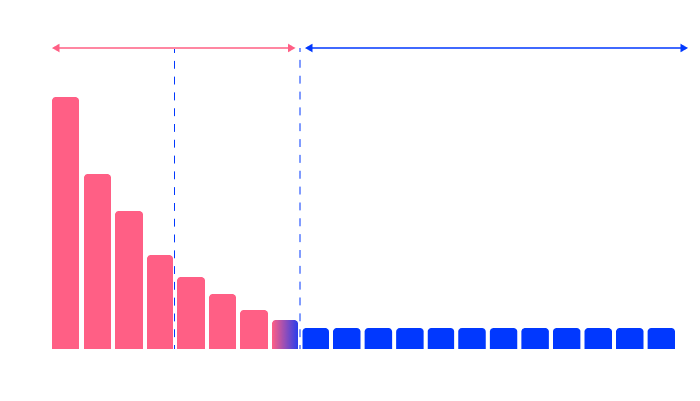
Most teams treat search engine optimisation as a checklist: fix a tag, publish a post, wait. That approach stalls because SEO is a coordinated system, technical accessibility, content relevance, and intent alignment all working together. CMAX is an agentic SEO platform that deploys and continuously updates content across the thousands of long-tail queries your customers actually type, using just two lines of code. Our AI-driven agents target the 90% of search demand that sits beyond head terms, where high-intent traffic lives. Teams that would need months of manual production can start seeing measurable results in as few as six weeks.
If your organic growth has plateaued and your team is stretched thin, CMAX gives you the scale and speed to close the gap.
Author
Jeremy Tang
Founder and CEO of CMAX
Jeremy Tang is the Founder and CEO of CMAX. With over 2 decades of experience in business consulting and digital marketing, he has successfully driven seven startup businesses, six of which achieved $1 million in revenue from zero in less than 16 months, 5 of which grew to multi-million dollar a year ventures without any external funding. Jeremy's expertise lies in streamlining business processes through technology and leveraging digital (in particular SEO) for business growth. He resides in Australia, travels extensively, and draws inspiration from his global experiences.