An AI Overview is Google’s AI-generated summary at the top of many search results. If you’re asking “What is AI search?” this is the part that lives inside Google: it synthesises an answer and links to the pages that back it up.
Picture a quiz night. The customer asks the question, you and your competitors are the contestants, and Google is the quizmaster who chooses which answer to read out.
Until now the quizmaster pointed at contestants. With an AI Overview, the quizmaster reads a combined answer aloud and names a few contestants behind it, so the customer hears the answer before anyone raises a hand.
The quizmaster still weighs who is answering, so trust, links, brand and whether Google can reach your page all count. In this context, an AI Overview means Google reads out a combined answer to the question first, and your page earns the visit only if it is one of the answers the quizmaster names.
Fewer clicks do not automatically mean less interest. A plan for SEO services for my website should judge performance by commercial outcomes.
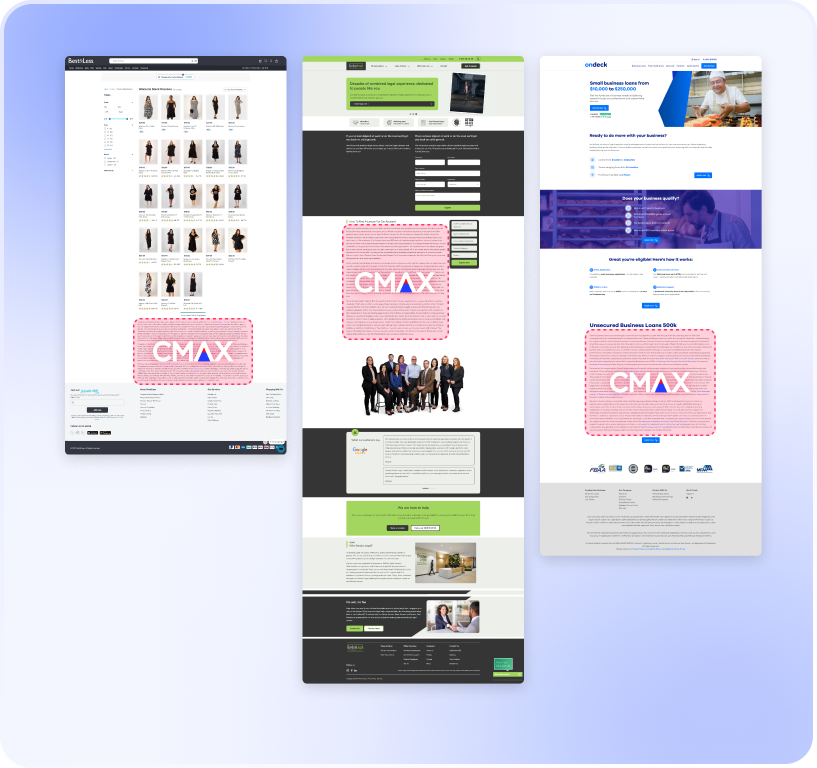
CMAX works on this layer, building the detailed, connected content that keeps a site visible as Google’s results page changes.
AI Overviews are Google’s own summaries
Where AI Overviews appear
An AI Overview appears inside Google Search on detailed questions, such as choosing a modular sofa for a small apartment with pets. Google first tested the format as the search generative experience, sometimes written as the Google search generative experience, before AI Overviews became the name.
How they change search behaviour
A visitor may reach your site after already comparing brands, materials, prices and policies on the results page. Effective product pages SEO accounts for that shopper.
Google says users in AI search experiences ask longer, more specific questions and follow-up questions. That shifts visibility toward sites that answer the detailed searches people type.
Google has always answered questions. Now it answers them before anyone clicks, which is efficient and slightly rude.
A plan for how to rank in AI overviews starts with answering specific comparison questions on the relevant pages.
AI Overviews shift clicks, visibility and measurement
Click impact varies by query
AI Overviews do not affect every search the same way. On a definition query, an AI Overview may satisfy the user without a visit.
A purchase query still needs product detail, pricing, availability, reviews and proof. Effective answer engine optimisation separates those intent types.
Judging by click volume alone can hide that fewer visitors are arriving with stronger intent.
People also ask “What is answer engine optimisation?” The short version is writing pages that answer engines can quote and link to.
Measurement needs more context
Treat an AI Overview results page as a discovery layer and a possible competitor for the click. If you’re comparing international SEO services, ask the provider to analyse performance by query type.
In Search Console, Google’s free tool showing which searches your site appears for, commercial AI SEO optimisation connects impressions and clicks with engaged sessions, signups, quote requests, assisted sales and revenue. Google recommends looking beyond clicks to on-site indicators such as sales, signups and engaged audiences, because AI search experiences can change how impressions and visits turn into outcomes.
A score like an AI benchmark ranking means little to your CEO until it connects to those same outcomes.
Eligibility depends on coverage, freshness and connected content
What improves eligibility
Google’s guidance for AI search stays close to core SEO. An AI Overview synthesises sources where a standard result lists them, and both depend on useful pages that Google can crawl and index.
The test is whether each important customer question has a clear page that answers it directly, whether that’s size guidance, delivery limits, comparison criteria or aftercare.
Useful generative SEO gives each narrow long-tail intent a clear answer, supported by related pages that show depth on the topic. Generative AI SEO software can draft those pages quickly.
Each page still needs a real question to answer and a person to review it.
Why CMAX focuses on coverage
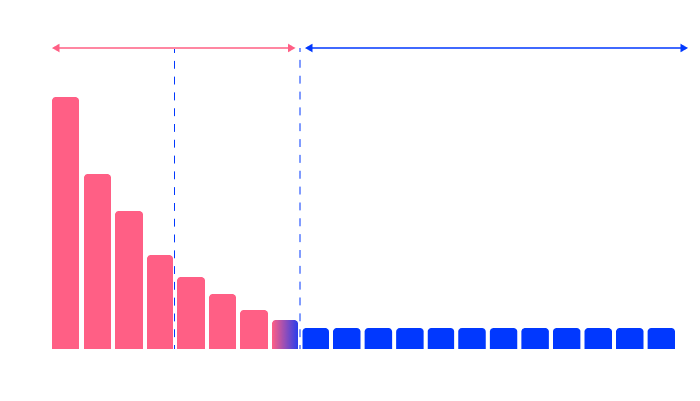
Over 90% of search and AI demand is in the long tail. You can’t appear for searches your site doesn’t cover.
We apply LLM SEO optimisation by expanding content surface area, keeping it fresh and connecting useful pages across search and AI visibility. CMAX is the Agentic SEO Platform, and CMAX targets the long tail, where most search demand sits, because AI Overview eligibility still comes down to useful, crawlable, connected content.
A business searching for a SEO agency Gold Coast faces the same rule as one comparing providers in Brisbane: Google has to be able to crawl the page, and the page has to be good.
Frequently Asked Questions (FAQ)
Can a website block its content from Google AI Overviews?
Site owners can. Google lets them use controls such as nosnippet, data-nosnippet, max-snippet or noindex to limit how content appears across Search features, including AI Overviews.
The trade-off is real: stricter controls can also reduce how your pages appear in standard results, including regular snippets. The question can i turn off AI Overview on Google has the same answer.
The controls limit your content in the feature, and they may cost you snippets and organic discovery too.
Decisions about controls for AI SEO Brisbane work, or similar work in Sydney, still need to weigh AI visibility against that effect on standard snippets.
Do AI Overviews include ads?
Google confirms ads can appear above, below or within AI Overviews on eligible searches. Placement is limited by market, language, device, campaign type and sensitive-vertical restrictions.
Report paid and organic separately, because one AI Overview page can carry ad placements and unpaid links together.
Can you ask follow-up questions in an AI Overview?
Google says users in AI search experiences ask follow-up questions to go deeper, and its AI Overviews page directs users to AI Mode for those interactions. What appears depends on the interface Google serves for that query.
Knowing how to rank in AI search results means covering the follow-up questions, since deeper interactions move into AI Mode.
A shopper who starts with “best dining table for apartment” will likely follow with questions about materials, seating, delivery, care or returns. Your site needs a connected answer for each step.
For larger organisations assessing enterprise SEO services Adelaide, a connected content structure can answer follow-up questions across products, policies, locations and procurement.
AI Overview Rewards Specific Useful Coverage
An AI Overview changes where people notice your brand. The rule behind visibility stays the same.
If your site doesn’t answer the specific questions shoppers ask, Google has less to work with in search results and AI-generated summaries.
Our SEO agents expand useful long-tail content, keep it fresh and connect related pages, so visibility isn’t limited to a handful of obvious terms. Through LLM SEO, that work turns detailed customer questions into connected coverage Google can crawl and use.
The brands that show up more are usually the ones covering more of what customers search for.
A review shows which customer questions your site answers and which it leaves to a competitor. That is a faster way to find out than guessing from click reports.
If you’re curious as to how you’re performing on AI, book in a Missing Customer Map review with our Growth Team.
Author
Jeremy Tang
Founder and CEO of CMAX
Jeremy Tang is the Founder and CEO of CMAX. With over 2 decades of experience in business consulting and digital marketing, he has successfully driven seven startup businesses, six of which achieved $1 million in revenue from zero in less than 16 months, 5 of which grew to multi-million dollar a year ventures without any external funding. Jeremy's expertise lies in streamlining business processes through technology and leveraging digital (in particular SEO) for business growth. He resides in Australia, travels extensively, and draws inspiration from his global experiences.