Most of what gets labelled AI optimisation is standard SEO work applied to a newer problem: how retrieval systems select, extract, and cite your content in generated answers. The underlying requirements haven’t changed. Pages still need to be crawlable, indexable, and genuinely useful before any model will pull a passage from them. What has changed is how that usefulness is evaluated, at the passage level rather than the page level, and whether your content holds up when quoted out of context. CMAX helps enterprise teams apply that shift at scale without abandoning the SEO foundations already in place.
AI Optimisation Is SEO Adapted for AI Retrieval
SEO for AI Retrieval Systems
AI optimisation applies the same foundational SEO work your team already does, improving clarity, crawlability, entity context, and information quality, to a different kind of system. Instead of ranking a URL in a list of results, these systems retrieve specific passages from pages and synthesise them into generated answers.
The mechanics shift, but the inputs do not. A passage gets selected because it is clear, self-contained, and directly relevant to the query. That is a content quality problem, which is an SEO problem. Teams that have already invested in structured, well-sourced pages are closer to retrieval eligibility than they may realise.
Why SEO Still Comes First
AI retrieval does not bypass the index. Before any model can pull a passage from a page or cite it in an answer, that page needs to be crawlable, indexable, and useful on its own terms. A page that fails basic search engine optimisation is invisible to retrieval systems for the same reason it is invisible to traditional search: the crawler never reached it, or the content gave no signal worth acting on.
This means the sequencing matters. Sound technical SEO and genuinely useful content are prerequisites, not parallel workstreams. AI optimisation builds directly on the principles of search engine optimisation, applying the same fundamentals of crawlability, clarity, and content quality to the retrieval systems that power generated answers. Generative engine optimisation takes this further by making content more extractable and citation-ready, building on the groundwork that makes a page accessible in the first place.
Search Visibility Now Spans Ranking, Retrieval, and Citation
Ranking vs Retrieval Eligibility
A traditional AI ranking tells you where a URL sits in search results. Retrieval eligibility is a different question entirely: can a model extract a specific passage from that page and use it to construct an answer?
A page can hold a top-three position and still be passed over at the retrieval stage. Retrieval systems evaluate passages, not pages as a whole. The passage needs to be clear, relevant, and self-contained enough to inform an answer without the surrounding context. A URL that ranks well but buries its key claim inside a long, loosely structured paragraph may never contribute to a generated answer. AI optimisation extends well beyond traditional AI rankings to encompass AI search, where retrieval systems evaluate whether a specific passage is clear and self-contained enough to inform a generated answer.
These are two separate evaluations happening in the same search ecosystem.
What Makes Pages Citable
AI search optimisation improves citation eligibility through three consistent factors. First, headings that state the topic plainly give retrieval systems an immediate signal about what the passage covers. Second, claims backed by original detail or sourcing give a model a reason to select that passage over near-identical coverage elsewhere. Third, entity references need to be explicit enough that a retrieved passage still makes sense when quoted or summarised out of context. Effective AI search engine optimisation treats each of these factors as a structural requirement rather than a stylistic preference.
That last point is easy to overlook. A passage that relies on pronouns, implied antecedents, or page-level context to carry meaning loses coherence the moment it is extracted. Writing each passage to stand alone is a structural discipline, and it directly affects whether a page gets cited or skipped.
Measurable signals show whether AI optimisation is working.
Signals teams can actually track
Measurement starts with the basics: crawl and index coverage. If pages are not being crawled and indexed, retrieval eligibility is a moot point. Once coverage is confirmed, Search Console becomes the primary signal layer. Look specifically for question-led query patterns, the kind of impressions that reflect how users actually phrase problems, not just the head terms your category pages were built around.
These signals show whether AI optimisation is working at the passage level, since the metrics worth tracking, crawl coverage, question-led impressions, and engagement on revised pages, all reflect the same underlying quality criteria. Teams benefit from knowing what search engine optimisation means in this context, because it grounds measurement in retrievability rather than vanity rankings.
Landing-page engagement on revised pages tells you whether structural changes are holding attention. Bounce rate shifts, scroll depth, and time-on-page on updated content give you a before-and-after read that is defensible in a board conversation. Broader long-tail impressions are the clearest indicator that the optimisation work is translating into retrieval eligibility across the query spectrum.[1]
Enterprise proof by long-tail scale
The numbers from one CMAX engagement make the mechanism concrete. Based on CMAX’s client engagement data, a B2B omnichannel hospitality retailer added 5,000 long-tail product pages and reached $1M+ per month in incremental SEO revenue within 8 months.
The same dynamic applies to any enterprise site where head-term rankings have plateaued. High-intent searches cluster around product variations, specific features, and use-case combinations that standard category pages were never built to answer. Those queries sit in the long tail, and standard category pages leave them uncovered. Closing that gap at scale is where AI optimisation, applied correctly, produces measurable commercial return.
A practical framework makes AI optimisation measurable.
What changes, what does not
A correction checklist gives teams a concrete way to separate genuine AI-visibility work from activity that inflates page count without improving retrieval eligibility. The checklist asks whether each page improves passage clarity, extractability, and citation readiness, or whether it simply adds volume.
AI optimisation changes how content is evaluated for retrieval and citation, not the need for sound technical SEO.[2] A page still needs to be crawlable, indexable, and substantively useful before any retrieval system considers it.
AI optimisation frameworks are most effective when built on a clear understanding of SEO what is SEO, because the correction checklist separating real retrieval work from thin-page shortcuts relies on those same foundational concepts.
AI assistance can accelerate drafting, clustering, and page analysis. It does not make thin, repetitive, or unsupported pages more eligible for citation. Retrieval systems select passages on quality signals, not output speed.
Ranking and citation are related but distinct. A page can hold a strong ranking position for a query and still not be the passage a model selects when synthesising an answer. That gap is where passage-level clarity becomes the deciding factor, because when a search system extracts a snippet to build a response, the reader may never see the surrounding page context. The passage has to stand on its own.
Original facts, worked examples, clear distinctions, and explicitly stated mechanisms give retrieval systems a concrete reason to select one source over near-duplicate pages on the same topic. Generic coverage does not create that differentiation. Effective AI website optimisation focuses on this passage-level extractability rather than broad page volume.
Internal linking remains part of this framework. It helps crawlers reach deeper pages and signals topical relationships between related content, both of which affect whether a page enters the retrieval pool at all.
Human Editorial Review Remains Necessary Where Accuracy, Compliance, Brand Risk, or Subject-Matter Nuance Affects Whether a Claim Is Trustworthy Enough to Surface
Before-and-After Page Example
An anonymised page comparison makes the method concrete. Take a generic service page that covers a topic competently but loosely: claims are unsourced, subheadings describe the page’s structure rather than the topic, entity references are vague enough that a lifted passage loses meaning without the surrounding page, and internal links point to broad category pages rather than related specifics.
After editorial review, the same page looks different in several measurable ways. Claims carry sourced detail. Subheadings state the topic directly, so a retrieved passage still answers the question without the surrounding context. Entity references are explicit: product names, process names, and role titles appear in full rather than as pronouns or shorthand. Internal links connect to pages that extend the topic rather than loop back to the homepage.
The result is a page that a retrieval system can extract a passage from with minimal guesswork, because each section is self-contained enough to answer a specific question-led query on its own terms.
AI optimisation decisions around passage clarity and citation readiness become more consistent when teams revisit search engine optimisation what is at its core, a discipline centred on making content genuinely useful and accessible to both crawlers and readers.
Human review is what produces that outcome. AI assistance can flag thin claims, suggest structural changes, and accelerate drafting, but it cannot verify whether a sourced figure is accurate, whether a compliance-sensitive claim is defensible, or whether a brand distinction is stated with enough precision to hold up when quoted out of context.[3] Those calls require a person with domain knowledge and editorial accountability.
The practical takeaway is that AI optimisation extends SEO.
Treat it as an evaluation shift
AI optimisation changes the criteria by which content gets selected, extracted, and cited, it does not introduce a separate channel with its own foundational requirements. Enterprise teams that treat it as a parallel discipline risk duplicating effort or, worse, deprioritising the technical and editorial work that makes pages eligible for retrieval in the first place.
AI optimisation (sometimes called GEO optimisation) is best understood as an evolution of conventional practice, and teams looking to define search engine optimisation will find that the core criteria, crawlability, relevance, and authority, remain unchanged.
The shift is in how usefulness gets assessed. A page that answers a specific question directly, states its entities clearly, and supports its claims with original detail is more extractable than one that covers the same topic in broad, hedged language. That standard applies whether the retrieval system is a traditional search index or a generative answer engine.
Human review still decides trust
Automated processes can draft, cluster, and flag at scale. They cannot reliably judge whether a claim is accurate enough to publish, whether a statement creates legal exposure, or whether a passage reflects the kind of subject-matter depth that makes a source worth citing.
Human review carries the most weight in exactly those areas: factual accuracy, legal sensitivity, brand risk, and content where genuine expertise is what separates a citable source from a near-duplicate. Retrieval systems are increasingly capable of distinguishing well-supported claims from thin assertions, and that distinction gets made at the passage level.[4] An editor reviewing for citation readiness is doing the same work a retrieval system does, just earlier in the process, where corrections are cheaper.
Frequently Asked Questions (FAQ)
How do you optimise for getting discovered on ChatGPT, Gemini, Grok etc?
Publish crawlable pages with clear headings, direct answers to likely questions, original supporting detail, and unambiguous entity context. Retrieval systems extract specific passages to synthesise answers, so each passage needs to make sense on its own. The less guesswork a model has to do, the more likely your page is the one it pulls from.
How do you measure the success of AI SEO?
Look for observable signals: stronger crawl and index coverage, broader long-tail query coverage in Search Console, improved engagement on revised pages, and documented appearances in AI-generated answers where your page is the identifiable source. No single metric captures the full picture, so track the pattern across all of them.
What are the most important AI search KPIs to track?
Crawl and index status, question-led impressions and clicks, landing pages structured for passage-level relevance, assisted conversions from long-tail queries, and tracked citations or mentions across major AI answer surfaces. These KPIs map directly to where retrieval eligibility is won or lost.
What’s our current visibility across different AI platforms, and how does it vary?
Each platform uses different retrieval sources, update cycles, and answer formats. The same page can rank well in Google, appear in one assistant’s answer set, and be absent from another entirely. Platform-by-platform auditing is the only way to get an accurate read.
Anyone here actually optimising for AEO?
Teams are already doing AI optimisation in practice when they restructure pages to answer specific questions directly, sharpen entity references, and add verifiable detail. That is AEO in practice, regardless of what the work is called on the project tracker.
AI optimisation is easier to apply once teams have a firm grasp of the SEO definition that underpins it, since retrieval eligibility and citation readiness both depend on the same foundational principles of relevance and quality.
AI Optimisation Requires Scale, CMAX Was Built for It
Most SEO platforms target the same high-volume keywords everyone fights over.
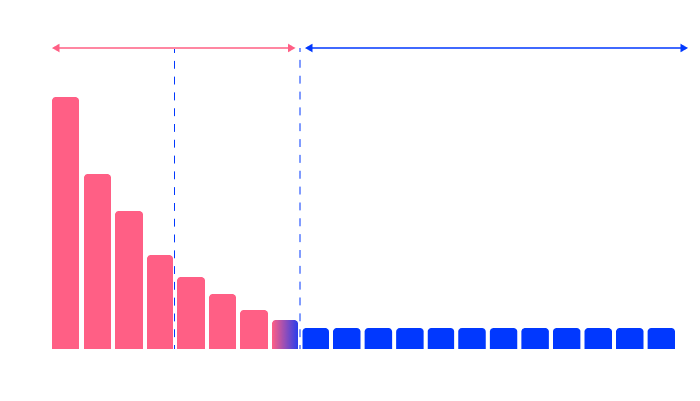
CMAX is an agentic SEO platform that deploys and continuously updates content across the thousands of long-tail queries your customers actually type, the 90% of search and AI demand most businesses leave on the table. It installs with two lines of code, targets high-intent phrases at a speed manual teams can’t match, and starts producing measurable results within six weeks. Whether search engines rank your pages or AI systems retrieve them, CMAX builds the structured, crawlable content that earns visibility in both.
If your current approach has plateaued, the problem likely isn’t effort, it’s coverage.
References [1] – https://searchengineland.com/guide/long-tail-keywords-seo [2] – https://developers.google.com/search/docs/fundamentals/ai-optimization-guide [3] – https://developers.google.com/search/docs/fundamentals/creating-helpful-content [4] – https://developers.google.com/search/docs/fundamentals/creating-helpful-content
Author
Jeremy Tang
Founder and CEO of CMAX
Jeremy Tang is the Founder and CEO of CMAX. With over 2 decades of experience in business consulting and digital marketing, he has successfully driven seven startup businesses, six of which achieved $1 million in revenue from zero in less than 16 months, 5 of which grew to multi-million dollar a year ventures without any external funding. Jeremy's expertise lies in streamlining business processes through technology and leveraging digital (in particular SEO) for business growth. He resides in Australia, travels extensively, and draws inspiration from his global experiences.