Effective SEO services for real estate agents start by matching each page to what local buyers and sellers type into Google. Few people search “real estate agent.” They search “2 bedroom apartment Surry Hills” or “sell my house in Brunswick.”
Most agencies lose enquiries in the gap between broad city pages and specific local searches. Picture a kitchen where every drawer is labelled “stuff”. Someone after a bottle opener opens six drawers and gives up, while the kitchen next door labels its drawers cutlery and bottle openers.
A city page is a “stuff” drawer, and a suburb page that copies every other suburb page is the same label with a different postcode. In this context, SEO for real estate means labelling each drawer: giving every page one specific job that matches the question the searcher is asking.
Detailed suburb coverage gives real estate digital marketing a stronger foundation than duplicated city pages, which offer Google no distinct local evidence.
Getting this right means deciding which page answers which search, how listings stay useful after a property sells, and how internal links tie suburb pages, guides and agent pages together. Among real estate marketing methods, connected suburb pages and guides give you a measurable path from a specific Google search to an enquiry.
We build that local coverage at CMAX and report on which pages bring in enquiries and clicks.
Real estate SEO wins when it matches local search demand
Local searches are highly specific
A property search arrives with the place, the property type and the intent already attached: “2 bedroom apartment Surry Hills”, “sell my house in Brunswick”, “property manager near Parramatta.” In local property markets, SEO for real estate connects suburb, property type and service pages to the intent behind each enquiry. A single city page can’t catch those enquiries because it doesn’t match what the searcher typed.
Ask one question across your site: do we have a strong page for the suburb, service, property type and decision our next buyer or seller is searching? Demand for SEO for real estate agents australia is shaped by suburb-level language, while US campaigns typically organise local coverage around neighbourhoods and ZIP codes. Local SEO Australia work starts from that difference.
Each page needs one local intent
Google recommends one preferred URL per piece of content. Thin suburb pages that differ only by place name give it little reason to choose any of them. Distinct URLs, original suburb information and one clear page purpose are local SEO factors that help Google select a preferred result. Give each page one job: buying in a suburb, selling there, current listings or property management.
Then back the page with median price movement, stock levels, schools, commute patterns, recent sales and a clear next step. A real estate marketing plan for sellers can draw on median price movement, recent sales, local schools and a clearly defined appraisal step.
Strong real estate SEO uses suburb pages, listings and supporting guides
Different page types do different jobs
City pages catch broad searches. Useful real estate SEO keywords reflect concrete needs such as Newtown houses, local appraisals, property management, auctions and buyer representation, and the same SEO keywords for real estate belong on the matching service pages.
Listing pages convert buyers who are already comparing properties. Within a broader strategy for SEO for estate agents, agent pages field trust-led searches, and service pages capture demand for appraisals, property management, auctions and buyer representation.
Supporting guides on schools, inspection checklists, selling timelines, stamp duty, rental yield and market conditions turn a basic content programme into SEO for real estate grounded in real decisions. If a seller, landlord, buyer or investor asks it before making contact, a page should answer it.
Fresh listings and links shape visibility
Google uses links to discover pages and descriptive anchor text to read them. The internal-linking principles behind local SEO for home builders also apply here: they connect location pages, current inventory, nearby areas and relevant service pages. Internal links should reflect the market. Suburb pages should point to live listings, recent sales, the local agent, appraisal pages and nearby suburbs.
Active inventory, sold status and updated suburb copy signal currency to search engines. A connected suburb hub supports entity SEO by making the relationships among properties, agents, services and locations explicit.
CMAX connects local coverage to leads and revenue
CMAX scales the long tail
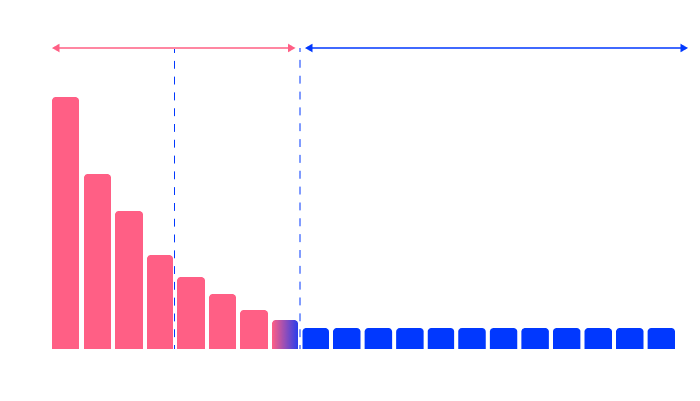
Over 90% of search and AI demand is in the long tail. In property, that means suburb, property type, price band, school zone, rental yield, commute, appraisal and “near me” searches. Campaigns built around trophy terms miss most of it, and SEO for real estate can cover this demand directly.
CMAX is the Agentic SEO Platform built for this work. CMAX targets that long-tail demand with Dynamic Internal Linking and Full Body SEO. CMAX is trained on human-reviewed, client-approved content, which keeps suburb pages, listings, service pages and guides connected and current. Teams comparing local SEO services australia can use that as a test: ask how each provider covers the long tail.
Reporting should tie pages to revenue
Search Console shows clicks, impressions, queries and pages. It doesn’t show which pages produce appraisals, enquiries or landlord leads. For programmes that include entity SEO services, revenue-linked reporting connects location pages and clusters to pipeline. A suburb page with fewer visits but more valuation requests may deserve more investment than a guide that draws many more visitors. In digital marketing for real estate companies, CMAX reporting shows which pages create qualified demand, which need freshness and which internal links to strengthen.
How long does real estate SEO take to show results?
Timelines depend on the site, its competition and how the work is done. We define SEO for real estate as sustained coverage, so timing varies with those same three things.
Most SEO programmes run by conventional agencies, using outdated methods, make clients expect results in six months. CMAX’s methods allow clients to start seeing clicks in 6 to 8 weeks. For SEO for real estate websites, early movement comes from long-tail suburb, property type, service and guide queries before broader head terms shift.
Should every IDX listing page be indexed by Google?
For large property portals, entity based SEO still requires duplicated feed pages to be consolidated through redirects or canonicals, so the preferred property and location URLs stay clear.
The practical answer to what is local SEO marketing includes original local copy, inspection details, suburb context and links to similar properties. Keep low-value filter combinations, thin duplicates and near-identical search result pages out of the index.
What happens to listing pages when a property sells?
Sold pages that have earned links, impressions or local relevance shouldn’t disappear. If a close replacement exists, such as another two-bedroom apartment in the same suburb, redirect to it.
Otherwise, keep the page live with a clear “sold” status and links to similar properties, the suburb page, and an appraisal or agent contact page. Keeping sold status, suburb links and appraisal pathways in place means the page keeps delivering value after the listing leaves the market.
SEO For Real Estate Starts With Local Coverage
SEO for real estate works when each page has one local job and answers a search people actually make. Coverage for real estate marketing Australia commonly uses suburb-level language, whereas US property strategies organise comparable local pages around neighbourhoods and ZIP codes. Across categories, we see the same pattern: you usually lose on the coverage you don’t have, and the obvious term is rarely the problem.
CMAX is built to address the central challenge facing a real estate SEO agency: closing long-tail coverage gaps with current, connected content tied to revenue. A review of your site shows which suburb searches your pages already answer and which they miss. It is the plainest way to find your gaps before you spend anything on fixing them.
If you’re curious as to how you’re performing on AI, book in a Missing Customer Map review with our Growth Team.
Author
Jeremy Tang
Founder and CEO of CMAX
Jeremy Tang is the Founder and CEO of CMAX. With over 2 decades of experience in business consulting and digital marketing, he has successfully driven seven startup businesses, six of which achieved $1 million in revenue from zero in less than 16 months, 5 of which grew to multi-million dollar a year ventures without any external funding. Jeremy's expertise lies in streamlining business processes through technology and leveraging digital (in particular SEO) for business growth. He resides in Australia, travels extensively, and draws inspiration from his global experiences.