Most SEO content creation services sell you a volume of articles and leave you to figure out whether any of it actually performed. What tends to break isn’t the writing itself but everything around it: briefs with no search intent, drafts published without metadata, and reports that never connect pages to revenue. If you’re evaluating providers, the useful question is what happens at each stage from research through reporting, and who owns each handoff. CMAX is one provider that structures its engagements around those stage-level deliverables and measurable outcomes.
SEO Content Creation Services Should Deliver More Than Articles
Core Service Deliverables
A draft is a starting point, not a deliverable. SEO content creation services should cover the full production chain: keyword and SERP research, production briefs, editorial review, publishing support, and performance measurement. Each stage answers a question the draft alone cannot. Research confirms the page targets a query with real demand. A brief aligns the writer to the searcher’s actual task. What is SEO content writing starts with the brief, not the draft. Editorial review catches factual risk and brand language before publication. Publishing support gets the page live with the right metadata and internal links in place. Performance measurement shows whether the page was indexed, attracted qualified visits, and contributed to conversions. Strip any of those stages out and you have content spend without a feedback loop.
Clear Delivery Ownership
Handoff failures are where SEO programmes quietly break down. Briefs that never reach subject reviewers, pages that go live without metadata or internal links, reports that skip indexing status or conversion blockers, these are operational failures, and they are common when ownership is informal. Defined accountability across strategy, subject review, technical publishing, and reporting removes the ambiguity that lets those failures repeat. When each stage has a named owner and a clear output, gaps surface early rather than after months of underperforming pages. Providers of SEO content writing services should make this ownership structure visible before work begins. Before signing any engagement, confirm who owns each handoff, not which team, but which role signs off before the next stage begins.
A well-structured SEO content creation services engagement typically defines who is responsible for each deliverable, including the role of SEO content writers in translating research briefs into search-ready drafts.
Service quality shows up in process and output.
Quality controls that matter
Three controls separate pages built for search from copy that fills a word count: originality checks, search-intent mapping, and expert review gates.
Originality checks catch duplicate angles before they go live, which matters at scale because long-tail programmes produce hundreds of pages targeting closely related queries. Without a check, similar pages compete against each other rather than covering distinct demand.
Search-intent mapping confirms that a page answers what the searcher is actually trying to do. A query like “best inventory software for hospitality” carries a different task than “how does inventory software work.” Copy written without that distinction tends to answer the wrong question, which means the page ranks poorly or attracts visits that don’t convert.
Expert review gates add a factual accuracy layer before publication. For pages covering regulated language, product specifications, or pricing, a single unchecked claim creates brand and compliance risk that is harder to fix after indexing than before. When assessing SEO content creation services for quality controls and scalable output, buyers often compare providers against what a dedicated SEO content writing company brings in terms of editorial standards, review gates, and publishing workflows.
Systems for scalable pages
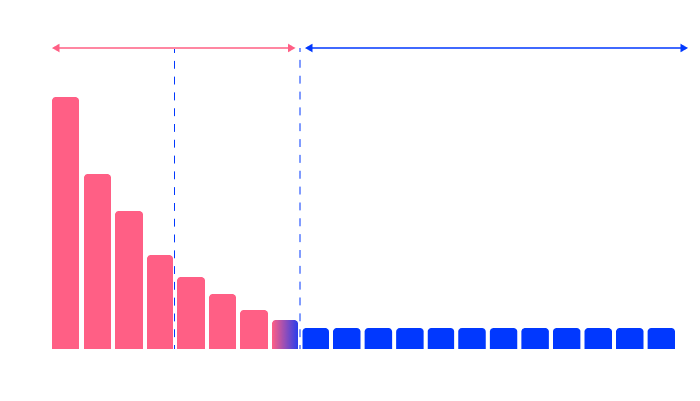
Scaling long-tail content without structural controls produces thin pages and repetitive coverage faster than it produces useful search coverage. Page templates, internal linking rules, and on-page optimisation standards prevent that. Effective SEO content creation depends on these structural controls being defined before production begins.
Templates define what each page must contain: target query, required entities, page purpose, and the supporting context that differentiates it from adjacent pages in the same cluster. Internal linking rules connect related pages deliberately rather than randomly, which distributes authority and helps search engines map the site’s topical depth. On-page optimisation standards keep metadata, heading structure, and schema consistent across every page published, regardless of volume. When SEO and content creation operate as a combined discipline, these standards apply to every asset from brief through to publication.
The Right Provider Makes Comparison Easier
Expectations by Content Stage
What separates strong SEO content creation services is visibility into each stage. A strong provider should be able to show what inputs, outputs, approvals, and success measures exist at each stage from research through reporting. That transparency lets you judge whether the engagement will produce search-ready pages and auditable progress, rather than a higher article count with no clear line to commercial outcomes.
Buyers assessing SEO content creation services at scale may also explore enterprise SEO consultants when they need dedicated strategic oversight across large content programmes.
Research stage: A usable SEO content plan defines which queries to target and why, starting with a keyword universe, prioritisation logic, search-intent grouping, and examples of how opportunities are filtered by business relevance. If a provider cannot explain why certain topics are in scope and others are excluded, the strategy is guesswork.
Brief stage: Expect each brief to define the target query, page angle, required entities, internal links, conversion goal, and review requirements. Clarifying what is SEO content at this stage means specifying the search objective, audience, and commercial intent before a single word is drafted. Writers and reviewers need to work from the same search and business objective, or the draft will drift from both.
Draft stage: Expect content that reflects the brief closely and answers the query directly. Where factual accuracy, regulated language, or product detail is involved, the draft should flag where editorial or subject review is required before publication.
Review stage: Expect named owners for sign-off on factual accuracy, brand language, compliance constraints, and duplicate-content checks. An informal email chain is not an approval gate.
Publishing stage: Expect clear ownership for CMS upload, metadata, schema or template fields, internal linking placement, and indexation checks. A page that goes live with incomplete deployment details cannot perform, regardless of how well the content was written.
For organisations evaluating SEO content creation services across large site architectures, working with an enterprise SEO specialist can help align content strategy, technical publishing, and reporting accountability at programme level.
Reporting Stage: Expect Timeline-Based Reporting on Pages Published, Pages Indexed, Qualified Visits, Conversions, and Blockers That Affect Performance, So Progress Can Be Tied to Specific Releases and Operational Issues Can Be Recognised Early
A reporting deliverable that lists only traffic numbers tells you very little. Useful reporting connects each metric to a specific publishing event: which pages went live in a given period, how many were indexed, what qualified traffic those pages attracted, and whether that traffic converted. That chain of evidence is what lets you trace a revenue outcome back to a content decision rather than attributing it to general domain authority or seasonal lift. A provider offering SEO services in Sydney should tie reporting to specific page releases so that performance gains or losses can be attributed accurately.
Blockers deserve equal space in any report. If pages are published but not indexed, or indexed but attracting irrelevant visits, those are operational signals that need to surface in the same reporting cycle, not six weeks later when the problem has compounded. A provider that reports only on what went well is managing perception, not performance. For any agency delivering SEO services in Adelaide, the same standard applies: blockers, indexing gaps, and conversion shortfalls belong in every reporting cycle alongside the wins.
Acceptance Tests for Accountability
Acceptance tests shift accountability from a post-delivery conversation to a pre-engagement agreement. Before work starts, define in writing what a usable brief must contain, what a publishable draft must demonstrate, what a completed deployment must include, and what a meaningful report must cover.
Without those definitions, quality review defaults to whoever is most persistent in a feedback thread. With them, both sides have a shared standard to measure against at each stage. That specificity also makes it easier to escalate when a deliverable falls short, because the gap between what was agreed and what was delivered is documented rather than disputed.
Proof and Reporting Should Make Progress Auditable
Metrics That Show Compounding
Indexed pages, qualified visits, conversions, and date-based reporting each answer a different question, and you need all four to see whether an SEO content programme is actually working.
Indexed pages confirm that production translated into discoverable content. Qualified visits confirm that search engines are surfacing those pages to the right audience. Conversions confirm that the traffic is commercially relevant. Date-based reporting ties each of those outcomes to a specific publishing release, so you can see whether a batch of pages from a given month is pulling its weight or sitting dormant.
The value of SEO content creation services becomes measurable when indexed pages, visits, and conversions are reported together. Without that chain, a report showing rising traffic tells you very little. Traffic from the wrong queries, on pages that convert at zero, against a publishing timeline you can’t reconstruct, is not progress. Reporting that connects each metric to a specific release date makes it possible to identify what’s working, what’s stalled, and where the operational fix needs to happen.
For buyers evaluating SEO services Australia providers, the proof sits in indexed pages and conversion data, not traffic volume alone. Measuring the impact of SEO content creation services requires the same rigour applied to SEO services marketing more broadly, connecting published pages, indexed URLs, qualified visits, and conversions to demonstrable business outcomes over a defined reporting period.
Among the best SEO services Australia has produced, the common thread is reporting that ties every published page back to a commercial outcome within a defined timeframe.
CMAX Proof Point
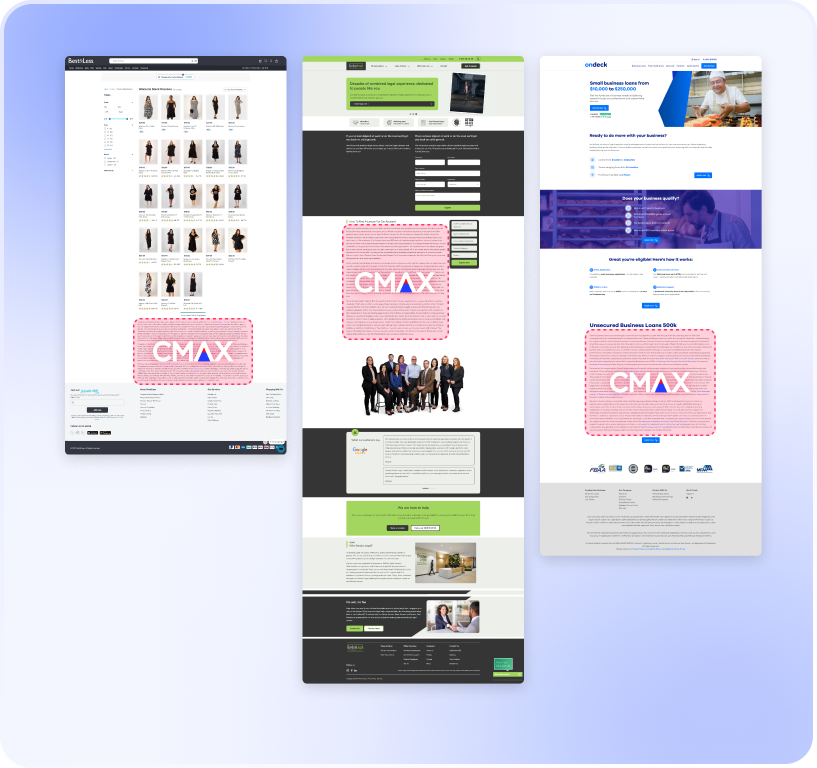
In one CMAX engagement, a B2B omnichannel hospitality retailer added 5,000 long-tail product pages and drove over $1M per month in incremental SEO revenue within 8 months.
The mechanism is the same one that drives enterprise SEO at scale: many query-specific pages, published at catalogue volume, with reporting that connects page growth to measurable commercial impact. The revenue figure is a product of that chain running correctly, production, indexation, qualified traffic, and conversion, tracked against a timeline that made each stage auditable.
Frequently Asked Questions (FAQ)
How do you scale content creation?
Scaling works when research, briefs, templates, review rules, publishing workflows, and measurement are standardised before volume increases. For SEO content marketing services, adding more drafts without those controls produces uneven quality, duplicate angles, and reporting gaps faster than it expands useful search coverage.
Do you write it yourself and use an AI tool?
Most providers use a mix of human workflows and AI assistance. The more useful buyer question is who sets the strategy, validates facts, checks originality, and approves pages before publication. Those controls determine whether output is fit for search and for the brand, regardless of which tools sit underneath.
When evaluating SEO content creation services, it’s worth understanding how AI in search engine optimisation is reshaping the way content is discovered, ranked, and surfaced across modern search environments.
When should I expect to see SEO results?
Early signs include pages being published, indexed, and attracting impressions or qualified visits. Conversion evidence typically needs a longer reporting window because long-tail SEO gains build page by page rather than appearing all at once.
SEO and content marketing services often require extended timelines because combined programmes depend on content indexing, audience growth, and conversion tracking working together over multiple cycles.
As SEO content creation services evolve, providers increasingly need to account for SEO for AI search so that published pages remain discoverable as search engines shift toward AI-driven results.
How often should you send SEO reports to your clients?
Monthly reporting is often practical for SEO content programmes. It gives enough time to track publishing, indexing, traffic quality, conversions, and blockers in a single view without overreacting to normal week-to-week movement.
How do you define SEO success?
SEO success is better measured by whether targeted pages get indexed, attract relevant visits, and contribute to enquiries, sales, or other conversion actions. Rankings alone do not show whether the content reached the right audience or produced a business result. Ultimately, SEO content creation services should be judged by whether targeted pages reach the right audience and produce a business result.
Two Lines of Code, Thousands of Long-Tail Pages
CMAX is a programmatic SEO platform built for teams that need scale without headcount.
Our agentic system deploys and continuously updates content designed to target the long-tail demand most SEO content creation services never reach, the thousands of specific, high-intent queries your buyers actually type. Integration takes two lines of code, and early results typically surface within six weeks. Every page is indexed, measured, and optimised automatically so your team stays focused on strategy, not production bottlenecks.
If you’re evaluating SEO content creation services, CMAX gives you a clear, reportable path from deployment to qualified traffic.
Author
Jeremy Tang
Founder and CEO of CMAX
Jeremy Tang is the Founder and CEO of CMAX. With over 2 decades of experience in business consulting and digital marketing, he has successfully driven seven startup businesses, six of which achieved $1 million in revenue from zero in less than 16 months, 5 of which grew to multi-million dollar a year ventures without any external funding. Jeremy's expertise lies in streamlining business processes through technology and leveraging digital (in particular SEO) for business growth. He resides in Australia, travels extensively, and draws inspiration from his global experiences.