Perplexity SEO means getting your brand cited in Perplexity’s AI answers. It works when your pages answer buyer questions about cost and safety directly.
To define SEO properly now, include AI citation visibility inside it. It is the same discipline with no separate rulebook.
Labels like generative engine optimisation GEO describe part of that same work. Why is generative engine optimisation important?
Buyers read one AI answer that names a few brands, and the brands named are the ones with a page that answers the question clearly.
Cost and safety questions show where AI and SEO need the same thing: a direct answer a buyer can ACT on. Start with the pages already close to a buying decision, like cost comparisons and safety concerns.
Generic brand copy can wait.
If a page never answers the question, no amount of technical polish fixes it. A clear answer gives a checkable statement, and checkable statements earn citations for SEO in standard results and AI responses.
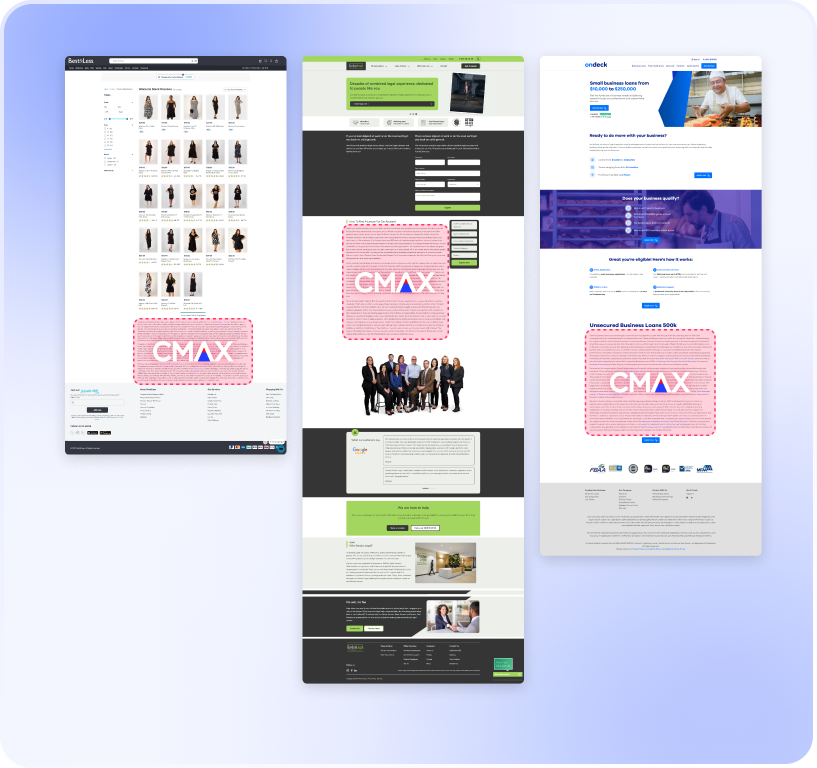
CMAX works inside this logic. We build the specific answers buyers and AI tools both look for, so coverage grows where it matters.
Perplexity SEO starts with content that answers real questions clearly
Clear answers win citations
Put the answer in the first few lines. Back it with evidence.
Make the claim easy to check. Brand copy that says “premium solutions for modern customers” gives Perplexity nothing to quote.
Nobody repeats it at barbecues either. A page that states what five years of ownership costs gives Perplexity a sentence to lift.
Structure supports citation visibility
Perplexity reads a page quickly before it uses it, so structure carries real weight. Headings that mirror buyer questions and short sections that each answer one point give automated SEO a page it can follow.
A practical LLM SEO strategy adds one topic per page and descriptive internal link text. Schema can clarify meaning, but it won’t earn citations if the page doesn’t answer the question.
Long-tail coverage matters
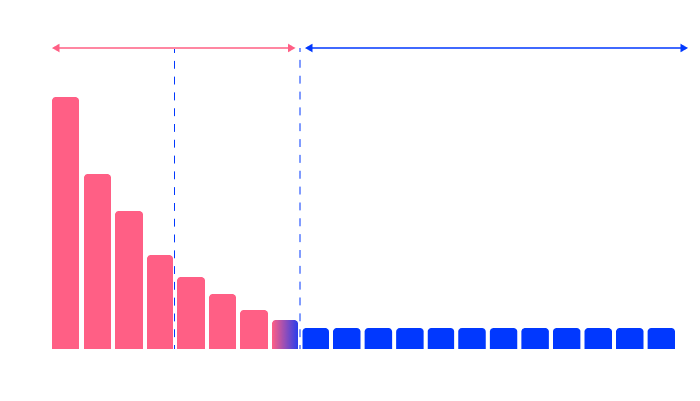
Over 90% of search and AI demand is in the long tail: the specific, detailed questions buyers type, such as “homewares returns policy for online furniture.”
Let’s say a customer asks a deli for a platter for eight, two vegetarian, nothing with nuts. The counter staff skip the brochure, check the cheeses and the dips one at a time, then serve what they can vouch for.
In this context, long-tail coverage means having one clear page for each small question, the way the deli has one clear answer for each item, so an AI tool finds something to vouch for.
A site built on broad phrases gives Perplexity fewer useful pages to cite when the question gets specific. Free keyword research tools can compile a first list.
Your sales, support and paid search teams know the real one. Write down the 50 questions they hear every month, then check whether your site has one clear page that answers each.
Strong citation readiness depends on breadth, freshness and internal links
Coverage drives citation readiness
Content surface area is how many of the ways customers search you have a useful answer for. automated SEO reports can show where coverage is still thin.
Effective generative engine optimisation services expand that surface area across comparisons, objections, delivery terms, pricing logic and maintenance issues. An AI SEO content generator can draft the missing pages, and a person who knows your range should check each one.
Fresh, connected pages perform better
Google’s systems recrawl pages often enough to pick up changes, and crawl demand rises with update frequency. Old comparison pages, outdated statistics, discontinued products and isolated blog posts are weak points.
Regular refreshes make Perplexity SEO more effective because they replace discontinued products and outdated statistics before Perplexity evaluates the page.
CMAX scales breadth and freshness
CMAX uses Dynamic Internal Linking to connect related pages as coverage grows. It uses Full Body SEO to expand on-page answers beyond thin templates.
CMAX is trained on human-reviewed, client-approved content. When you assess the best generative engine optimisation tools, look at freshness and internal connections.
A count of published pages tells you little.
The right Perplexity SEO approach is measured
Measure visibility with real data
Measurable answer engine optimisation services use Google Search Console to show which searches your site appears for. They also show whether new pages gain impressions for specific questions rather than broad keywords.
Prompt tracking tools repeatedly ask ChatGPT questions and record whether your brand appears. That catches AI visibility shifts that standard analytics miss.
Direct visits may also rise when AI tools shape a buyer’s research but pass no referral tag to your dashboard. With automated SEO reporting, these signals sit in one summary.
One-off tactics miss the long tail
Unlike one-off schema and FAQ updates, Perplexity SEO needs sustained coverage of narrow questions about pricing, comparisons, policies and locations. In a vertical programme such as SEO for hotels, each unanswered question about rooms, policies, amenities or location can become a missed citation when an AI tool runs several smaller searches to build one answer.
Timelines depend on the operating model
Most SEO programmes run by conventional agencies, using outdated methods, tell clients to expect results in six months. CMAX’s methods allow clients to start seeing clicks in 6 to 8 weeks.
Our agents apply Perplexity AI SEO through broader long-tail coverage and live performance data.
Frequently Asked Questions (FAQ)
Does Perplexity-User follow robots.txt?
Perplexity-User is not a standard crawler. Perplexity SEO means improving citation visibility while respecting Perplexity’s documented crawler behaviour.
In technical SEO terms, blocking or allowing the wrong user agent can change whether your content is available when someone asks Perplexity a question.
Will Perplexity use my content for AI training if I allow it to appear?
Perplexity’s documentation states PerplexityBot is designed to surface and link websites in Perplexity search results and is not used to crawl content for AI foundation models. A useful explanation of “What is generative engine optimisation?” distinguishes citation visibility from foundation-model training, as Perplexity’s documentation does for PerplexityBot.
For regulated brands, aeo answer engine optimisation requires documented distinctions between appearing in Perplexity answers and contributing content to foundation-model training.
Why does Perplexity cite Reddit so often?
Reddit ranks because its pages answer narrow, experience-based questions in plain language, and Google’s expanded Reddit partnership gives it structured, real-time access to fresher Reddit content.
Publish specific, current answers backed by evidence. They give Perplexity SEO the substance to compete with Reddit pages for narrow citations.
Perplexity SEO Starts With Clear Answers
CMAX approaches AI SEO optimisation by creating direct, checkable answers to the specific questions buyers ask before they choose a brand. We focus on coverage first: without a useful page for the question, you’re unlikely to be cited for it.
Brands that get SEO services from CMAX use an Agentic SEO Platform built around the long tail. It scales the hard part of SEO: publishing enough useful content, keeping it fresh and connecting related pages so search engines and AI tools can make sense of what you sell.
You don’t need to guess where your gaps are. A short review of the buyer questions your site doesn’t answer yet will show you.
If you’re curious as to how you’re performing on AI, book in a Missing Customer Map review with our Growth Team.
Author
Jeremy Tang
Founder and CEO of CMAX
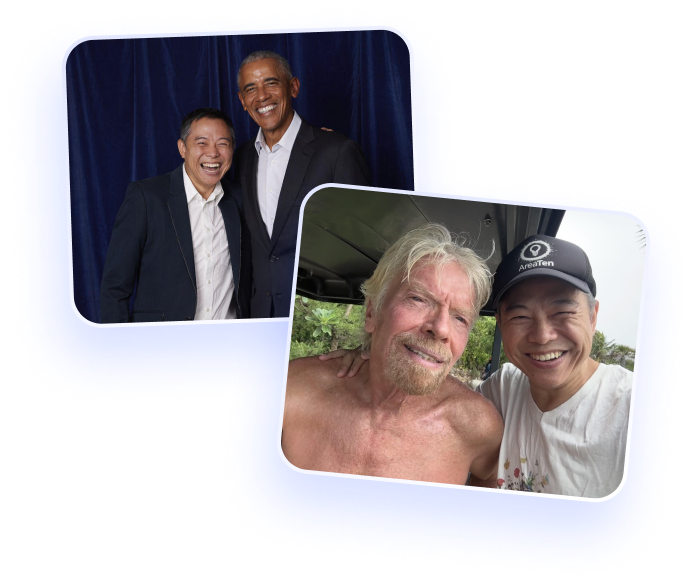
Jeremy Tang is the Founder and CEO of CMAX. With over 2 decades of experience in business consulting and digital marketing, he has successfully driven seven startup businesses, six of which achieved $1 million in revenue from zero in less than 16 months, 5 of which grew to multi-million dollar a year ventures without any external funding. Jeremy's expertise lies in streamlining business processes through technology and leveraging digital (in particular SEO) for business growth. He resides in Australia, travels extensively, and draws inspiration from his global experiences.