Most teams exploring AI SEO optimisation already know AI can produce drafts faster. The harder question is what happens after the draft: who checks intent, who validates sources, who decides a page is ready to publish, and who flags when it needs updating six months later. That’s a workflow and governance problem, not an authorship one. Scaling long-tail content without losing control over quality is the challenge CMAX was built around.
AI Changes SEO Through Workflow, Not Authorship
AI Speeds Content Operations
Managing hundreds or thousands of long-tail pages manually is where most SEO teams hit a ceiling. AI reduces that friction across the full production chain: keyword research, clustering, briefing, first-draft scaffolding, on-page optimisation and post-publication monitoring. Tasks that once took a team of five a full sprint can move faster and at greater volume, which matters when the goal is covering product variants, use-case queries and location or industry modifiers that a small manual programme would simply leave uncovered.
The real shift AI SEO optimisation introduces is in speed and repeatability, not authorship. Practitioners explore this workflow perspective further when studying AI in search engine optimisation across research, briefing and monitoring stages.
Humans Own Final Decisions
Speed does not transfer accountability. Human reviewers still determine whether query intent is informational, commercial or transactional, verify every claim against approved sources, apply brand and compliance rules, and make the final call on whether a page is accurate and useful enough to publish. AI can produce a draft; it cannot sign off on one.
What AI Changes, and What It Doesn’t
SEO optimisation, the practice of aligning pages with how search engines crawl, index and rank content (or, for those asking what is SEO optimisation, the discipline of making each page as findable and useful as possible), is being reshaped by AI. The speed, volume and repeatability of SEO tasks all accelerate. Repetitive research, drafting and monitoring across large keyword sets move faster. Coverage of narrow, high-intent topics that manual programmes routinely skip becomes achievable.
What AI does not change: search engines still depend on crawlable pages, clear internal links, Search Essentials compliance and content that directly answers the query.
What AI cannot handle safely: factual accuracy checks, brand risk assessment, legal review, source approval and publication accountability.
What AI makes more critical: consistent briefing standards, approved-source rules, taxonomy discipline and defined refresh triggers. Without those controls, scaled content drifts, duplicates itself or ages into inaccuracy.
Scalable long-tail workflows depend on repeatable content operations
Scaling long-tail content without repeatable operations produces the opposite of what teams intend: inconsistent pages, missed coverage and maintenance debt that compounds with every new URL added.
Better long-tail query discovery
Long-tail discovery is stronger when three data sources work together rather than any one in isolation. AI search engine optimisation starts with combining search data, taxonomy gaps and customer language to build a complete picture of demand. Search tools surface existing demand, showing which queries already have volume and competitive context. Site taxonomy reveals where coverage is thin, flagging topic clusters the current page set has not addressed. Customer language, drawn from support tickets, sales calls or on-site search logs, exposes the exact phrasing real buyers use, which often differs from how internal teams describe the same product or service. Each source fills a gap the others leave open. Teams that rely on search tools alone tend to over-index on high-volume terms and miss the narrow, high-intent queries where long-tail programmes generate the most return. When AI SEO optimisation is applied to long-tail query sets, the underlying goal frequently connects to SEO for lead generation, so that high-intent pages not only rank but convert visitors into qualified pipeline.
Rules keep production consistent
AI SEO optimisation only scales when shared rules govern every page. Shared prompt libraries, approved-source rules and predefined update triggers give large content sets a consistent backbone. Page structure, terminology, tone and maintenance standards stay aligned even when multiple reviewers or publishers are involved. Effective AI website optimisation depends on these structural guardrails holding firm across every template and URL pattern. Without them, output drifts: terminology shifts between pages, update schedules become ad hoc and structural inconsistencies accumulate across hundreds of URLs. Documented rules make the workflow transferable and auditable. Building repeatable content operations at scale often leads teams to evaluate enterprise SEO consultants who can establish shared taxonomy, prompt libraries and governance frameworks across large keyword sets.
Review gates reduce publishing errors
Formal review gates for factual accuracy, authorship standards, E-E-A-T signals and legal approval catch problems before they reach the index. Pages that pass these gates qualify as SEO optimised content because every claim, source and structural element has been verified against documented standards. Weak pages, duplicated content and non-compliant claims are far cheaper to fix in draft than after publication. A gate-based process also creates a clear accountability trail, which is critical when content touches regulated topics or carries brand risk.
Modern AI SEO workflows run from discovery to refresh
Discovery-to-refresh workflow
A complete AI SEO optimisation workflow runs from cluster research through post-publish refresh. A workable AI SEO process follows a defined sequence: clustering and briefing first, then drafting, human review, publication and performance monitoring. Each stage has a clear handoff.
Clustering groups related long-tail queries before a single brief is written, so pages are scoped to a specific intent rather than built around a vague topic. Briefs set the approved sources, required claims and structural rules that drafts must follow. Human review then checks whether the draft answers the query accurately, matches the intended intent type and meets publication standards. After a page goes live, performance monitoring flags which URLs are gaining or losing ground, so teams can correct weak pages, tighten internal links or revise outdated claims before rankings erode.
Skipping any stage is where scaled content programmes break down. A draft that bypasses human review can publish factual errors across hundreds of pages simultaneously. A published page that is never monitored can age into inaccuracy without anyone noticing. AI SEO agents flag ranking drops, SERP changes and outdated claims so reviewers act on signals, not schedules.
Refresh triggers and signals
Refresh decisions tied to fixed publishing dates miss most of the signals that actually indicate a page needs attention. Ranking movement, SERP layout changes, product or policy updates, shifts in how a query is phrased and falling conversion performance are all more reliable indicators than a calendar reminder.
A page that ranked well six months ago may now face a SERP with new features, updated competitor content or a query that has shifted from informational to transactional. Monitoring for those signals, rather than refreshing on a schedule, directs editorial effort where it produces measurable impact.
As AI SEO optimisation workflows mature, teams increasingly monitor SERP shifts driven by zero click search behaviour, where answers surface directly on the results page before a user ever visits the site.
A confident rollout starts with measured scope.
Pilot before scaling.
Scaling to thousands of long-tail pages without a tested process is how teams end up with duplicate content, broken review chains and pages that should never have gone live. A pilot run solves this before it becomes a volume problem.
A well-scoped pilot does four things: it tests whether your templates produce pages that match query intent, assigns clear review ownership so no draft sits in a queue without an accountable editor, sets a measurement window long enough to read ranking and traffic signals, and defines the refresh triggers that will govern the broader rollout. Process flaws that would be expensive to fix across 5,000 pages are cheap to fix across 50. Piloting at small scale is what separates controlled AI SEO optimisation from unmanaged content sprawl.
For teams pursuing SEO optimisation Australia demands, a measured pilot reveals process gaps early. Organisations scaling across large page sets, particularly those working with enterprise SEO services Sydney, benefit from piloting templates and review gates before committing to full rollout.
Proof point from B2B retail.
In one CMAX engagement, a B2B omnichannel hospitality retailer added 5,000 long-tail product pages and drove over $1M per month in incremental SEO revenue within 8 months.
The result came from turning a large query set into publishable, maintainable page templates without losing control over review and refresh. That is the operational challenge at the centre of enterprise long-tail SEO: large keyword sets have no commercial value until a team can produce, approve and maintain pages at that volume without quality degrading. The pilot stage is where teams confirm they can do exactly that before committing to full-scale deployment.
The same pilot-first principles that govern AI SEO optimisation rollouts apply in specialised verticals, where practices like SEO for migration agents require careful intent matching, compliance review and refresh triggers before content is published at scale.
Frequently Asked Questions (FAQ)
How does AI impact SEO and Google rankings?
AI changes the speed and scale at which teams research, produce and update content. Rankings still depend on usefulness and crawlability, not on whether AI SEO optimisation appeared in the workflow. A page produced with AI assistance ranks or fails on the same criteria as any other page: does it answer the query, can search engines access it, and does it link coherently to related content? The workflow behind the page is invisible to Google.
How do you optimise for getting discovered on ChatGPT, Gemini, Grok etc?
Discovery in generative tools improves when content answers narrow questions directly, uses consistent entity, category and product language, and is structured so retrieval systems can parse, attribute and trust it. The same discipline that supports traditional crawlability, clear headings, specific answers, consistent terminology, also supports generative retrieval. When considering how platforms like Perplexity AI SEO retrieve and attribute sources, consistent entity language and structured answers become even more critical.
A common question in AI SEO optimisation is how generative tools affect discoverability, and SEO for AI search addresses exactly that, structuring content so retrieval systems can parse, attribute and surface it reliably.
How are you using AI in your SEO writing right now?
A practical setup uses AI for clustering, briefs, draft scaffolds and update suggestions. Running a SEO AI audit early in the process identifies gaps in coverage, internal linking and technical health before production begins. Humans review claims against approved sources, add missing context, correct wording, check intent match and approve publication. AI handles the repeatable work; humans own the decisions that carry brand and accuracy risk.
How do I maintain topical authority while scaling?
Topical authority holds at scale when pages are built from a shared taxonomy, linked to closely related supporting content, updated when source material changes and reviewed against consistent evidence and quality rules. Taxonomy discipline and refresh triggers are what prevent a large content set from drifting or duplicating itself over time.
Does Google differentiate between AI written content and human written content?
The more durable distinction is whether a page demonstrates originality, accuracy, relevance, editorial oversight and enough depth to satisfy the query better than a thin or generic alternative. Authorship method is secondary to whether the page earns its place in the results.
AI SEO Optimisation at Scale, Built for Teams Who’ve Hit the Plateau
CMAX is an agentic SEO platform that targets long-tail search demand programmatically.
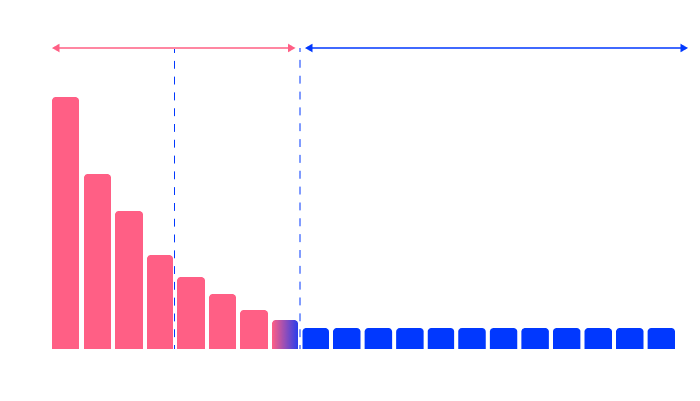
Most organic strategies focus on a narrow set of high-volume keywords, leaving the vast majority of high-intent queries untouched. CMAX deploys AI agents that create, publish, and continuously refresh content across thousands of those queries, integrated with two lines of code. Teams running lean can operate at a scale that would otherwise require a full content department.
The platform is built for measurable, boardroom-ready results, with early performance signals observed within six weeks across campaigns to date.
Author
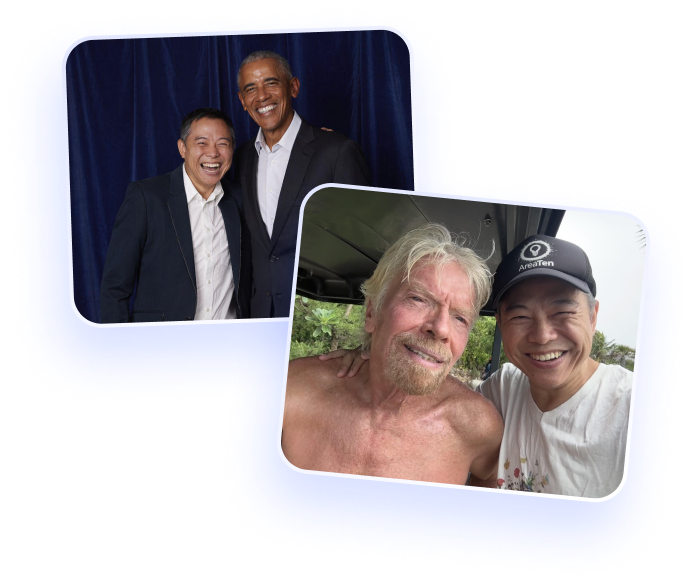
Jeremy Tang
Founder and CEO of CMAX
Jeremy Tang is the Founder and CEO of CMAX. With over 2 decades of experience in business consulting and digital marketing, he has successfully driven seven startup businesses, six of which achieved $1 million in revenue from zero in less than 16 months, 5 of which grew to multi-million dollar a year ventures without any external funding. Jeremy's expertise lies in streamlining business processes through technology and leveraging digital (in particular SEO) for business growth. He resides in Australia, travels extensively, and draws inspiration from his global experiences.