Most agencies pitching AI mode engine optimisation Sydney bundle everything together: crawlability fixes, new suburb pages, and vague promises about AI citations, all under one label. The problem is that some of that work is standard SEO you should already have, some of it genuinely improves eligibility for AI Mode surfaces, and some of it no provider can actually control. Separating those three categories is the first step to evaluating any scope or proposal. CMAX approaches this split with documented audits and measurable page-level signals rather than broad guarantees.
AI Mode SEO in Sydney has clear limits.
Eligibility improves, citations do not
The way AI mode engine optimisation Sydney works in practice is shaped by what a provider can and cannot control. As a form of AI automation Sydney, AI Mode work can improve whether your Sydney pages are crawlable, indexable, locally relevant, and detailed enough to match multi-part searches. That’s the honest scope of what a provider controls.
What no agency controls is whether a specific AI answer surface cites your page. Google’s AI Mode appears to select citations based on relevance signals at query time. A provider can improve the conditions that make a page eligible, but eligibility and citation are two different outcomes. Any agency that promises the latter is overstating what the work can deliver.
When Sydney businesses research AI mode engine optimisation Sydney, they often encounter related disciplines such as GEO generative engine optimisation, which similarly focuses on improving a site’s eligibility to appear in AI-generated answer surfaces.
Sydney specialists must separate the work
A credible Sydney provider keeps two workstreams distinct.
The first is foundational SEO: resolving indexing gaps, fixing crawl access, and filling thin location coverage so key pages are actually eligible to appear. The second is AI Mode visibility work: building service, suburb, and problem pages that match the layered, multi-step ways people actually search, such as “commercial fit-out company Parramatta” or “what’s the difference between a fitout and a refurb.”
Conflating these two workstreams is where scope gets vague and accountability disappears. A provider who can articulate both, and explain how they measure each separately, is operating at the right level of rigour. An AI automation agency Sydney businesses shortlist should distinguish what’s foundational from what’s visibility-specific. One that bundles them under a single “AI SEO” label without making that distinction is worth pressing harder before you sign anything.
The service scope should match AI Mode reality.
Six-point AI Mode scope checklist
A practical scope document for AI mode engine optimisation Sydney should state three things clearly: what the provider can control, how each item will be checked, and what sits explicitly outside the engagement. Any scope that promises guaranteed AI citations or references undocumented AI-only shortcuts should be treated as a red flag before a contract is signed. A well-defined scope should align closely with what practitioners mean by SEO for AI search, covering crawlability, local page coverage, and query mapping rather than undocumented AI-only shortcuts.
A credible scope covers six areas:
Crawlability. Key pages must be requestable, renderable, and reachable by bots. Robots rules, weak internal linking, and technical configuration are the common blockers, and each one is checkable before any AI engine optimisation content work begins.
Index status. Discovery and indexation are different states. Sydney service and problem pages that are discovered but not indexed are invisible to search systems in practice, and that gap needs to be closed first.
Local page coverage. A site that only answers one broad city-level query has limited surface area. Suburb, service, and use-case pages expand the number of searches the site can match.
Query coverage. Buyers ask layered questions: service + suburb, problem + service, comparison-style searches. A thorough AI search engine optimisation scope should map to those patterns, not just short head terms.
Measurement setup. Impressions by page and query-level patterns need to be tracked before new Sydney-relevant pages go live, so there is a baseline for generative engine optimisation reporting to compare against after publication.
What is out of scope matters as much as what is in. Guaranteed citations and undocumented AI-only shortcuts belong in neither column.
Guaranteed AI citations, special hidden files, and generic AI copy production are excluded from scope because they are not reliable control points and Google does not require special AI markup for eligibility.
Accessible coverage matters more than tricks
Google has confirmed that no special AI markup is required for a page to be eligible to appear in AI Mode results.[1] That rules out a category of vendor claims before the conversation starts: secret schema files, hidden directives, proprietary AI-only markup, and undocumented technical shortcuts are not control points. A provider who leads with those tactics is selling something Google has not asked for. Sound SEO engine optimisation foundations, such as crawlability, indexation, and structured content, carry far more weight than any undocumented trick.
What does carry weight is whether a page is accessible, specific, and structured around the way buyers actually phrase multi-part questions. A crawlable Sydney service page that answers a layered query, such as a problem plus a service plus a suburb, gives AI systems something concrete to work with. A generic city-level page with thin copy does not, regardless of what markup sits behind it.
The same logic applies to bulk AI copy production. Volume without specificity can add pages that do not match real search variants. Page coverage earns visibility when each page answers a distinct, real query variant, not when it fills a word count.
Providers working on AI mode engine optimisation Sydney should help clients grasp the practical distinctions covered in the aeo vs SEO debate, particularly around what each discipline can and cannot guarantee in terms of citation or ranking outcomes.
Scope should reflect this. Providers who separate what they can control, crawlability, index status, local page depth, and query coverage, from what they cannot, citation selection by Google’s AI systems, are the ones worth shortlisting. Solid SEO optimisation practices define those controllable levers far more reliably than any proprietary markup claim. These exclusions keep AI mode engine optimisation Sydney focused on reliable control points.
The right provider should show measurable decision factors.
Compare practical SEO visibility signals
Before hiring, ask the agency to show its work in concrete terms. Can they pull crawlability checks that confirm your key Sydney pages are accessible to bots? Can they show index status for your service and problem pages? Can they map query-level impression patterns in Search Console that connect a specific piece of work to a measurable visibility change?
Vague claims about “AI optimisation” are easy to make. What separates a credible provider is the ability to point to a page, show its indexed status before and after, and explain which queries it started appearing for. If an agency can’t demonstrate that chain, the work is unverifiable. Measurable signals are what makes AI mode engine optimisation Sydney accountable.
For businesses evaluating SEO in Sydney, comparing crawlability checks and impression patterns across providers reveals more than any pitch deck. When shortlisting for AI mode engine optimisation Sydney, some businesses also research what a gemini SEO agency offers in terms of measurable visibility signals, making it useful to compare how different specialists document crawl checks and impression growth.
Use a before-and-after page test
Run a simple comparison before you commit. Take a generic city-level page already on your site and a newly published, crawlable Sydney service or problem page. Put both into Search Console. After the specific page is indexed, track three things: indexed status, impression growth, and query spread.
A well-built Sydney service page may earn impressions across a wider set of queries than a broad category page, because it answers more specific combinations of suburb, service, and problem. That spread is the signal. If the specific page outperforms the generic one across those three measures, the methodology is working. If it doesn’t, the agency should be able to explain why, not deflect.
Businesses evaluating AI mode engine optimisation Sydney may also come across a ChatGPT SEO agency in their research, reinforcing why comparing documented before-and-after page tests and impression patterns matters more than the AI brand a provider associates itself with.
Shortlisting Confidence Comes From Evidence, Not Promises
Ask for Screenshots and Misses
When shortlisting Sydney providers, ask for screenshots of Search Console data tied to specific pages, and ask the agency to explain its reporting method in plain terms. An AI agency Sydney businesses trust should walk you through how it tracks impressions by page, query spread, and indexed status before and after new content goes live.
Agencies pitching AI mode engine optimisation Sydney sometimes frame their work under LLM optimisation, so asking for screenshots, indexed-page counts, and query-spread data helps distinguish evidence-backed practice from broad claims.
The more revealing question is what did not work. Ask the agency to point to a page cluster or suburb coverage build that did not improve visibility, and explain why. A provider that can diagnose a miss, whether a crawl block, a thin page that stayed unindexed, or a query set that never gained traction, shows it reads the data rather than curates it. Broad claims with no documented limits are a signal to keep shortlisting.
One CMAX Proof Point
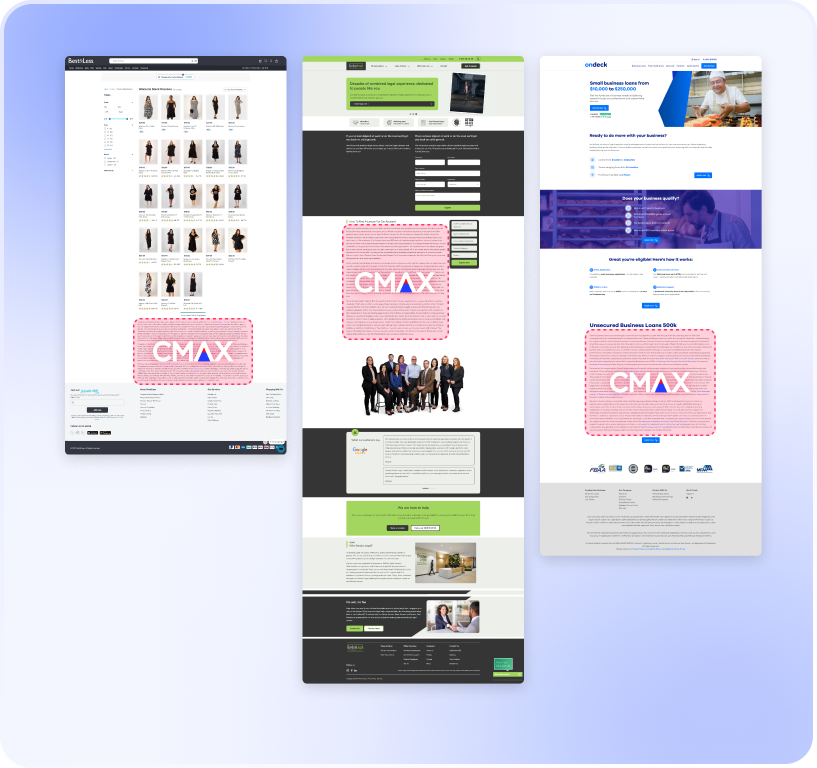
Based on CMAX’s client engagement data, scale of page coverage is what drives long-tail visibility, and the numbers from one CMAX engagement make that concrete. Based on CMAX’s client engagement data, a B2B omnichannel hospitality retailer published 5,000 long-tail product pages through CMAX and reached $1M+ per month in incremental SEO revenue within 8 months.
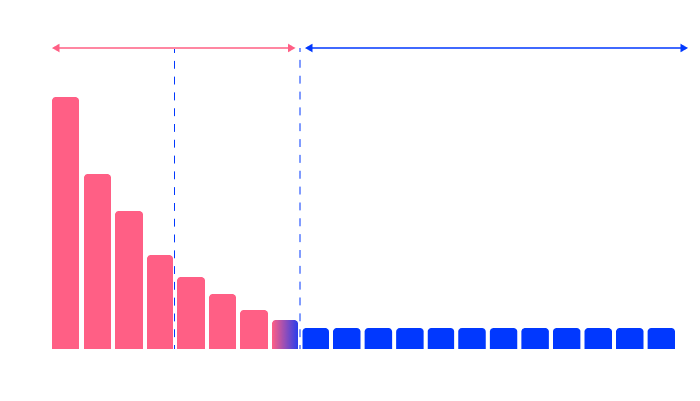
The same dynamic applies to AI Mode visibility in Sydney. AI Mode handles layered, multi-part queries, and a site with a small set of generic pages will match far fewer of them than a site with specific service, suburb, and problem pages built at scale. Coverage depth is the variable an agency can actually move. That is what the proof point measures.
Frequently Asked Questions (FAQ)
How do I measure the success of my AI SEO strategy in this new landscape?
Start with crawlability and index status: are the pages you’ve built actually reachable and eligible to appear? From there, check whether Sydney service or problem pages are gaining impressions across a wider set of queries in Search Console. The signal to watch is whether those visibility gains connect to qualified visits or leads, not just raw impression counts.
What metrics should I track for AI search performance?
Track indexed page count, crawl status by URL, impressions per page, and query-level impression spread. Where click data is available, review it alongside impressions. Pay particular attention to how many Sydney-specific pages begin appearing for suburb, service-intent, or problem-led searches, since that spread indicates whether your coverage is matching the layered ways buyers actually search.
Can I test if AI crawlers can access my site right now?
Yes. Inspect your robots rules, test key URLs for crawl access, and pull server logs or bot activity reports to confirm whether non-browser agents can request the pages you expect them to reach. Gaps here are fixable and worth finding before publishing new content.
Exploring the broader role of AI in search engine optimisation helps clarify how the same foundational principles around crawlability, indexability, and content depth apply locally as well.
How is AI search optimisation different from traditional SEO?
The foundations are the same. AI mode engine optimisation Sydney still depends on standard SEO foundations, but places more weight on pages that answer multi-step questions, local variants, and problem-specific searches rather than relying on a small set of broad category terms.
How long before AI search optimisation shows results?
Timing depends on crawl frequency, indexation health, and how much new Sydney-relevant coverage is added. The earliest useful signal is typically an increase in impressions on newly published or improved pages, which precedes traffic gains.
Long-Tail Coverage at Scale, Not Another SEO Promise
CMAX is an agentic SEO platform built for one job: capturing the long-tail search traffic most businesses never reach.
Our AI agents deploy and continuously update content across thousands of keyword variations, the specific, high-intent queries your customers actually type. Two lines of code connect CMAX to your site, and campaigns across our platform have shown measurable traction within six weeks. For Sydney businesses evaluating AI Mode readiness, that breadth of query coverage directly supports the crawlability and indexing signals search engines, and AI surfaces, rely on.
We don’t replace your SEO strategy; we scale the parts a small team can’t do manually.
References [1] – https://developers.google.com/search/docs/essentials/spam-policies
Author
Jeremy Tang
Founder and CEO of CMAX
Jeremy Tang is the Founder and CEO of CMAX. With over 2 decades of experience in business consulting and digital marketing, he has successfully driven seven startup businesses, six of which achieved $1 million in revenue from zero in less than 16 months, 5 of which grew to multi-million dollar a year ventures without any external funding. Jeremy's expertise lies in streamlining business processes through technology and leveraging digital (in particular SEO) for business growth. He resides in Australia, travels extensively, and draws inspiration from his global experiences.