Most businesses searching for an AEO agency Sydney have already noticed the problem: their pages still rank, but they’re not showing up where AI answers pull from. The gap between organic position and answer-surface visibility is real, and it needs its own measurement, its own audit criteria and its own strategy. That starts with diagnosing what’s actually missing, not layering more content onto an unchanged foundation. CMAX works with Sydney teams who need that diagnostic clarity tied to baselines, method and measurable business outcomes.
Sydney AEO Specialists Should Diagnose Measurable Visibility Gaps
An aeo agency Sydney should begin by diagnosing measurable visibility gaps before proposing any strategy. Where a traditional SEO agency Sydney engagement tracks rankings, AEO measurement must also capture citation presence across AI-driven answer surfaces.
Measure Answer Visibility Separately
A page can hold its organic ranking while its answer-surface presence shifts in either direction. Citation presence, answer impressions, local pack exposure and downstream commercial signals each move on their own schedule, driven by entity signals, structured data and content freshness rather than link authority alone. Tracking them inside a single headline metric hides those movements.
A Sydney AEO specialist should report AI citation checks, organic impression trends, local visibility and qualified enquiry volume as separate data streams. When one drops while another holds, that separation tells you exactly where to act. Any credible SEO Sydney agency will already segment organic data this way, and the same discipline applies to answer-engine reporting.
An aeo agency Sydney provider working across answer surfaces will often align its method with GEO generative engine optimisation principles, since both disciplines address how content is retrieved and cited by AI-driven answer engines.
Cover Sydney Search Patterns
Sydney search demand is not uniform. A user in Parramatta searching for a service provider phrases that query differently from one in Surry Hills or Cronulla, and the intent modifiers shift with the suburb. A credible AEO plan maps suburb-level, service-level and long-tail queries to distinct pages or content blocks that address those differences directly.
Boilerplate location copy rarely carries enough specificity to cover suburb-level demand. It tends to repeat the same service description with a suburb name swapped in, which does little to signal local relevance or explain service differences to an answer engine. The coverage gap that creates is measurable: queries go unanswered, citations go to competitors, and local pack exposure stays flat. A reputable SEO agency in Sydney should show how that coverage will be built, with clear suburb-level mapping and content plans to back it up.
The right audit should show what can be measured.
Audit answer eligibility signals
An AEO audit is only useful if it surfaces the specific signals that answer engines rely on when deciding whether to reuse, cite or surface your content. That means checking five areas: entity consistency (are your business name, address, category and service descriptions aligned across your site, structured data and third-party sources?), structured data coverage (do your key pages carry schema that answer engines can parse without guesswork?), approved fact sources (is there a defined process for which claims are authoritative and where they live?), update processes (how quickly can outdated facts be corrected before they circulate in AI-generated answers?), and local relevance signals (does the content reflect Sydney-specific service context, not generic copy that could apply to any city?). A weakness in any one of these reduces how confidently an answer engine treats your content as a reliable source. Qualified SEO specialists Sydney should be able to demonstrate audit capabilities across all five of these areas before any strategy is proposed.
Set a baseline before strategy
Strategy without a baseline is guesswork with a slide deck. Before any AEO work begins, the agency should define a named review period and connect four data sources: Search Console, site analytics, AI citation checks and lead data. That combination gives you a fixed reference point. During the audit phase, an aeo agency Sydney team should be able to demonstrate how its diagnostic approach compares with what an aeo Australia agency typically establishes as a baseline before any strategy begins. When visibility changes later, you can compare against the same rules and the same period rather than relying on screenshots taken at convenient moments, isolated ranking wins or anecdotal feedback from the sales team. A named baseline also makes it possible to separate genuine answer-surface gains from organic fluctuations that would have happened regardless.
A practical checklist makes Sydney agency fit easier to score.
Sydney AEO fit checklist
Scoring aeo agency Sydney fit means comparing evidence across baseline quality, method and review timing. This self-assessment gives you a structured way to compare Sydney AEO providers on what they can demonstrate, not what they claim. The checklist helps buyers judge whether an aeo agency can show working evidence, not just credentials.
Score each agency against the following criteria:
Baseline quality Can the agency define a named review period and connect Search Console, analytics, AI citation checks and lead data from day one? A baseline built on screenshots or isolated ranking wins won’t hold up when you need to report to a CFO.
Working method Does the agency separate AI citation presence, organic impressions, local pack exposure and qualified enquiries, or does it roll everything into a single headline number? Separate measurement is critical because each signal can move independently.
Sydney coverage Can the agency map suburb, service and long-tail queries to distinct pages or content blocks? If the answer involves near-identical location pages, the method won’t cover the variation in how Sydney users actually search.
Governance controls Does the agency have a defined process for entity consistency, structured data, approved fact sources and content updates? Gaps here reduce how confidently answer engines cite or surface the content.
Business impact Can the agency connect visibility changes to pipeline movement, not just impressions? Reporting that stops at traffic or rankings leaves the commercial case unfinished.
Work through these five criteria with each shortlisted agency. The one that can show evidence across all five is worth a deeper conversation.
When scoring agency fit against the checklist, businesses can also review aeo services in Australia to understand the broader service landscape before committing to a Sydney-specific engagement.
Can the agency show a named baseline period using Search Console, analytics and lead data, rather than isolated ranking examples or channel-specific screenshots?
This is a practical filter, and it separates agencies that measure from agencies that report selectively.
A named baseline period means the agency defined a specific window before work began, connected Search Console, analytics and lead data to that window, and can now compare current performance against the same rules. That structure lets you attribute changes to specific actions rather than seasonal shifts, algorithm updates or a single strong month. Whether you are vetting an SEO agency north Sydney or a provider in the inner west, the baseline evidence expectations should be identical: a defined review window, connected data sources and trackable metrics.
Isolated ranking screenshots do not meet that bar. A position-one result for one query in one tool tells you nothing about citation presence, answer-surface impressions, local pack exposure or whether any of that visibility is producing qualified enquiries. Each of those signals can move independently, and a reporting method that rolls them into one headline number will miss the gaps. An SEO agency western Sydney covering a broad geographic footprint, for example, needs baseline data segmented by region to show whether visibility gains are distributed or concentrated in a single corridor.
When evaluating a Sydney AEO agency, ask for the baseline document directly. It should name the review period, list the connected data sources and show how each metric is tracked over time. If the agency defaults to before-and-after screenshots or a single organic traffic graph, the measurement infrastructure is not in place to support a credible strategy. Suburb-level demand can vary sharply; an SEO agency penrith serving outer-metro clients will see different query volumes and intent profiles than a CBD-focused provider, and the baseline must reflect those differences to be useful.
When evaluating whether an aeo agency Sydney can show a named baseline period, it is worth examining how the highest rated aeo agency within the consultancy sector Australia structures its measurement and attribution methodology as a reference point.
Lead data is the commercial anchor. Visibility gains that do not connect to qualified enquiry movement are incomplete. An agency that tracks citation checks, impression trends and local visibility changes alongside pipeline data gives you something you can present to a CFO with confidence.
Does the method separate AI citations, organic impressions, local visibility and qualified enquiries, instead of rolling them into one headline number?
A single blended visibility score hides more than it reveals. AI citation presence, organic impressions, local pack exposure and qualified enquiry volume can each move in different directions at the same time, a page can gain AI citations while organic impressions hold flat, or local visibility can improve while lead quality drops. Collapsing those signals into one headline figure makes it impossible to know which lever moved and why.
The method should track each signal in its own lane. AI citation checks confirm whether the content is being reused or referenced by answer engines. Search Console data shows organic impression and click trends at the query level. Local visibility monitoring covers suburb and service-area exposure separately from broad organic performance. Qualified enquiry data, calls, form fills, pipeline entries, connects visibility changes to commercial outcomes rather than stopping at traffic.
When these are reported separately, a Sydney business can see exactly where a gap exists and what type of work is likely to close it. A citation gap points to entity consistency or structured data issues. A local visibility gap points to suburb-level content coverage. A lead quality gap points to intent mismatch between what the content attracts and what the business actually sells.
A general AI agency Sydney may build models or automate workflows, whereas an AEO-focused provider measures whether those efforts increase answer-surface citations and qualified enquiries. An aeo agency Sydney that separates AI citations from organic impressions should also be able to show how GEO services Sydney are measured as a distinct local-visibility signal rather than folded into a single headline metric.
Ask any prospective AEO agency Sydney-side to show how each signal is reported and how changes in one are distinguished from changes in another. If the answer defaults to a single dashboard number, the method won’t support the diagnostic work the strategy depends on. Separating these metrics is one way to judge whether an aeo agency Sydney is reporting substance or surface.
Can the agency explain how Sydney suburb, service and long-tail demand will be covered without defaulting to near-identical location pages?
This is a practical test, and the answer should be specific.
Sydney search demand does not distribute evenly. A plumber in Parramatta, a financial adviser in Chatswood, and a physio in Surry Hills each attract queries with different intent modifiers, service expectations, and local signals. An agency that responds to this with templated location pages, same structure, swapped suburb name, near-identical body copy, produces content that answer engines have little reason to cite, because it adds nothing distinct to the record.
A credible agency maps suburb, service, and long-tail queries to content that reflects actual differences: what users in that area search for, what service variants apply, and what intent signals distinguish a research query from a commercial one. That mapping should be visible in the strategy brief, not described in general terms during a sales call. An ecommerce SEO agency Sydney brief, for instance, requires mapping product-category and transactional long-tail queries to distinct pages rather than duplicating location copy.
An aeo agency Sydney covering suburb and long-tail demand should be able to articulate how its content architecture differs from the approach taken by a leading aeo agency Melbourne serving a comparable metro market.
Ask the agency to show how they would handle two or three of your highest-priority Sydney locations. If the answer is a content template with variable fields, that is a signal the coverage will be thin. If the answer references query research, intent segmentation, and distinct content rationale for each location or service cluster, the method is more likely to produce pages answer engines treat as authoritative sources rather than duplicates.
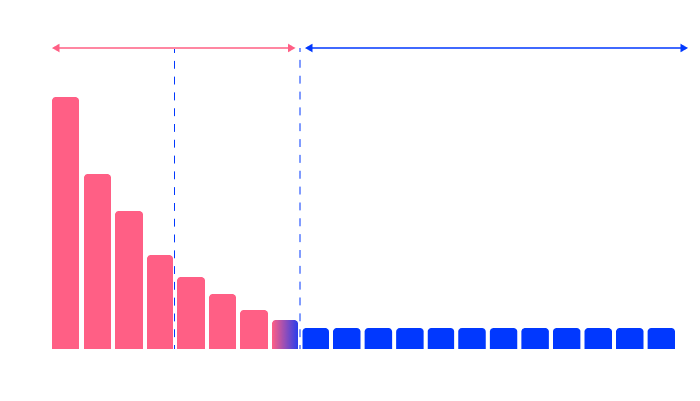
Long-tail demand compounds this. Based on CMAX’s analysis, over 90% of search and AI queries sit in the long tail, and suburb-level queries are a significant part of that volume. Coverage that ignores this leaves significant addressable demand unserved.
Frequently Asked Questions (FAQ)
How do you measure AEO success today?
AEO success is measured through a combination of citation checks, organic impression trends, local visibility changes and qualified lead movement. No single metric shows whether answer-surface visibility is increasing or whether that visibility is influencing pipeline. Citation presence can shift while organic rankings hold steady, and local pack exposure can move independently of both. Tracking these signals separately gives a clearer picture of what is actually changing and why.
What does an AEO audit include?
For businesses exploring aeo Sydney options, an audit typically reviews entity consistency, structured data and local intent coverage. Each area is checked to identify which issues are limiting answer eligibility, citation trust or reporting clarity. A thorough AEO audit also examines source control, content freshness and measurement setup. Weaknesses in any one of these can reduce how confidently answer engines reuse or surface the content.
How long does AEO take to work?
Some improvements appear within weeks when technical, entity or governance issues are resolved quickly. Broader gains take longer because local and long-tail visibility depend on publishing the right coverage, being recrawled and building repeat presence across many queries.
Is AEO replacing SEO?
AEO does not replace SEO. The same site still needs crawlable content, clear entities, strong internal structure and useful pages. What changes is that reporting and content design also need to account for answer surfaces beyond blue-link rankings.
An aeo agency Sydney specialist can clarify how aeo vs SEO differ in measurement focus, since answer-surface citations and organic blue-link rankings are tracked through separate signals and serve distinct reporting purposes.
How to choose an AEO agency?
When evaluating an aeo agency Sydney, look for a defined baseline, measurable method and governance over facts. The agency should also demonstrate realistic timeframes, regular updates, and reporting that connects visibility changes to business outcomes rather than vanity metrics alone.
Two Lines of Code, Thousands of Long-Tail Keywords
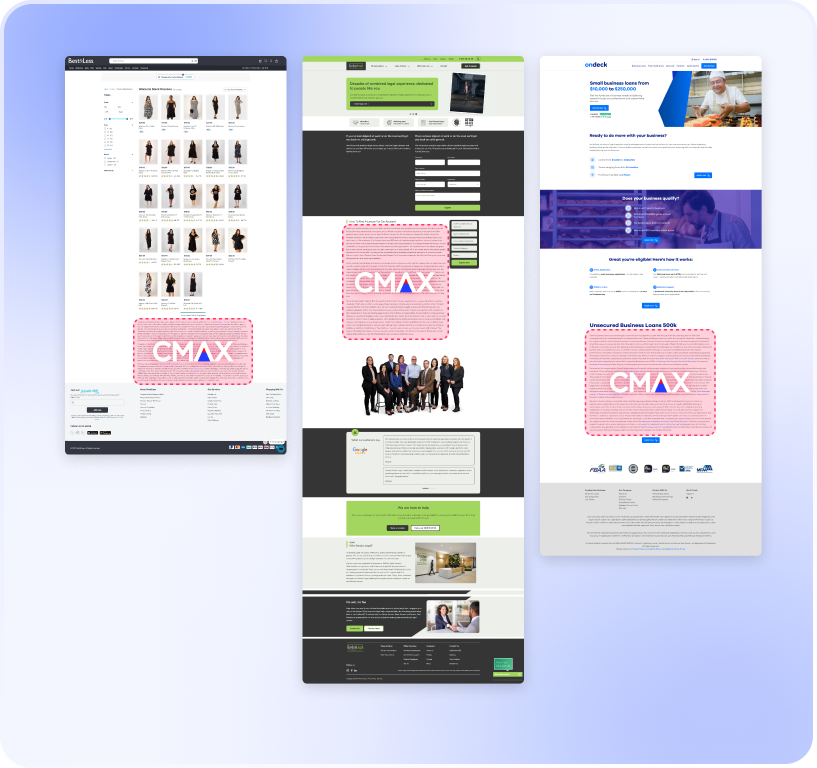
CMAX is an agentic SEO platform built for scale.
Our AI agents deploy and continuously update content targeting the long-tail queries that represent over 90% of search and AI demand, the high-intent phrases most businesses never reach. For Sydney teams evaluating AEO-ready partners, CMAX covers local, long-tail and answer-engine visibility from a single integration: two lines of code, no rebuild required. Results typically begin surfacing within six weeks, with baselines and attribution baked into every campaign.
If your organic strategy has plateaued, the gap is almost certainly in the long tail.
Author
Jeremy Tang
Founder and CEO of CMAX
Jeremy Tang is the Founder and CEO of CMAX. With over 2 decades of experience in business consulting and digital marketing, he has successfully driven seven startup businesses, six of which achieved $1 million in revenue from zero in less than 16 months, 5 of which grew to multi-million dollar a year ventures without any external funding. Jeremy's expertise lies in streamlining business processes through technology and leveraging digital (in particular SEO) for business growth. He resides in Australia, travels extensively, and draws inspiration from his global experiences.