AI in search engine optimisation means two different things right now, and most teams are conflating them. One is using AI to scale the repeatable parts of SEO work: clustering, drafting, internal linking. The other is making sure your pages are structured well enough for AI search systems to surface them. Both matter, but they require different decisions about where humans stay in the loop and where automation actually helps. CMAX works at that intersection, pairing scaled content production with the governance frameworks that keep output publishable.
AI is Changing SEO in Two Distinct Ways
The phrase “AI in search engine optimisation” covers two separate shifts, and conflating them leads to poor decisions. One is about how teams produce and manage SEO work. The other is about how search systems surface content. Both matter, but they call for different responses.
AI-Assisted SEO at Scale
The practical side of AI in search engine optimisation starts with how teams handle the repeatable, high-volume work that used to consume most of the week: keyword clustering, draft creation, internal linking suggestions, and reporting. Tasks that once took days can move in hours.
What it does not change is the need for human review. Editors still verify facts, remove duplication, check that a page matches the searcher’s actual intent, and apply brand or subject-matter judgement before anything goes live. AI accelerates production; it does not replace the layer of scrutiny that keeps output credible and distinct.
AI in search engine optimisation extends naturally into AI website optimisation, where the same analytical and production capabilities are applied to improving page structure, metadata, and on-site signals that influence both traditional and AI-generated search results.
SEO for AI Search Visibility
The foundations that search engine optimisation Australia teams rely on still require crawlability, specific answers, clear structure, and evidence a system can recognise and summarise. AI-generated search experiences, including AI Overviews and similar features, are best served by these same page-level signals. For international readers familiar with the American spelling, search engine optimisation Australia applies identically: the technical requirements do not change by region.
A thin page, a blocked URL, a vague claim with no supporting detail, these give AI search systems less reliable material to work with. The mechanism is the same as conventional search: pages that are technically accessible and factually grounded are easier to surface. Pages that are not give any system, human or automated, less to work with. This emerging discipline, often called generative engine optimisation, focuses on structuring content so AI systems can extract and present it reliably. Generative AI search engine optimisation requires the same commitment to factual depth and technical accessibility, applied with an awareness of how large language models select and synthesise source material.
AI in search engine optimisation increasingly intersects with how entities are understood by search systems, making knowledge graph SEO a relevant consideration for teams that want their brand, products, and relationships represented accurately in AI-generated results.
The Strongest AI SEO Workflows Keep Humans in Review
Why Governance Prevents Commodity Pages
Commodity pages and inaccurate output are a production problem, not an AI problem. When teams publish at scale without clear briefs, approved sources, duplication controls, or editorial review, unchecked systems repeat generic patterns and surface unsupported claims. The failure point is weak governance. AI assistance amplifies whatever process sits beneath it, a disciplined approach to AI in search engine optimisation produces distinct, accurate pages; an undisciplined one produces noise at speed.
AI SEO Engagement Checklist
A credible AI search engine optimisation engagement makes six things explicit before scale begins. AI in search engine optimisation works best when strategy is set by experienced practitioners, which is why many organisations bring in enterprise SEO consultants to define query priorities, governance rules, and review ownership before scaling output.
Strategy agrees the target query sets, business priorities, excluded topics, and the difference between pages targeting broader head terms versus pages built to cover specific long-tail demand.
Inputs are limited to approved source material, technical SEO constraints, brand rules, and any compliance language the business must follow. This keeps the workflow from inventing claims or drifting outside what the business can stand behind.
Production specifies what AI may generate, briefs, outlines, drafts, metadata, or page variants, and what still requires human writing, approval, or both. The checklist applies equally whether a team labels its practice search engine optimisation AI or uses another term; the governance steps remain the same.
Review assigns named owners for factual checks, duplication control, brand fit, and publication sign-off. Each page is checked for accuracy and distinctiveness before it goes live.
Measurement tracks indexed-page quality, query-cluster coverage, Search Console movement, and conversion quality, so the team can judge whether output is expanding useful visibility rather than only increasing page count.
Iteration sets rules for updating underperforming pages, merging thin coverage, and feeding reviewer findings back into the workflow. Recurring errors get corrected in the system, not patched one page at a time.
The right investment depends on scale, risk, and proof.
When AI SEO Investment Makes Sense
The clearest case for AI SEO investment is a site that already has scale: a large product catalogue, expensive paid search terms eating into margin, or a long list of uncovered long-tail queries that category pages never reach. In those situations, the opportunity is broader query coverage, not more articles targeting the same handful of head terms the site already ranks for.
A site with thousands of SKUs, service variants, or location combinations has search demand it can’t serve with manually produced pages. AI-assisted production changes that equation. The risk calculus also shifts: if paid search costs are high, organic coverage of the same queries has a measurable offset value, which makes the investment easier to present to a CFO with numbers rather than projections.
Based on CMAX’s client analysis, measurable offset value tied to organic query coverage is what makes AI in search engine optimisation worth the spend. Teams operating in Australia’s largest market may find that enterprise SEO services Sydney aligns that investment with the specific competitive landscape they need to address.
Smaller sites with narrow catalogues and low paid search spend face a different calculation. The governance overhead and review capacity required to maintain quality at scale may outweigh the return until the site has enough inventory to justify it.
Proof From Long-Tail Expansion
One CMAX engagement with a B2B omnichannel hospitality retailer illustrates the mechanism directly. The AI search engine optimisation tools used on the project enabled the site to add 5,000 long-tail product pages and drive over $1M per month in incremental SEO revenue within 8 months.
The pattern holds across large enterprise sites: category pages cover only a fraction of real search demand. Product pages, variant pages, and use-case pages capture the longer tail that those sites already have the inventory to serve. The search optimisation techniques applied here follow a consistent logic: the inventory exists, the pages don’t, and AI-assisted production closes that gap at a speed manual workflows can’t match.
AI in search engine optimisation can expand query coverage significantly, and when that expanded visibility is tied to commercial intent, it naturally supports SEO for lead generation by surfacing the site for the specific questions prospects ask before converting.
Clear Measurement Makes AI SEO Decisions Easier
Signals That Show Useful Visibility
Search Console trends, query-cluster coverage, and indexed-page quality are the three signals that tell you whether AI-assisted output is actually expanding relevant reach. The clearest way to judge AI in search engine optimisation is by whether new pages are addressing distinct search demand or duplicating territory the site already holds. Indexed-page quality flags whether pages are being crawled, ranked, and clicked, or simply accumulating without contributing. Together, these signals separate genuine visibility growth from page proliferation: a rising page count with flat or declining non-brand impressions is a governance problem, not a content win.
AI in search engine optimisation should ultimately be judged by its effect on measurable outcomes, and tracking SEO website traffic through Search Console trends and query-cluster coverage is one of the clearest ways to confirm that scaled output is generating genuine visibility rather than just page count.
Checks Before Scaling Output
At its core, what is search engine optimisation if not the discipline of producing pages worth publishing, pages that earn crawls, clicks, and conversions. Accuracy checks, revision effort, and conversion quality are the three production-side signals that show whether faster output is creating publishable pages or redistributing clean-up work.
Accuracy checks reveal whether AI-generated drafts are factually reliable against approved sources, or whether editors are spending more time correcting claims than they would writing from scratch. Revision effort tracks how much editorial intervention each page requires before it meets publication standards. Revision effort climbing can increase search engine optimisation cost, since hours spent correcting AI output may divert from new content or strategic work. Conversion quality connects organic traffic to downstream outcomes, showing whether the pages being indexed are attracting the right audience or pulling in volume that never converts.
AI in search engine optimisation is most effective when it is grounded in proven fundamentals, and reviewing established SEO optimisation techniques helps teams confirm that AI-assisted workflows are reinforcing, rather than bypassing, the practices that drive lasting rankings.
If revision effort is high and conversion quality is low, the workflow is generating cost, not capacity. Those signals, reviewed alongside Search Console data, give a team the evidence to adjust briefs, tighten source controls, or recalibrate review ownership before scale compounds the problem.
Frequently Asked Questions (FAQ)
How do you measure the success of AI SEO?
Compare indexed coverage, non-brand query growth, and click and impression trends in Search Console against a defined baseline. Add downstream conversion quality to that picture. Output volume tells you how much was published; these signals tell you whether it’s earning relevant visibility and driving business outcomes.
Can I use AI to create SEO content for a niche site?
AI can support niche content when the workflow draws on approved sources and a reviewer who knows the subject. Narrow topics are less forgiving of generic phrasing, imprecise terminology, or factual drift. Review standards need to be tighter on a niche site, not relaxed because the volume is lower.
How does AI impact SEO and Google rankings?
When teams adopt AI in search engine optimisation, rankings still depend on whether the final page is useful, technically accessible, distinct from competing pages, and matched to what the searcher actually wants. A related discipline, GEO search optimisation, applies many of the same principles to visibility within AI-generated answer engines and featured summaries. The speed changes; the criteria do not.
How can I improve my brand visibility with AI SEO?
Brand visibility grows when AI expands coverage across the specific questions, comparisons, locations, product variants, and use cases people already search for. Each page needs to add distinct value and be supported by evidence the business can stand behind.
Is AI content worth the gamble?
Treat it as a governed production method with source controls, named review owners, and clear quality checks, and the outcomes become more predictable. Publishing large volumes of unchecked pages and waiting for rankings to sort quality out later is where the risk concentrates.
AI Changed Search, CMAX Changed the Response
Most teams feel the shift: AI is reshaping how search engines rank, recommend, and surface content.
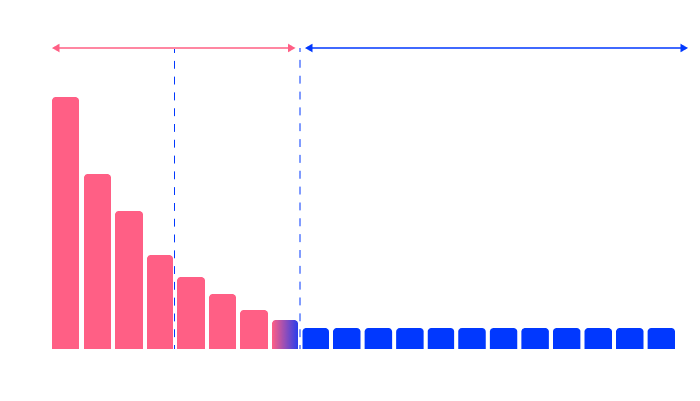
CMAX is an agentic SEO platform built to operate at that new speed. It deploys and continuously updates content across thousands of long-tail keyword variations, the queries that represent over 90% of search demand, based on platform data across hundreds of campaigns. Two lines of code connect it to your site, and teams typically see measurable movement within six weeks.
Where AI in search engine optimisation raises questions about scale, quality, and control, CMAX gives you a governed system with real output you can track in Search Console.
Author
Jeremy Tang
Founder and CEO of CMAX
Jeremy Tang is the Founder and CEO of CMAX. With over 2 decades of experience in business consulting and digital marketing, he has successfully driven seven startup businesses, six of which achieved $1 million in revenue from zero in less than 16 months, 5 of which grew to multi-million dollar a year ventures without any external funding. Jeremy's expertise lies in streamlining business processes through technology and leveraging digital (in particular SEO) for business growth. He resides in Australia, travels extensively, and draws inspiration from his global experiences.