The first thing a good AEO agency looks at is whether your pages actually answer what customers type. For a homewares retailer, that means questions about sizing, materials, care, delivery and product comparisons, not just category names.
If you’re comparing an AEO Australia agency with a US provider, factor in local terminology, Australian spelling signals and .com.au domain behaviour. The two markets read differently to Google.
Most brands treat answer engine optimisation as a separate budget line on top of SEO. It isn’t.
AI tools retrieve their answers from the same web pages Google already indexes, so the two systems feed each other. Answer engine optimisation services work when they connect specific customer questions to pages that Google and AI engines can find and read.
The real question is whether your site has enough of those pages. CMAX starts by reviewing your existing Google Analytics and Search Console data, the free Google tool showing which searches your site appears for, before recommending any new work.
An AEO agency helps you become easier to answer and find.
Make content answer-ready
Picture a shop with one sign outside that says “Homewares.” A customer walks up and asks, “Do your cushions fit a 55 cm insert?
Can I put the cover in the machine? Do you deliver to Geelong?”
The sign says nothing. The staff are out the back.
No sale. Now picture a shop where the answer to each of those questions is written on a card right next to the product.
In this context, answer-ready content means a dedicated page for each question your customers actually ask, not one broad category page that covers nothing in detail.
A credible generative engine optimisation agency structures pages around exact questions. Google’s AI Overviews use query fan-out, which means the AI runs several smaller searches to build one answer, then stitches the results together.
A thin category page gets passed over in favour of pages that match the exact question being asked. One vague category intro is not enough.
AEO works with SEO
AEO does not replace SEO. AI systems retrieve, recognise and trust what already ranks, and Google confirms that AI responses identify supporting web pages as they are generated.
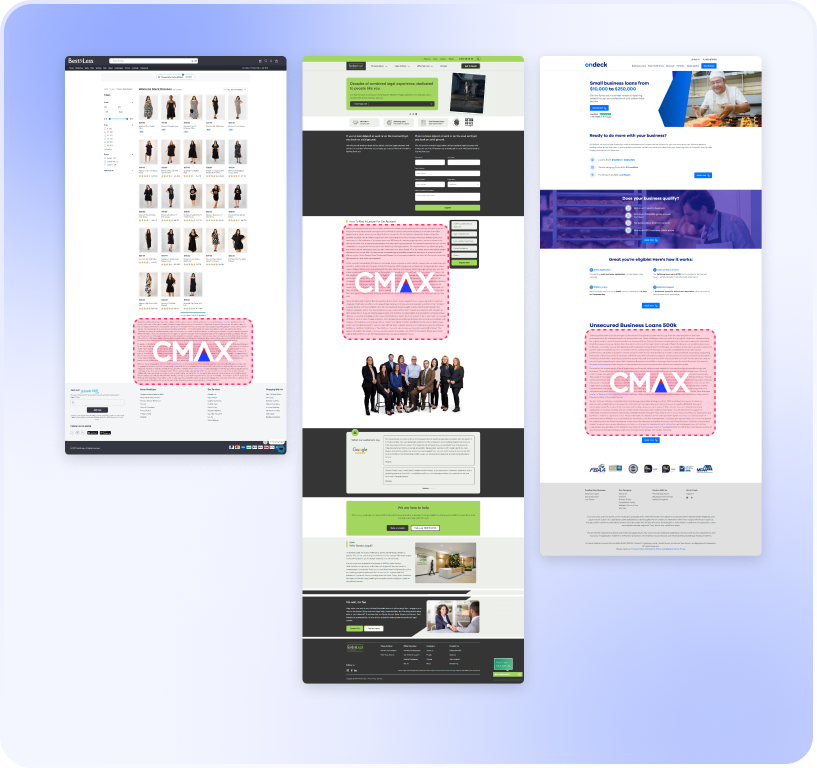
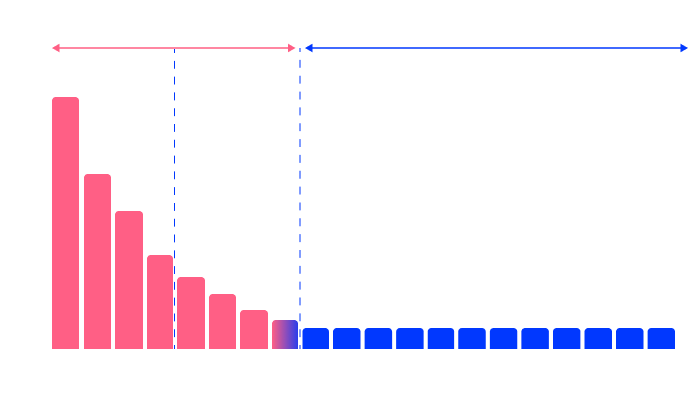
The practical job for an AEO agency is expanding content surface area: mapping the highest-value questions in the long tail (the specific, detailed searches people type) and making sure each question has a page or section that can be found and read.
The best agency work combines coverage, structure and freshness.
Cover the long tail
Shoppers searching for homewares rarely type “cushions.” They type “machine washable linen cushion cover 55cm” or “outdoor furniture delivery Wollongong.”
To optimise content for AI search, you need dedicated pages covering chair dimensions, washable fabrics, delivery locations and product comparisons. Over 90% of search and AI demand is in the long tail.
An AEO agency that targets only a shortlist of obvious category terms leaves sizing, use-case, comparison and problem-solving searches completely uncovered. When an AI expands one customer question into five related searches, that gap gets wider fast.
Measure real visibility
Visits to your site are a lagging signal. A strategy for search engine optimisation Australia must account for Australian spelling and .com.au signals, unlike a US plan built around .com.
Visibility problems show up first in impressions, query breadth and page coverage. Google Search Console shows all three for free.
Google also now provides a generative AI performance report inside Search Console, covering impression trends, top pages and breakdowns by device and country for AI Overviews and AI Mode. A useful agency report shows whether more pages are appearing for more queries.
A gemini aeo agency should prove that progress with page-level data, not a single headline keyword.
Why CMAX is different
CMAX positions its AEO agency work around Dynamic Internal Linking, Full Body SEO and performance-led updates for long-tail coverage. Breadth, internal context and freshness are managed together continuously, so content keeps matching search behaviour as it shifts.
We start with a 3-day review of your Google Analytics and Search Console data to identify exactly where coverage gaps are costing you demand.
The right AEO agency shows its value in how it works.
Go beyond publish and leave
Most agencies treat publication as the finish line. Many also copy the surface features of AEO work: FAQ sections, keyword headings, a certain page length.
They build the runway and the control tower. No planes come.
The coverage system that makes those features function, connecting each page to real customer queries, tracking which pages get found, and updating the ones that do not, is the part most agencies skip. In this context, answer engine optimisation AEO means building and maintaining that underlying system, not just the visible structure on the page.
CMAX is trained on human-reviewed, client-approved content, so tone, claims and approval inputs stay under your control. A credible workflow specifies how often pages are checked, what triggers an update, and how live performance data decides what gets refreshed first after an AI AEO agency publishes a page.
Fit regulated and complex teams
Brands in ecommerce, financial services, healthcare, legal, education and SaaS need an agency process that scales output without breaking internal review, compliance or CMS constraints. In a controlled workflow, answer engine optimisation services use approved brand assets and live page performance to guide updates after publication.
As content programmes expand from a few campaign pages to hundreds of specific search intents, the real test is whether claims stay consistent, approvals stay traceable, updates keep moving across teams, and release timing still fits legal, product and CMS dependencies.
Judge speed carefully
Most SEO programmes run by conventional agencies, using outdated methods, tell clients to expect results in six months. CMAX’s methods allow clients to start seeing clicks in 6 to 8 weeks.
Unlike a conventional SEO retainer, an AEO agency updates published pages against query and page-level performance data. When assessing the impact of Perplexity AEO, ask what changes in the first 30 to 60 days, which metrics move before revenue does, and how much content is updated in that window.
A practical answer to what is search engine optimisation starts with helping Google find, index and rank useful pages for the questions customers are actually asking.
Frequently Asked Questions
Can an AEO agency guarantee my brand will appear in ChatGPT?
No credible AEO agency can guarantee appearance in ChatGPT or any other AI answer. These systems generate responses dynamically and change what they retrieve from one query to the next.
The right standard is whether the agency expands your content surface area, improves answer-readiness and strengthens the pages that search and AI systems can access. If an agency promises guaranteed inclusion, examine the methodology closely.
How can I verify an AEO agency’s claimed results?
Ask for first-party evidence: Search Console data, analytics and page-level before-and-after examples tied to specific content changes. Google’s generative AI report in Search Console shows impression trends in AI Overviews and AI Mode.
If the agency cannot show the exact pages changed, the queries affected and the before-and-after trend, the claim is too vague to trust. Reliable reporting for generative engine optimisation GEO connects specific page changes with Search Console impressions, affected queries and broader page coverage.
Verifiable page-level evidence makes an AEO agency accountable for content changes, affected queries and subsequent impression trends.
Do I own the AEO content and data if I leave the agency?
A contract covering a gemini aeo service must define ownership of published content, drafts, source files, analytics access and the data used to prioritise updates. Confirm pages live in your own CMS, that you retain admin access to analytics and Search Console, and that a clear handover process exists.
Your ongoing visibility should not depend on staying with any single agency.
AEO Agency Means Coverage That Stays Fresh
An AEO agency should do more than tidy up a few pages for AI answers. If AI pulls from what already ranks in Google, the real job is to expand how many specific questions your site can answer and keep those answers current.
That is the logic behind CMAX, the Agentic SEO Platform, built around the long tail where most search demand sits.
The platform targets the majority of search demand sitting in the long tail, deploying and updating content across new and existing pages so coverage, internal context and freshness move together. Generative AI optimisation through CMAX draws on long-tail content, Dynamic Internal Linking and updates guided by real performance data.
For teams comparing AEO with SEO, the split is often overstated. Whether the brief is broad AEO, a Perplexity AEO service, a Perplexity AEO agency engagement or an AI search optimisation programme, AI changed the interface rather than the fundamentals.
Building visibility still comes down to answering what customers search for. What is generative engine optimisation, at its core?
It is making sure your pages are found and read when AI tools go looking for answers. The same applies to AI search visibility optimisation and to any approach that uses AI search engine optimisation tools to track and improve coverage.
The Gemini AEO service and Perplexity AEO service pages on our site show how that works in practice for specific AI engines. If you want to understand what is answer engine optimisation in plain terms: it is the work of making sure your pages answer the questions your customers ask, on every platform that goes looking for those answers, including the feature snippets and AI-generated summaries that appear before any click.
Answer engine optimisation services that connect page-level data to specific query gaps are the ones that move the numbers.
The easiest way to see where your site stands is to check it against the questions customers are already asking. We can show you exactly where the gaps are.
“If you’re curious as to how you’re performing on AI, book in a Missing Customer Map review with our Growth Team.”
Author
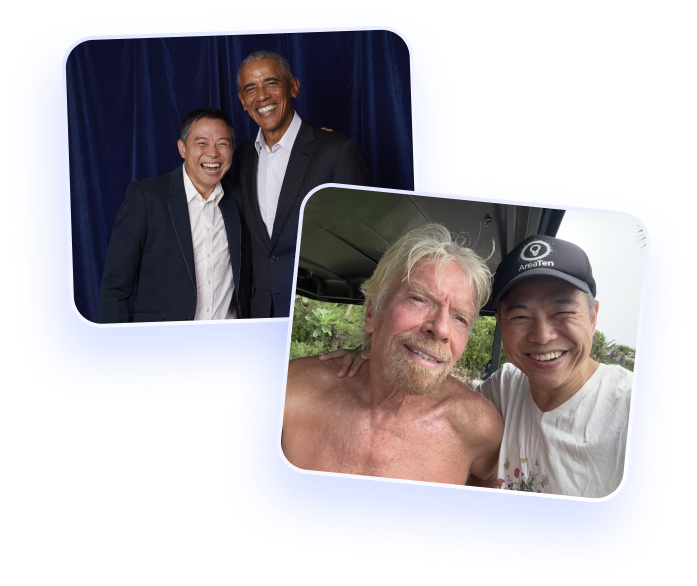
Jeremy Tang
Founder and CEO of CMAX
Jeremy Tang is the Founder and CEO of CMAX. With over 2 decades of experience in business consulting and digital marketing, he has successfully driven seven startup businesses, six of which achieved $1 million in revenue from zero in less than 16 months, 5 of which grew to multi-million dollar a year ventures without any external funding. Jeremy's expertise lies in streamlining business processes through technology and leveraging digital (in particular SEO) for business growth. He resides in Australia, travels extensively, and draws inspiration from his global experiences.