Most agencies adding “AI aeo agency” to their positioning have not changed their workflow, their reporting, or their quality controls. They have added a label. The real test is whether the agency can show documented query research, answer-ready content with human review, citation tracking across answer surfaces, and conversion measurement that connects visibility to revenue. If any of those steps are missing, the AI claim is cosmetic. CMAX built its AEO programme around that full workflow, with first-party proof tying citations to commercial outcomes.
An AI AEO agency should prove its workflow.
Workflow evidence
A credible AI aeo agency documents its process from query research through to conversion tracking. Ask any agency claiming an AI-powered AEO capability to walk you through that documented process. A credible one can show exactly how it organises query research: question clusters grouped by topic, search modifiers that reflect how buyers phrase queries at different stages, and buying-stage patterns that separate early-research intent from late-stage commercial intent.
That research then drives content decisions. Answer-ready page elements, concise definitions, comparison blocks, eligibility details, are built from those specific queries, not added as generic copy. As an AI automation agency Australia businesses increasingly turn to, the agency also secures the technical access needed to publish changes, improve internal linking, and maintain the clean page structures that answer systems can parse. Without that access, strategy stalls at a slide deck.
Monitoring is ongoing. A documented workflow tracks whether pages earn citations across relevant answer surfaces over time. Any credible AI SEO marketing agency also runs every output through human review before publication.
Measurement beyond labels
Workflow documentation is the first test. The second is measurement. Ask whether the agency can connect answer citations to qualified referral traffic and then to conversions. If the answer is vague, the AI angle is likely a label applied to standard content production.
Visibility on its own tells you a page appeared in a generated answer. It does not tell you whether that appearance brought a qualified buyer to the site, moved them through evaluation, or contributed to pipeline. Agencies that report only mention counts or impressions are measuring attention, not commercial impact.
When evaluating an AI aeo agency, it helps to understand how aeo marketing frames the broader goal of earning citations and qualified referrals rather than optimising for impressions alone.
Service differences matter more than AI claims.
Drafting and review controls
Generic AI copy creates a specific problem for AEO: it produces plausible-sounding text that answer systems struggle to extract cleanly. Unsupported claims, blurred distinctions between services, and loosely structured sentences all reduce the likelihood that an answer engine will pull your page as a citation. Source-grounded drafting ties every claim to a verifiable input before the content is written, and a human reviewer checks for factual drift, brand risk, and compliance boundaries before anything is published. That review step carries more weight when AI accelerates production, because speed without editorial accountability increases the surface area for error. The output that reaches an answer engine should be accurate, extractable, and defensible. An AI aeo agency builds on the principle that aeo vs SEO clarifies why answer-ready formatting and citation tracking require a different workflow than traditional ranking-focused optimisation.
SEO still underpins answers
Answer systems do not operate independently of the web. They reuse content from pages they can crawl, parse, and attribute, which means weak page structure, thin service coverage, or missing buying-stage depth limits both traditional search visibility and answer citations at the same time. For a business that already works with a SEO agency Melbourne firms rely on, the next step is making sure service pages address the questions buyers ask during evaluation, because no amount of AI-assisted formatting will make uncitable content appear in answers. Existing SEO work, crawlability, internal linking, clear page hierarchy, and query-matched content depth, remains the foundation that answer visibility is built on, not a separate workstream to deprioritise. An AI aeo agency still depends on crawlable, well-structured pages, which is why aeo SEO functions as an integrated discipline, where crawlable page structure and answer-ready formatting must work together rather than be treated as separate workstreams. When evaluating providers, the best SEO agency Melbourne has to offer will already treat answer-readiness as an extension of its core SEO methodology.
This Numbered Correction List Exposes Empty AI Claims
What AI Agencies Change
An AI-powered AEO agency is genuine when AI improves a documented, human-reviewed workflow for research, answer formatting, citation tracking, and conversion measurement. When it acts as a label on standard content production, the output looks the same and performs the same.
An AI aeo agency focused on documented, human-reviewed workflows will often situate its methodology within the broader discipline of GEO generative engine optimisation, which addresses how content is selected and surfaced across AI-generated responses.
Whether the provider is an AI agency Brisbane companies engage or an AI agency Perth teams consult, the same checklist applies. Here’s what a real workflow covers:
- Query research is documented. The agency maps exact question clusters, search modifiers, and buying-stage patterns, and can show a buyer why each query was chosen and how it connects to commercial intent.
- Service pages are reformatted for extraction. Pages are rewritten with concise definitions, comparison blocks, and eligibility details that answer systems can pull directly, tied to specific queries rather than added as generic copy.
- Technical implementation is included. The agency holds the page access needed to publish updates, improve internal linking, and maintain clean page structures that answer systems can parse. Strategy without that access stalls at a slide deck.
- Monitoring tracks answer surfaces. The agency watches whether pages earn citations or mentions in generated answers, not just rankings or impressions, which measure search visibility but say nothing about reuse.
- Reporting separates visibility from qualified referrals. Traffic quality is judged by who arrives and what they do, not inferred from mention counts.
- Conversion tracking closes the loop. Referral sessions are mapped to first-party outcomes, such as leads, calls, demos, or revenue, so the work is evaluated against business impact rather than content volume.
Human review checks factual accuracy, brand risk, and compliance boundaries before and after deployment, which is especially important when AI speeds up production but does not remove editorial accountability.
AI accelerates content production. It does not replace the editor who catches a misattributed claim, a compliance boundary crossed, or a brand distinction blurred in the drafting stage. Human review sits at two points in a credible workflow: before publication, to catch factual drift and flag anything that could create brand or regulatory risk; and after deployment, to assess whether the published content performs as intended across answer surfaces.
Speed without review is a liability, particularly when content is being produced at scale for answer engines that may surface a single sentence out of context.
An AI aeo agency applying human review before and after deployment can help clarify the practical distinctions raised in the SEO vs aeo conversation, particularly around which content formats are reused in generated answers versus ranked in traditional results.
Before-and-after page proof
A before-and-after example is one of the clearest tests a buyer can apply. A useful case from any AI aeo agency should show which query set was targeted and why those queries were chosen, which specific page elements were reformatted to support direct extraction such as definitions, comparison blocks, or eligibility criteria, whether citation patterns across relevant answer surfaces changed after publication, what the referral quality looked like in terms of who arrived and what they did, and how any conversions were attributed back to that specific page rather than to the channel overall.
A SEO agency shopify store owners hire still needs the same before-and-after proof of citation impact, regardless of the platform powering the site.
If an agency cannot produce that level of detail, the before-and-after is a design exercise, not a performance record. Ask for it early in any evaluation.
Proof Should Tie Answer Visibility to Revenue
CMAX Proof Point
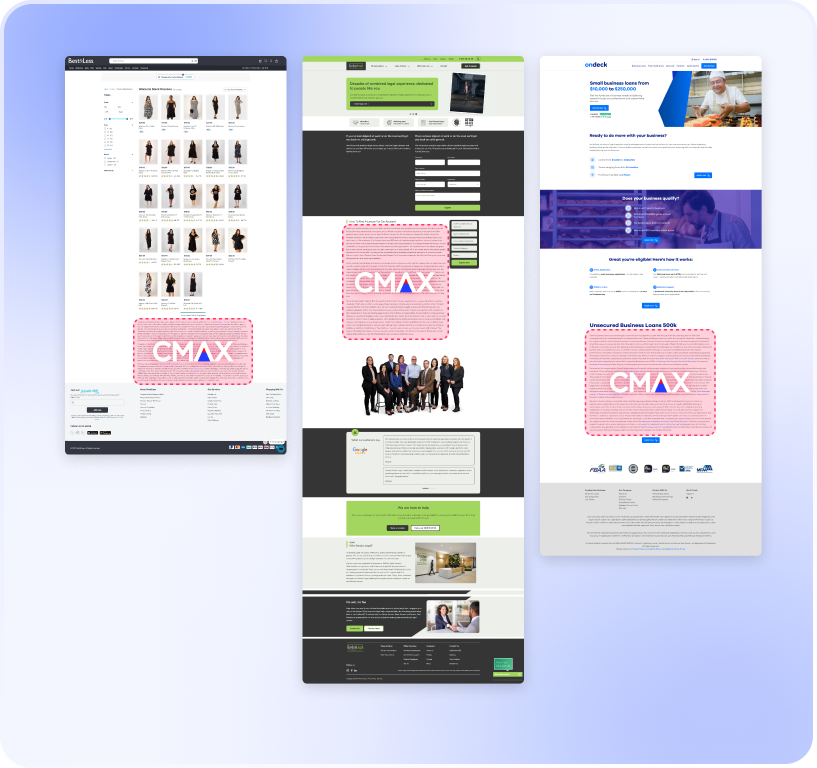
Scale creates answer opportunity. In one CMAX engagement, a B2B omnichannel hospitality retailer published 5,000 long-tail product pages and generated over $1M per month in incremental SEO revenue within 8 months. The same logic applies directly to enterprise AEO programmes: a large catalogue with broad query variation produces far more answer opportunities than a small set of core pages can cover. Whether the provider is a Australia SEO agency or a global firm, proof should tie citations to revenue. Answer systems draw from the full depth of a site’s content, so programmes that target only high-volume head terms leave many commercially relevant queries unaddressed.
Revenue-Linked Reporting
Visibility metrics tell you a page was seen. They do not tell you whether it drove a qualified visit, an assisted conversion, or a revenue outcome. A credible AI aeo agency report separates four distinct layers: cited answers, qualified referral sessions, assisted conversions, and first-party revenue impact. Each layer answers a different question a buyer needs to bring to a CFO. Cited answers confirm the content is being reused by answer systems. Qualified referral sessions show who arrived and whether they matched the target buyer profile. Assisted conversions connect those sessions to pipeline activity. First-party revenue impact closes the loop between answer visibility and commercial results. Without that separation, a report that leads with mention counts is measuring attention, not performance. Among top SEO agencies in Australia, the ability to separate these layers is what distinguishes credible reporting from surface-level dashboards.
An AI aeo agency delivering revenue-linked reporting may also offer GEO services Sydney for businesses whose buyer queries are concentrated in the Sydney market and surrounding regions.
Frequently Asked Questions (FAQ)
How do we get our company mentioned by ChatGPT and AI search engines?
Answer systems pull from pages that directly match the question being asked. That means publishing clear, question-matched pages with extractable answers, concise definitions, comparison blocks, eligibility details, backed by supporting evidence. Topical coverage also matters: a brand that answers one question in isolation is less likely to be recognised as a reliable source than one that covers a query set with depth and consistency. Even a SEO agency wollongong businesses trust needs to show citation-to-conversion data before its content strategy can be called effective.
How do you measure the success of AI SEO?
Track cited mentions, qualified referral visits, assisted conversions, and revenue signals in first-party analytics. Impressions and mention counts show reach; they don’t show whether that reach produced a lead, a call, or a sale. For a SEO agency in Canberra, tying local citation gains to measurable pipeline activity is the clearest proof of ROI.
Are AEO agency services worth the cost?
An AI aeo agency is usually worth the cost only when it can tie citation gains to leads or revenue. Content output without attribution is difficult to value internally, and harder still to defend to a CFO. For a SEO agency north Sydney teams depend on, the same standard applies: if the work cannot be linked to commercial outcomes, the spend is hard to justify.
Do I still need SEO if AI search is taking over?
Yes. AI answer systems depend on the web content they can crawl, interpret, and cite. Weak page coverage, poor structure, or missing service-page depth limits both traditional search rankings and answer visibility. The two are not separate problems. A SEO agency surry hills businesses engage should be addressing both traditional rankings and answer-engine visibility within the same strategy.
How long does it take to see results from AEO?
Timelines vary by site authority, technical access, publication speed, and query competition. Expect staged progress: implementation and measurement come first, and a reliable conversion trend takes longer to establish than initial citation gains.
An AI aeo agency operating at a national level may complement or overlap with an aeo agency Sydney for buyers whose commercial queries are tied to local intent and Sydney-based service coverage.
CMAX Builds the Workflow Most AI Claims Skip
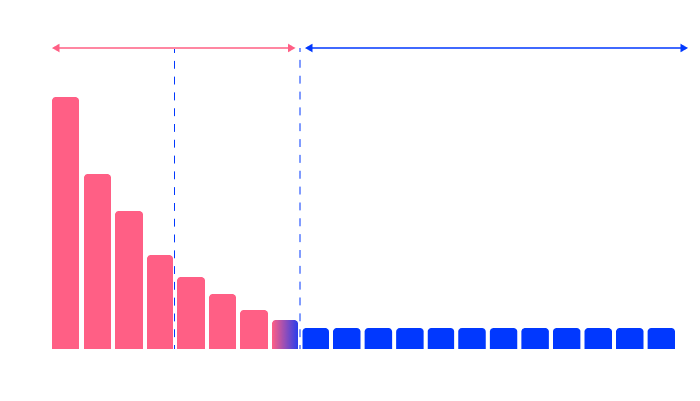
Most platforms call themselves AI-powered and stop there. CMAX is a programmatic SEO platform that deploys two lines of code to target the long-tail keywords where over 90% of search and AI-driven demand sits. Its agentic system creates, publishes, and continuously updates answer-ready content across thousands of queries, so your pages can surface where buyers actually search. Every content deployment follows a documented, human-reviewed process designed to produce measurable citations, referrals, and conversions rather than vanity visibility. Teams running lean can see early results within six weeks, without rebuilding their existing search stack. If you’re evaluating an AI aeo agency, the difference worth testing is whether the AI improves a real workflow or just decorates the pitch.
Author
Jeremy Tang
Founder and CEO of CMAX
Jeremy Tang is the Founder and CEO of CMAX. With over 2 decades of experience in business consulting and digital marketing, he has successfully driven seven startup businesses, six of which achieved $1 million in revenue from zero in less than 16 months, 5 of which grew to multi-million dollar a year ventures without any external funding. Jeremy's expertise lies in streamlining business processes through technology and leveraging digital (in particular SEO) for business growth. He resides in Australia, travels extensively, and draws inspiration from his global experiences.