SEO AI means using artificial intelligence to support research, content updates, internal linking and long-tail coverage across a site. For a lean team, the pull is obvious: more pages, more coverage, less manual work.
In practice, AI based SEO refreshes pages when product details change and uses Dynamic Internal Linking to connect related answers. SEO for AI can extend long-tail coverage while people still approve the facts, claims and publishing decisions.
Anyone can get AI to write a page. The harder question is who signs off on the facts, the claims, and whether the page is worth publishing at all.
Google has been clear that it penalises automation only when the aim is to manipulate search results. So the risk sits in how you manage the workflow, and AI touching it doesn’t change that.
Google permits machine learning in SEO when automation supports useful content. CMAX works inside that line.
We pair AI-assisted content with human-approved brand input, so output stays controlled as it scales.
AI-generated content hurts performance when it lacks review and freshness. So we define AI based SEO as a governed workflow: source checks, dated updates, clear bylines and approval rules for high-risk claims.
AI Based SEO Works When Humans Set the Rules
Where AI Helps
AI based SEO means using AI to support SEO work: research, content updates, internal linking and long-tail coverage. Take AI search engine optimisation.
It can spot specific questions, like modular sofa delivery in Sydney, and support the page updates that answer them. Long-tail searches are the specific ones, like “modular sofa for small apartment delivery Sydney” instead of “sofa”.
AI can find and service far more of them than a lean team can by hand.
Google’s guidelines allow AI and automation when the main purpose isn’t to manipulate search results. In a controlled workflow, automation handles research and update drafting.
Humans approve facts, claims, internal links and publishing decisions.
Maintenance Beats Automation
Basic automation stops at publishing. A stronger AI powered SEO workflow keeps checking that pages stay current, connected and useful.
A page that’s correct in January can be wrong by June when prices, ranges or delivery terms change. The page doesn’t know the price changed.
Pages are loyal like that. Effective AI content optimisation revisits those January pages before a customer finds the error.
The practical guardrail is to split machine tasks from judgement tasks. AI drafts updates, suggests internal links and flags decaying pages.
Humans approve factual claims, compliance-sensitive language and anything that could mislead a customer.
Coverage Matters More Than One-Off Content Generation
Long-Tail Demand Drives Discovery
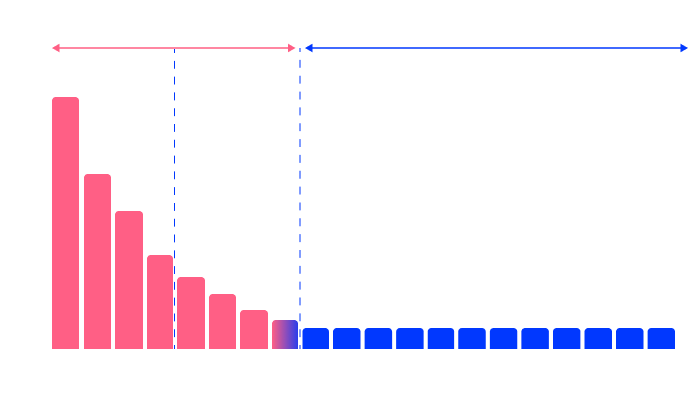
Over 90% of search and AI demand is in the long tail. A brand can rank for its obvious category terms and still miss thousands of buying, comparison, location and problem searches.
When a customer asks an AI tool a question, the tool runs eight to 12 narrower Google searches behind the scenes to build its answer. Each of those searches is another chance for your pages to shape whether your brand appears.
Imagine asking a travel agent where to go for a week in Japan. The agent doesn’t answer from memory.
They would make a string of quick calls about flights, hotels, weather and visas, then recommend whoever answered clearly. A hotel whose only answer is a glossy brochure never gets named.
The hotel with a clear reply on price, location and availability does. In this context, long-tail coverage means having a page ready for each smaller call the agent makes, so the best hotel has an answer when the agent rings.
Answer engines retrieve supporting evidence, so Perplexity AI SEO depends on source pages with accurate claims. To optimise content for AI search, keep those claims traceable to approved brand material.
To map coverage, AI SEO specialists can sort demand into problem searches, product-fit searches, alternative searches, price searches, risk searches and post-purchase searches. Each one needs a useful answer.
Coverage Needs Freshness and Links
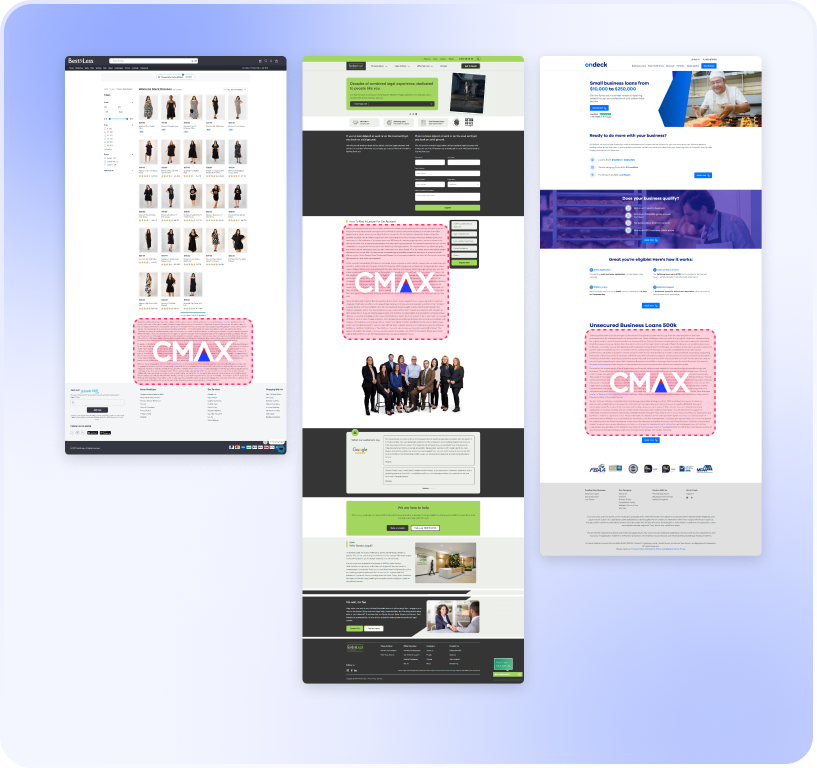
CMAX targets that same long tail of search demand. Our agents apply AI driven content optimisation through controlled freshness updates and Dynamic Internal Linking across related long-tail pages, and CMAX is trained on human-reviewed, client-approved content.
Google’s own crawl guidance confirms that recrawl frequency rises with update frequency, page quality and relevance. Connected, current pages get more attention than isolated ones.
That’s AI based SEO for a lean team: refresh pages when product details change and use Dynamic Internal Linking to connect related answers. The work moves beyond “publish more pages” and toward expanding useful content surface area, so authority isn’t trapped in articles nobody links to.
Better Measurement Shows Whether the System Stays Useful
Measure Discovery and Contribution
Search Console is Google’s free tool that shows which searches your site appears for. Useful automated SEO reporting uses its Performance report to track clicks, impressions, CTR, average position, queries and pages over time.
Use it to answer three commercial questions.
- Are you appearing for more specific customer searches?
- Are important pages gaining impressions before clicks arrive?
- Are clicks reaching pages tied to products, services or enquiries?
Governed AI content management means visibility metrics don’t sit alone. Read them beside direct visits, which are the ones your analytics can’t trace to a source, and beside sales-tied reporting.
Pages Google has listed only matter if they contribute to demand. Before you shortlist any AI SEO software, check whether its reports connect to sales.
Surface Area Is the Clearest Test
Unlike one-off page generation, AI based SEO expands content surface area. That’s how many of the ways customers search you have a useful answer for.
A practical audit asks four questions.
- Which customer questions have no page?
- Which pages answer the same question too similarly?
- Which pages have no internal links from related content?
- Which pages contain out-of-date claims?
If pages are thin, repetitive or disconnected, Google may cluster similar URLs or spend crawl time on duplicates instead of unique pages. The measure of an AI SEO optimisation programme is whether useful answers stay current, connected and accurate enough to keep earning attention.
Judge the best SEO automation tools, and any shortlist of AI platforms you build this year, by that same test.
Frequently Asked Questions (FAQ)
Can AI-Generated Content Hurt My Search Ranking?
It can. AI-generated content hurts performance when it’s produced mainly to manipulate search results, or when it fails the same quality tests Google applies to any page.
The safer standard is operational. Require source checks, brand or expert review where needed, clear bylines, dated updates and approval rules for regulated or high-risk claims.
A fast draft is not a finished page.
Can AI-Written Content Become Duplicate-Like Across Pages?
It can, particularly when teams reuse the same prompt, structure and source material across location pages, product comparison pages or “best for” pages where only a few words change. Controls for SEO machine learning should separate page intent and manage canonical handling, which tells Google the main version among similar pages.
Similar URLs dilute signals and waste crawl time. Strong AI driven SEO needs intent separation, canonical handling and internal linking so each page has a clear job.
Should I Add AI or Automation Disclosures to My Content?
Google’s published guidance focuses on content quality and intent, with no general requirement to label text because AI helped write it. For most teams, the better default is to document internal review standards and make trust visible through sourcing, update dates, bylines and approval workflows.
That’s what responsible AI powered content optimisation looks like in practice.
AI Based SEO Starts With Human Rules
AI based SEO only works at scale when the rules are clear. Bringing AI and SEO together needs defined governance for facts, claims and updates.
We built CMAX around that: expand coverage across the long tail, keep pages fresh and keep related content connected, so visibility grows from useful answers instead of one-off page generation.
That fits what search and AI now reward. Unlike a standalone SEO automation platform, CMAX is the Agentic SEO Platform for expanding and maintaining useful content surface area.
Creating pages is easy. Keeping thousands of answers current, accurate and commercially useful is the harder part.
A review is the quickest way to see which customer questions your site already answers and which it leaves open.
If you’re curious as to how you’re performing on AI, book in a Missing Customer Map review with our Growth Team.
Author
Jeremy Tang
Founder and CEO of CMAX
Jeremy Tang is the Founder and CEO of CMAX. With over 2 decades of experience in business consulting and digital marketing, he has successfully driven seven startup businesses, six of which achieved $1 million in revenue from zero in less than 16 months, 5 of which grew to multi-million dollar a year ventures without any external funding. Jeremy's expertise lies in streamlining business processes through technology and leveraging digital (in particular SEO) for business growth. He resides in Australia, travels extensively, and draws inspiration from his global experiences.