Most of what you already do for SEO still applies to AI search engine optimisation. The core signals haven’t changed: crawlable pages, clear answers to specific queries, and enough original detail to be worth citing. What has changed is which tactics still earn visibility in AI generated answers and which ones quietly stopped working. The gap between the two is where most teams lose ground without realising it. CMAX works in this space as an SEO platform built for the kind of page-level precision AI citation rewards.
AI Search Engine Optimisation Still Relies on Core SEO Signals
Crawlable, Sourceable Answer Pages
AI-generated answers pull from pages that search engines can already crawl, parse, and evaluate. That baseline hasn’t shifted. What has changed is the bar for citation: a page needs to answer one defined query directly, not gesture toward a topic broadly. Businesses pursuing search engine optimisation Australia already know that the same core signals apply regardless of market.
AI search engine optimisation begins with how AI search systems retrieve and evaluate content before any visibility strategy can take effect. The American-spelling variant search engine optimisation Australia surfaces the same intent and leads to the same foundational requirements.
Generic summaries rarely earn a reference. AI systems have access to plenty of those. What tips a page toward inclusion is original detail, a specific mechanism, a data point, a worked example, that gives the system a reason to cite that source rather than synthesise around it. One clear query, one direct answer, enough supporting evidence to justify the reference. That’s the structure that holds up.
Crawlability is the prerequisite. If a page is blocked, slow to load, or buried under duplicate parameter variants, eligibility doesn’t come into the conversation.
No Special AI Markup Required
There is no separate markup layer to build for AI search. Google’s own guidance confirms that strong technical SEO, indexable content, and query-led pages remain the foundation.[1] Chasing AI-specific schema or hidden signals is a distraction from the work that actually moves visibility.
The pages that perform in AI-generated answers are the same pages that perform in conventional search: technically accessible, clearly structured, and useful enough to answer what someone actually asked. The mechanics are the same. The execution standard is higher.
Tactics That Move Visibility Differ Clearly From Tactics That Now Fail
What Still Improves Eligibility
Pages that earn inclusion in AI-generated answers share four characteristics: clear structure, distinct information gain, entity-level relevance, and supporting evidence tied to the specific query. Each of those qualities gives an AI system a concrete reason to reference that page rather than synthesise a generic answer from multiple weaker sources. AI search engine optimisation shares much of its technical groundwork with web search optimisation, so teams that have already addressed crawlability and structured content are better positioned to extend that work into AI-generated answer eligibility. As generative AI search engine optimisation matures alongside emerging answer-engine formats, that foundation becomes even more critical.
We recommend avoiding generic AI copy, hidden text, and repeated keywords, as these work against eligibility. AI systems are built to surface the most useful, parseable answer to a prompt. A page stuffed with keyword variations or padded with thin AI-generated paragraphs offers no information gain, which means it has no citation advantage over a competitor page that does. Effective AI search optimisation requires each page to deliver a distinct, verifiable claim rather than restate what already exists elsewhere.
The practical implication: prioritise pages that say something specific and verifiable about a narrow topic, then structure that content so the key answer is easy to extract. Teams already practising search engine optimisation AI will recognise this as the same principle behind featured-snippet targeting, applied to a broader set of AI surfaces. For organisations following international standards, AI search engine optimisation applies the same logic regardless of regional spelling conventions.
Measure Visibility and Business Outcomes Separately
Appearing in an AI-generated answer and driving commercially relevant traffic are two different outcomes. Reporting that conflates them will mislead the team and the board.
AI SEO reporting should track four signals independently: impressions from AI surfaces, referred visits that arrive from those surfaces, assisted conversions where AI-driven sessions contributed to a conversion path, and on-page engagement metrics that indicate whether arriving visitors found what they needed.
Separating these signals shows whether answer visibility is producing traffic that converts or simply expanding surface-level exposure with no downstream value. A team presenting AI SEO results to a CFO needs that distinction to be explicit.
A practical checklist makes AI SEO readiness easier to assess.
AI answer inclusion checklist
The checklist below helps teams gauge how prepared each page is for AI search engine optimisation. Run each priority page against this checklist, “Can your site earn inclusion in AI-generated answers?”, before drawing conclusions about why a page is or isn’t appearing in AI-generated results.
AI search engine optimisation readiness assessments often overlap with website search optimisation audits, since both require confirming that priority pages are crawlable, clearly structured, and aligned to specific user queries.
Can the page answer one specific query clearly? Each priority URL should address a single, defined intent. If the page tries to serve three overlapping queries at once, an AI system has less reason to pull from it than from a tighter, more direct source.
Is the main answer visible near the top? The answer should appear before navigation clutter, gated elements, or filler copy push it down the page. AI systems parse what’s accessible first.
Can search engines crawl and index the page cleanly? Blocked resources, thin placeholder text, duplicate variants, and parameter-driven copies all reduce crawl confidence. Each of those issues is a separate eligibility risk.
Does the page include enough original detail to justify citation? A generic summary gives an AI system no reason to reference your page over a broader source. Pages that reflect the best search engine optimisation practices provide supporting evidence, specific data, or a distinct angle tied to the query, and that changes the calculus.
Are you measuring the right signals? Separate AI-driven impressions, referred sessions, assisted conversions, and on-page engagement. Visibility alone doesn’t confirm the traffic is commercially useful. Assessing search engine optimisation cost against expected citation gains helps prioritise effort across your page portfolio.
Work through each question per page, per query. Gaps in any one area are worth fixing before attributing underperformance to the algorithm.
Does each priority page answer one specific query directly, rather than trying to cover several intents at once?
AI-generated answers pull from pages that do one thing well. Whether a team is running search engine optimisation Sydney campaigns or serving national queries, each priority page should answer one specific intent. A page built to rank for “AI search engine optimisation,” “programmatic SEO benefits,” and “how to measure SEO ROI” simultaneously is optimised for none of them. Each intent pulls the page in a different direction, and AI systems reading for a clear, citable answer find ambiguity instead.
The fix is structural before it’s editorial. Identify your highest-priority queries, then check whether each has a dedicated page built around that single intent. If one page is carrying three or four related-but-distinct questions, it’s a candidate for splitting, not expanding.
AI search engine optimisation and AI search optimisation address the same underlying challenge of making content eligible for inclusion in AI-generated answers by ensuring each page answers a defined query with sufficient clarity and evidence.
A useful test: read the first 100 words of the page. If a reader can’t identify the one question being answered, an AI system won’t either. The answer should be visible before any navigation clutter, gated elements, or supporting context pushes it down the page.
Pages that pass this test tend to be shorter, tighter, and more citable than broad pillar content. That’s a deliberate trade-off. Depth on a narrow query outperforms breadth across several, particularly as AI systems increasingly favour pages that give a direct, evidence-backed response to a specific prompt rather than a comprehensive overview that hedges across multiple use cases.[2]
Is the main answer visible near the top of the page, before navigation clutter, gated elements, or filler copy get in the way?
AI systems tend to parse pages the way a time-pressed analyst might, reading what appears first. If your actual answer is buried beneath a hero banner, a cookie consent wall, three paragraphs of brand preamble, or a login prompt, the page fails the citation test before the content even gets a chance.
For AI search engine optimisation, the main answer should be visible near the top of the page, with no structural barriers between the crawler and the response. “Meaningful” here means a direct, specific response to the stated query, not a topic introduction or a section header that promises an answer further down.
Practitioners working on AI search engine optimisation consistently find that placing the primary answer near the top of the page, before navigation clutter or gated elements, is one of the most reliable ways to improve eligibility for AI-generated citations.
Gated elements are a particular liability. A page that requires sign-in to reveal its core content is, from an AI system’s perspective, a page with no core content. The same applies to lazy-loaded text that depends on JavaScript execution the crawler may not complete, and to filler copy that restates the page title in three different ways before committing to a point.
Audit each priority page with one question: if a crawler read only the first 150 words of visible text, would it have a complete, citable answer? If the answer is no, the page’s position in the content hierarchy is the problem, and restructuring the page order will do more for AI search engine optimisation eligibility than any metadata adjustment.
Can search engines crawl and index the page without blocked resources, thin placeholder text, duplicate variants, or parameter-driven copies competing with each other?
Crawlability is a prerequisite, not a bonus. A page that answers a query precisely but sits behind a blocked JavaScript resource, a noindex tag applied by accident, or a canonical pointing to a staging variant will not appear in AI-generated answers regardless of how well the content is written.
AI search engine optimisation depends on resolving the same technical barriers that affect search optimisation broadly, including blocked resources, duplicate variants, and thin placeholder content that prevent pages from being properly indexed and cited.
Four specific failure modes undercut indexability at scale:
Blocked resources. If CSS or JavaScript renders the main answer and Googlebot cannot fetch those files, the visible answer and the crawled answer are different documents. Audit render-blocking assets against your robots.txt and server response headers.
Thin placeholder text. Pages published before content is ready, or pages that hold a template shell with minimal copy, give crawlers nothing worth indexing.[3] AI systems have no incentive to cite a page that adds less detail than a generic summary would.
Duplicate variants. Multiple URLs serving near-identical content split crawl equity and create ambiguity about which version to surface. Consolidate with canonical tags or redirect chains resolved to a single authoritative URL.
Parameter-driven copies. Faceted navigation, session IDs, and tracking parameters can generate hundreds of URL variants for a single page. Without parameter handling in Google Search Console or consistent canonical implementation, those variants compete with the page you actually want indexed.
Each of these is diagnosable through a standard technical audit. A search engine optimisation specialist can audit for blocked resources, duplicate variants, and parameter-driven copies in a single pass. Fix the crawl layer first; content quality improvements only compound when the page is reliably accessible.
Frequently Asked Questions (FAQ)
What factors help a webpage get mentioned in AI generated answers?
Understanding what is AI search helps clarify why crawlability matters. A page needs to clear several bars at once. Search engines must be able to crawl it without obstruction. The content must align tightly to a specific query rather than drifting across several intents. The structure must be easy to parse, so an AI system can extract a direct answer without guesswork. And the detail must be substantive enough to give the system a reason to reference that page rather than defaulting to a generic summary it can construct on its own.
How do you measure success of AI SEO?
Visibility alone tells you very little. Separate AI-driven impressions from referred sessions, then track assisted conversions and on-page engagement signals independently. That split shows whether answer inclusion is generating commercially relevant traffic or simply expanding surface-level exposure with no downstream value.
Is traditional SEO enough, or do we need a different strategy for AI search?
Traditional SEO remains necessary. We recommend going further than traditional SEO: answering narrow intents clearly, structuring information cleanly, and adding original supporting detail that a generic page wouldn’t carry.
AI search engine optimisation builds on traditional fundamentals rather than replacing them. Grasping what is search engine optimisation at its core, crawlability, relevance, and useful content, confirms that these foundations remain essential regardless of which system surfaces the answer.
How can I improve my brand visibility with AI SEO?
Give each priority query its own dedicated, evidence-backed page. Pages that are technically accessible, easy to interpret, and genuinely useful are more likely to be cited across long-tail search journeys.
How do you optimise for getting discovered on ChatGPT, Gemini, Grok etc?
Publish crawlable pages that answer real user prompts directly. Cover the different ways people phrase the same question. Include enough clarity, structure, and supporting proof to make each page worth referencing rather than skipping.
Two Lines of Code, Thousands of Long-Tail Rankings
Most SEO platforms ask you to do more. CMAX asks for two lines of code.
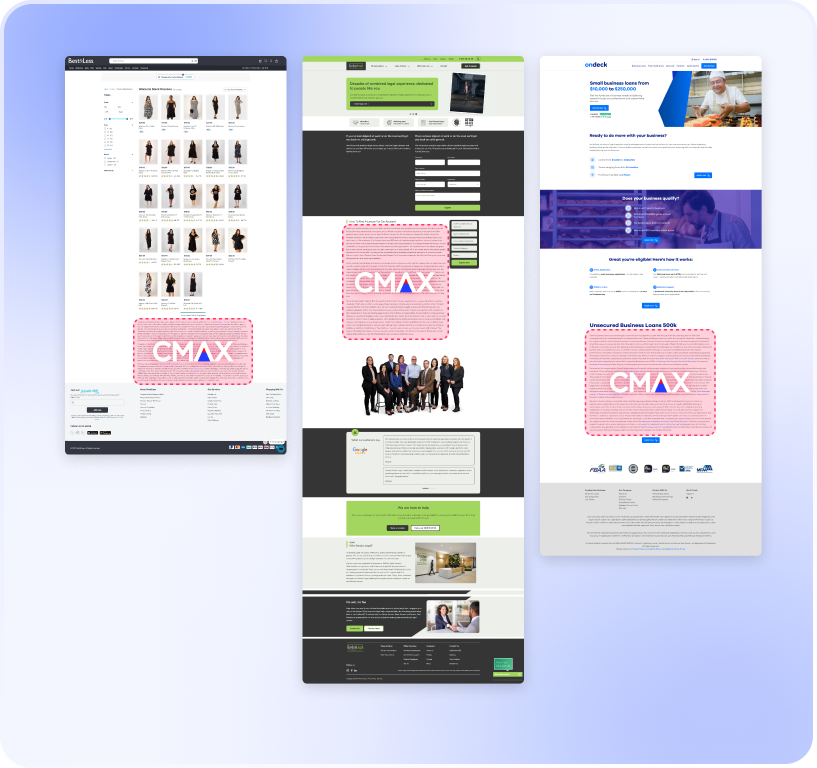
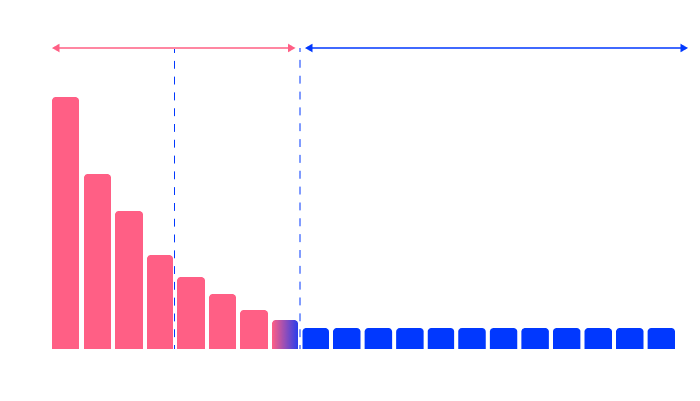
Our agentic SEO platform deploys and continuously updates content targeting the long-tail keywords where over 90% of search and AI demand actually lives. Each page is built to be clear, crawlable, and intent-led, the same fundamentals that drive visibility in traditional and AI-powered search results. Teams typically start seeing measurable movement within six weeks of deployment.
If your current approach has plateaued, CMAX was built to fill the gap at a scale and speed manual workflows can’t match.
References [1] – https://developers.google.com/search/docs/fundamentals/seo-starter-guide [2] – https://developers.google.com/search/docs/fundamentals/ai-optimization-guide [3] – https://developers.google.com/search/docs/essentials/spam-policies
Author
Jeremy Tang
Founder and CEO of CMAX
Jeremy Tang is the Founder and CEO of CMAX. With over 2 decades of experience in business consulting and digital marketing, he has successfully driven seven startup businesses, six of which achieved $1 million in revenue from zero in less than 16 months, 5 of which grew to multi-million dollar a year ventures without any external funding. Jeremy's expertise lies in streamlining business processes through technology and leveraging digital (in particular SEO) for business growth. He resides in Australia, travels extensively, and draws inspiration from his global experiences.