AI search marketing is one of those terms that keeps showing up in strategy decks without a stable definition behind it. Some teams use it to mean paid-search automation. Others treat it as a rebrand of SEO. In practice, it covers a specific slice of organic visibility: the work of appearing in both traditional ranked results and AI-generated answers, without trying to manipulate how models behave. The distinction matters because the tactics overlap with SEO but the surfaces, metrics, and content requirements diverge in ways worth understanding. CMAX works across both discovery surfaces as part of its enterprise SEO platform.
AI Search Marketing Sits Beside Traditional SEO
Ranked Results and AI Answers
AI search marketing covers organic visibility across two distinct surfaces: standard ranked listings and AI-generated answer experiences. It does not include paid-search automation or tactics designed to manipulate model behaviour. Within what is digital marketing, this discipline targets a specific pair of surfaces rather than the full spectrum of channels.
Grasping AI search marketing starts with recognising how AI search has expanded the definition of organic discovery beyond traditional ranked links to include AI-generated answer surfaces.
Ranked listings and AI-generated answers operate through different mechanisms and reward different things, but both sit within organic discovery. Teams working on AI search marketing are working on both surfaces simultaneously, which is why the category needs its own definition rather than borrowing one from adjacent disciplines.
Shared Foundations, Different Surfaces
Traditional SEO still governs the fundamentals. Whether a page can be crawled, indexed, and matched to a query determines whether it appears in ranked results at all. That has not changed.
AI-mediated discovery adds a second layer of requirements on top of those foundations. Pages need to contain facts, definitions, and claims that an answer engine can quote, summarise, and attribute accurately. A page that ranks well but states its key claims ambiguously may be passed over in favour of a source that says the same thing more precisely.
The two requirements are additive. Crawlability and relevance remain the entry conditions. Source clarity and factual consistency determine whether a page moves from being discoverable to being cited. Teams that treat these as separate workstreams tend to optimise one at the expense of the other; the stronger approach treats them as a single content standard applied consistently across the site.
Search visibility now happens in two parallel surfaces.
Links Versus Compressed Answers
Grasping what is AI search means distinguishing compressed answers from ranked links. Ranked links present the user with a list of options. They scan titles, read snippets, and choose which page to visit. The evaluation happens before the click.
AI-generated answers change that sequence. The engine pulls material from multiple sources, compresses it into a single response, and delivers a conclusion. The user’s job shifts from selecting a result to assessing whether the summary is accurate and complete enough to act on. Clicking through becomes a secondary step, taken only when the answer raises a question it doesn’t fully resolve.
That shift has a direct consequence for visibility. A page can rank well and still be absent from the generated answer. A page can appear in an answer without ranking in the top three links. Both surfaces matter, and they reward different things. AI search marketing does not replace search engine optimisation but instead extends it by adding a second visibility surface where AI systems summarise and cite source pages alongside conventional ranked results.
Accessibility Still Shapes Visibility
The foundation hasn’t changed. Google’s own SEO guidance and Search Console’s generative-AI reporting point to the same requirements: pages that are crawlable, indexable, and genuinely useful are easier for search systems to retrieve.[1]
That same crawlability is what allows AI features to surface or cite a page. A page the crawler can’t reach is a page no answer engine can quote. Accessibility is the prerequisite for both surfaces, which means the technical work teams have already done for conventional SEO carries forward directly into AI-mediated discovery.
Clear boundaries make the category easier to use.
Included Scope and Clear Limits
A practical definition of AI search marketing includes a clear boundary around what teams can actually act on. The scope covers six areas of organic discovery:
- Organic ranked results, standard link-based listings in search engine results pages
- AI-generated answers and overviews, synthesised responses that surface source material without requiring a click
- Source citation and mention visibility, whether the brand is named, quoted, or attributed within a generated answer
- Answer-ready content formatting, structuring pages so facts, definitions, and claims can be extracted and reused accurately
- Entity clarity and factual consistency, keeping names, product details, and positioning aligned across the site so retrieval systems read one coherent signal
- Technical accessibility for discovery, crawlability and indexability as the baseline for both ranked and AI-mediated surfaces
AI search marketing is easier to scope once teams have a working SEO definition to anchor the shared foundations, such as crawlability, indexability, and content relevance, before layering in AI-mediated discovery requirements.
An AI search marketing agency focuses on the organic surfaces listed above, not paid-search automation. Tactics aimed at forcing or manipulating model behaviour also sit outside this scope. That boundary is worth drawing because conflating source optimisation with model manipulation leads teams toward work that search systems are actively designed to discount.
What remains is a defined set of levers that digital and SEO teams control directly: the quality, clarity, and consistency of source material. Each lever connects to a surface where visibility can be measured, improved, and reported to stakeholders without relying on opaque or unsustainable methods.
Excludes Model Manipulation Tactics
How It Complements SEO
AI search marketing complements SEO when teams make source material easier to interpret, rather than replacing existing search practices. The distinction is in what each discipline asks teams to do.
SEO focuses on technical accessibility, relevance signals, and editorial quality so pages can be crawled, indexed, and matched to queries. AI search marketing takes that same source material and asks a further question: can an answer engine read this page, extract a specific claim, and attribute it accurately?
That second requirement changes the editorial task. Search marketing specialists that make source material clearer, plain-language definitions, consistent terminology, explicit authorship signals, give answer engines less to infer. When a model has to fill gaps, it draws on whatever is available, which may not reflect the brand’s actual position. Tighter source content reduces that risk.
AI search marketing teams that want to strengthen both surfaces often revisit the fundamentals covered by SEO search optimisation, confirming pages are crawlable, relevant, and structured so answer engines can reuse content faithfully.
Strengthening entity signals across pages works the same way. When a brand name, product detail, or factual claim appears consistently across multiple pages, retrieval systems can cross-reference rather than guess. Contradictions between pages create ambiguity; consistency removes it.
Structuring core information so it can be reused faithfully is the third lever. This means leading with the claim, supporting it with specifics, and keeping the logical chain short enough that a summary can carry it without distortion.
None of this involves prompting models directly or attempting to steer how they respond. The work happens at the source level, which is exactly where SEO work already lives.
Useful measurement extends beyond keyword rankings.
Metrics Beyond Rankings
Rankings still matter. A page that drops out of the top results loses link-based traffic regardless of how well it performs in AI-generated answers. But ranking position alone tells you nothing about AI-mediated visibility.
Measuring AI search marketing requires a wider view than keyword position alone. A fuller measurement framework tracks four things: whether the brand appears in AI-generated answers at all, whether those answers cite the correct source page, whether users click through to the site after seeing an answer, and whether those visits produce qualified leads or revenue. Each of those can move independently. A brand can rank on page one and never appear in an AI Overview. It can appear in an AI Overview and receive zero attribution clicks. Citation without conversion is still a gap.
Unlike AI image search, which matches visual queries to media files, the metrics discussed here track text-based citation and referral quality. AI search marketing measurement expands naturally into AI search optimisation territory when teams begin tracking not just ranking positions but also citation accuracy, brand mention frequency, and referral quality from AI-generated answer surfaces.
Search Console’s generative-AI reporting surfaces some of this directly, making it a practical starting point for teams that already have the property configured.
Before-and-After Prompt Comparison
Prompt comparison is one of the more direct ways to isolate what a content change actually did. Run the same query before and after updating a page, then check three things: whether the answer now cites the right source, whether the language in the answer reflects the updated definitions accurately, and whether the response stays consistent across repeated runs of the same prompt.
This method separates citation accuracy and referral quality from raw ranking movement. A page can hold its ranking position while its AI-answer representation improves significantly, or vice versa. Clearer headings, tighter definitions, and explicit source statements are the variables most likely to shift citation behaviour when ranking position stays flat.
Practical Execution Depends on Trustworthy Source Content
Signals That Support Citation
Answer engines pull from pages that make their job easy. That means stating important facts in plain language, defining terms consistently across the site, and attributing claims to a named source or author. Effective AI search optimisation starts here: where pages contradict themselves, different product names on different URLs, positioning that shifts between the homepage and a category page, retrieval systems have to reconcile competing versions. Often, they won’t. They’ll cite a cleaner source instead.
Consistency is the operative word. Names, product details, and core claims should read the same way whether a user lands on a blog post, a product page, or a support article. That coherence is what makes a page reliably quotable rather than occasionally useful. Teams working on AI search optimisation (the US spelling of the same discipline) apply identical consistency checks regardless of market.
AI search marketing builds on the same technical groundwork as web search optimisation, meaning pages that are accessible, clearly structured, and factually consistent are better positioned to be crawled, indexed, and cited across both surfaces.
Enterprise Coverage and Discovery
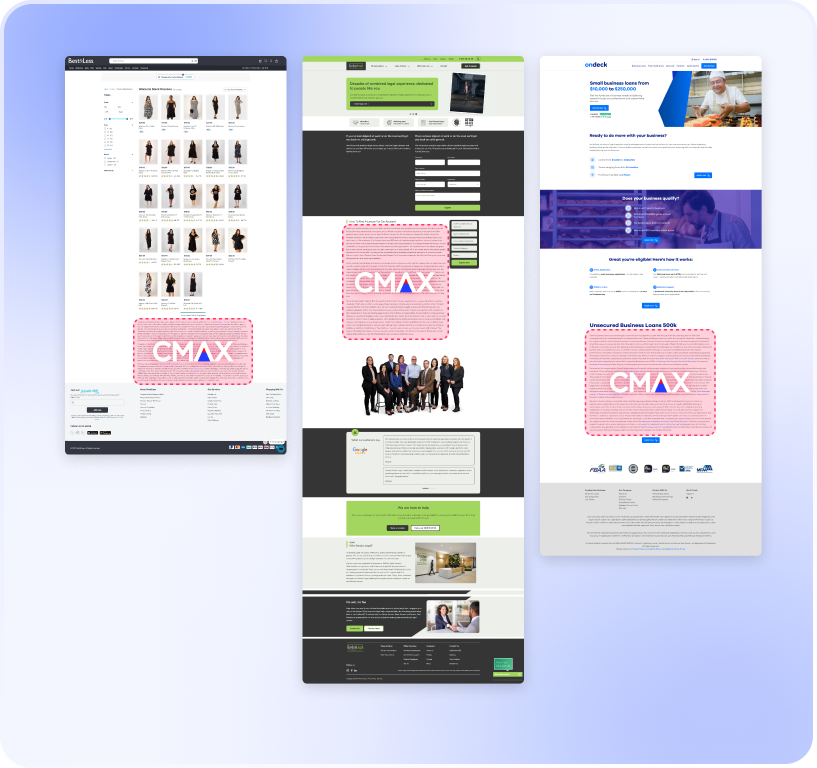
Scale amplifies this logic. A small set of head-term pages can’t cover the full range of ways buyers search across a large catalogue, specific product combinations, niche use cases, and long-tail queries that individually look minor but collectively represent a significant share of search demand.
In one CMAX engagement, a B2B omnichannel hospitality retailer added 5,000 long-tail product pages and reached $1M+ per month in incremental SEO revenue within 8 months. The mechanism was coverage: matching the breadth of how buyers actually search, not just the terms a planning session surfaces. The same logic applies to any enterprise where buyers search across many specific product, category, or solution combinations, AI answer surfaces included.
Frequently Asked Questions (FAQ)
How do I rank my website in AI search engines?
Publish crawlable pages with clear factual statements, stable terminology, and source material that can be quoted or summarised directly. When a model can pull a clean, unambiguous claim from your page without inferring what you meant, that page is more likely to surface in an AI-generated answer. This is what makes AI search marketing distinct from paid-search automation.
How do I track brand mentions in AI search?
Brand mention tracking needs four checks running together: repeated prompt monitoring to see whether the brand appears in answers, citation logging to record which source is named, referral analysis to identify visits arriving from AI surfaces, and lead attribution to capture brand mentions that never produce a click. Many answer experiences name a brand without sending traffic, so click data alone undercounts actual visibility. For businesses exploring AI marketing Australia, the same citation principles apply regardless of region.
Will AI replace SEO?
AI is unlikely to replace SEO. Answer engines still depend on discoverable, indexable, relevant source pages to generate responses. The user may see a generated answer rather than a list of links, but the underlying retrieval still runs on the same crawlable web.
AI search marketing and website search optimisation share a common foundation, so teams that have already invested in making pages crawlable and useful are well placed to extend that work toward AI-mediated citation and answer visibility. An AI marketing agency Sydney, for example, would apply these same retrieval fundamentals when advising local clients.
How is AI search changing SEO?
AI search raises the importance of answer-surface visibility, citation accuracy, and source clarity. The core technical and editorial foundations, crawlability, relevance, and useful content, remain firmly in place. Across markets such as AI marketing Brisbane, these shifts are prompting teams to invest more in structured, quotable source material.
How do brands appear in AI search?
Brands tend to appear when their sites and other attributable sources describe who they are, what they offer, and the facts behind those claims in language that can be reused accurately across summaries, citations, and direct answers.
Two Lines of Code, Thousands of Long-Tail Keywords
Most SEO platforms target the same crowded head terms your competitors already own.
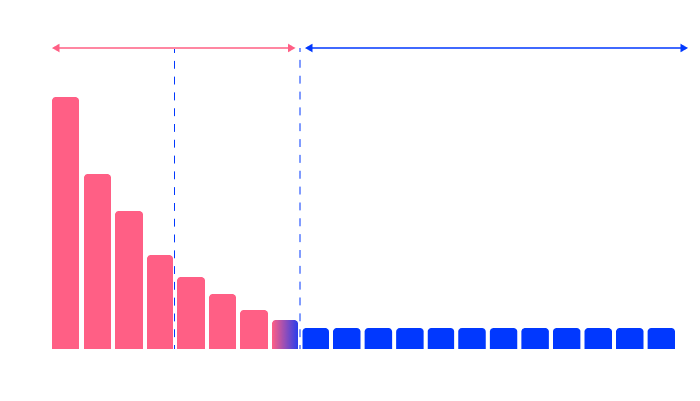
CMAX is an agentic SEO platform built to capture the other 90%-the long-tail queries where high-intent buyers actually search. It deploys and continuously updates content at a scale manual teams can’t match, using just two lines of code to integrate with your site. Teams typically start seeing measurable results within six weeks.
When AI search marketing adds AI-generated answers alongside traditional ranked links, the sites with the broadest, most accurate content footprint get cited. CMAX builds that footprint programmatically so you show up across both discovery channels.
References [1] – https://developers.google.com/search/docs/fundamentals/seo-starter-guide
Author
Jeremy Tang
Founder and CEO of CMAX
Jeremy Tang is the Founder and CEO of CMAX. With over 2 decades of experience in business consulting and digital marketing, he has successfully driven seven startup businesses, six of which achieved $1 million in revenue from zero in less than 16 months, 5 of which grew to multi-million dollar a year ventures without any external funding. Jeremy's expertise lies in streamlining business processes through technology and leveraging digital (in particular SEO) for business growth. He resides in Australia, travels extensively, and draws inspiration from his global experiences.