Most of the confusion around AI search optimisation comes from treating it as a separate discipline, when the real shift is narrower than that. The fundamentals still apply: crawlable pages, clear structure, content that answers a real question. What changes is how that content gets used, because AI systems retrieve specific passages, evaluate claims, and decide whether to cite a source inside an answer. That means your existing SEO work still matters, but the build standard for individual pages gets tighter. CMAX helps enterprise teams scale that kind of precise, intent-led content without losing editorial control.
AI Search Optimisation Extends SEO Into Answer Experiences
Retrieval, Understanding, and Citation
AI search optimisation applies core SEO principles to three concrete stages of answer generation. First, can a system retrieve the right passage from your page? Second, can it identify what specific claim that passage makes? Third, does it judge the page reliable enough to cite inside a generated answer?
Grasping AI search optimisation begins with learning how AI search itself works, the retrieval and ranking layer that determines which pages are surfaced inside answer experiences before a citation is ever chosen.
Each stage is a filter. A page that fails retrieval never reaches the citation decision. A page that retrieves but carries ambiguous claims may be skipped in favour of one that states its point directly. These are the same access, clarity, and authority signals that have always governed whether a page earns visibility.
AI search optimisation does not describe a separate system sitting outside normal search fundamentals. It describes where those fundamentals get applied.
Eligibility Still Starts With SEO Basics
To grasp the shift, start with what is search engine optimisation in its conventional form: making pages crawlable, useful, and easy to interpret so they rank in traditional results. Eligibility for AI-generated answers depends on those same qualities. Google has generally indicated that no special AI-only markup file is required. There is no hidden configuration that unlocks citation eligibility.
The practical work sits in three areas: technical access so systems can reach and index the page, clear information architecture so the right passage is findable within it, and content that answers a real query directly rather than circling it. Teams that have those foundations in place are already doing the work that counts most for AI search eligibility. At its core, what is search optimisation if not this same discipline applied wherever a system decides which page deserves visibility.
The workflow changes more than the fundamentals do.
Intent Clusters Over Single Keywords
Conventional SEO often maps one page to one target query. AI search engine optimisation operates differently: closely related questions are distributed across supporting pages, so a system can connect a narrow prompt to the right page, then verify that page through nearby topic coverage and internal links.
That shift has a practical consequence for site architecture. A single broad landing page that touches ten related questions gives an AI system little to work with when a user asks one of those questions precisely. Dedicated pages, each answering a specific question, give the system a clear retrieval target and a cluster of surrounding pages that reinforce the source’s authority on that subject. AI search optimisation builds directly on web search optimisation principles, extending them into the intent-cluster and evidence-signal work that answer systems require when deciding which passage to retrieve and cite. This intent-cluster model is also referred to as generative search optimisation (the practice of structuring content so generative answer systems can locate and cite it reliably).
Pages Need Tighter Evidence Signals
The build standard for AI-retrievable pages is more specific than what broad, authority-reliant pages typically meet. A page is easier to retrieve and cite when it answers one narrow question directly, states who or what a claim refers to, and points to the supporting source on-page or nearby.
Broad pages that rely on implied context or generic authority create ambiguity at the retrieval stage. An AI system cannot infer what a claim refers to if the page does not state it, and it will not treat a page as a reliable source if the evidence is absent or buried. Explicit attribution and on-page sourcing reduce that ambiguity for both the system and the reader. Tracking AI search visibility optimisation at the page level reveals which dedicated pages are being retrieved and which still lack the evidence signals systems need to surface them.
Measurement Must Separate Rankings, Citations, and Conversions
Track Visibility, Traffic, and Outcomes Separately
Rankings, AI citations, qualified clicks, and conversions are four distinct signals. Each answers a different operational question, and collapsing them into one headline number hides where performance is actually breaking down.
Rankings show whether a page appears in conventional search results. AI citations show whether answer systems pull that page as a source. Qualified clicks show whether that visibility produces real visits. Conversions show whether those visits move pipeline or revenue.
A page can rank well and never be cited. It can be cited and generate almost no clicks, because users got their answer in the AI response. It can drive clicks that convert poorly. Without separating these layers, a team cannot tell whether the bottleneck sits at discovery, click-through, or post-click performance. An experienced AI search SEO agency will typically separate citation metrics from ranking metrics before drawing any performance conclusions. Reporting one blended number makes that diagnosis impossible.
AI search optimisation requires a more layered measurement framework than search optimisation alone, because citation visibility, qualified clicks, and conversions can each move in different directions at the same time.
Proof Point From Long-Tail Coverage
The measurement logic above is easier to act on when there is a concrete example of what dedicated, intent-specific pages can produce.
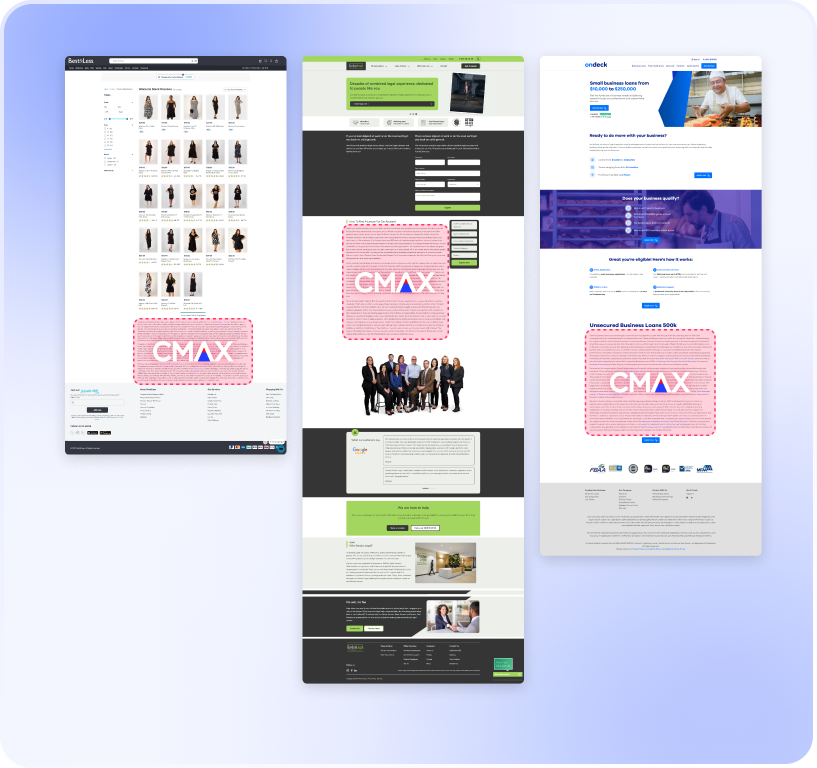
In one CMAX engagement, a B2B omnichannel hospitality retailer added 5,000 long-tail product pages and reached $1M+/month in incremental SEO revenue within 8 months. The mechanism is directly relevant here: when a site covers narrow, high-intent questions with dedicated pages, search and AI systems have more precise source material to retrieve for specific prompts. Broad pages that bundle multiple questions together give retrieval systems less to work with. Dedicated pages give them a clear, attributable answer to pull.
A practical correction list prevents wasted AI search work.
What Changes, What Doesn’t
The quickest way to stop wasting effort is to separate genuine retrieval changes from SEO basics that still control whether a page can be discovered, interpreted, and trusted. What AI search optimisation actually changes is the output format, not the underlying eligibility rules.
AI search changes the output format. Users may see a cited answer before they ever reach a results list, which shifts where visibility actually occurs and how click-through behaves.
AI search does not remove the need for crawlable pages. A page that search systems cannot access cannot be retrieved or cited. Indexing and technical access remain the entry requirement.
AI search changes content planning. Narrow questions often need their own dedicated pages or clearly separated sections. Burying a specific answer inside a broad landing page reduces the chance a system can isolate and attribute it cleanly.
AI search does not make evidence optional. Both users and machines need visible support for claims before treating a page as a reliable source. Assertions without attribution carry less weight in retrieval decisions.
AI search changes measurement. Citation visibility, qualified clicks, and conversions can move in different directions at the same time. A page cited frequently may still produce few visits; a page with strong click-through may convert poorly. Treating these as one number hides where the real gap is.
The pattern across all five points: format and measurement shift, but the underlying requirements for access, clarity, and credibility do not.
Much of the correction work in AI search optimisation overlaps with website search optimisation fundamentals, covering crawlable pages, clear structure, and specific answers before any AI-specific retrieval layer is considered.
AI Search Does Not Reward Content Volume by Itself
Scaled pages still need distinct intent, clear sourcing, and editorial control to be useful. Publishing more pages without those qualities produces content that retrieval systems cannot confidently cite and users cannot act on.
Fix Pages, Sources, and Links First
The first improvements usually come from three places.
Optimise content for AI search by publishing pages for unanswered long-tail questions. If a specific customer question has no dedicated page, neither search nor AI systems have a precise source to retrieve. A broad landing page that touches the topic in passing is harder to cite than a page built around that question directly.
Format claims and sources so they are easy to verify. A claim with visible supporting evidence, an on-page source, a clearly attributed figure, a named entity, gives retrieval systems something concrete to work with. Implied authority or generic statements leave too much to inference.
Strengthen internal links so related pages reinforce each other. A single well-written page carries less weight than a cluster of pages that connect logically. Internal links signal topical depth and give AI systems a source path to follow when verifying whether a site covers a subject reliably. Among practical search optimisation techniques, this kind of internal linking remains one of the most effective.
Practitioners sometimes encounter AI search engine optimisation as an alternative spelling when researching AI search optimisation, and while the two terms describe the same discipline, the British spelling reflects the dominant usage in most English-language guidance and official documentation.
These three steps typically deliver more retrieval gain than prompt engineering tactics or experimental AI page templates.[1] This logic reflects how AI-assisted answer generation is generally understood to work: crawlable, useful, intent-specific content remains the input, and AI search optimisation works best when those foundations hold before volume scales.
The Practical Takeaway Is SEO With Sharper Retrieval Design
Scaled Content Needs Reviewable Value
AI-assisted content can be indexed and cited when each page is reviewable, follows approved brand and editorial standards, and adds information a near-duplicate page does not already provide. That last condition is the one most teams underestimate. A page that repeats what three other pages already say gives a retrieval system no reason to prefer it as a source. Scale helps only when review, governance, and page-level usefulness keep pace with output. Without those controls, volume creates noise rather than coverage.
AI search optimisation is best understood as a sharper application of search engine optimisation, where the same crawlability, relevance, and authority signals are refined to meet the stricter retrieval demands of answer-based systems.
Most Teams Need Better Retrieval Signals
A separate AI search playbook is rarely the right starting point. Teams often get more traction from tightening the search engine optimisation signals already on their existing pages: define entities clearly so a system knows exactly what a claim refers to, make evidence easy to detect by placing it near the claim rather than in a footnote or a linked PDF, and expand coverage where real customer questions still have no dedicated page or only weak support.
Those three moves, entity clarity, visible evidence, and intent coverage, address the gaps that cause pages to be skipped during retrieval. They also happen to improve conventional search performance at the same time, which means the work compounds rather than competes. Identify the questions your site currently leaves unanswered, build pages that answer them directly, and the retrieval signals follow.
The same principles apply at a regional level. Strong search engine optimisation Australia teams rely on these retrieval fundamentals to give locally relevant pages a better chance of surfacing in answer-based results.
Frequently Asked Questions (FAQ)
How can I improve my brand visibility with AI SEO?
Publish pages that answer specific questions in plain language, connect related pages through deliberate internal links, and present claims in a form that search systems can retrieve and attribute directly. When context has to be inferred, retrieval becomes unreliable. Explicit answers, clear attribution, and a linked topic cluster give AI systems the signals they need to surface your brand consistently. That combination of clarity, structure, and evidence is what makes AI search optimisation work.
How can I get my brand cited by AI search engines?
Pages are more likely to be cited when they contain a direct answer, a clearly attributable claim, and visible supporting evidence. Topical depth reinforces this: a strong surrounding cluster of related pages helps a system treat your site as a reliable source for that subject, rather than a single isolated result.
Teams researching AI search optimisation often arrive via AI search engine optimisation, and both terms point to the same practical discipline: applying retrieval-focused content and technical standards so answer systems can find, understand, and cite a page.
How do you optimise content for both users and AI overviews?
Write so a person can find the answer quickly, then make the structure explicit. A direct answer near the top, supporting evidence close to the claim, clear headings, and obvious links to related pages reduce guesswork for both readers and AI systems. The two audiences need the same thing: clarity.
How do you measure the success of AI SEO?
Measure in layers: indexing and visibility, AI citation or surfacing, qualified visits from that visibility, and whether those visits influence leads, sales, or assisted conversions. Each layer answers a different operational question, and collapsing them into one headline number hides where performance is actually breaking down.
How do you optimise for getting discovered on ChatGPT, Gemini, Grok, etc?
Discovery across different AI products comes from improving the same underlying inputs: crawlability, intent coverage, entity clarity, internal page relationships, and evidence-backed answers. The interfaces differ, but each one needs source material it can parse and trust.
Most Search Traffic Is Long Tail, CMAX Is Built to Capture It
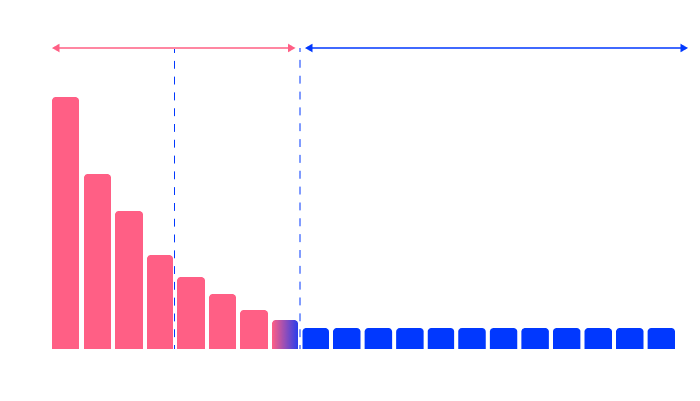
Over 90% of search and AI demand sits in long-tail queries most teams never target.
CMAX is an agentic SEO platform that deploys and continuously updates content for thousands of intent-specific keywords, the kind that drive qualified clicks in both traditional and AI-assisted search. It works with two lines of code, no complex migrations, and teams can start seeing results in as few as six weeks. Each page acts as another node in a growing content structure, expanding the surface area AI and search engines can retrieve and cite.
If your current approach plateaus at head terms while long-tail traffic goes uncaptured, CMAX was built to close that gap.
References [1] – https://developers.google.com/search/docs/fundamentals/ai-optimization-guide
Author
Jeremy Tang
Founder and CEO of CMAX
Jeremy Tang is the Founder and CEO of CMAX. With over 2 decades of experience in business consulting and digital marketing, he has successfully driven seven startup businesses, six of which achieved $1 million in revenue from zero in less than 16 months, 5 of which grew to multi-million dollar a year ventures without any external funding. Jeremy's expertise lies in streamlining business processes through technology and leveraging digital (in particular SEO) for business growth. He resides in Australia, travels extensively, and draws inspiration from his global experiences.