AI search has shifted discovery from a page of ranked links to a synthesised answer assembled from multiple sources in real time. If you manage organic visibility for a large site, that shift changes what “being found” actually looks like: your content might be retrieved and cited without ever earning a click, or it might be skipped entirely because a competing page answered the query more precisely. The mechanics behind that, from query fan-out to citation behaviour, matter for how you plan coverage and measure results. CMAX works in this space, helping enterprise teams scale the indexable, structured content that AI search systems need to retrieve.
AI Search Changes Discovery From Link Lists to Synthesised Answers
Intent, Retrieval, and Synthesis
Classic search returns a ranked list of links. AI search does something different: it interprets what the user is actually asking, retrieves information from one or more sources, and assembles a direct answer. The user gets a response, not a queue of pages to work through.
That shift is significant because query intent is rarely a single keyword. A question like “which project management tool suits a remote team under 20 people” carries context, constraints, and an implied comparison. AI search reads that context, pulls relevant content, and synthesises an answer that addresses the full question rather than matching surface-level terms.
As AI search shifts discovery away from ranked link lists toward synthesised answers, the underlying importance of website search optimisation, keeping pages crawlable, clearly structured, and indexable, remains a foundational requirement for any content to be surfaced.
AI Search Boundaries
Knowing what is AI search starts with drawing a clear line around what the term covers. AI search typically combines four components: query interpretation, retrieval, synthesis, and citations. Knowing what sits inside that definition, and what sits outside it, keeps expectations accurate.
What AI search includes:
- Systems that answer questions directly from retrieved web content
- Multi-step retrieval that breaks a broad prompt into narrower sub-queries when a single lookup would miss definitions, comparisons, or exceptions
- Source citations or links that let a reader inspect which pages informed the answer
- Follow-up prompting that lets the user refine the question, test alternatives, or dig into one part of the answer
Where it stops:
- AI search does not mean every result on a search engine is AI-generated, and it does not remove the need for traditional crawling and indexing
- AI search is not the same as AI search optimisation, which focuses on improving the chances that content is retrieved, cited, and surfaced in these experiences
- AI search does not guarantee a complete or fully faithful answer; synthesis can compress source context, drop caveats, or miss edge cases[1]
AI Search Works Through Retrieval, Fan-Out, and Answer Synthesis
How Query Fan-Out Works
When a user submits a broad prompt, AI search can break it into several narrower retrieval steps rather than running a single lookup.[1] This is query fan-out. Each sub-query targets a specific slice of the original question: a definition here, a feature comparison there, an exception or edge case elsewhere. Sub-queries may span text results, AI image search, or structured data depending on the prompt type. The system pulls those inputs separately, then assembles them into one answer. A single lookup would miss the gaps between those slices, so fan-out is what allows AI search to handle nuanced, multi-part questions with more completeness than a ranked link list can. Grasping how AI search assembles answers through fan-out and multi-step retrieval helps clarify why SEO search optimisation remains relevant, pages that are well-structured and indexable are the raw material answer engines draw from.
One Comparison Search Journey
A comparison-style query illustrates how this plays out in practice. Ask something like “which project management tool suits a remote team on a tight budget,” and the system may fan out across price model, core features, use-case fit, and known limitations before returning a synthesised answer with citations alongside it.
What happens next depends on the user. Someone who needs a quick orientation may stop at the synthesised answer. Someone making a buying decision, checking source language, or verifying a specific claim will click through to the cited pages. Both outcomes are real, and both matter for how content gets used. The cited pages that informed the answer still receive scrutiny; they just receive it at a different point in the decision process than a traditional organic click would deliver.
Source Citations Help, But Verification Still Matters
Why Readers Should Verify Citations
Citations give AI answers a paper trail, and that’s genuinely useful. When a synthesised answer links to its sources, you can trace the claim back to an actual page rather than accepting the output at face value.
The catch is that a citation confirms a source was consulted, not that the source fully supports the claim as written. The linked page may have been updated since retrieval, may address a slightly different context, or may contain qualifications the AI answer didn’t carry forward. Checking whether the cited page actually says what the answer implies it says is a step the reader has to take, not one the system takes for you.
Why Nuance Can Still Be Lost
Synthesis compresses. Even when AI search cites its sources, synthesis can flatten caveats, reconcile conflicting figures selectively, or omit exceptions worth flagging. Those choices can drop conditions that change how a claim applies or skip edge cases that matter for a specific use case.
A cited AI answer is a strong starting point for research. It surfaces relevant sources faster than a manual scan of ranked links, and it frames the question in a way that can sharpen follow-up queries. Treat it as the first pass, then read the cited pages directly before drawing conclusions or making decisions that depend on accuracy.
Crawlability, Indexing, and Structure Still Shape AI Search Visibility
Technical Basics Still Matter
AI features change how answers appear on screen. They do not change which pages are available to retrieve. If a search system cannot crawl a page, it cannot index it. If it cannot index it, that page has no chance of being pulled into a synthesised answer.
The fundamentals that have always governed organic visibility still apply: clear information architecture so a crawler can follow the site’s logic, descriptive page focus so the system can match a page to a specific query, and accessible internal linking so retrieval can reach pages beyond the homepage.[2] A page buried behind JavaScript rendering issues or orphaned from internal links is just as invisible to an AI retrieval system as it is to a conventional crawler.
Learning how retrieval systems evaluate page structure is a natural entry point for exploring web search optimisation as a discipline that keeps content accessible to both crawlers and answer engines.
AI Search vs Optimisation
These two terms describe different things, and conflating them creates real planning problems.
AI search is the discovery experience the user sees: the synthesised answer, the citations, the follow-up prompts. It is the output.
AI search optimisation is the work that happens on the publishing and technical side to improve the chances that a page gets retrieved and cited within that experience. It sits inside the broader category of AI search engine optimisation, which also covers crawl accessibility, topical depth, and site architecture decisions.
While AI search describes the discovery experience a user sees, AI search optimisation services address the publishing, technical, and structural work that can improve the likelihood of content being retrieved and cited within those experiences.
Knowing which side of that line a task sits on determines where effort should go. Discovery mechanics and optimisation mechanics are related, but they are not the same problem.
Measurement Now Includes Impressions and Citations Without Clicks
Measuring Visibility Without Traffic
When a brand appears in an AI-generated answer or cited response, that appearance may not produce a traditional organic session. The click never happens, but the search visibility is real.
AI search monitoring tools like Search Console AI performance data can surface this gap. Query-level before-and-after comparisons show whether a page is being retrieved and cited in AI surfaces, even when session counts stay flat. Impressions rise; clicks may not follow. Treating that as a failure misreads the signal. The metric to track is whether the brand is present at the moment a question is answered, not only whether the user continued to the site. An AI ranking signal, such as whether a page is cited or surfaced in an AI-generated response, now carries weight alongside traditional position data.
As AI search introduces new visibility signals like impressions and citations, teams benefit from pairing those metrics with a broader search optimisation strategy that accounts for both traditional clicks and no-click answer appearances.
Teams that rely solely on organic traffic to measure SEO performance may undercount their actual reach in AI-mediated discovery.
Proof Point on Page Coverage
Broader, indexable coverage gives answer engines more relevant pages to draw from when they need a precise source. A single authoritative category page cannot serve the range of narrow, specific queries that AI systems now handle.
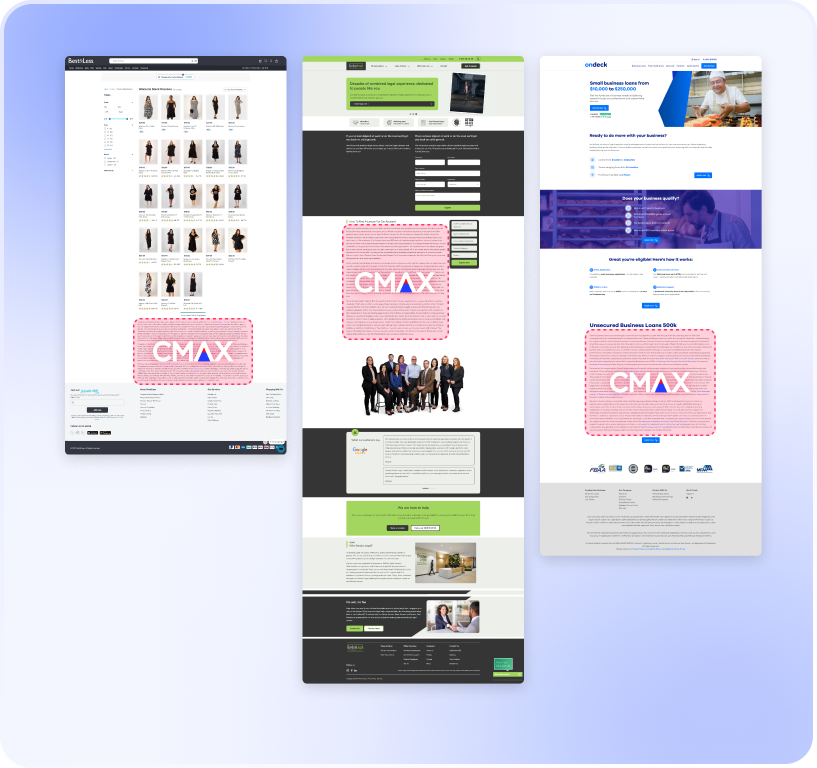
In one CMAX engagement, a B2B omnichannel hospitality retailer added 5,000 long-tail product pages and drove over $1M per month in incremental SEO revenue within eight months. The retrieval dynamic is the same in AI search: when a query is narrow and specific, the answer engine needs a page that matches that specificity. Catalogue-scale coverage increases the number of queries a site can credibly answer, which raises the chances of retrieval and citation across a wider range of searches.
Frequently Asked Questions (FAQ)
The AI search questions below cover the most common uncertainties businesses raise when adapting their SEO approach.
What is the best SEO for AI search?
There is no separate SEO playbook for AI search. The same foundation applies: crawlable, indexable, well-structured content that answers a specific query clearly enough to be retrieved and cited. Pages that already perform well on those fundamentals are the ones AI systems can pull from.
How can I improve my brand visibility with AI SEO?
Visibility in AI search tends to improve when pages cover distinct intents in enough depth to answer narrow questions. Weak internal linking, thin topic coverage, and technical barriers all limit how often a page gets retrieved or cited. Depth on a specific question tends to outperform broad coverage of a general topic.
Is AI-generated traffic replacing classic SEO?
AI-driven discovery is changing some search journeys. Specifically, AI search is changing some of those journeys by surfacing synthesised answers before a user ever clicks a link, but classic SEO still matters. People click through to verify claims, do deeper research, complete transactions, and read pages that an answer box cannot fully replace. The two coexist.
What are customers searching?
Customers often search in problem-led, comparison-led, or location-specific language that does not match site navigation. Long-tail queries and use-case modifiers frequently reveal demand that broad category pages overlook entirely.
For businesses in Western Australia asking how AI search affects their local discoverability, the principles of AI search optimisation Perth reflect the same crawlability and indexing foundations that apply globally.
What tools are they using?
People now move between classic search engines, AI answer features, and conversational interfaces. Discovery is more fragmented, and a single research session can include both a no-click AI answer and a follow-up visit to a cited source.
Two Lines of Code, Thousands of Keywords
Most SEO platforms target the same high-volume terms everyone else is chasing.
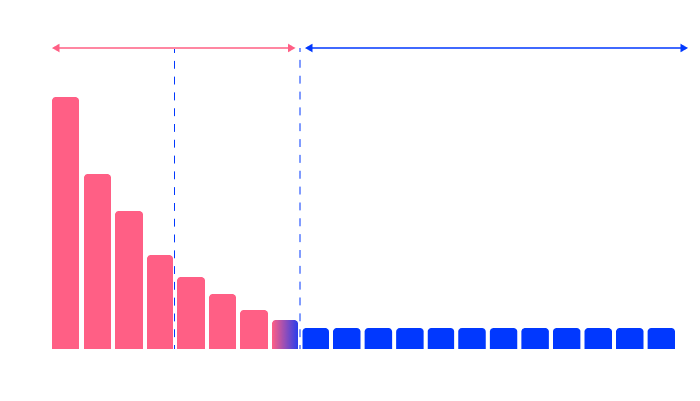
CMAX is an agentic SEO platform built for the long tail, the thousands of specific, high-intent queries that represent over 90% of search and AI-driven demand. Our agents deploy and continuously update content at a scale and speed manual teams can’t replicate, with integration that takes two lines of code. Results typically begin within six weeks across both traditional and AI search surfaces.
If your current strategy plateaus at the head terms, CMAX captures the traffic you’re leaving behind.
References [1] – https://developers.google.com/search/docs/fundamentals/ai-optimization-guide [2] – https://developers.google.com/search/docs/fundamentals/seo-starter-guide
Author
Jeremy Tang
Founder and CEO of CMAX
Jeremy Tang is the Founder and CEO of CMAX. With over 2 decades of experience in business consulting and digital marketing, he has successfully driven seven startup businesses, six of which achieved $1 million in revenue from zero in less than 16 months, 5 of which grew to multi-million dollar a year ventures without any external funding. Jeremy's expertise lies in streamlining business processes through technology and leveraging digital (in particular SEO) for business growth. He resides in Australia, travels extensively, and draws inspiration from his global experiences.