Most agencies positioning themselves as an AI SEO agency Melbourne will tell you they use AI. Fewer can show you what changed after they did. If your organic traffic has plateaued and you’re evaluating whether AI-assisted SEO actually moves qualified leads or just inflates page counts, the difference comes down to method, measurement, and local intent coverage. CMAX is a Melbourne-relevant resource for teams assessing how scalable, editorially controlled AI content performs against conventional SEO workflows.
Melbourne Buyers Need Evidence Beyond “AI-Powered” SEO Claims
Measure Qualified Search Outcomes
“AI-powered” appears in almost every agency pitch right now. It tells you nothing useful on its own. Melbourne’s SEO landscape is crowded with agencies making similar claims, which makes evidence-based evaluation critical.
The test worth running is whether an AI SEO agency Melbourne’s AI-assisted workflow actually lifts qualified organic visits, expands landing-page coverage across high-intent service and suburb queries, or increases assisted conversions. Page volume is not the metric. Any SEO agency Melbourne businesses are considering should be able to show movement in enquiries, not just publishing speed.
Ask specifically: which query segments grew, which landing pages drove assisted conversions, and what changed in the 90 days after the work went live. A credible SEO Melbourne agency will have those answers ready, tied to defined cohorts of work rather than sitewide averages.
When a Melbourne business is evaluating whether a given SEO agency in Melbourne can deliver qualified outcomes rather than just volume, it is useful to compare how structured local intent coverage is executed in other competitive markets, such as SEO services Gold Coast, where suburb-specific and service-variant pages face similar fragmentation challenges.
Check Method and Proof
Credible evaluation starts well before you see a results slide. Ask how the agency plans, generates, reviews, and updates pages. Ask how completely it covers Melbourne suburbs and service variants, not just the obvious inner-city terms. Ask how it tracks landing-page or query cohorts over time, rather than reporting sitewide traffic as a proxy for progress.
The clearest signal of capability is a before-and-after comparison tied directly to a defined body of work: a cohort of pages published in a specific window, measured against a specific set of queries, with conversion or assisted-conversion data attached. If an agency can’t produce that, the AI claim is a positioning choice, not a performance record.
Method and measurement are what separate agencies that use AI to scale outcomes from those that use it to scale output.
Measurable AI visibility depends on how the work is done.
What separates a credible AI SEO agency Melbourne is how the work connects technical SEO to local intent.
Connect technical SEO and local intent.
Melbourne search demand fragments across service terms, location modifiers, and the different ways buyers phrase the same need. For any provider offering SEO Melbourne services, this fragmentation is the core challenge. Someone searching for a commercial fit-out contractor in Cremorne phrases that query differently from someone searching in Dandenong or Docklands, even when the underlying intent is identical. Agencies improve retrievability when they plan technical SEO, entity-rich page structure, and suburb-level intent coverage as a single workstream rather than separate tasks. The foundational relationship between AI and SEO, where technical structure, content quality, and algorithmic signals work together, is what determines whether that integrated approach actually lifts visibility. Treating them in isolation leaves gaps that neither a technically clean site nor a high volume of generic pages can close.
Track cohorts beyond referral labels.
Analytics platforms do not consistently label AI-referred sessions, so waiting for clean attribution data means waiting indefinitely. A more reliable method is to group related query clusters in Google Search Console, then compare landing-page cohort performance before and after publication. The signal to track is whether those pages assist enquiries or sales over time, not just whether they accumulate impressions. When buyers compare one SEO service Melbourne provider against another, this cohort-level performance data is what reveals actual capability.
Use editorial controls with AI.
AI accelerates drafting, but search performance still depends on what happens after the first draft. Factual review, source control, and editorial oversight keep pages accurate, distinct from competing content, compliant with approved claims, and matched to actual search intent. Agencies that skip those controls trade short-term output speed for long-term ranking instability and compliance exposure. The production rate is only an advantage when the quality floor holds.
Agency capability shows up in execution, not branding.
Scale without losing local accuracy.
Any agency can claim AI-powered production. The question worth asking is how they control what the automation produces.
Agencies worth shortlisting can walk you through the specific inputs that constrain their system: approved claim sets, review rules that flag non-compliant or inaccurate content before it publishes, and suburb-level intent signals that keep Melbourne pages distinct rather than templated. Without those controls, scale produces volume. With them, it produces coverage that holds up under scrutiny. That discipline is what makes an AI SEO agency Melbourne worth shortlisting.
For any AI agency Melbourne businesses are evaluating, execution detail matters more than branding. A page for commercial cleaning in Fitzroy and one for the same service in Docklands should reflect different competitive contexts and buyer language, not the same copy with a suburb name swapped in. Agencies that can explain how their workflow prevents that collapse are the ones operating with genuine editorial discipline.
Businesses assessing an AI SEO agency Melbourne should also review what a full-service offering looks like in practice, and SEO services Melbourne covers the broader range of technical, content, and local optimisation work that underpins measurable search outcomes.
Melbourne search demand checklist.
A practical way to pressure-test your current SEO coverage is to check whether your site answers the queries buyers actually use before they contact a provider.
Run through four query types: suburb-specific searches (does your site appear when someone searches your service in their area?), service-level searches (do you have pages for each distinct offering?), problem-led searches (do pages address the specific issue a buyer is trying to solve?), and comparison searches (do you appear when someone is weighing options?). Gaps in any of these categories represent demand your site is currently leaving for a competitor to capture.
Does your site have dedicated pages for priority Melbourne suburbs where search wording, local competitors, or service relevance change by location?
This is a practical diagnostic, not a rhetorical one. Melbourne search demand fragments across suburbs, and buyers in Fitzroy, Dandenong, or St Kilda often phrase the same service need differently, face different local competitors, and respond to different relevance signals. A single generic service page cannot rank across all of them.
Dedicated suburb pages earn their place when three conditions apply: the search wording shifts by location, the competitive landscape changes, or the service itself carries different relevance depending on where the buyer operates. If any one of those conditions holds, a consolidated page is leaving qualified traffic on the table.
The test is straightforward. Pull your top 10 to 15 priority Melbourne suburbs and check whether each has a landing page built around the specific queries buyers in that area use. Then check whether those pages are indexed, whether they appear in Search Console for location-modified queries, and whether they assist any tracked conversions. If the answer to any of those checks is no, the gap is measurable and addressable.
While an AI SEO agency Melbourne focuses on local intent coverage, comparable methodology is applied in other competitive markets, and SEO services Sydney illustrates how suburb-level targeting and query clustering translate to a different but equally fragmented city search landscape.
Agencies worth shortlisting can show you how they identify which suburbs warrant dedicated coverage, how they differentiate page content so each page is distinct rather than templated, and how they track whether that coverage is producing qualified visits over time.
Do key services have separate pages for distinct buyer intents, such as comparisons, problem-led searches, pricing questions, or use-case research?
Before engaging an AI SEO agency Melbourne, check whether key services have separate pages for distinct buyer intents. Someone comparing agencies searches differently from someone who has already decided on AI SEO and wants to know what it costs. A buyer troubleshooting a traffic drop phrases their query differently again.
When those intents land on the same page, the page is optimised for none of them. A comparison query needs a structured breakdown. A problem-led search needs a direct answer to a specific symptom. A pricing question needs enough context to make the number meaningful. Collapsing these into one page forces a compromise that weakens relevance for every intent it tries to serve.
Separate pages let you match heading structure, supporting facts, and calls to action to what the buyer actually needs at that point. That specificity is what lifts a page from ranking to converting.
The same intent-mapping discipline that defines a capable AI SEO agency Melbourne is also relevant in other Australian markets, and SEO agency Perth demonstrates how dedicated service and location pages address distinct buyer queries in a geographically dispersed city.
A practical audit question: for each of your core services, can you name a live page that targets a comparison query, a problem-led query, and a pricing or use-case query independently? If the answer is no for most services, your coverage has gaps that a well-structured content programme can close systematically, starting with the intents that carry the highest commercial signal in your category.
Can you report performance by landing-page cohort or query theme, not just sitewide traffic or a small set of head terms?
Sitewide traffic figures and a handful of branded or head-term rankings tell you very little about whether your SEO is working at the query level where most buying decisions happen. If your reporting stops there, you’re flying without instruments on the searches that actually drive pipeline.
A more useful reporting frame groups pages by the intent they were built to serve: suburb-specific service pages, comparison queries, problem-led searches, pricing questions. A credible AI SEO services Melbourne provider will track those cohorts from publication date so you can see whether a defined body of work is lifting qualified visits and assisted conversions over time, independent of what’s happening across the rest of the site.
Query-theme reporting in Google Search Console adds a second layer. Cluster the terms each landing page ranks for, monitor impression and click trends by cluster, and you get a clear read on whether coverage is expanding or stalling across the Melbourne search landscape your buyers actually use. What distinguishes a capable AI SEO company Melbourne team is the ability to surface these cohort-level patterns and tie them back to specific content investments.
The cohort-based measurement approach that separates a rigorous AI SEO agency Melbourne from a generic provider is equally applicable in other markets, and SEO services Brisbane reflects how landing-page performance tracking by query theme works across a high-growth, multi-suburb environment.
Ask any agency you’re evaluating whether they can produce this kind of report. If the answer is a dashboard showing total organic sessions and three head terms, that’s a measurement gap, and it will make it very difficult to attribute outcomes to specific work or to justify continued investment to a CFO. Cohort-based measurement is what separates accountable SEO execution from activity that looks productive on a summary slide.
What is the difference between AEO and SEO?
SEO improves visibility in search results pages. AEO, Answer Engine Optimisation, structures content so answer engines can extract and present clear responses. That shifts the emphasis toward direct answers, entity clarity, and concise factual formatting, rather than ranking signals alone.
How does GEO differ from traditional SEO?
GEO (Generative Engine Optimisation) focuses on making content easy for AI systems to interpret, summarise, and attribute. Where traditional SEO targets ranked page positions, GEO also targets retrieval and citation by generative engines, so information architecture and factual precision carry more weight.
How to optimise for AI Overviews?
Pages are more likely to appear in AI Overviews when they answer a specific query directly, use clear headings backed by supporting facts, and pair that content with a crawlable, easy-to-parse page structure.[1] Broad, unfocused pages are harder for AI systems to extract a clean answer from.
What to look for in an AI SEO agency?
When evaluating an AI SEO agency Melbourne, look for evidence of method, intent coverage, QA controls, and measurement discipline. Those four factors show whether an agency can turn automation into reliable search outcomes, not just faster content production.
It is also worth asking how the agency tracks and optimises for AI search engines, since referral data from these platforms often does not surface cleanly in standard analytics dashboards.
How to transition from traditional SEO to AI SEO?
Keep your technical SEO foundations and proven pages. Then layer in query clustering, scalable long-tail coverage, stronger editorial controls, and cohort-based measurement. That sequence expands reach through AI SEO production without weakening the accuracy of what’s already working.
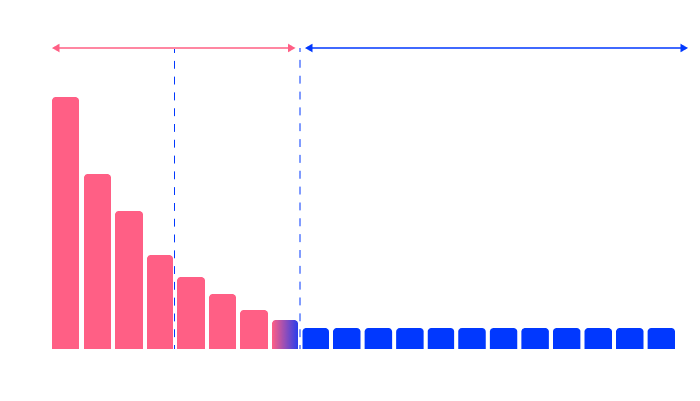
Most Melbourne Searches Happen Where Traditional SEO Stops
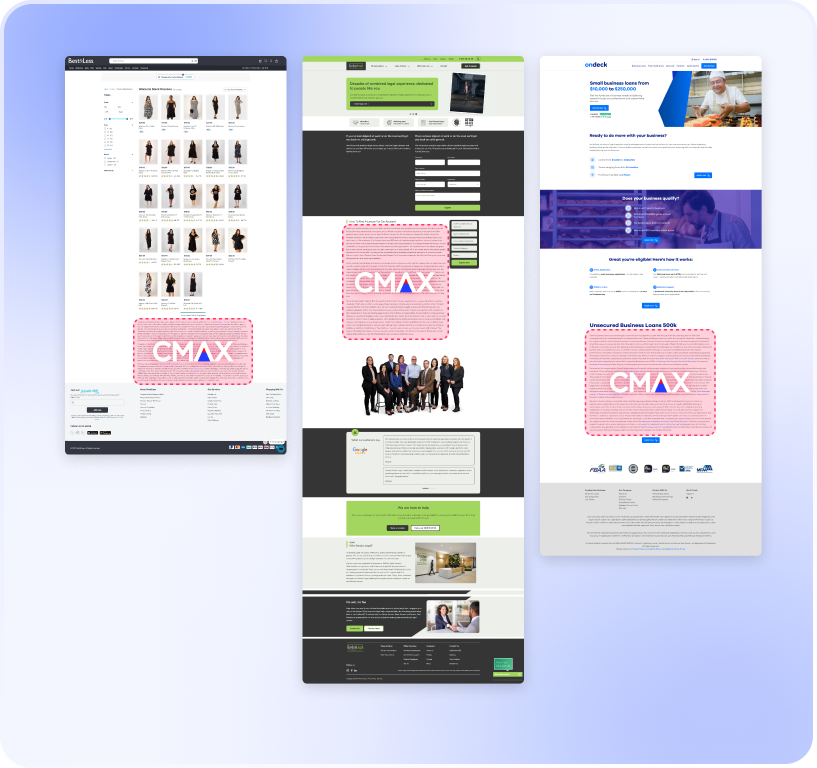
CMAX is an agentic SEO platform built for long-tail scale.
Over 90% of search demand sits in the thousands of specific, high-intent queries your competitors aren’t targeting. CMAX deploys AI agents that create, publish, and continuously update content for those queries, with just two lines of code on your site. Results from reported campaigns have been observed in as few as six weeks.
If your Melbourne SEO strategy plateaus at a few hundred keywords, CMAX targets thousands more at a speed manual teams can’t match.
References [1] – https://developers.google.com/search/docs/appearance/ranking-systems-guide
Author
Jeremy Tang
Founder and CEO of CMAX
Jeremy Tang is the Founder and CEO of CMAX. With over 2 decades of experience in business consulting and digital marketing, he has successfully driven seven startup businesses, six of which achieved $1 million in revenue from zero in less than 16 months, 5 of which grew to multi-million dollar a year ventures without any external funding. Jeremy's expertise lies in streamlining business processes through technology and leveraging digital (in particular SEO) for business growth. He resides in Australia, travels extensively, and draws inspiration from his global experiences.