Most conversations about AI SEO Australia start with what the technology can do, but the real bottleneck is rarely strategy. It’s turning approved keyword research and audits into reviewed, indexable pages at a pace that actually moves visibility. That gap between “we know what to target” and “those pages exist, rank and convert” is where traditional agency workflows slow down and where AI-assisted delivery changes the most. CMAX works in that gap, connecting strategy to published pages through structured briefs, technical QA and human review at scale.
AI SEO in Australia Changes Delivery More Than Strategy
Strategy-to-Page Bottleneck
AI SEO Australia changes delivery more than strategy because most Australian SEO programmes do not stall at strategy. They stall at execution. Keyword research gets done. Audits get delivered. Priorities get agreed. Then months pass before those priorities become reviewed, indexable pages that search engines can crawl, read, link to and revisit as the site evolves.
That gap is where visibility is lost across SEO Australia as a market. A target query only drives traffic when it maps to a live page that answers it clearly, sits within a coherent internal link structure and meets the technical conditions for indexing. Without that, the strategy document is accurate but inert.
What AI Changes in Delivery
AI-assisted SEO changes what happens after strategy is set. For any team running SEO in Australia, it can accelerate drafting, technical optimisation, internal linking and reporting across large page sets, work that would otherwise queue behind a small team’s capacity.
The broader relationship between AI and SEO reshapes execution after strategy is already set, particularly in how Australia SEO workflows move from keyword research to published, indexable pages at scale.
What it does not change is who makes the decisions. Human specialists still set priorities, approve source inputs and control what gets published. The AI handles volume; the team handles judgement. That distinction shapes how businesses should evaluate any SEO aus offering: the question is whether the workflow speeds up execution without removing the oversight that keeps published pages accurate, compliant and commercially useful.
Traditional Agency Workflows and AI-Assisted Workflows Differ in Four Key Areas
Search Coverage at Greater Depth
Conventional SEO programmes run by a typical Australian SEO company typically concentrate on a defined set of head terms and core service pages. That focus works until the business needs to compete across national, local and long-tail searches simultaneously.
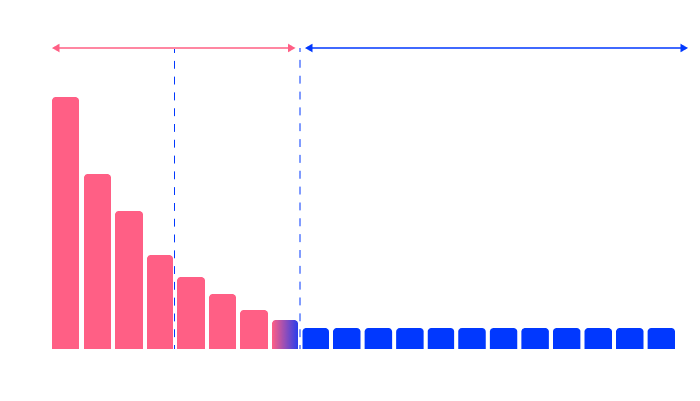
AI-assisted delivery changes the scale of what’s achievable. Where products, locations or use cases generate thousands of query variations, a manual workflow can’t realistically brief, build and maintain a page for each one. An Australian SEO agency using AI-assisted delivery can support many more intent-specific pages across that full query set, extending coverage into searches that a standard agency page set never reaches.
Quality Control Still Drives Outcomes
The practical quality test for AI SEO Australia has nothing to do with who wrote the first draft. It comes down to whether the page uses approved source material, answers the target query clearly, avoids duplication, follows template rules and passes human review before publication.
A page that clears all five of those checks will perform. One that skips any of them carries risk, regardless of how it was produced. That standard applies equally whether the work comes from an Australia SEO agency or an in-house team.
Oversight Matters More Than Drafting Method
Search compliance depends on whether published pages are helpful, reliable and within spam rules. The safeguards that determine that outcome are editorial standards, source controls, technical QA and a clear approval process.
Whether AI was involved in drafting is secondary. A page approved by a rigorous editorial process is a compliant page. A page that bypasses review is a liability, whatever produced it.
How AI SEO Delivery Works for Australian Businesses
AI SEO Delivery Process
A workable AI SEO Australia process connects strategy, content inputs, technical QA, review and measurement in one workflow. That connection is what lets teams publish at scale without losing control over quality, indexability or brand accuracy.
Define the query set. Map target queries across national, local and long-tail terms, then group them by search intent, template type and commercial relevance. This grouping determines which page types get built first and which query clusters carry the most commercial weight.
Build a controlled brief. Each brief sets the target intent, approved source inputs, page structure, required fields, internal linking rules and explicit restrictions on what the page must not claim. Every output traces back to that brief, not to an open-ended prompt.
Generate from approved inputs. Draft pages or page elements are produced from the brief and content structure. Starting from controlled inputs rather than a blank prompt keeps outputs consistent and auditable across large page sets.
The same AI-assisted delivery process that powers AI SEO Australia, covering brief creation, technical QA and human review, is the foundation of SEO services Melbourne, where local intent queries and suburb-level coverage add another layer of page-set complexity.
Run technical checks before review. Before any page reaches an editor, it passes checks for indexability, metadata, internal links, duplication, structured page elements and template errors. Catching these issues early prevents compliance debt from accumulating at scale.
Human review before publication. A human editor checks tone, factual accuracy, regulated language and anything that affects trust. Brand and compliance sign-off happens at this stage, not after pages are live. This layer of editorial oversight is what separates scalable Australian SEO services from bulk content generation with no quality gate.
When AI SEO Australia is applied to a major metro market, the workflow behind SEO services Sydney follows the same structured process of intent mapping, approved source inputs and editorial sign-off before any page is published.
Each step feeds the next. Skipping one creates the kind of quality or indexability problem that surfaces weeks later in crawl reports.
Publish in batches, then monitor rankings, traffic, enquiries and page updates over time to see which page groups are gaining coverage and which need revision.
An AI SEO agency in Australia that publishes in batches gives teams a controlled feedback loop. Rather than launching hundreds of pages at once and waiting for aggregate signals, batch publishing lets you isolate which intent clusters are gaining traction, which pages need structural updates and where internal linking is underperforming. Rankings, organic traffic, qualified enquiries and indexed page counts are the metrics that show whether new coverage is producing commercial visibility, not just crawl activity.
Monitoring over time also surfaces update triggers. Products change, locations expand, search language shifts. Pages that ranked well at launch can drift if they are not revised to reflect those changes. A structured update process, tied to performance data rather than a fixed editorial calendar, keeps coverage current without rebuilding from scratch.
The batch-publishing and monitoring cycle central to AI SEO Australia applies equally when working with a SEO agency Perth, where tracking which long-tail page groups gain coverage and which need revision is just as critical to measurable outcomes.
Shared roles across delivery
Delivery models differ mainly in who owns strategy, editing, development and automation. That division of ownership is where most implementation problems originate.
The practical questions are specific: who makes ranking decisions when priorities shift, who reviews content before it goes live, who handles technical implementation when templates need updating and who is accountable when hundreds of pages need revision at scale. A model where those responsibilities are ambiguous tends to stall at exactly the point where scale creates the most pressure.
Clarifying those roles before a programme starts, not after the first performance review, is what separates a scalable delivery model from one that works only at low volume.
Evidence Matters When AI SEO Is Judged on Outcomes
Australian Before-and-After Scenario
When AI SEO Australia is judged on outcomes, the evidence pattern starts with a common position: an Australian business that already ranks for core head terms but has thin long-tail coverage is visible for broad queries, invisible for the specific searches that signal purchase intent. Publishing approved, intent-specific pages for those more granular queries can broaden that visibility, provided the pages are reviewed, technically sound and updated as products, locations or search language shift.
The movement pattern tends to follow a predictable sequence. Newly published long-tail pages often show earlier ranking gains because they face less competition and answer a narrower query directly. Broader sitewide gains follow as internal links strengthen crawl paths, topic coverage deepens and search engines revisit the site more frequently.
The before-and-after pattern observed in AI SEO Australia, early movement on new long-tail pages followed by broader gains, is the same trajectory a business pursuing SEO services Brisbane can expect when approved pages are published systematically and updated as search language shifts.
Client Proof Point
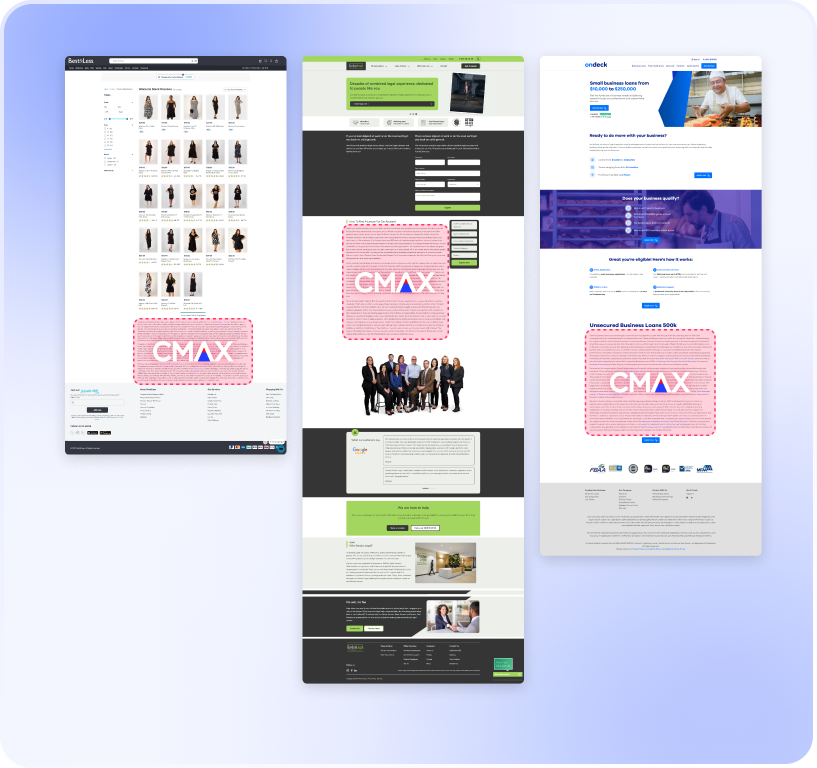
In one CMAX engagement, a B2B omnichannel hospitality retailer added 5,000 long-tail product pages and reached $1M+ per month in incremental SEO revenue within 8 months. The mechanism was catalogue scale: covering the specific product searches that a standard agency page set rarely reaches.
That dynamic applies directly to enterprise sites with large catalogues, multi-location footprints or extensive product variants. The gap between what a conventional workflow can build and maintain and what the full query set actually demands is where measurable coverage is lost. Closing that gap at scale, with reviewed and indexable pages, is where the commercial difference shows up in traffic and qualified enquiries.
The Right Fit Depends on Search Demand and Operating Constraints
Where AI SEO Fits Best
AI SEO tends to deliver the strongest return when the underlying search opportunity is too large for a manual workflow to cover. Three conditions signal that fit clearly.
A large product or service catalogue creates thousands of query variations across specifications, use cases and buyer stages. Businesses asking how much does SEO cost in Australia often find that catalogue breadth is the first variable that separates viable AI-assisted delivery from conventional retainers. A multi-location footprint multiplies that further: national, state and suburb-level searches each carry distinct intent, and a small team cannot brief, build and maintain pages at that volume without automation. Expensive paid search adds a third signal. When cost-per-click is high, shifting qualified traffic to organic reduces acquisition cost, but only if the organic page set is broad enough to capture the searches that paid campaigns are currently buying.
As AI SEO Australia continues to evolve, businesses with large catalogues or multi-location footprints are also paying closer attention to how AI search engines discover, evaluate and surface content beyond traditional crawl-and-rank models.
Where a business has a small, stable page set and limited query variation, a conventional workflow may be sufficient.
Decision Criteria That Matter
Whether AI SEO Australia suits a business depends on five comparison points.
Proof standard. Ask for attributed results with volume, timeframe and the page type that drove them. An Australian SEO expert who can demonstrate proof of outcomes will welcome that level of scrutiny. Aggregate claims without methodology are not sufficient.
Content sign-off. Confirm who reviews pages before publication and what that review covers: factual accuracy, regulated language, brand tone and technical compliance.
Technical implementation. Clarify how pages are deployed, indexed and updated at scale, and who is accountable when something breaks.
Outcomes beyond rankings. Providers worth engaging measure indexed page growth, organic traffic, qualified enquiries and revenue contribution, not rankings alone.
Australia-wide delivery. A capable provider can support national and local coverage within a single coherent site architecture, rather than producing disconnected city pages that dilute authority and fragment crawl paths.
For businesses evaluating AI SEO Australia across regional and coastal markets, the fit criteria around catalogue size, multi-location footprint and paid search spend apply just as directly to SEO services Gold Coast as they do to any major metro engagement.
How to measure success in AI SEO?
Rankings alone don’t confirm commercial visibility. A more complete picture tracks indexed page growth, non-brand rankings, organic traffic, qualified enquiries and the specific contribution of newly published long-tail pages. That last metric matters because long-tail coverage is where AI-assisted delivery adds the most volume, and it’s where incremental revenue tends to surface first.
How long to see results from AI SEO?
Timelines shift with crawl frequency, site authority, publishing volume and how quickly pages clear the approval process. Earlier movement typically appears on newly published long-tail pages. Broader sitewide gains across more competitive terms follow as internal links, crawl paths and topic coverage build. CMAX clients can start seeing results in six weeks, though the pace depends on how quickly the workflow moves from brief to published, indexed page.
Is AI SEO safe from Google penalties?
AI-assisted SEO carries no automatic safety guarantee.[1] The real risk sits in whether published pages are original, useful, reviewed, technically sound and within search spam rules.[2] Pages that meet those standards carry the same compliance profile as any well-produced page, regardless of how the first draft was generated.
How to maintain brand voice with AI SEO?
Brand voice holds when generation starts from approved messaging, terminology lists, examples and source content, and when editor sign-off is required before any page goes live. The controls sit at the input and review stages, not in the drafting method itself.
How to scale AI SEO for enterprise brands?
Enterprise scaling works when content templates, source inputs, internal linking rules, review workflows and update triggers are standardised across large page groups before expansion starts. Trying to scale without those standards in place produces inconsistent pages that are harder to review, update and maintain as the catalogue or location footprint grows.
Most SEO Platforms Scale Content, CMAX Scales Results
CMAX is an agentic SEO platform built for one job: capturing the long-tail demand most businesses never reach.
Two lines of code deploy thousands of pages targeting the specific, high-intent keywords your customers actually type, across both search engines and AI interfaces. Our agents don’t just publish and move on; they continuously update content so pages stay competitive as algorithms and search behaviour shift. Teams running AI SEO in Australia and beyond typically see measurable traction within six weeks of deployment.
If your current approach stalls at strategy and never reaches reviewed, indexable pages at scale, that’s the gap CMAX closes.
References [1] – https://developers.google.com/search/docs/essentials/spam-policies [2] – https://developers.google.com/search/blog/2024/03/core-update-spam-policies
Author
Jeremy Tang
Founder and CEO of CMAX
Jeremy Tang is the Founder and CEO of CMAX. With over 2 decades of experience in business consulting and digital marketing, he has successfully driven seven startup businesses, six of which achieved $1 million in revenue from zero in less than 16 months, 5 of which grew to multi-million dollar a year ventures without any external funding. Jeremy's expertise lies in streamlining business processes through technology and leveraging digital (in particular SEO) for business growth. He resides in Australia, travels extensively, and draws inspiration from his global experiences.