AI SEO Melbourne can mean three different things depending on the provider: AI tools speeding up research and technical work, AI drafting content at scale, or optimising pages to appear in AI search results. Most pitches blur those lines, which makes it harder to compare scope, judge quality controls, or know what you’re actually buying. The differences matter because each approach carries its own risks around accuracy, local relevance, and editorial oversight. CMAX works across all three layers with a documented human review process built into production.
Melbourne AI SEO Means Different Things in Practice
The phrase “AI SEO” covers at least three distinct activities, and a Melbourne buyer who conflates them will evaluate providers on the wrong criteria.
AI SEO Service Types
What AI SEO Melbourne actually covers depends on which type of AI involvement a provider offers. AI-assisted SEO uses AI to accelerate research, keyword analysis, and workflow decisions. AI-generated content uses AI to draft publishable copy at scale. AI search optimisation focuses on making pages citation-ready for AI-powered answer engines. Each solves a different problem. A provider may do one, two, or all three, and the quality of each depends on whether documented human review sits between AI output and anything that goes live.
Grasping AI SEO Melbourne starts with recognising how the broader relationship between AI and SEO shapes which tools, workflows, and review processes a provider actually puts to work on your site.
Before shortlisting a Melbourne provider, confirm which of these activities they actually perform and what their review process looks like at each stage.
Scope Boundaries
Melbourne’s SEO landscape includes a wide range of provider models, and a workable AI SEO scope covers keyword and suburb research, page planning, drafting support, technical recommendations, and change monitoring. Factual sign-off, approval of legal or regulated claims, and final publishing decisions stay with accountable humans.
Keyword and suburb research can be AI-assisted, but target terms still need commercial-intent checks, duplication checks, and a review of whether Melbourne searchers use city-level terms, suburb-level terms, or service-plus-location phrasing. Those distinctions shift which pages get built and in what order. Any credible SEO Melbourne engagement accounts for these layered search patterns before page production begins.
When evaluating AI SEO Melbourne providers, it helps to know what Melbourne SEO services typically cover, from keyword research and technical audits to suburb-level page planning and ongoing content review. For a detailed breakdown, see what a full suite of SEO services Melbourne includes.
Technical SEO may include crawl analysis, internal-link suggestions, and schema recommendations. Implementation still needs validation on the live site to confirm nothing disrupts templates, indexing rules, canonicals, or conversion paths. Comprehensive SEO Melbourne services will pair these recommendations with post-deployment checks to catch regressions early.
Content operations can include briefs, outlines, drafts, and refresh recommendations. Final copy requires checks for factual accuracy, repeated wording across page sets, unsupported claims, and alignment with approved brand language before publication.
Human-reviewed AI workflow
A strong AI SEO agency Melbourne will use AI across research, technical triage, content production, and change monitoring. Quality depends on whether a person reviews the search intent behind each page, checks disputable claims against source material, and signs off publish-ready assets before deployment. Without that step, any AI SEO company Melbourne offers accelerates output volume, not output quality.
Melbourne local intent mapping
Local performance in AI SEO Melbourne often depends less on broad citywide terms and more on whether suburb intent, service variations, and industry language are mapped into dedicated page types, internal links, and refresh cycles. How people search in Footscray differs from how they search in Hawthorn or Dandenong. Providers who treat Melbourne as a single keyword miss that fragmentation entirely.
Suburb pages expand early coverage
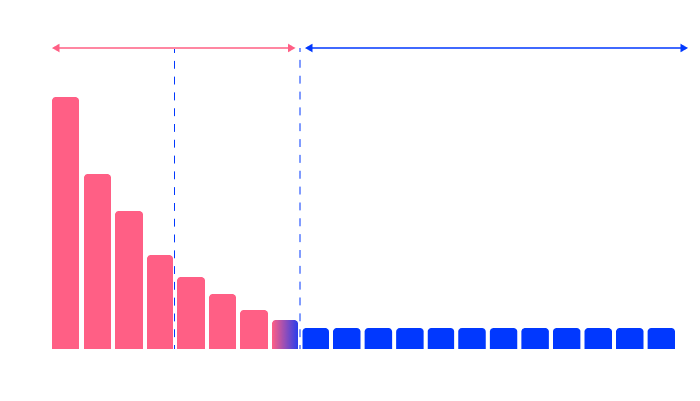
A service-area rollout often expands visibility first through suburb and long-tail queries. Narrower page types can match specific local intent earlier than broad head terms, which face heavier competition and slower ranking movement.
Metrics that show progress
Track qualified organic traffic, leads, rankings by page type, and AI-search citations over a fixed reporting window. Each metric answers a separate question: reach, relevance, commercial quality, and whether content is being surfaced outside traditional search results. A single headline ranking answers none of them.
Five-point provider checklist
These five questions apply to any AI SEO Melbourne engagement before contracts are signed.
- Strategy ownership is named. One accountable person handles priorities, trade-offs, and scope when departments disagree or new requests arrive mid-rollout.
- Fact-checking is assigned to a human reviewer, especially for regulated, technical, or location-specific claims where an incorrect line can create compliance issues.
- Update responsibility is explicit. Someone refreshes pages when services change, suburb coverage expands, templates drift, or search behaviour shifts enough to warrant rewriting.
- Local coverage is mapped in advance. Target suburbs, service combinations, and page types are listed before production starts so teams can see what demand is being pursued and what is intentionally out of scope.
- Success metrics are defined before launch, not after the first reporting cycle.
Safe AI SEO practices
Safer AI SEO separates scaled drafting from final editorial approval, applies source checks where claims are disputable, follows Google guidance on helpful content, and avoids publishing large volumes of unchecked copy that is thin, inaccurate, or misaligned with search intent.[1]
CMAX local-search example
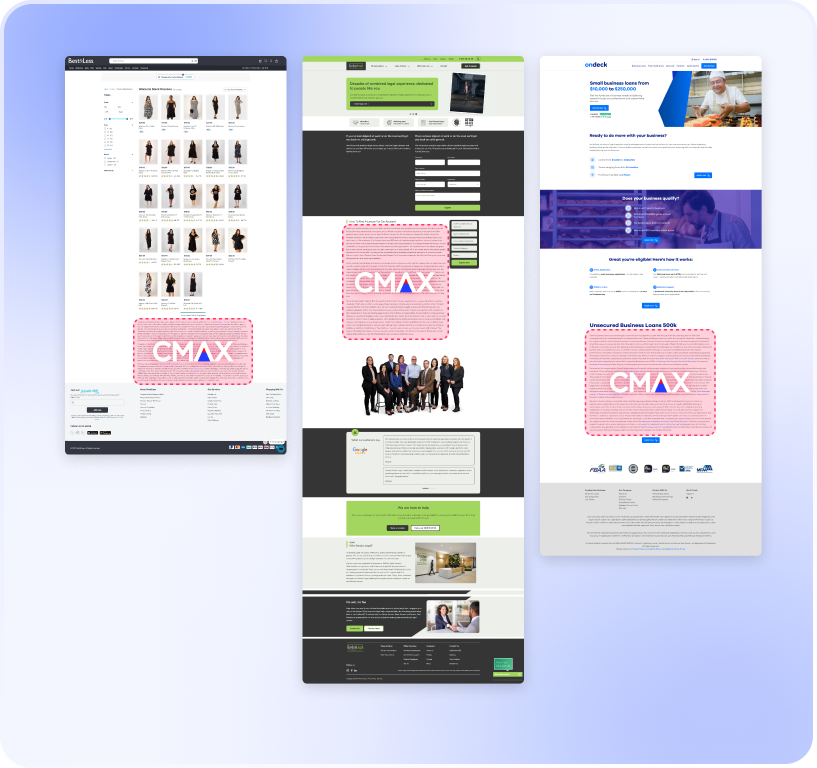
In one CMAX engagement, a regional internet provider built 6,637 suburb-specific pages and lifted organic traffic 86% in 12 months. The same suburb-by-suburb logic underpins AI SEO Melbourne when demand is fragmented and a typical site covers only a small share of those query variations.
What a Melbourne brief needs
An AI SEO services Melbourne brief should specify target suburbs, priority page types, who owns factual and editorial review, and the reporting window before implementation starts. Those decisions shape rollout order, review load, and how stakeholders interpret early results.
How to measure success in AI SEO?
Measure changes in qualified organic traffic, lead volume, rankings segmented by page type, and tracked AI-search citations over a pre-agreed window. A single headline ranking hides whether the right pages and queries are actually improving. Alongside performance metrics, buyers often ask how much does SEO cost in Australia, context that helps frame whether reported results justify the investment window.
How to get cited in AI search results?
Pages are more likely to be citation-ready when they answer a clear query directly, use precise headings, present factual claims carefully, and keep important information easy to extract rather than buried inside vague marketing copy or hard-to-parse layouts. Businesses researching AI SEO in Melbourne increasingly want to know how their content performs across AI search engines, where citation-readiness and structured answers determine whether a page gets surfaced at all.
Does AI SEO impact E-E-A-T?
AI SEO can support E-E-A-T when it helps structure content around first-hand expertise, reviewed facts, clear authorship, and traceable claims. It can weaken trust when teams publish scaled copy without subject-matter review or supporting evidence. The overlap between SEO and AI continues to grow as search engines reward the same quality signals both disciplines rely on: accuracy, authority, and transparent sourcing.
How to integrate AI SEO with existing marketing?
AI SEO works best when it connects with existing SEO, paid search, content, and CRM reporting so keyword opportunities, landing-page performance, and lead-quality feedback inform prioritisation rather than sitting in separate reporting silos. Organisations evaluating AI SEO Melbourne providers may find it useful to review how SEO services Brisbane handle local intent mapping and suburb page rollouts, since the structural challenges of fragmented metro demand appear across multiple Australian cities.
How to transition to AI-driven SEO?
Define the workflow for research, drafting, review, publishing, and measurement on a limited page set first. Expand only after the team has confirmed that quality control, approval paths, and reporting hold up under production pressure. A phased rollout is the safest path into AI SEO Melbourne for teams that need to prove quality before scaling.
Most SEO Platforms Scale Content, CMAX Scales Results
CMAX is an agentic SEO platform built for one job: capturing the long-tail search traffic most businesses never reach.
Two lines of code deploy thousands of pages targeting the specific, high-intent keywords your customers actually type, across traditional search and AI-driven results. Our AI agents don’t just publish content; they continuously update and optimise it based on live performance data. That means your coverage grows and improves without adding headcount. For Melbourne businesses competing in tight local verticals, this matters, because ranking for ten broad terms won’t move pipeline the way thousands of precise, suburb- and service-level queries can.
Results typically begin within six weeks of deployment, measured by qualified traffic and keyword visibility, not vanity metrics.
References [1] – https://developers.google.com/search/docs/fundamentals/creating-helpful-content
Author
Jeremy Tang
Founder and CEO of CMAX
Jeremy Tang is the Founder and CEO of CMAX. With over 2 decades of experience in business consulting and digital marketing, he has successfully driven seven startup businesses, six of which achieved $1 million in revenue from zero in less than 16 months, 5 of which grew to multi-million dollar a year ventures without any external funding. Jeremy's expertise lies in streamlining business processes through technology and leveraging digital (in particular SEO) for business growth. He resides in Australia, travels extensively, and draws inspiration from his global experiences.