Most teams hiring AI SEO specialists find that every candidate claims fluency with the same tools, the same prompts, the same platforms. The real gap is not tool access. It is whether the person or team can govern what gets published: choosing which queries deserve a page, constraining inputs to approved sources, reviewing output before it goes live, and measuring commercial impact after launch. That distinction matters more as AI makes it easier to produce volume without quality controls. CMAX works at that governance layer, combining programmatic long-tail coverage with the editorial and technical checks specialists are expected to provide.
AI SEO Specialists Are Not Just Tool Operators
Governed Search Expertise
Access to AI tools is table stakes. What separates a genuine AI SEO specialist is the ability to build a governed system around those tools, one that decides which query themes deserve coverage, restricts generation to approved sources and brand assets, reviews drafts before a single page goes live, and publishes content that answers the exact intent behind a search rather than producing generic copy at volume. For anyone asking what is SEO services, the answer starts here: it is a governed discipline, not a set of prompts.
That governance layer is where most tool users fall short. Prompts and plugins can produce output at speed, but without defined controls over what gets created, reviewed, and published, the result is scale without standards. A governed SEO system treats AI as an input to a disciplined process, not a replacement for one.
Grasping the broader relationship between AI and SEO, where governed expertise, not just tool access, determines whether AI output becomes a reliable search asset, is the first step to evaluating any SEO service specialist you consider hiring.
Combined SEO and Editorial Judgment
A genuine specialist brings together technical SEO, retrieval-aware content planning, and editorial judgement, and all three have to work in concert. Pages need to be crawlable and indexable. They also need to match how users and AI retrieval systems surface answers. And they need to carry enough original value to avoid the low-quality patterns that trigger duplication flags, weak intent matching, or claims a search engine can’t verify.
That combination is harder to replicate than it looks. Technical SEO without editorial judgement produces pages that rank for the wrong reasons. Editorial judgement without retrieval awareness produces content that answers questions no one is asking. Specialists hold all three together, and that’s what produces pages worth publishing.
The Workflow Matters More Than the Software
Human Judgement Sets Priorities
AI can accelerate research, audits, drafting, and monitoring. What it cannot do is decide which query clusters deserve coverage first, which page types justify scale, or whether a new page should exist at all.
Those calls require someone who weighs search intent against business value, recognises when a high-volume term is a poor commercial fit, and knows that consolidating ten thin pages often does more for site quality than publishing ten new ones. The software surfaces options. A specialist makes the call.
That distinction shapes outcomes. Programmes that hand priority decisions to automation tend to accumulate volume without direction, producing pages that compete with each other, miss conversion intent, or require expensive remediation later. AI SEO specialists apply human judgement to AI SEO workflow decisions that carry weight beyond traditional rankings, including how content is structured so that AI search engines can retrieve and surface it accurately in response to user queries.
Quality Controls Are Non-Negotiable
In AI-assisted SEO, quality controls are the working system. Approved inputs, source validation, editorial review, and post-launch checks are what keeps the workflow producing pages worth indexing.
Without them, the common failure modes are predictable: factual drift, duplicated patterns across page variants, and content that technically covers a query without matching what the searcher actually needs. Each of those problems carries a cost, whether that is a compliance issue, a brand credibility hit, or a signal that invites Google’s scrutiny of scaled content abuse. Effective SEO and AI integration depends on AI SEO specialists who enforce review standards at every stage of the production cycle.
Google’s guidance on helpful, people-first content sets a clear standard: pages need to demonstrate genuine expertise and serve the reader’s actual need.[1] A governed AI SEO workflow is built to meet that bar at scale, not to route around it.
Buyer Checks Reveal Specialist-Level Capability
What Specialists Do Differently
Platform access is easy to demonstrate. Specialist capability is harder to fake, and these checks will expose the difference quickly. Evaluating AI SEO specialists means testing whether they can explain each stage of their governed process.
Ask any provider to walk through how they select target queries. A specialist can show a prioritisation framework built on search intent, business value, and content gaps. They can also tell you which high-volume terms they chose to skip and why, because chasing volume without intent fit wastes crawl budget and dilutes topical relevance.
When evaluating AI SEO specialists, buyers applying the same rigour to an AI SEO agency should ask how queries are prioritised, how outputs are constrained, and how results are measured, not just which platforms the team uses.
Push further on inputs. A specialist can name exactly what shapes each page: approved sources, internal product or service data, brand guidelines, and any deliberate constraints on what the system is allowed to generate. If the answer is vague, the governance is vague.
Whether you need an SEO specialist Brisbane businesses rely on or an SEO specialists Sydney firms recommend, the same capability checks apply. The question of what do SEO specialists do in practice is answered by how they handle the review process before a page goes live. Strong providers describe how they check for factual accuracy, duplication risk, and compliance exposure, and they can point to the stage where a page gets stopped rather than published and fixed later. Catching problems pre-publication is a structural choice, not a quality-control afterthought. An SEO specialist Gold Coast teams trust will be able to walk through this same pre-publication gate.
Finally, ask how page templates vary by query type. A product search, a location search, a comparison search, and a problem-led search each require different evidence, different structure, and a different conversion path. For SEO specialists Melbourne buyers are vetting, the ability to show those templates side by side and explain the logic behind each one separates a governed SEO system from a content generator with a dashboard. A tool user shows you one template applied everywhere.
These questions take ten minutes. The answers tell you whether you’re looking at a governed SEO system or a content generator with a dashboard.
They can explain how performance is measured after launch, including page cohorts, query-theme coverage, conversion impact, and which pages were revised, consolidated, or removed based on actual results.
Reporting Must Show Controlled Tests
Ask any candidate how they measure performance after launch. A specialist gives you a specific answer. A tool user gives you a dashboard screenshot.
Specialist reporting groups pages into cohorts by query theme, page type, or rollout batch, then connects those cohorts to controlled tests and downstream outcomes. That structure lets you evaluate AI SEO optimisation at the cohort level, seeing whether a particular content pattern, template, or rollout approach drove qualified traffic and commercial impact, or whether it simply added indexed pages with no measurable return.
AI SEO specialists who report at the cohort and query-theme level bring the same accountability that buyers expect from an enterprise SEO consultant, connecting page-type decisions to qualified traffic and downstream commercial outcomes rather than isolated ranking screenshots.
Isolated ranking screenshots tell you almost nothing. A position-three result with no context on lead quality, revenue contribution, or what changed in the page after launch is not evidence of performance. It is a number without a story.
What you need to see is whether a page type worked, whether a query theme converted, and which pages were revised, consolidated, or removed because the data said they should be. Pruning and consolidation decisions are as much a part of specialist reporting as growth metrics. A programme that only adds pages and never removes or improves them is not being governed; it is being grown.
That level of reporting also gives you something you can take to a CFO: a clear line from a content decision to a traffic outcome to a revenue or lead result, with enough methodological context to defend the attribution.
Measured Examples Show Where Specialists Add Value
Long-Tail Coverage Adds Reach
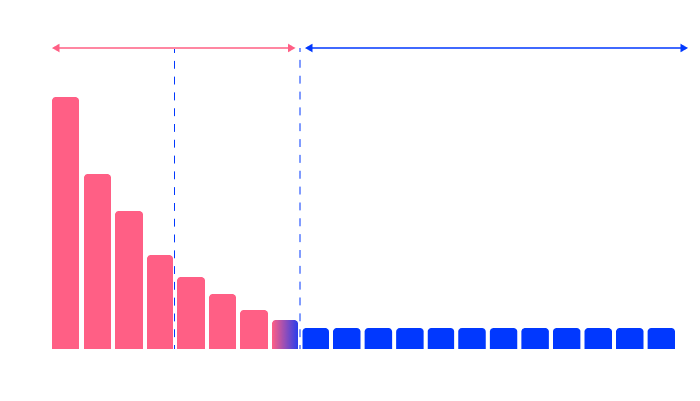
Manual SEO workflows have a ceiling. Researching, briefing, building, reviewing, and maintaining individual pages for product variants, location combinations, and problem-specific queries takes more editorial hours than most teams have. A governed long-tail programme removes that ceiling by applying consistent rules across query clusters at scale, so coverage extends into searches that would otherwise go unaddressed. Those searches are often where purchase intent is highest and competition is thinnest.
Teams offering AI SEO services Melbourne and AI SEO services Sydney clients can verify should show cohort-level evidence linking long-tail coverage to commercial outcomes. AI SEO specialists working at catalogue scale demonstrate the kind of coverage and commercial measurement that a B2B SEO agency must deliver when product, location, and problem-specific queries are too numerous for a conventional editorial workflow.
Evidence From One CMAX Engagement
In one CMAX engagement, a B2B omnichannel hospitality retailer added 5,000 long-tail product pages and reached $1M+/month in incremental SEO revenue within 8 months. That result came from catalogue-scale coverage governed by approved inputs, page-type rules, and ongoing performance review, not from generating more content faster.
That distinction shapes how to evaluate any AI SEO specialist. The question is whether AI SEO specialists can govern catalogue-scale coverage and measure commercial impact. Speed of output is a secondary concern. A team that can deploy thousands of pages but cannot show which query themes drove qualified traffic, which page types converted, and which pages were revised or removed has not demonstrated specialist capability. It has demonstrated volume.
The Strongest Hire Is Measurable, Not Flashy
Methodology Builds Trust
The clearest signal of a capable AI SEO specialist is an inspectable method. AI SEO specialists build trust by making the method inspectable. Ask how they brief pages before generation starts, how claims get validated against approved sources, how drafts move through editorial review, and how templates get tested before rollout. Ask which decisions AI can support and which ones stay with a human reviewer.
Specialists who can walk through each of those steps without hesitation have built a working system. Those who pivot to platform features or ranking screenshots have not.
The most trustworthy AI SEO specialists make their methodology inspectable, which is the same standard buyers should apply when assessing any AI SEO services, looking for documented briefing, validation, and testing processes rather than output volume alone.
Scale Must Protect Standards
Expanding long-tail coverage to hundreds or thousands of pages only creates value when originality, compliance review, and brand voice hold at that volume. A team that publishes faster than its review process can keep pace will accumulate pages that drift from intent, weaken topical coherence, or introduce claims that were never verified.
The strongest fit is a team whose review capacity scales with output, so quality at page 5,000 matches quality at page five. That means defined thresholds for what triggers a human check, clear rules for when a page should be stopped rather than published, and a pruning process that removes pages failing usefulness or accuracy standards after launch.
Scale is a capability. Governed scale is the differentiator.
How do you measure AI SEO ROI?
Rank movement alone does not tell you whether a page programme is working. AI SEO ROI is best measured by comparing page cohorts against a pre-launch baseline across indexed coverage, qualified traffic, conversion rate, and revenue or lead impact. Cohort-level analysis shows whether the pages produced through the process delivered incremental business value, and which page types, query themes, or rollout approaches drove it.
How does AI SEO handle zero-click searches?
Pages structured around direct answers, clear entities, and supporting detail give retrieval systems what they need to surface a response without a click. That visibility still has value. The stronger play is pairing it with coverage of follow-on queries, comparisons, validation searches, and action-oriented terms, where the searcher still needs to click through to make a decision.
Can AI SEO scale without losing quality?
It can, when expansion is constrained by approved inputs, page-type rules, human review thresholds, and ongoing pruning of pages that fail usefulness or accuracy standards. Scale without those controls produces more pages to manage, not more value.
How does AI SEO affect topical authority?
A governed programme can strengthen topical authority by filling genuine gaps across related subtopics and search intents. The site becomes more complete and internally connected rather than cycling through a small set of head terms with slightly different wording.
What are the risks of AI-driven SEO?
The main risks are factual drift, thin differentiation, duplicated patterns, and publishing more pages than the team can properly review. Those problems trace back to weak governance, unclear source controls, or template-led expansion that skips the question of whether a page deserves to exist at all.
AI SEO specialists focused on governed long-tail programmes address a different scale of challenge than a generalist enterprise SEO company, because the work centres on maintaining originality, compliance review, and brand consistency across hundreds or thousands of pages simultaneously.
Two Lines of Code, Thousands of Long-Tail Keywords
Most SEO platforms target the same crowded head terms your competitors already rank for.
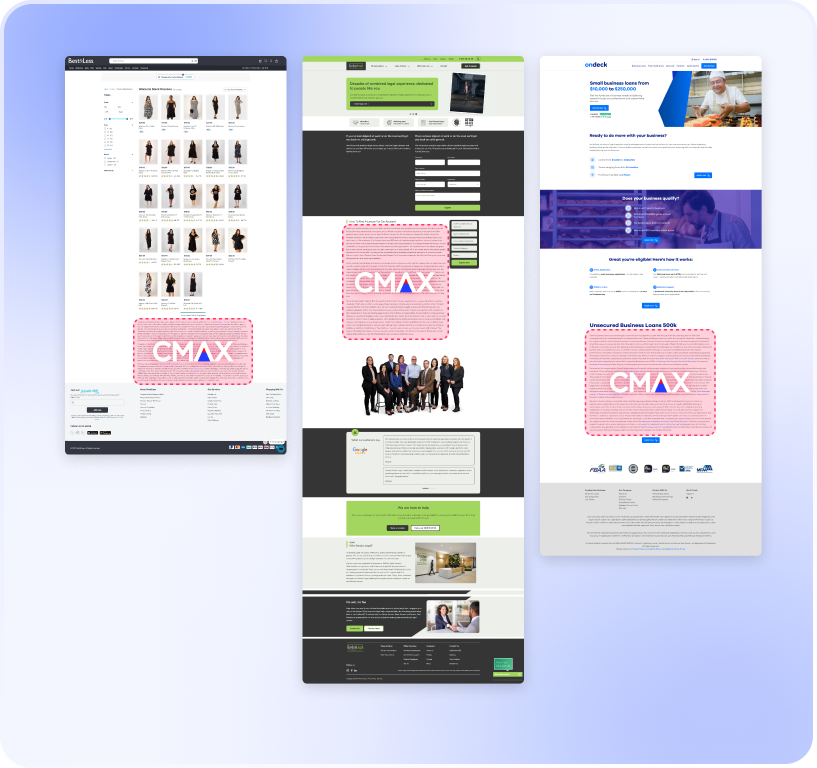
CMAX is an agentic SEO platform built to capture the long-tail demand that accounts for over 90% of search and AI traffic. Our AI agents deploy and continuously update content across the thousands of product, location, and problem variants your customers actually type. Teams have observed measurable organic growth within six weeks of deployment, with just two lines of code added to an existing site.
If you’re evaluating AI SEO specialists, the question isn’t whether AI can help, it’s whether the platform behind it can govern content quality, scale programmatically, and deliver results a CFO will accept.
References [1] – https://developers.google.com/search/docs/fundamentals/creating-helpful-content
Author
Jeremy Tang
Founder and CEO of CMAX
Jeremy Tang is the Founder and CEO of CMAX. With over 2 decades of experience in business consulting and digital marketing, he has successfully driven seven startup businesses, six of which achieved $1 million in revenue from zero in less than 16 months, 5 of which grew to multi-million dollar a year ventures without any external funding. Jeremy's expertise lies in streamlining business processes through technology and leveraging digital (in particular SEO) for business growth. He resides in Australia, travels extensively, and draws inspiration from his global experiences.