AI visibility measures whether your brand shows up in the answer itself, not in the search results below it. That distinction matters because a growing share of queries now resolve inside AI interfaces where traditional rank tracking has no line of sight. If your reporting only covers rankings and traffic, you could be absent from AI answers without knowing it. The fix starts with defining what counts as presence, choosing metrics you can actually track, and building a repeatable method around both. CMAX works with enterprise teams applying this kind of structured measurement to their organic programmes.
AI Visibility Is Brand Presence in AI Answers
What AI Visibility Means
AI visibility refers to whether a brand, product category, or owned content is mentioned, accurately represented, or cited in an AI-generated answer. The metric lives inside the answer itself. It has no direct relationship to where a page ranks in a traditional search engine results page, how much traffic a site receives, or whether a user converted after reading the response.
That boundary is worth holding firmly. A brand can rank on page one of Google and still be absent from every AI-generated answer about its category. The reverse is also true. Treating AI visibility as a proxy for rankings or revenue introduces measurement noise before a team has even started tracking.
AI visibility is measured within the answer itself rather than on a results page, which is why knowing how AI search surfaces and cites content is central to any brand presence strategy.
Scope of AI Visibility
Unlike traditional search visibility, AI visibility measures presence inside the answer itself. Four signal types fall within scope:
- Brand mention in the answer text, the brand name appears in the generated response.
- Answer position, whether the brand appears near the start of the answer or only after other brands, examples, or recommendations have been listed.
- Citations or source cards, linked references shown alongside the answer.
- Cited source URLs, the exact pages an AI system surfaces or attributes.
Two signal types fall outside scope unless measured separately:
- Organic rankings in a traditional search engine results page.
- Clicks, sessions, leads, and conversions.
AI visibility tells a team what appeared in the answer. It does not cover AI ranking signals such as where a page sits in a traditional list of results, because those belong to a separate measurement layer. Proving that an answer produced a visit, a lead, or a sale requires its own tracking.
AI visibility is the foundation of how a brand appears in generated answers, and teams looking to act on that knowledge often explore AI search visibility as the next step in building a measurable presence strategy.
AI Visibility Matters Before the Click
Why Traditional SEO Still Matters
AI systems do not generate answers from nothing.[1] They crawl, parse, and retrieve web content, then judge which pages are relevant enough to cite or reference for a given prompt. That dependency means the fundamentals of traditional SEO remain load-bearing. AI visibility depends heavily on the same crawlable, well-structured content that search engine optimisation has always prioritised, making traditional on-page fundamentals a prerequisite for appearing in AI-generated answers.
A site with thin topic coverage gives a model fewer usable pages to draw from. Poor internal linking makes it harder for a crawler to find and index related content. Inaccessible pages, whether blocked by robots directives, slow load times, or broken markup, simply do not enter the retrieval pool. The brand that publishes crawlable, well-structured, intent-specific content across a broad range of query variations gives AI systems more material to work with. The brand that does not, hands that ground to competitors who did.
Citation Features Make Tracking Possible
Several AI interfaces now display linked sources or citation cards alongside generated answers. Those features create a practical measurement window. AI visibility can be observed directly when platforms surface a summarised response at the top of results, and tracking whether a brand appears inside an AI Overview is one of the clearest ways to record that presence before any click occurs.
An AI visibility checker lets teams compare saved outputs over time by recording four things: whether the brand appeared, where it appeared in the answer, whether it was cited, and which source URL was surfaced. Run the same saved prompt set on a set schedule and those four fields become a time series. Answer wording will vary across sessions and model updates, but the citation record stays comparable because the prompt stays fixed. That consistency is what separates a repeatable AI visibility monitoring methodology from a one-off screenshot.
Consistent Measurement Starts With Frozen Prompts
Use a Fixed Prompt Set
Measurement breaks down when the prompts change between checks. If a team runs “best sustainable backpacks” one week and “eco-friendly backpacks for travel” the next, any shift in brand mentions, answer order, or citations could reflect the prompt change rather than a real change in AI visibility.
A frozen prompt set removes that variable. Lock in the exact phrasing, for example, “sustainable backpacks for travel,” “sustainable backpacks for hiking,” “sustainable backpacks for work,” “sustainable backpacks with recycled materials,” and “waterproof sustainable backpacks”, and run those same strings across each platform on a set schedule. What you get is a repeatable test bed: the same intent, the same wording, the same platforms, checked at consistent intervals. This repeatable methodology is what turns a one-off check into a proper AI visibility audit. Changes in brand mentions, answer position, citations, and cited URLs then reflect actual shifts in AI visibility rather than prompt drift.
Track Presence, Not Outcomes
Inclusion rate, answer position, and citation rate are useful AI visibility metrics because each answers a distinct question.
Inclusion rate answers whether the brand appeared at all. Answer position answers how prominent it was, first among named brands, or buried after several competitors. Citation rate answers whether the AI system attached a source to the mention, and which URL it surfaced.
AI visibility measurement becomes more actionable when content is deliberately shaped to be cited in direct responses, and answer engine optimisation focuses on exactly that alignment between content structure and the way AI systems construct their answers.
Traffic and conversions are downstream outcomes. They belong in a separate measurement layer, tracked separately and attributed separately. Folding them into AI visibility reporting conflates two different signals and makes it harder to act on either.
Source footprint affects what AI can cite.
Long-Tail Coverage Expands Citation Footprint
AI systems retrieve answers from content they can find, parse, and judge as relevant to a specific prompt. A brand with broad long-tail coverage gives those systems more retrievable pages to draw from across narrow, intent-specific queries.[2] A brand with thin coverage gives them fewer options, and fewer options means fewer citations.
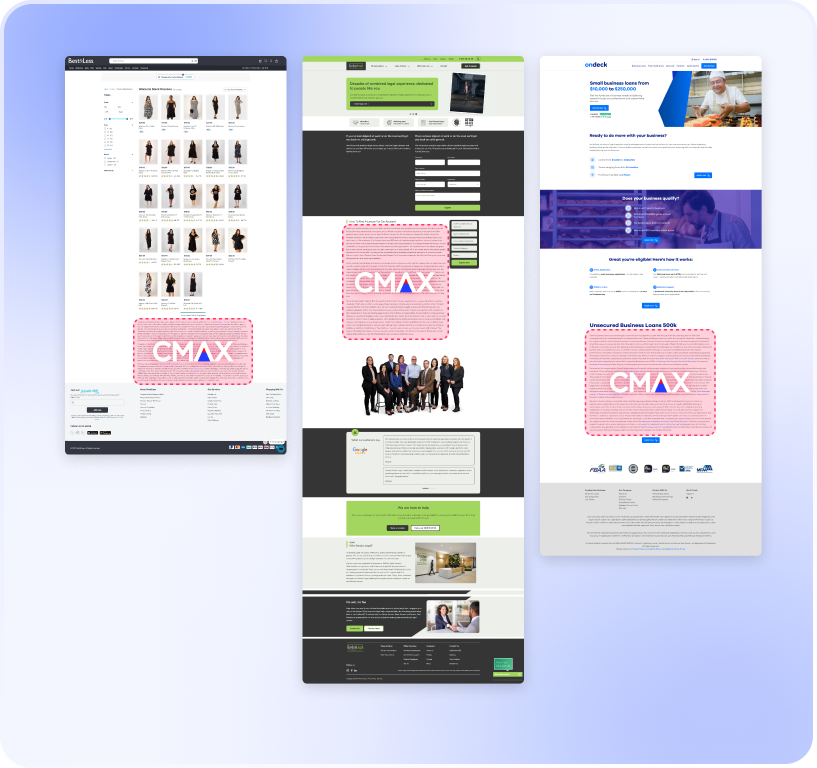
The mechanics are visible in CMAX client data. A B2B omnichannel hospitality retailer added 5,000 long-tail product pages through a CMAX engagement and increased organic traffic 255% in 12 months. The same principle applies to AI search visibility optimisation: each additional page targeting a specific query variation is another candidate the model can surface when that query is asked. Scale the page count and you scale the pool.
AI visibility improves when a brand’s content is structured so that AI systems can retrieve and cite it, which is the core concern that generative engine optimisation addresses by aligning content architecture with how generative models select sources. Running an AI search visibility audit against a fixed prompt set reveals how much of that content AI models are actually pulling from, and where gaps in the source footprint remain.
Report Directional Evidence
AI visibility results shift with platform updates, prompt phrasing, and model changes. A single snapshot taken on one day against one platform tells you very little. What holds up over time is a repeatable methodology: a fixed prompt set, timestamped outputs, and before-and-after comparisons run at consistent intervals.
Report AI visibility as directional evidence, not a definitive score. An AI search visibility checker lets teams compare saved outputs across measurement periods to spot credible signals, such as increased brand mentions across a frozen prompt set. Any claim of guaranteed inclusion overstates what the methodology can actually prove, and a CFO-ready report should reflect that distinction clearly. AI visibility is best reported as directional before-and-after evidence, grounded in consistent methodology and transparent about its limits.
Frequently Asked Questions (FAQ)
How do you track brand visibility in AI search (ChatGPT, Gemini, etc.)?
Run the same saved prompt set across each platform on a fixed schedule. For every response, log four fields: whether the brand appears, where it appears in the answer, whether it’s cited, and which source URLs were surfaced. That four-field log gives you a consistent record you can compare across platforms and over time, even when answer wording shifts between runs.
AI visibility across platforms like ChatGPT and Gemini raises questions about how content should be prepared for large language models, and LLM SEO addresses the technical and structural practices that help those models retrieve and cite a brand’s pages.
How can I improve my brand visibility with AI SEO?
Brands improve AI visibility by publishing crawlable, intent-specific pages that answer narrow query variations clearly. The language and structure of each page needs to be something an AI system can retrieve, interpret, and cite for the exact prompt being asked. Broad, generic pages give AI systems less to work with than pages built around a specific use case or query type.
Can AI visibility help improve SEO rankings?
AI visibility and organic rankings can move together because both depend on discoverable, relevant, well-structured content. A mention or citation in an AI answer does not, on its own, push a page higher in traditional search results.
Do we appear in the top three AI answers for category-defining prompts?
You can answer that only by defining a fixed list of category prompts and checking whether your brand appears within the first three entities, recommendations, or examples in each saved response.
Is it possible that my brand isn’t showing up in AI-generated answers, and I have no way of knowing?
Yes. Brands can be absent from AI-generated answers without noticing if they rely only on rankings or traffic reports. Zero-click answers can mask that loss entirely unless someone monitors a repeatable prompt set on a set schedule.
AI Visibility Starts with the Content AI Actually Finds
Most brands optimise for ten keywords and ignore the thousands of queries AI models pull from when generating answers.
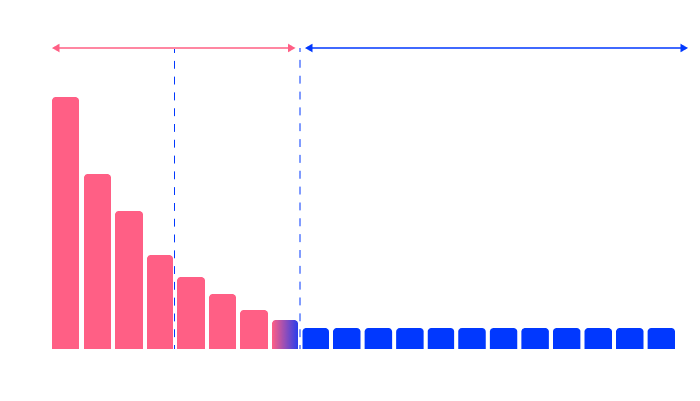
CMAX is an agentic SEO platform built to close that gap. Our AI agents deploy and continuously update content targeting the long-tail searches that make up over 90% of search and AI demand, the same queries that feed AI-generated responses. With just two lines of code, teams can scale content production at a speed manual workflows can’t match, and most see measurable results within six weeks.
If your content isn’t present where AI models look, it won’t be cited, mentioned, or represented in their answers. CMAX makes sure it’s there.
References [1] – https://developers.google.com/search/docs/fundamentals/ai-optimization-guide [2] – https://searchengineland.com/guide/long-tail-keywords-seo
Author
Jeremy Tang
Founder and CEO of CMAX
Jeremy Tang is the Founder and CEO of CMAX. With over 2 decades of experience in business consulting and digital marketing, he has successfully driven seven startup businesses, six of which achieved $1 million in revenue from zero in less than 16 months, 5 of which grew to multi-million dollar a year ventures without any external funding. Jeremy's expertise lies in streamlining business processes through technology and leveraging digital (in particular SEO) for business growth. He resides in Australia, travels extensively, and draws inspiration from his global experiences.