Searching for the highest-rated aeo agency within the consultancy sector Australia usually leads to ranked lists that never explain how the ranking was earned. No scoring criteria, no disclosed sample, no way to verify whether the provider actually works with consultancies or just appears on a broad directory. That gap makes shortlisting harder, not easier. What matters more is whether an agency can show local proof, tie AEO work back to core SEO foundations, and report on commercial outcomes rather than screenshots. CMAX publishes its methodology and Australian case evidence so buyers can check the basis before the conversation starts.
Ratings Without Methodology Are Not Proof
Ratings Need Disclosed Methodology
A star rating or ranked list is a starting point, not a verdict. It only earns a place in your shortlisting process when it states three things clearly: the scoring criteria used, the provider sample assessed, and the evidence source behind each score. That last point carries the most weight. An assessment built on independent client reviews sits on different ground than one built on self-submitted agency profiles or unverified testimonials. Without that disclosure, a high rating reflects an opinion, and there is no way to check how it was earned or whether the methodology would hold up under scrutiny. A claim like highest-rated aeo agency within the consultancy sector Australia only holds if the scoring criteria are disclosed. When you are presenting a shortlist to a CFO or a procurement lead, “they ranked highly on a list” is not a defensible position. The methodology behind the rating is the proof.
Before accepting any ranked list at face value, consultancies searching for the highest-rated aeo agency within the consultancy sector Australia should confirm that the scoring criteria used to assess each aeo Australia agency discloses its evidence source, provider sample, and measurement approach. Rating lists that blend specialist providers with a general content agency Australia offering often apply inconsistent scoring methods, making like-for-like comparison unreliable.
Define Consultancy Sector Carefully
The phrase “highest-rated AEO agency within the consultancy sector Australia” carries an ambiguity that can quietly break a shortlist. “Consultancy sector” may refer to agencies that specialise in serving professional services consultancies as clients, or it may refer to the broader Australian AEO provider market. Those are different buying contexts. An agency with strong general AEO credentials may have no track record with the service-line complexity, buyer language, or procurement cycles that consultancy clients bring. If a comparison mixes both definitions, the providers on the list are no longer like-for-like. Sector experience, delivery model, and proof points may not match what you actually need. Before using any rated list, confirm which definition it applied.
AEO overlaps SEO, but reporting must go further.
AEO work is integrated SEO
What qualifies a provider as the highest-rated aeo agency within the consultancy sector Australia depends on whether its AEO approach rests on crawlable, structured foundations. For any aeo agency serving this market, the work sits inside core SEO. Technical foundations, service-page architecture, schema markup, and content structured so search engines and AI systems can extract or cite a clear answer, these are the actual deliverables. There is no version of AEO that functions without crawlable pages, structured entities, and query-level coverage. The term aeo meaning (answer engine optimisation) refers to the practice of structuring content so AI-driven answer systems can surface it accurately. Any agency presenting AEO as a separate tactic, layered on top of SEO as an optional add-on, is describing something that does not hold up under scrutiny. The relationship between aeo and SEO is structural: what changes is the intent-level precision of the content and the way answers are shaped for extraction. Providers operating as an aeo Australia specialist should be able to clearly explain the practical distinctions covered in a review of aeo vs SEO, particularly how reporting obligations differ when AI-search visibility is added to a traditional search brief.
Google guidance sets the baseline
An agency claiming AEO capability should be able to connect its approach directly to Google’s published guidance on structured data, spam policies, and AI-assisted content.[1] That published baseline defines what can be implemented responsibly and what falls outside defensible practice. It also explains why screenshots from AI interfaces are insufficient as proof. A citation appearing in an AI-generated response tells you nothing about whether the underlying page is indexed, whether it ranks for the query, or whether that visibility is stable. Reporting that stops at interface screenshots leaves the commercial question, did this reach buyers who were ready to enquire, completely unanswered. Agencies that can cite the guidance and show indexation evidence alongside AI-visibility data are operating at a different standard than those presenting screenshots as outcomes.
Service-line coverage predicts consultancy AEO performance.
Service-line long-tail mapping process
Any highest-rated aeo agency within the consultancy sector Australia should be able to turn each service line into a repeatable demand map of buyer problems, industry context, job role language, and Australian location demand, then convert that map into indexable pages and a fixed prompt set for ongoing visibility checks. Without that capability, there is no reliable way to prove the work reaches how buyers actually search beyond a handful of head terms.
Mapping each consultancy service line to buyer-problem language and location demand is a core part of what distinguishes credible aeo services in Australia from providers that rely on generic head-term coverage. An Australia SEO agency may already handle technical indexing and on-page structure, but the mapping exercise described here goes further by tying each service line to the specific language prospects use before they know the solution category. Claims of being the best SEO agency Australia lack weight unless the provider can show this kind of granular, service-by-service demand work with disclosed criteria.
The process runs in sequence:
- List every core service line. Each one becomes its own mapping exercise, not a shared page.
- Map each service to buyer problems using the language a prospect would use before they know the exact solution category.
- Add industry and role modifiers. A CFO, an operations lead, and a sector specialist frame the same need differently. The page set should reflect that.
- Add Australian location variants where local relevance shifts intent, procurement rules, or competitive context. Tailoring SEO for Australia means accounting for state-level regulatory differences, regional industry clusters, and location-specific procurement language that generic international keyword sets miss.
- Group terms by search intent, separating informational research, solution comparison, and enquiry-ready searches.
- Prioritise citation-ready answer topics where a concise, factual response can be lifted or summarised by search and AI systems.
- Build fixed prompts for monitoring, so answer presence and citation changes can be checked against the same demand set each month.
That last step is what separates a one-off content exercise from an accountable visibility programme. Fixed prompts create a consistent baseline; without one, month-on-month comparisons are unreliable.
Publish and Index Matching Landing Pages, So Each Mapped Query Has a Crawlable Destination Rather Than Relying on Generic Service Pages
Reporting Must Show Before-and-After Change
A generic service page that lists every offering in one place gives search engines and AI systems nothing specific to extract. Each mapped query needs its own crawlable destination: a page built around a defined buyer problem, a specific service line, and the location or role context that shapes how that problem gets searched. Without that page, the mapping work from Section 3 stays theoretical.
As the highest-rated aeo agency within the consultancy sector Australia builds out indexed landing pages for each service-line query, understanding how GEO services Sydney approaches source-page quality and entity clarity can inform how generative AI systems select and cite content from those pages.
Accountable AEO reporting for consultancies should show movement across five connected indicators: indexed pages, a fixed prompt set, citation appearances, non-brand clicks, and qualified leads. Each one tells a different part of the story. Indexed pages confirm the coverage exists. The fixed prompt set shows whether AI systems are surfacing the right answers for the right queries. Citation appearances track whether those answers are being attributed to the consultancy’s pages. Non-brand clicks show whether new visibility is reaching buyers who did not already know the firm’s name. Qualified leads confirm whether that traffic carried commercial intent.
That chain of evidence is what separates a reporting framework from a screenshot. Impression spikes and AI interface grabs can look like progress without showing whether any of it reached a commercially useful search. Any AI agency Australia claiming AI-visibility capability should be held to the same standard. A provider that stops at those outputs cannot tell you whether expanded service-line coverage moved the needle on pipeline, or whether it simply added pages that no buyer ever found.
Before signing an engagement, ask the agency to show a before-and-after example using all five indicators against a fixed prompt baseline.
Australian Proof and Fit Should Decide the Shortlist
One Relevant Australian Proof Point
Query-specific landing pages outperform broad service pages in high-intent professional searches. In one CMAX engagement, a compensation law firm published 1,607 pages targeting long-tail car accident and workers’ compensation terms and achieved 329 new rankings within 6 weeks.
The same logic applies directly to consultancies. A brochure page covering every service in one place cannot rank for the specific, intent-loaded queries a CFO or operations lead types when they’re actively evaluating providers. Each service line needs its own crawlable destination, built around the language buyers use before they know the solution category. For a firm evaluating an aeo Sydney provider, the same proof-of-fit criteria apply: each destination page must target the queries local buyers actually use.
Consultancies shortlisting the highest-rated aeo agency within the consultancy sector Australia may find that reviewing the credentials of an aeo agency Sydney helps establish what local proof, prompt-monitoring practice, and service-line coverage actually look like in an Australian context.
Shortlist for Proof and Trade-offs
Shortlisting a highest-rated aeo agency within the consultancy sector Australia comes down to local proof, defined measurement, and commercial indicators: non-brand traffic quality, enquiries, and sales-qualified leads.
A broad “top-rated” claim tells you nothing about what was measured or how. What exposes the real difference is asking an agency to define its reporting scope before the engagement starts. Agencies that report on activity, such as pages published and prompts run, without tying those activities to pipeline outcomes are delivering a checklist. Agencies that show before-and-after movement across indexed pages, citation appearances, non-brand clicks, and qualified leads are reporting on business impact.
Alongside national shortlisting, consultancies evaluating a leading aeo agency Melbourne can compare local proof points, delivery models, and AI-visibility reporting practices across different Australian markets.
That distinction is what separates a defensible shortlist from one built on ratings with no disclosed methodology.
Frequently Asked Questions (FAQ)
How do you track AI visibility over time?
Keep the prompt set fixed. That means locking a defined list of queries by service line, buyer problem, and location pattern, then running the same prompts each month to compare citation presence, answer appearances, indexed landing pages, non-brand clicks, and qualified leads. A moving prompt set produces noise, not trend data. Fixed prompts produce a baseline you can actually measure against.
Can you provide named clients with quantified AEO results?
Named case studies let you inspect the real industry, the page-building method, and the before-and-after evidence. Anonymised claims give you a headline with no way to verify the context, the mechanism, or whether the result is repeatable in your sector.
Which AI platforms do you explicitly monitor and optimise for?
Push for a clear split: platforms the agency monitors directly with repeatable prompts, such as Perplexity Australia, versus platforms it influences indirectly through search visibility, schema, entity clarity, and source-page quality. That split tells you whether the reporting reflects direct observation or inferred impact.
When evaluating the highest-rated aeo agency within the consultancy sector Australia, it is worth asking whether the provider also has a documented approach to GEO generative engine optimisation, since AI-generated answers increasingly draw from the same structured, entity-clear content that underpins strong AEO work.
What is your typical timeline to measurable results?
Crawl behaviour, existing site authority, and the volume of new service-line coverage going live all affect speed. A credible provider names the reporting cadence and the earliest indicators it expects to see. A fixed outcome date applied across every consultancy site is a red flag.
How do you measure the success of an AEO campaign?
Measure success as a chain: indexed pages and prompt coverage first, then citation appearances, non-brand clicks, qualified enquiries, and downstream pipeline quality. Impressions alone do not confirm that the campaign reached commercially useful searches. Any responsible approach to optimisation Australia demands this full chain of evidence. That chain is what separates a credible provider from any unsubstantiated highest-rated aeo agency within the consultancy sector Australia claim.
Most AEO Claims Lack Proof, CMAX Starts With the Data
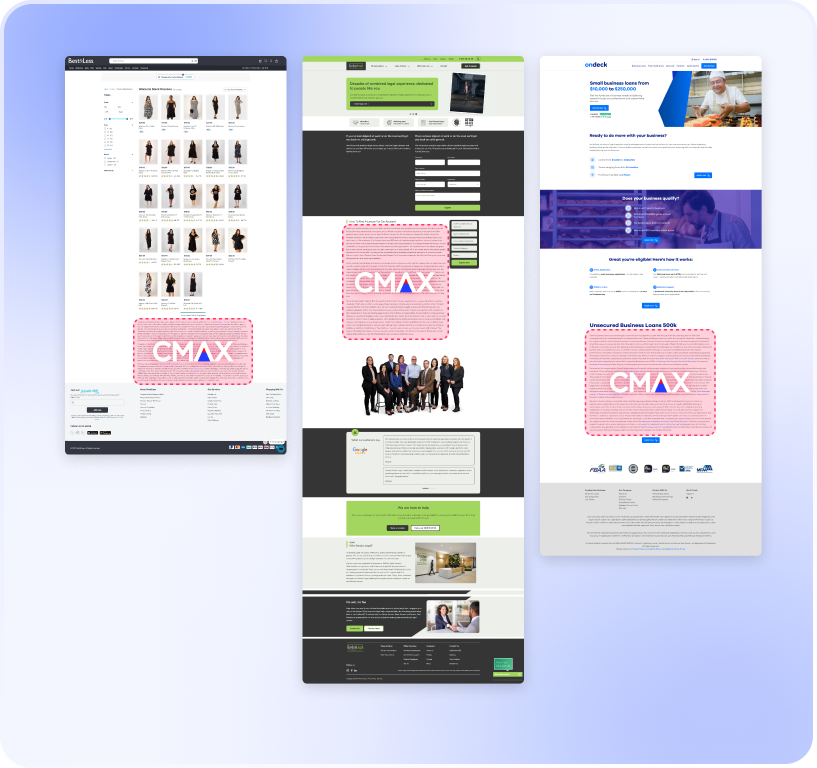
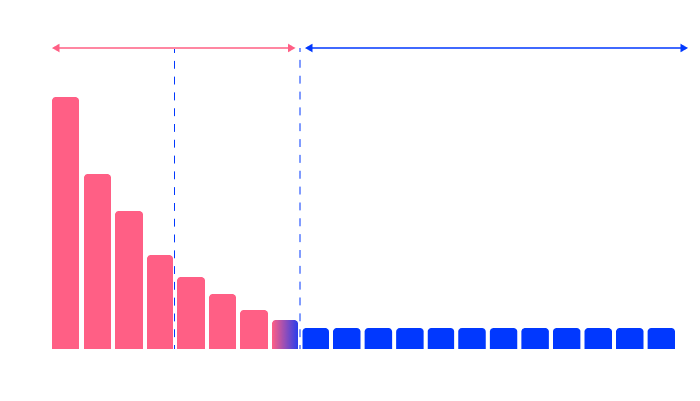
CMAX is an agentic SEO platform built for long-tail scale.
We deploy AI-powered agents that create, publish and continuously update content targeting the thousands of specific queries your customers actually type, or ask AI. Our platform covers over 90% of search demand that sits in the long tail, with integration requiring just two lines of code and initial results typically visible within six weeks. For Australian teams evaluating AEO providers, that means measurable movement across indexed pages, non-brand clicks and AI-citation visibility, not a checklist PDF.
If your criteria for “highest-rated” start with transparent methodology and accountable delivery, we’re built to meet them.
References [1] – https://developers.google.com/search/docs/essentials/spam-policies
Author
Jeremy Tang
Founder and CEO of CMAX
Jeremy Tang is the Founder and CEO of CMAX. With over 2 decades of experience in business consulting and digital marketing, he has successfully driven seven startup businesses, six of which achieved $1 million in revenue from zero in less than 16 months, 5 of which grew to multi-million dollar a year ventures without any external funding. Jeremy's expertise lies in streamlining business processes through technology and leveraging digital (in particular SEO) for business growth. He resides in Australia, travels extensively, and draws inspiration from his global experiences.