Most advice on ChatGPT SEO Australia treats it like standard SEO with a new label. But the local layer changes things: Australian English spelling, suburb-level intent, and the way ChatGPT decides which page is worth citing all follow different rules than Google rankings alone. If your pages rank well nationally but blur the location signal, they may never surface when someone in Melbourne or Brisbane asks ChatGPT for a local provider. CMAX works with Australian teams building the kind of localised, measurable page coverage that these conditions require.
ChatGPT SEO in Australia follows local SEO rules on a different surface.
Citations Need More Than Rankings
The way ChatGPT SEO Australia works in practice starts with visibility depending on more than rankings. Strong Google rankings can support discovery, but for anyone exploring ChatGPT in Australia, the conditions for appearing in a ChatGPT answer are distinct. A page needs to be crawlable, it needs to answer the exact service-and-location prompt a user submits, and it needs to present detail that is clear and trustworthy enough to be pulled as a direct citation.
That last point is where many well-ranked pages fall short. A page can sit at position one in Google and still be passed over in a ChatGPT answer if the content is thin, the structure is ambiguous, or the crawler cannot access it reliably. Rankings confirm relevance to a search engine algorithm. Citation suitability is a separate test.
Businesses researching ChatGPT SEO Australia often find that the broader practice of ChatGPT SEO requires the same trust signals and crawlability foundations, applied with Australian language and local entity cues layered on top.
Australian Language Changes Relevance
Australian English spellings, suburb and state references, and recognisable local entities can shift which pages read as relevant when a prompt carries Australian intent. A prompt asking for a service provider in a specific suburb or state is not a generic national query, and pages written in generic or US-English register may not signal the right fit. Australian ChatGPT behaviour reflects this: prompts with local intent favour pages that carry local language cues.
A strong foundation in search engine optimisation remains relevant for ChatGPT SEO Australia, because the crawlability, trustworthiness, and page clarity that support Google rankings also influence whether a page is surfaced or cited in AI-generated answers.
Wording such as “optimise,” “organise,” or a reference to a named suburb or state acts as a local relevance cue. When a prompt implies Australian context, pages that reflect that context in language and local entity references are better positioned to be surfaced. Generic national pages often lack those signals entirely.
Local Coverage Matters When Australian Intent Is Specific
Local Pages Clarify Local Intent
A national service page tells ChatGPT that a business exists. A suburb-level page tells it where that business operates and which local query it is built to answer. For any team working on SEO Australia, that distinction drives citation relevance on place-specific prompts.
When a user asks ChatGPT for a provider in Parramatta or Geelong, a broad national page competes poorly because the location signal is too diffuse. Service, suburb, and state-level pages each carry a tighter match to the prompt, which makes them more usable as direct sources when ChatGPT is pulling from live web results.
Australian SEO Assumptions to Correct
Before scaling local coverage, teams working on ChatGPT SEO Australia should correct five assumptions that consistently distort ChatGPT SEO decisions in the Australian market.
Language signals local fit. Australian spelling and phrasing, forms such as “optimise,” “authorise,” and “suburb,” help confirm that a page matches an Australian prompt. Generic US-spelled copy can weaken that signal even when the content is otherwise strong. Businesses researching ChatGPT SEO Australia may come across the US-spelled variant answer engine optimisation, though Australian practitioners and style guides would typically use the local spelling when producing content intended for Australian prompts and audiences.
One national page cannot satisfy suburb-level intent. When a prompt names a specific suburb, city, or state, the location signal on a national page is too broad to resolve it cleanly.
Google rankings do not transfer to ChatGPT citations. Answer inclusion depends on whether a page is usable as a direct source. A page can rank on page one and still be passed over if it cannot be crawled or does not answer the prompt directly.
Location pages need distinct local context. Near-duplicate pages with only the place name swapped offer little unique detail to reference. Suburb-specific service framing and local entity cues are what separate a citable page from a thin one. This principle applies broadly to SEO in Australia, where location depth often determines whether a page earns a citation or gets skipped.
Measurement needs three separate tracks. Crawlability, citation presence, and referral traffic each answer a different question about why a page is, or is not, appearing in AI answers. Combining them into a single metric obscures where the actual gap sits.
Measurement Relies on Citations, Referrals, and Page-Level Signals
Measuring ChatGPT SEO Australia means separating three distinct signals.
Track ChatGPT Referral Signals
Referral analytics give you the clearest direct signal available. When ChatGPT’s web-connected answers include a cited link and a user clicks through, the session can appear in your analytics with a source containing ChatGPT.com. Filtering for that source separates answer-driven visits from broader organic traffic or direct sessions, so you can see which pages are actually pulling referrals from ChatGPT for SEO answers rather than guessing based on ranking position alone.
Set up a dedicated segment or channel grouping for ChatGPT.com referrals now, even if volumes are low. Early data establishes a baseline, and a baseline is what makes a before-and-after comparison credible when you present results to a CFO.
Tracking the referral and citation signals that feed into ChatGPT SEO in Australia is a core part of what structured aeo services typically help businesses implement and monitor over time.
Use Bing for Diagnostics
Bing Webmaster Tools is a practical diagnostic layer for ChatGPT SEO in Australia because ChatGPT’s web browsing is understood to draw in part on Bing’s index. If a page has crawl errors, indexation gaps, or rendering problems visible in Bing Webmaster Tools, those issues can suppress citation likelihood regardless of how well the page ranks in Google.
The diagnostic split is significant: a page that ranks in Google but fails Bing’s crawl checks has a different problem than a page that is fully indexed but never cited. Bing Webmaster Tools helps you identify which category you’re dealing with, so remediation targets the actual constraint. Check crawl coverage, page inspection results, and any flagged errors for your highest-priority Australian service and location pages first.
A controlled rollout makes localisation easier to test.
Test Localised Page Revisions
For teams investing in LLM SEO Australia, a controlled rollout clarifies which changes drive citation gains. Start with a single controlled comparison. Take a page written in US English with no suburb or state references, create an Australian-English revision that adds local entity cues, suburb-level framing, and state context, then run the same Australian-intent prompts against both versions over several weeks. If the revised page is cited more often for prompts that imply a specific Australian location or service context, that’s a signal worth scaling. If it isn’t, the diagnostic tells you whether the gap is a crawl problem, a content-depth problem, or a prompt-match problem. Either outcome is useful.
The revision doesn’t need to be a full rebuild. Spelling changes, suburb references, and locally recognisable entities can shift relevance signals meaningfully. The point is to isolate one variable at a time so the result is attributable.
Compare Dated Snapshot Sets
AI visibility doesn’t move in a straight line. A page cited in one prompt set on one day may not appear in a different prompt set the following week, because answer composition varies by phrasing, location signal, and what sources are accessible at query time. One-off checks overstate wins and hide genuine progress in equal measure.
Dated screenshots of prompts, cited sources, and answer text give you a repeatable record. Pair those with referral analytics and crawl data from the same period, and the pattern becomes readable across time rather than dependent on a single observation. This before-and-after method is what makes ChatGPT SEO Australia testable rather than speculative.
A suburb-level content model can create measurable discovery gains.
Suburb Pages Can Expand Discovery
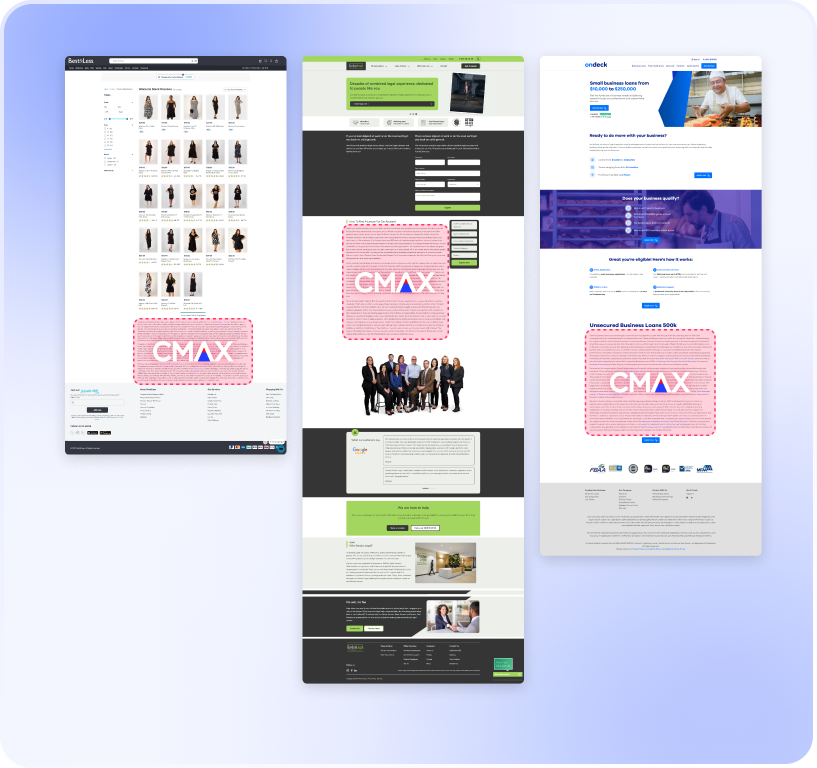
The numbers from one CMAX engagement are specific enough to be useful here. Based on CMAX’s client engagement data, a regional internet provider built 6,637 suburb-specific pages and recorded 86% organic traffic growth across 12 months. That result came from matching page supply to the way users actually search: suburb by suburb, not state by state. Suburb-specific pages are where ChatGPT SEO Australia produces its most measurable gains.[1]
The same logic applies to ChatGPT visibility. When a prompt asks for a provider in Parramatta or Geelong, a national service page rarely carries enough local signal to be surfaced or cited. A page built for that suburb, with distinct service framing and local entity cues, gives the model something specific to reference. Scale that across hundreds of suburbs and the coverage gap closes in a way that broad pages cannot replicate. For SEO services Australia providers with large geographic footprints, this suburb-level approach converts latent demand into trackable discovery.
Best Fit for Location-Scale Sites
This model works best when three conditions are in place. First, the site can support a large set of location pages where each page carries genuinely distinct local content rather than near-duplicate text with a suburb name swapped in. An experienced SEO consultant Australia teams rely on can audit each page for uniqueness before publication. Second, the team can track which pages earn citations or referral sessions, so performance is visible at the page level. Third, those pages can be kept current as services, suburbs, and local conditions change.
For Western Australian businesses building out location-specific pages as part of a ChatGPT SEO Australia strategy, working with an aeo agency Perth can help those pages reflect the suburb-level language and local entity cues that improve citation likelihood. Among SEO providers Australia businesses work with, those experienced in location-scale builds are best placed to maintain quality across hundreds of pages.
Sites that meet those conditions are positioned to turn suburb-level search and AI demand into measurable discovery gains. Sites that cannot maintain page quality at scale will find the approach harder to sustain.
Frequently Asked Questions (FAQ)
How do I get my business to show up in ChatGPT or Google AI Overviews?
Pages are more likely to be surfaced when they can be crawled, answer a specific service-and-location question directly, and use the local entities and terminology that match the prompt. For Australian businesses, that means suburb and state references, Australian English spelling, and service framing that fits the exact query rather than a broad national description.
When Australian businesses explore ChatGPT SEO Australia as a strategy, they frequently encounter the term answer engine optimisation as the broader discipline that covers how pages are structured to be cited across AI-powered answer surfaces.
How do you measure the success of AI SEO?
Combine three signals: referral traffic from AI surfaces (sessions where the source contains ChatGPT.com), citation evidence where answers are visible, and technical checks confirming cited pages are accessible and indexable. Each signal answers a different diagnostic question, so tracking only one will leave gaps in the picture.
What sources does ChatGPT use to give recommendations?
As an AI chatbot Australia users increasingly rely on, ChatGPT draws on model knowledge and, when web access is enabled, live web sources. For Australian queries, recommendation quality depends on whether trustworthy, prompt-relevant pages exist for the specific topic and location being asked about. A page that ranks in Google but cannot be crawled or lacks local specificity may still be passed over.
How do you get cited by ChatGPT for your business?
Citation likelihood improves when a page answers a narrow query directly, uses consistent local language and entities, and avoids thin or near-duplicate location content. A page that swaps only the place name while keeping identical body copy offers little unique detail worth referencing.
How can I check if my business appears in ChatGPT results?
Run the prompts your customers would realistically use, save dated screenshots of the answers and any cited links, then cross-reference with analytics and crawl diagnostics. Dated snapshots make the review repeatable and give you a baseline to measure against as you make page-level changes.
Australian businesses new to ChatGPT SEO Australia often start by asking what is aeo before they can meaningfully assess how answer-engine visibility differs from the Google rankings they are already tracking.
Most Australian Businesses Optimise for Google, the Other 90% of Search Stays Empty
CMAX is an agentic SEO platform built to capture long-tail demand at scale.
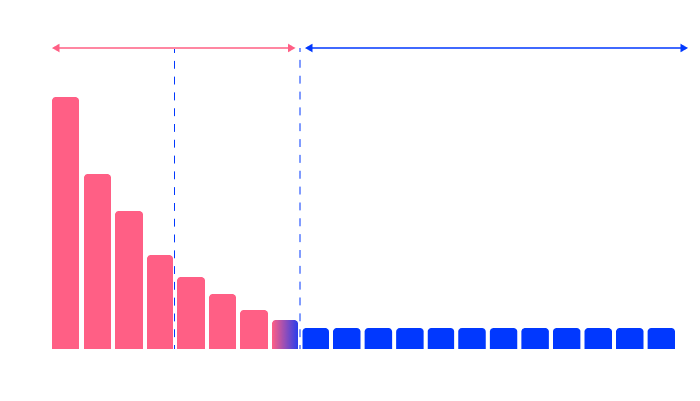
Over 90% of search and AI traffic sits in the long tail, the thousands of specific, high-intent queries your audience actually types. CMAX deploys AI agents that create, publish and continuously update content targeting those queries, using just two lines of code on your site. Results typically begin surfacing within six weeks.
For Australian businesses exploring ChatGPT SEO, that same long-tail principle applies: visibility in AI-generated answers depends on localised, crawlable content that matches how Australians actually search, spelling, suburbs, local entities and all. CMAX helps you build that content layer at a speed and scale a small team simply can’t match manually.
References [1] – https://searchengineland.com/guide/long-tail-keywords-seo
Author
Jeremy Tang
Founder and CEO of CMAX
Jeremy Tang is the Founder and CEO of CMAX. With over 2 decades of experience in business consulting and digital marketing, he has successfully driven seven startup businesses, six of which achieved $1 million in revenue from zero in less than 16 months, 5 of which grew to multi-million dollar a year ventures without any external funding. Jeremy's expertise lies in streamlining business processes through technology and leveraging digital (in particular SEO) for business growth. He resides in Australia, travels extensively, and draws inspiration from his global experiences.