As sites grow through SEO dynamic content or manual publishing, content cannibalisation happens when two or more of your own pages compete for the same search. Google has to pick a winner.
It won’t always pick the one you’d choose.
You might notice positions that swap between pages, clicks that look split rather than growing, or a page that quietly loses ground even though you haven’t touched it.
Before picking a fix, you need to know whether the problem is duplicate content that should be merged, or pages with unclear jobs that need sharper signals. Diagnosing SEO duplicate content separates pages that should be consolidated from pages whose distinct roles just need clearer direction.
Getting that wrong wastes work and costs you visibility you already have.
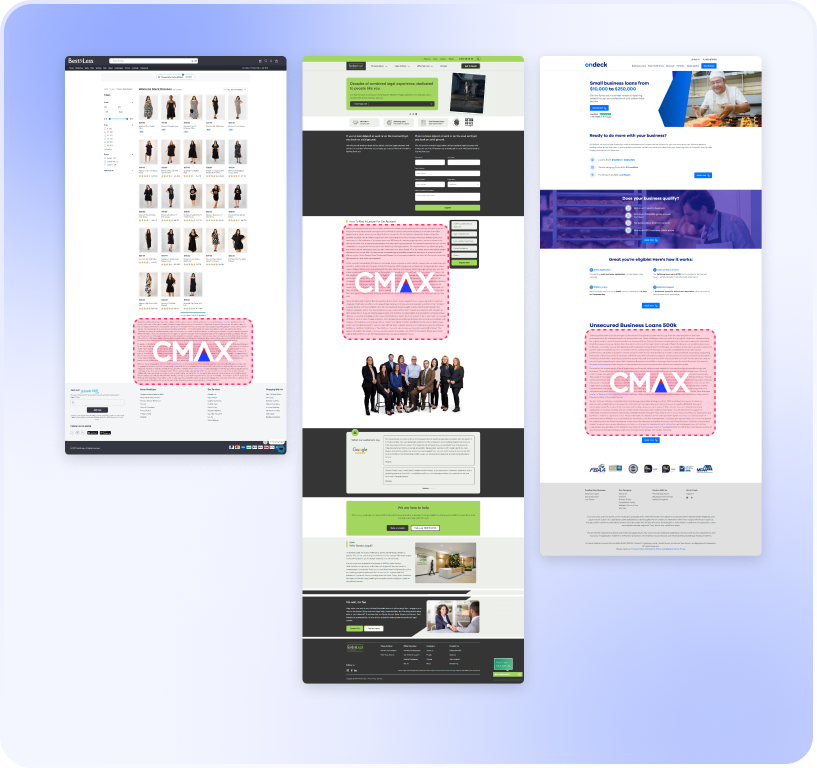
CMAX, the Agentic SEO Platform, maps keyword cannibalisation across page roles and internal links so you can see where pages are competing before you decide whether to merge, retarget, or strengthen the signals.
Content cannibalisation happens when multiple pages compete for the same search intent, so the first step is to confirm where the overlap is.
Spot switching and split signals
In Search Console, the free Google tool that shows which searches your site appears for, content cannibalisation shows up when one query surfaces more than one of your URLs and divides the clicks that previously supported a single page. Flag any search term bringing up multiple URLs, a steady slide in clicks on your main page, or clicks that look split rather than concentrated.
Without a coordinated SEO and content strategy, authority, internal links, and engagement signals get spread thin across competing pages rather than reinforcing one stronger page. Publishing more content can make it worse.
Check intent before keywords
Two pages can share similar wording without causing a problem, as long as each one answers a different job. A guide that explains a topic and a product page that helps someone buy are doing different work.
The real issue is overlapping search intent, meaning both URLs are targeting the same goal and leaving Google choosing between near-duplicates.
Think of your site like a market stall with two signs pointing to two different tables for the same product. Customers split between them, neither table gets a queue, and the stall looks less busy than it is.
When two of your pages answer the same query, Google splits the credit between them rather than giving it all to your best page.
In this context, overlapping search intent means your pages are doubling up on the same customer goal. Fix it with sharper titles, clearer headings, and internal links that route both users and Google to the right page for the right step.
The right fix depends on which page should own the topic, which should be retired, and which signals need strengthening.
Merge and redirect duplicates
When consolidating programmatic content that has produced overlapping URLs, use permanent redirects and update every internal link, menu item, and related article to point to the preferred page. A 301 redirect is the right SEO redirect to use when a weaker duplicate has been merged into one preferred URL.
It tells Google the move is permanent and transfers the ranking signals to the page that stays.
Re-target supporting pages
When competing pages still serve distinct purposes, clear roles for overview, use-case, and detail pages prevent content cannibalisation while keeping URLs that still do useful work. Canonical tagging tells Google which URL is the preferred version of a page, but it is one signal among many.
The copy, headings, and internal links carry the real weight of separating intent.
CMAX helps brands diagnose cannibalisation by mapping page roles, internal links, and content coverage across the full site.
Map roles, links, and gaps
CMAX is the Agentic SEO Platform, and it distinguishes content cannibalisation from harmless topic overlap by mapping which pages should lead, which should support, and which are close enough to conflict. The platform applies internal linking for SEO when Google consolidates similar URLs, because mixed signals can leave the wrong page ranking or stronger pages underperforming.
Effective SEO content marketing services let you make decisions from the whole site structure rather than patching pages one by one.
Most SEO work happens at the page level. The problem usually lives at the site level.
Plan for the long tail
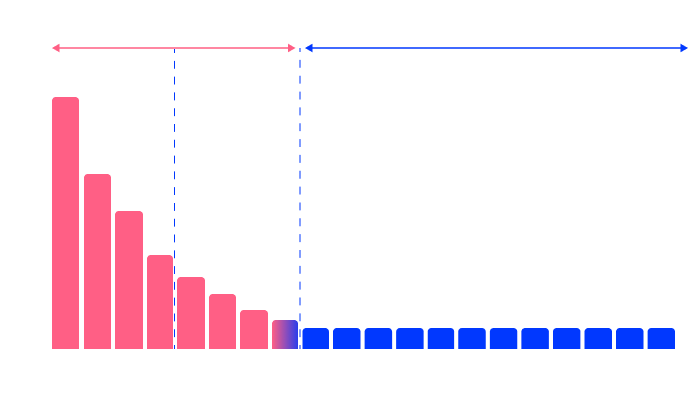
Everyone targets the same obvious head keywords. They’re the crowded end of the market where every competitor is jostling for the same few spots.
More than 90% of search and AI demand sits in the long tail, the specific, detailed searches people actually type. CMAX targets that share of search demand built around those specific queries rather than the obvious terms every competitor chases.
An SEO content score helps assess an individual page, but pages also need clearer intent, enough depth to answer the full query, and fresher supporting content to avoid overlap and keep growing. CMAX is trained on human-reviewed, client-approved content, so scaled updates stay aligned with your approved messaging while improving coverage, freshness, and internal connections across the site.
Frequently Asked Questions (FAQ)
Can content cannibalization emerge months after publication?
Yes. Adding a new page that targets the same intent as an older one can create content cannibalisation.
Expanding an existing page until it answers the same query set as another URL, or changing navigation and internal linking templates, can trigger it after the fact. Search Console usually shows the shift first: impressions and clicks start splitting between pages that previously had clearer roles.
Can product and category pages compete for the same search?
Yes, particularly when both are written around the same generic term. There are different search intent types, and understanding them separates the broader role of a category page from a product page’s evaluation role.
A category page should own browsing and comparison intent. A product page should focus on evaluation or purchase intent.
A site-wide SEO content gap analysis can clarify whether the category should own the broader query, before internal links, metadata, and the homepage-to-category path reinforce it as the primary destination. For SEO duplicate content product pages, the same logic applies: if two product pages answer the same query, one needs a sharper role or the weaker one needs to go.
Can content cannibalization trigger a Google penalty?
Google states that SEO duplicate content is not, by itself, grounds for action unless it is deceptive or manipulative. The more common outcome is reduced performance or filtered duplication.
What is search intent matters here because Google may alternate between URLs when two pages answer the same underlying goal. Consolidating duplicates, sharpening page roles, and strengthening internal links resolve content cannibalisation more directly than treating it as a penalty situation.
Content Cannibalisation Starts With Clear Page Roles
Before applying content pruning SEO, confirm whether the issue comes from unnecessary pages or from useful pages whose roles and signals are just unclear. CMAX maps which pages should lead, which should support, and where internal links or overlapping intent are splitting authority across the site.
That reflects how the platform reads SEO: you are often not losing because another brand is stronger, but because your site does not cover each search clearly enough for Google to back one page with confidence. CMAX evaluates duplicate content in SEO alongside page purpose, long-tail coverage, and internal connections rather than judging repeated wording in isolation.
Most SEO programmes run by conventional agencies, using outdated methods, tell clients to expect results in six months. CMAX’s methods allow clients to start seeing clicks in 6 to 8 weeks.
The first step is knowing where your pages are competing and what the gaps actually are.
If you’re curious as to how you’re performing on AI, book in a Missing Customer Map review with our Growth Team.
Author
Jeremy Tang
Founder and CEO of CMAX
Jeremy Tang is the Founder and CEO of CMAX. With over 2 decades of experience in business consulting and digital marketing, he has successfully driven seven startup businesses, six of which achieved $1 million in revenue from zero in less than 16 months, 5 of which grew to multi-million dollar a year ventures without any external funding. Jeremy's expertise lies in streamlining business processes through technology and leveraging digital (in particular SEO) for business growth. He resides in Australia, travels extensively, and draws inspiration from his global experiences.